'%3e%3cpath%20d='M43.073%200.00649261H15.0943V3.94346H43.073V0.00649261Z'%20fill='url(%23kiwitaxi-grad)'%20/%3e%3cpath%20d='M15.0828%203.94346C16.1928%203.94346%2017.0512%203.06513%2017.0512%201.97497C17.0512%200.874164%2016.1822%200.00649261%2015.0828%200.00649261C14.0362%200.00649261%2013.1379%200.851916%2013.1379%201.97497C13.1379%203.10916%2014.0478%203.94346%2015.0828%203.94346Z'%20fill='white'%20/%3e%3cpath%20d='M43.0614%203.94346C44.1715%203.94346%2045.0299%203.06513%2045.0299%201.97497C45.0299%200.874164%2044.1609%200.00649261%2043.0614%200.00649261C42.0149%200.00649261%2041.1166%200.851916%2041.1166%201.97497C41.1166%203.10916%2042.0265%203.94346%2043.0614%203.94346Z'%20fill='white'%20/%3e%3cpath%20d='M19.5921%2038.5052V39.828H23.1471V26.0491H19.5921V27.3446C18.895%2026.5789%2017.4549%2025.8841%2015.7339%2025.8841C11.8502%2025.8841%208.78975%2028.7578%208.78975%2032.939C8.78975%2037.1374%2011.8702%2039.9935%2015.7339%2039.9935C17.4938%2039.9935%2018.932%2039.2691%2019.5921%2038.5052ZM12.2892%2032.939C12.2892%2030.5715%2013.929%2029.1912%2015.9819%2029.1912C18.0106%2029.1912%2019.5647%2030.5845%2019.5647%2032.939C19.5647%2035.2579%2017.9768%2036.6869%2015.9823%2036.6869C13.9596%2036.6869%2012.2892%2035.264%2012.2892%2032.939Z'%20fill='white'%20/%3e%3cpath%20d='M44.7174%2026.0496H41.4289V39.8281H44.7174V26.0496Z'%20fill='white'%20/%3e%3cpath%20d='M32.2183%2035.7001L29.3455%2039.8281H24.94L30.044%2032.8552L25.1624%2026.0496H29.7075L32.3295%2029.8985L35.035%2026.0496H39.4405L34.5599%2032.7435L39.6361%2039.8281H35.1189L32.2183%2035.7001Z'%20fill='white'%20/%3e%3cpath%20d='M3.34504%2022.9604V26.0496H7.4039V29.0939H3.34504V34.2781C3.34504%2035.9866%204.33971%2036.7008%205.955%2036.7008C6.54504%2036.7008%207.16659%2036.5766%207.63241%2036.235V39.4341C7.04237%2039.7757%206.14133%2039.9931%204.89915%2039.9931C1.8243%2039.9931%200.0226746%2038.1293%200.0226746%2034.9298V22.96H3.34504Z'%20fill='white'%20/%3e%3cpath%20d='M36.2094%208.57428L33.307%2016.8723L30.43%208.57428H27.7621L24.8597%2016.8723L21.9828%208.57428H18.4884L23.2157%2021.4188H26.5037L29.084%2014.4093L31.6629%2021.4188H34.951L39.6782%208.57428H36.2094Z'%20fill='white'%20/%3e%3cpath%20d='M44.7174%208.57381H41.4289V21.4188H44.7174V8.57381Z'%20fill='white'%20/%3e%3cpath%20d='M16.7387%208.57381H13.4502V21.4188H16.7387V8.57381Z'%20fill='white'%20/%3e%3cpath%20d='M11.7001%208.57382L6.07922%2014.1326L12.1622%2021.4188H8.05929L3.92163%2016.28L3.3455%2016.8538V21.4188H0.0226746V3.94299H3.3455V12.7574L7.59764%208.57382H11.7001Z'%20fill='white'%20/%3e%3c/g%3e%3cdefs%3e%3clinearGradient%20id='kiwitaxi-grad'%20x1='15.0945'%20y1='1.97497'%20x2='43.073'%20y2='1.97497'%20gradientUnits='userSpaceOnUse'%3e%3cstop%20stop-color='%2300D2CD'%20stop-opacity='0'%20/%3e%3cstop%20offset='1'%20stop-color='%2300D2CD'%20/%3e%3c/linearGradient%3e%3cclipPath%20id='kiwitaxi-clip'%3e%3crect%20width='46'%20height='40'%20fill='white'%20/%3e%3c/clipPath%3e%3c/defs%3e%3c/svg%3e)


Stay connected on your trip
Get an eSIM before you fly - works in 200+ countries, no roaming fees, instant activation. Exclusive Kiwitaxi × Airalo partnership: unlock your discount with our promo code
Get eSIMBest Picks
Practical guides to help you stay connected and move smoothly wherever you travel.

What Is an eSIM? A Traveler's Guide to Staying Connected Abroad

Best eSIM for Japan 2026

Best eSIM for International Travel [2026]

Free eSIM Trial: Where to Get Free Data

Airalo eSIM: Complete Review & How to Use

Best eSim for Europe: One Card for 30+ Countries

Best eSim for Mexico: Stay Connected on Your Trip
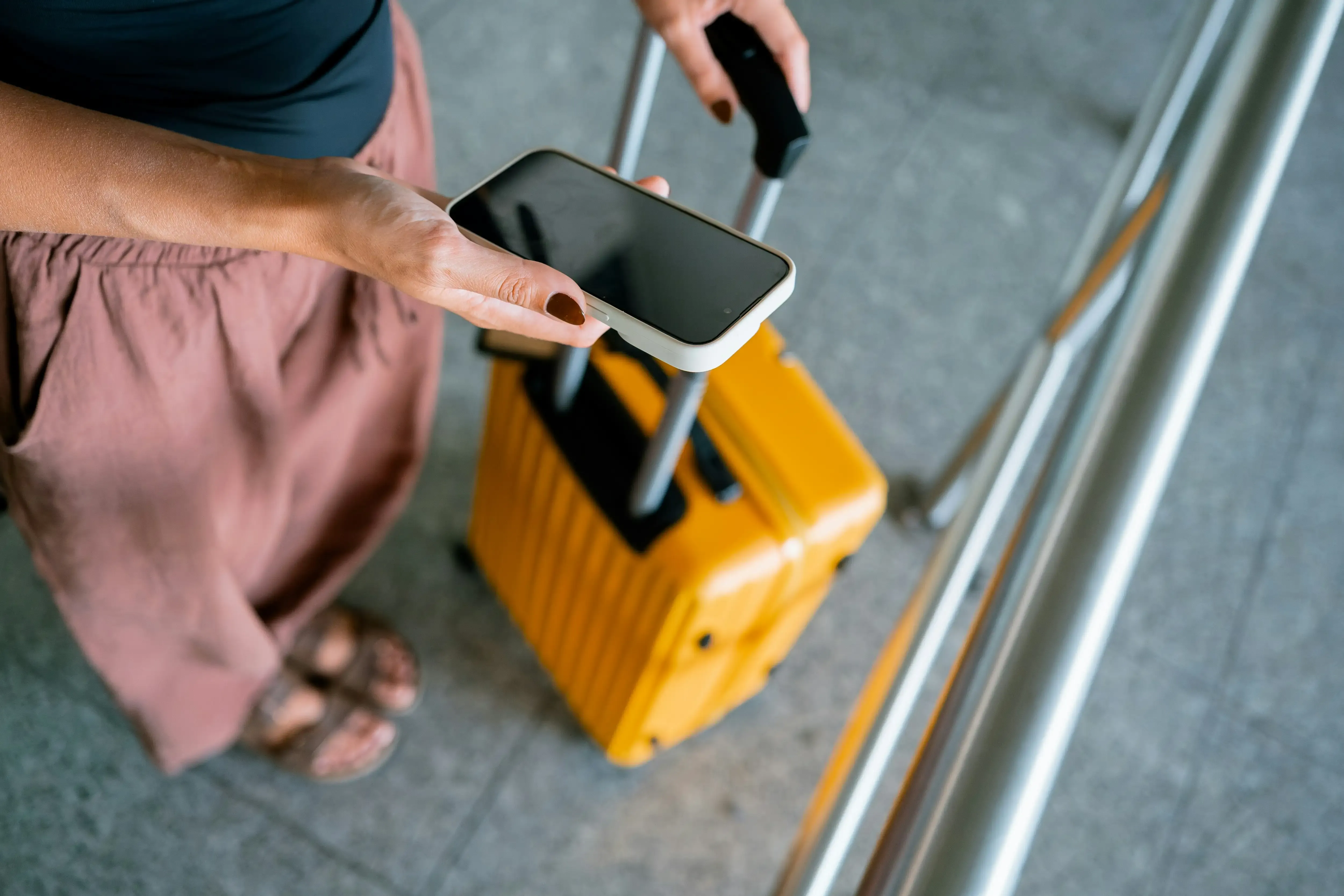
Best eSim for UK: Visitor’s Guide

Best eSIM for USA: Plans, Prices & Setup Guide

eSim vs Physical SIM: Which Is Better for Travel?
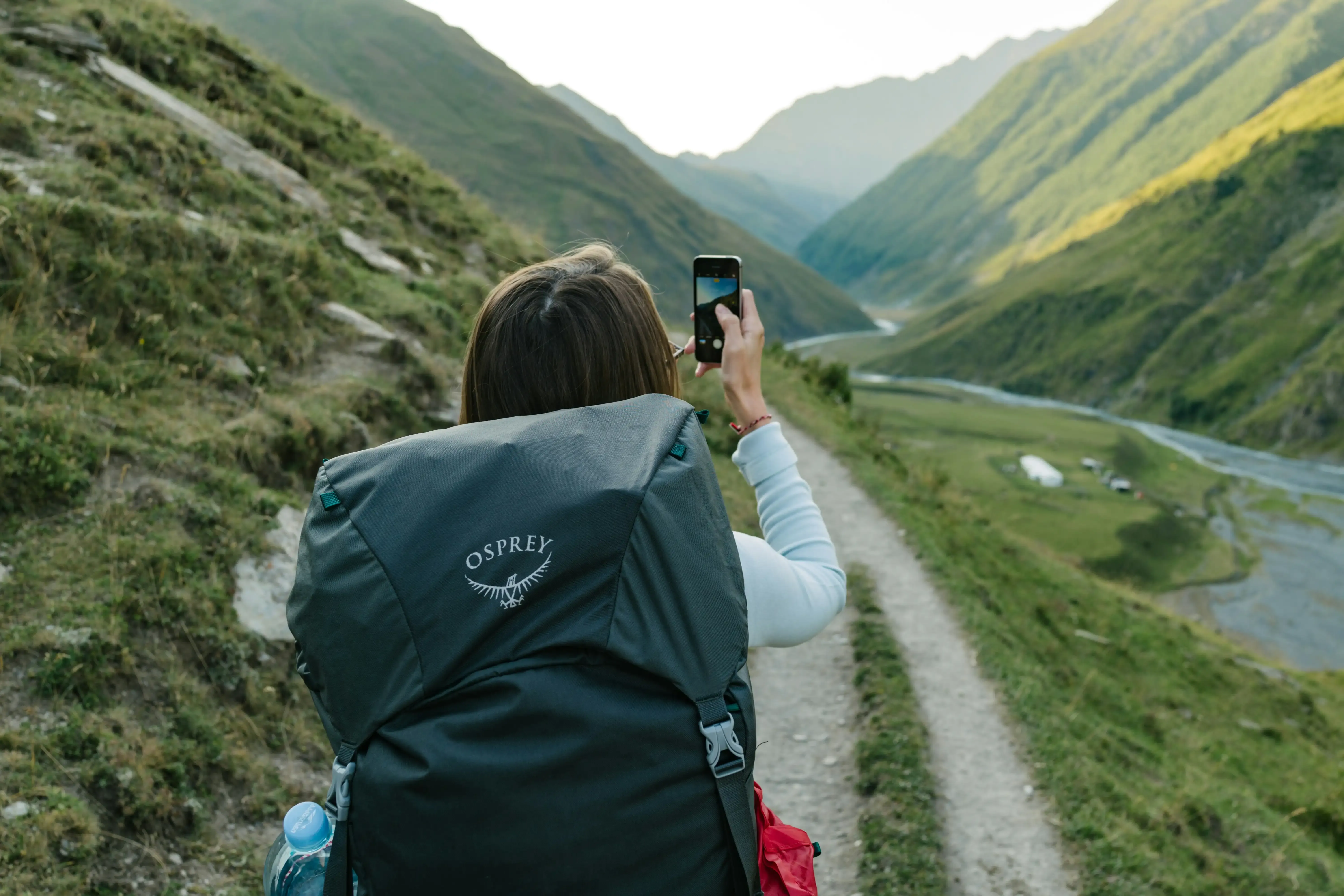
How to Activate eSim: Step-by-Step Guide

Kiwitaxi Airport Transfers
Land. Meet your driver. Go. Skip taxi lines and travel stress after your flight. With Kiwitaxi, your airport transfer is already arranged. Fixed prices, professional drivers, and service in 100+ countries - so your trip starts smoothly from the moment you land.
Book a transferYour pre-trip mobility checklist
Two things most travelers forget to sort until they're already at the airport. Both take under five minutes to fix at home. Neither one costs much. And skipping either of them can turn a good trip into a stressful one before it even begins.
This is your pre-trip mobility checklist: get connected before you land, and get your transfer sorted before you fly.

Step 1. Get an international eSIM — before you board
What is an eSIM, and why does it matter for travel?
An eSIM is a digital SIM card built directly into your phone. Unlike a physical SIM, you don't need to swap anything out — you buy a data plan online, scan a QR code or download it through an app, and your phone is ready to connect the moment you land.
For travelers, this changes everything. You no longer have to:
Queue at an airport kiosk after a 10-hour flight to buy a local SIM
Pay €10–€25 per day in international roaming fees to your home carrier
Rely on spotty airport Wi-Fi just to pull up your hotel address or call your driver
Worry about losing a tiny plastic SIM card somewhere in your luggage
You set it up at home, before your trip. Your phone connects automatically when you arrive. That's it.
eSIM vs roaming vs local SIM — which is actually better?
Most travelers assume roaming is the easiest option because it requires no action. It is easy — and it's also by far the most expensive. A single day of roaming in Southeast Asia or the Middle East can cost more than a week-long eSIM plan for the same region.
Buying a local SIM at the destination is cheaper than roaming, but it means finding a shop, waiting in line, dealing with a language barrier, and sometimes not having data for the first few hours after landing — exactly when you need it most.
An eSIM gives you the convenience of roaming with pricing closer to a local SIM. You activate it before you fly, you arrive connected, and you don't touch anything.
What to look for when choosing an eSIM plan
Not all eSIM plans are equal. Before buying, check:
Coverage. Some plans advertise a country but only cover major cities. If you're heading to rural Thailand, a ski resort in the Alps, or a beach town in the Dominican Republic, verify that the plan covers your specific area — not just the capital.
Data limit and speed throttling. Many plans include "unlimited" data but throttle speeds after 1–3 GB. For navigation, streaming, or video calls, this matters. Look for plans that specify their full-speed data allowance clearly.
Validity period. Plans range from 7 days to 30 days. Match the plan length to your trip — buying a 7-day plan for a 10-day trip means you'll run out of data mid-trip.
Device compatibility. eSIM works on most iPhones from iPhone XS onwards, and most flagship Android phones from 2020+. Check your specific model before purchasing. Some carriers also lock phones to prevent eSIM use — worth checking if your phone is carrier-locked.
Regional vs country-specific plans. If you're traveling through multiple countries — say, a two-week Europe trip covering Italy, France, and Spain — a regional plan covering the whole area is almost always cheaper and simpler than buying separate plans per country.
Airalo is the world's largest eSIM marketplace, with plans for 200+ countries and regions. You can compare options, check coverage maps, and activate your plan entirely within the app — before your flight departs.
Step 2. Pre-book your airport transfer — before you fly
Why the airport is the worst place to find a taxi
Most travel stress happens in the first 45 minutes after landing. You've just spent hours on a plane. You're tired, possibly disoriented, and now you need to get from the airport to your hotel in a city you may have never visited before.
Taking a taxi on arrival sounds simple. In practice, it rarely is.
At major international airports — Istanbul, Bangkok, Dubai, Barcelona, Cairo, Cancun — unofficial drivers approach passengers before the official taxi stand. They quote prices two or three times the normal rate, knowing that tired travelers often don't know the local fare. Even at the official taxi rank, meters can be "broken," routes can be longer than necessary, and negotiation happens in a language you don't speak.
At peak hours, the official taxi queue at airports like Athens, Rome Fiumicino, or Phuket can run 30–60 minutes. After a long-haul flight, that queue is the last thing you want.
Pre-booking a private airport transfer eliminates every single one of these problems — before you even leave home.
What pre-booking actually looks like
With Kiwitaxi, you enter your flight details, pick-up point, and destination. You choose your vehicle class — economy, comfort, business, minivan for families, or minibus for groups. You see the price upfront. You pay online or choose to pay the driver in cash. Done.
From that point on, here's what happens:
24 hours before your flight, you receive your driver's name, phone number, and WhatsApp contact. You can message them directly to confirm details or ask questions.
On the day of your flight, the driver monitors your flight in real time. If it's delayed — by 20 minutes or two hours — they adjust automatically. You don't need to call anyone. You don't lose your booking.
After landing, you clear passport control, collect your bags, and walk to the arrivals exit. Your driver is standing there holding a sign with your name. They help with luggage and walk you to the car.
The price you saw when booking is the price you pay. No meter, no surge pricing, no night surcharge, no "tolls not included." Fixed, locked, guaranteed.

When pre-booking a transfer makes the most sense
Pre-booking is valuable for any arrival, but it becomes essential in specific situations:
Late-night arrivals. Landing at 1 AM in Istanbul or Ho Chi Minh City and trying to find a legitimate taxi in a dark, emptying terminal is not a situation anyone wants to be in. Your pre-booked driver is already there.
Traveling with family or children. Managing luggage, a stroller, two tired kids, and a car seat negotiation in a foreign language simultaneously is not a holiday. Book the minivan with child seats in advance — they're pre-installed when you arrive.
Unfamiliar destinations. In countries like Egypt, Turkey, Dominican Republic, or Vietnam, airport taxi scams are well-documented. Pre-booking removes any interaction with unofficial drivers entirely.
Business travel. When you need to be at a meeting looking presentable and on time, a business-class Kiwitaxi in a Mercedes or BMW with a professional driver is not a luxury — it's just the right tool.
Large groups. A minibus for 7–19 people, booked in advance, is almost always cheaper per person than splitting into multiple taxis — and everyone arrives together.
Kiwitaxi operates in 100+ countries and 14,000+ destinations worldwide, including all major European cities, Southeast Asia, the Middle East, the Americas, and beyond. The same booking experience, the same fixed price guarantee, the same 90-minute free waiting policy — whether you're landing in Paris, Bali, or Punta Cana.
Both sorted. Trip starts right.
You land with data already on your phone. Your driver is waiting at arrivals with your name on a sign. The price is what you agreed to three days ago at home.
That's not a luxury. That's just what travel looks like when you sort the basics before you leave.
Explore All Guides

Barcelona Neighborhoods Guide: Where to Stay & What to Expect in Each Barrio

Discover Paris: A Guide to Iconic Landmarks, Historic Cafés & Legendary Stores

Osaka Travel Guide: Top Things to Do & Food Spots

First-Timer's Japan Handbook: 10 Essential Travel Tips + Etiquette FAQ

Rome in a Day & 3 Days in Rome: The Ultimate Itineraries for Every Traveler

Barcelona Airport to Gothic Quarter: Fastest Transfer Options, Prices & Travel Tips

Ultimate Japan Itineraries: Discover the Best of Japan in 7 or 14 Days

More than the Eiffel Tower: Best Things to Do In Paris

Best hotels in Albania: Tirana, Saranda, Vlorë & Durres

Rome: La Dolce Vita in Every Corner — travel guide by Olivia (@doinglifewithliv)

Barcelona Airport to Sagrada Família: Best Transfer Options, Prices & Travel Times

Paris Food Guide: Eiffel Tower View Restaurants & Rooftop Dining

18 Things You Need to Know Before Visiting Croatia

10 Unforgettable Day Trips from Rome, Italy: Ancient Towns, Best Beaches & Countryside Escapes

A Taste of Florence: Your Complete Food Guide

Best Day Trips from Milan with a Private Driver: Lake Como, Verona & Beyond

10 Best Holiday Alternatives to the Middle East for Spring 2026

Best Things to Do Around the Colosseum: Rome Attractions, Tours & Insider Tips

Barcelona vs Madrid: Which City Is Better to Visit in Spain?

Barcelona: Hidden Bites, Secret Sips & Sunshine Tips by Nancy Sevilla
Best eSIM for Japan 2026

Budapest Travel Tips: Beyond the Obvious

Best Hotels in Rome for Every Budget: Luxury, Boutique & Budget Stays

Cinque Terre Travel Guide: Best Villages & Trails

Best Wine Tours from Milan: Franciacorta, Valpolicella & Chauffeur Hire

Milan to Verona Day Trip with a Chauffeur

South Korea Travel Guide: Best Cultural, Beauty & Wellness Experiences in Seoul, Busan & Jeonju

Best Things to Do in Singapore: Food, Views & Hidden Gems
Free eSIM Trial: Where to Get Free Data

Hoi An Travel Guide: Hidden Gems, Spas & Local Experiences

Santorini Travel Guide: Sunsets, Cruises & Wine

3 Days in Northern Spain: Bilbao, the Cantabrian Coast & Santander
Best eSim for Europe: One Card for 30+ Countries
Best eSim for Mexico: Stay Connected on Your Trip

How to Get from Lisbon to Porto (2026): Train, Bus, Car, or Flight?

How to Get from London to Madeira: Complete Guide (2026)

How to Get from Beauvais Airport to Paris

Paris on a Budget: Affordable Hotels, Shopping & Free Things to Do

Top 12 Things to Do in Albania: Ultimate Travel Guide

Where to Stay in the Albanian Riviera: Best Hotels & Areas

Kyoto Travel Guide: Journey to the Heart of Old Japan
