'%3e%3cpath%20d='M43.073%200.00649261H15.0943V3.94346H43.073V0.00649261Z'%20fill='url(%23kiwitaxi-grad)'%20/%3e%3cpath%20d='M15.0828%203.94346C16.1928%203.94346%2017.0512%203.06513%2017.0512%201.97497C17.0512%200.874164%2016.1822%200.00649261%2015.0828%200.00649261C14.0362%200.00649261%2013.1379%200.851916%2013.1379%201.97497C13.1379%203.10916%2014.0478%203.94346%2015.0828%203.94346Z'%20fill='white'%20/%3e%3cpath%20d='M43.0614%203.94346C44.1715%203.94346%2045.0299%203.06513%2045.0299%201.97497C45.0299%200.874164%2044.1609%200.00649261%2043.0614%200.00649261C42.0149%200.00649261%2041.1166%200.851916%2041.1166%201.97497C41.1166%203.10916%2042.0265%203.94346%2043.0614%203.94346Z'%20fill='white'%20/%3e%3cpath%20d='M19.5921%2038.5052V39.828H23.1471V26.0491H19.5921V27.3446C18.895%2026.5789%2017.4549%2025.8841%2015.7339%2025.8841C11.8502%2025.8841%208.78975%2028.7578%208.78975%2032.939C8.78975%2037.1374%2011.8702%2039.9935%2015.7339%2039.9935C17.4938%2039.9935%2018.932%2039.2691%2019.5921%2038.5052ZM12.2892%2032.939C12.2892%2030.5715%2013.929%2029.1912%2015.9819%2029.1912C18.0106%2029.1912%2019.5647%2030.5845%2019.5647%2032.939C19.5647%2035.2579%2017.9768%2036.6869%2015.9823%2036.6869C13.9596%2036.6869%2012.2892%2035.264%2012.2892%2032.939Z'%20fill='white'%20/%3e%3cpath%20d='M44.7174%2026.0496H41.4289V39.8281H44.7174V26.0496Z'%20fill='white'%20/%3e%3cpath%20d='M32.2183%2035.7001L29.3455%2039.8281H24.94L30.044%2032.8552L25.1624%2026.0496H29.7075L32.3295%2029.8985L35.035%2026.0496H39.4405L34.5599%2032.7435L39.6361%2039.8281H35.1189L32.2183%2035.7001Z'%20fill='white'%20/%3e%3cpath%20d='M3.34504%2022.9604V26.0496H7.4039V29.0939H3.34504V34.2781C3.34504%2035.9866%204.33971%2036.7008%205.955%2036.7008C6.54504%2036.7008%207.16659%2036.5766%207.63241%2036.235V39.4341C7.04237%2039.7757%206.14133%2039.9931%204.89915%2039.9931C1.8243%2039.9931%200.0226746%2038.1293%200.0226746%2034.9298V22.96H3.34504Z'%20fill='white'%20/%3e%3cpath%20d='M36.2094%208.57428L33.307%2016.8723L30.43%208.57428H27.7621L24.8597%2016.8723L21.9828%208.57428H18.4884L23.2157%2021.4188H26.5037L29.084%2014.4093L31.6629%2021.4188H34.951L39.6782%208.57428H36.2094Z'%20fill='white'%20/%3e%3cpath%20d='M44.7174%208.57381H41.4289V21.4188H44.7174V8.57381Z'%20fill='white'%20/%3e%3cpath%20d='M16.7387%208.57381H13.4502V21.4188H16.7387V8.57381Z'%20fill='white'%20/%3e%3cpath%20d='M11.7001%208.57382L6.07922%2014.1326L12.1622%2021.4188H8.05929L3.92163%2016.28L3.3455%2016.8538V21.4188H0.0226746V3.94299H3.3455V12.7574L7.59764%208.57382H11.7001Z'%20fill='white'%20/%3e%3c/g%3e%3cdefs%3e%3clinearGradient%20id='kiwitaxi-grad'%20x1='15.0945'%20y1='1.97497'%20x2='43.073'%20y2='1.97497'%20gradientUnits='userSpaceOnUse'%3e%3cstop%20stop-color='%2300D2CD'%20stop-opacity='0'%20/%3e%3cstop%20offset='1'%20stop-color='%2300D2CD'%20/%3e%3c/linearGradient%3e%3cclipPath%20id='kiwitaxi-clip'%3e%3crect%20width='46'%20height='40'%20fill='white'%20/%3e%3c/clipPath%3e%3c/defs%3e%3c/svg%3e)

Why Visit Tallinn?
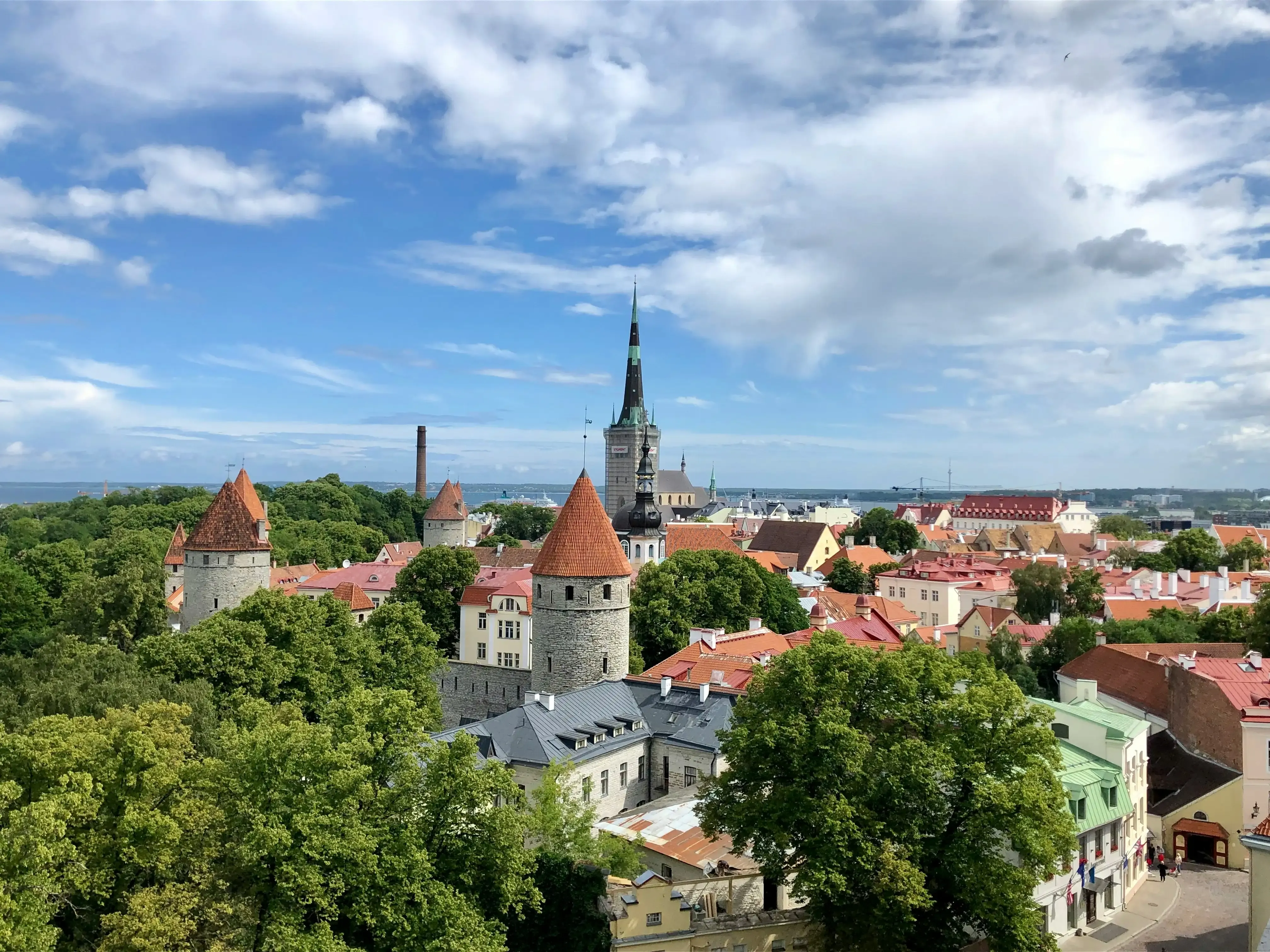
Tallinn gets called one of Europe's best-preserved medieval cities, and that's true, but it's only half the story. Behind the city walls is a capital that's quietly reinvented itself.
Estonia is one of the most digitally advanced countries in the world, and Tallinn shows that side of itself without losing its history.
Medieval churches sit next to modern buildings, centuries-old market squares are a short walk from creative districts full of cafés and galleries, and green space connects neighborhoods that each feel distinct.
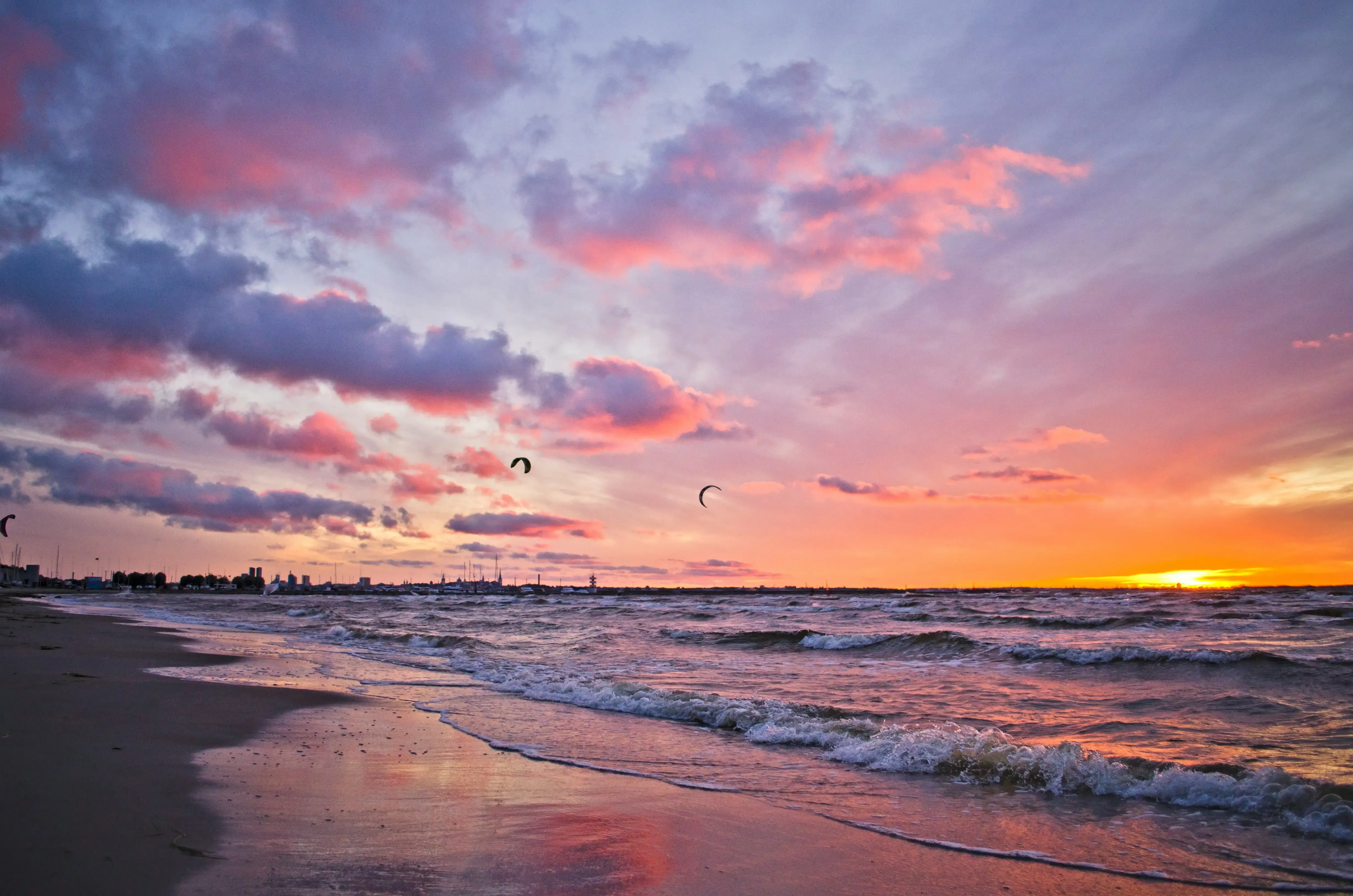
One of the best things about Tallinn is how little time you lose getting around. You can walk the Old Town in the morning, have lunch in a former industrial district, spend the afternoon in a park, and watch the sunset over the Baltic, all in one unhurried day.
It also has a different rhythm than a lot of popular city breaks. Busy, but rarely crowded. Even next to the most photographed spots, a quiet courtyard or cozy café is usually just a couple of minutes away.
And despite all the history, Tallinn doesn't feel like an open-air museum. People actually live inside the Old Town. Students cycle past medieval towers on their way to class, locals meet for coffee in Kalamaja, and trams glide through streets that are eight hundred years old like it's nothing.
That mix is what makes the city worth a longer look than most visitors give it.

Tallinn at a Glance
The capital of Estonia, Tallinn, is famous for:
One of Europe's best-preserved medieval Old Towns (UNESCO World Heritage Site)
Fairytale towers and city walls
Soviet-era history
Creative neighborhoods like Telliskivi and Kalamaja
Parks and seaside promenades
Estonia's digital-first culture
Best time to visit Tallinn works year-round, and each season shows you something different.
May to early September is the busiest window, with long daylight, outdoor cafés, and comfortable temperatures for walking. Around the summer solstice, it barely gets properly dark, so you get extra hours to explore without noticing the time.
Autumn brings colorful parks, crisp mornings, and noticeably fewer visitors, good if you like a slower city break with time for long café stops.
Winter turns Tallinn into one of Northern Europe's more magical destinations, with snow on the rooftops, festive lights, and the Christmas Market taking over Town Hall Square, usually running from late November into early January.
Spring is the quiet, affordable option, the city waking back up after winter, with fewer crowds than summer and lower prices across the board.

How long should you stay? Tallinn is compact enough that a single day covers a lot of ground, which makes it a solid pick for a weekend break or even a long layover. Two or three days lets you slow down properly, museums, neighborhoods beyond the Old Town, the coastline, without watching the clock the whole time.
Airport Tallinn Airport (TLL) sits under 5 km from the city center, small, modern, and easy to navigate.
Tram 4 runs directly from the terminal into the center, about a 15 minute ride to Hobujaama near the ferry terminal, and costs around €2 with a contactless card tapped at the validator (there are no ticket machines at the stops, so have a card ready). If you'd rather skip figuring that out after a long flight, a Kiwitaxi airport transfer gets a driver waiting at arrivals for a fixed price agreed in advance, useful if you're arriving late, traveling with kids, or just don't want to think about tickets right off the plane.
A Few Things to Know Before You Go
Tallinn is one of the easier capitals in Europe to figure out. English is spoken almost everywhere, cards are accepted for pretty much everything, and most major sights sit within walking distance of each other.
Life here runs a bit calmer than in many capitals. People keep their personal space, public transport runs on time, and even the busiest corners rarely feel overwhelming.
First-timers are often surprised by how green the city is. Parks, forest, and sea are always close, so a break from sightseeing is never far away.
One real mistake: spending the whole trip inside the Old Town. It's genuinely beautiful, but Kalamaja, Telliskivi, and Kadriorg show a completely different side of the city and are worth building into your plan, not treating as optional extras.
Local tip: always validate your ticket the moment you board, whether that's tapping a card or scanning a QR code on the orange validator. Inspectors do check, and a missed validation is a flat fine around €40, regardless of how genuine the mix-up was.
Choosing the Right Area to Stay
Tallinn is small, but where you base yourself still shapes the trip. Most neighborhoods connect easily, so this is really about atmosphere more than convenience.
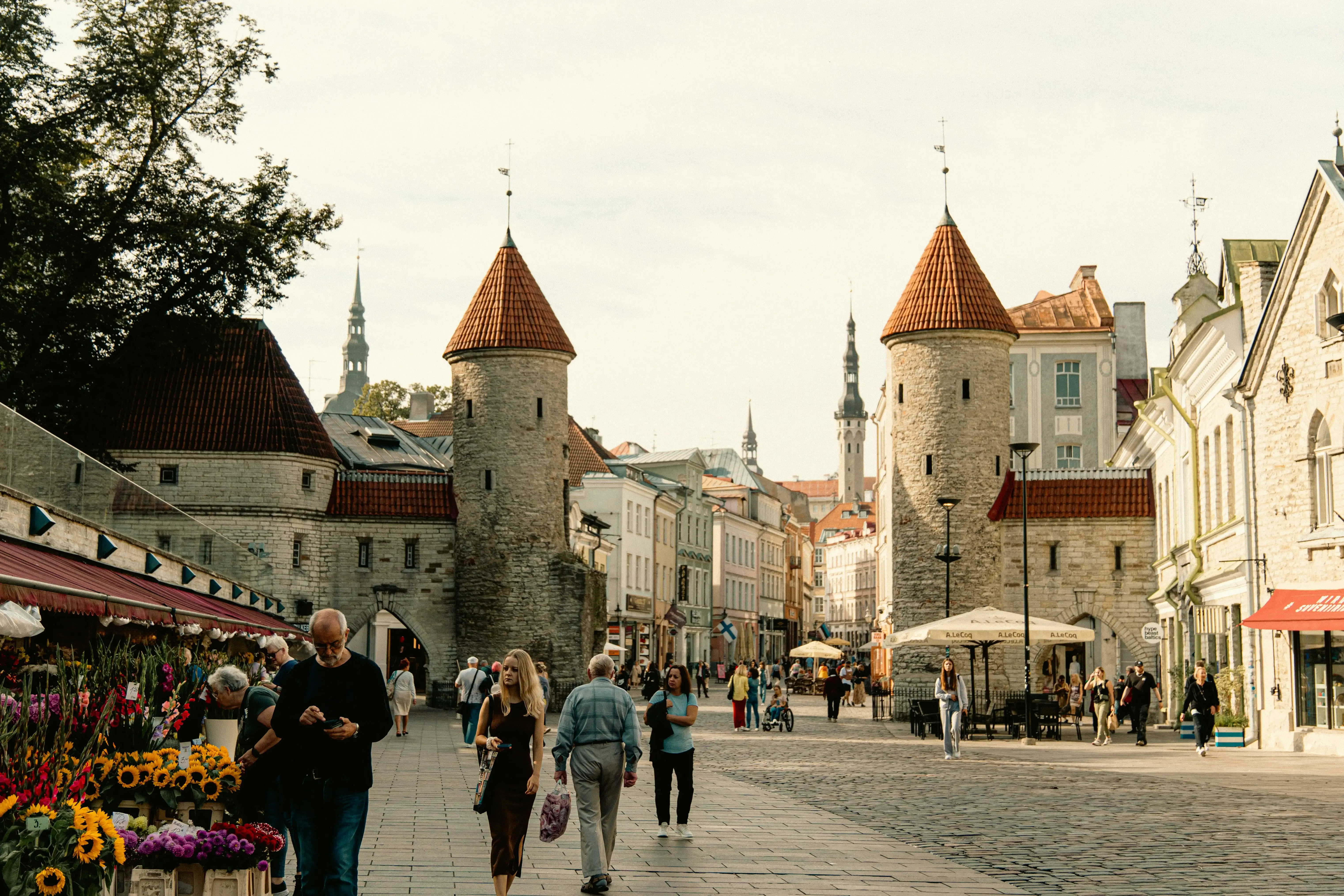
Old Town: best for first-timers and history lovers
Few cities let you actually sleep inside medieval walls. Wake up to church bells, walk the cobbled streets before the day-trippers arrive, and enjoy the atmosphere once the crowds thin out in the evening. Most major landmarks, museums, and restaurants are a short walk from wherever you're staying. Accommodation ranges from boutique hotels in historic buildings to apartments tucked behind centuries-old façades.
Best for: first-time visitors, couples, history fans, anyone who wants Tallinn's most iconic setting.
Kalamaja: best for a more creative, local feel
Once a working-class district, now one of the trendiest parts of the city. Colorful wooden houses line quiet streets, and independent cafés, bakeries, vintage shops, and small galleries give the area a relaxed, lived-in feel. Right next door is Telliskivi Creative City, a former industrial complex now packed with restaurants, design stores, street art, and events year round. Still walkable to the Old Town, but a completely different mood once you're there.
Best for: food lovers, digital nomads, younger travelers, anyone chasing a more local experience.
Kadriorg: best for quiet mornings and green space

A slower pace without feeling out of the way. Known for its elegant park, gardens, museums, and the historic palace commissioned by Peter the Great. Good for morning walks, picnics, or simply staying somewhere calmer after a day of sightseeing. The nearby seaside promenade makes it easy to pair a city day with time by the water.
Best for: families, couples, museum lovers, anyone wanting a quieter base.
City Center: best for convenience
Sitting between the Old Town and Kadriorg, this is the practical choice if you want everything close, shopping, restaurants, hotels across every budget, and strong public transport links. Also a sensible pick if you're arriving by bus or ferry, or planning several day trips during your stay.
Best for: weekend breaks, business travelers, anyone who wants everything within easy reach.
Wherever you land, Tallinn is best explored on foot; distances between neighborhoods are shorter than they look, and half the appeal is stumbling onto a quiet courtyard or café you hadn't planned on. If you'd rather cover more ground in a single day without relying on trams, a Kiwitaxi Chauffeur is worth considering. A driver handles the route while you move between the Old Town, Kadriorg, Kalamaja, and the seaside at your own pace.
Getting There and Around
Tallinn is genuinely easy to navigate. It's compact, public transport is reliable, and most major sights are never far apart. The main question is just which option fits how you like to travel.

Flying In
Most visitors land at Tallinn Airport (TLL), under 5 km from the center. Security and baggage tend to move quickly, and you're rarely more than 20 minutes from your first stop.
If you'd rather not sort out a bus route right after landing, a Kiwitaxi airport transfer covers that for you, driver at arrivals, help with luggage, fixed price agreed ahead of time. Particularly useful if you're landing late at night or traveling with kids or heavy bags.
Arriving by Ferry
Tallinn is one of the few European capitals where arriving by sea is a normal way to show up. Regular ferries connect the city with Helsinki, with the crossing taking around two hours, which makes combining Finland and Estonia in one trip genuinely easy. Breakfast in Tallinn, lunch in Helsinki is a real option, not just a marketing line. If you're arriving at the passenger port with luggage, a pre-booked transfer saves you from figuring out transport before you've even had coffee.
By Public Transport
Trams, buses, and trolleybuses cover the whole city and are simple to use even on a first visit. A single ride costs about €2, a 24-hour ticket runs around €5.50, and a 3-day pass is about €9, all available through the Ühiskaart card (sold at R-Kiosks and post offices) or the Pilet24 app. Most visitors end up walking most places and hopping on a tram occasionally for Kadriorg Park, Pirita Beach, or the Estonian Open Air Museum.
Local tip: if you're planning to hit several paid museums and attractions in one day, look into the Tallinn Card. It bundles unlimited public transport with entry to 50-plus sights, and it only pays off if you're actually moving fast between attractions, if your plan is mostly wandering the Old Town and sitting in cafés, skip it and pay as you go.
On Foot
Tallinn is one of the more walkable capitals in Europe. The Old Town is almost entirely pedestrian, and even neighborhoods outside the walls sit close together. Old Town to Kalamaja is about 15 minutes on foot, and Kadriorg a bit further but still very walkable. Comfortable shoes matter more than any app you'll download for this trip.
By Car
You don't really need a rental car for the city itself. Parking in the center is limited, and walking or public transport covers nearly everything more easily. A car starts to make sense only once you're leaving Tallinn, for Lahemaa National Park, the beaches around Pärnu, or the quieter countryside beyond.
A Comfortable Alternative
If you want a car's flexibility without the driving, parking, or navigating, a Kiwitaxi Chauffeur is worth a look.
Instead of building your day around tram timetables, you move between neighborhoods with someone else handling the logistics, morning in the Old Town, Kadriorg after that, Telliskivi in the afternoon, sunset on the coast, all without a single transfer to plan yourself.
Especially handy for long layovers, families with young kids, or anyone who'd rather spend the day sightseeing than route-planning.
Tallinn by Interest
History lovers: Tallinn's story runs over 800 years deep, and it shows. Start in the UNESCO-listed Old Town, then move on to museums covering Soviet occupation, independence, and everyday 20th-century life. History here isn't locked in museum cases; it's built into the streets themselves.
Food lovers: Estonian food tends to surprise people, with seasonal ingredients, fresh fish, rye bread, mushrooms, and berries, alongside a restaurant scene mixing Nordic style with local creativity. Beyond sit-down meals, the city is full of artisan bakeries, speciality coffee shops, and neighborhood cafés. Try a fresh cinnamon bun, some smoked fish, and a slice of dark rye bread before you leave, and look out for kohuke, a chocolate-coated curd snack that's a genuine local favorite, not just a tourist novelty.
Art and design fans: Telliskivi Creative City is the center of it, old industrial buildings turned into galleries, design studios, bookstores, and street art. Good for browsing local designers or just soaking up the more contemporary side of the city.
Nature lovers: Kadriorg Park has the gardens and quiet paths, Pirita Beach has the sand and sea views. With a bit more time, the forests and wetlands just outside the city make easy day trips and show how green Estonia really is.
Families: compact layout, plenty of parks, and short travel times between attractions make Tallinn an easy trip with kids. Climbing the medieval towers, interactive museums, and Kadriorg or Pirita Beach in summer all tend to go down well.
Slow travelers: some of the best moments here happen with no plan at all. Step into a bookstore, watch trams pass from a café terrace, wander into a courtyard you hadn't planned on, sit by the sea for a while. The city's pace practically asks for it.
Beyond Tallinn
Estonia's small size means plenty of standout places sit within an hour or two, easy as day trips or the next stop on a longer itinerary.
Lahemaa National Park: under an hour's drive from Tallinn, dense forest, hiking trails, bogs, waterfalls, and small fishing villages. Wooden boardwalks make the wetlands easy to explore, and historic manor houses add a different angle on Estonia's past. A solid choice if you have an extra day and want real nature, not just a park in the city.
Tartu: Estonia's second city and its intellectual center, home to the country's oldest university, independent bookstores, and a student population that keeps the whole place feeling young. A different rhythm from Tallinn entirely.
Pärnu: often called Estonia's summer capital, known for its long beach, relaxed pace, and spa culture. Good for swimming, cycling the coast, or a lazy afternoon at a seaside café, worth a stop even outside peak summer.
Helsinki: one of the easiest international day trips in Europe, a roughly two-hour ferry ride away. Doable in a single day, though plenty of travelers stay a night or two before heading back.
If you're combining several of these stops, a Kiwitaxi Chauffeur is worth considering if you'd rather skip the unfamiliar roads and parking logistics. You get the scenery without the navigating. The driver will figure everything out for you, while you can spend your day enjoying what is really important.

Fun Facts About Tallinn
Estonia is one of the most digital countries on Earth. Everyday tasks like signing documents or accessing healthcare happen online almost by default, and Tallinn wears that reputation proudly.
Skype's original code was written largely by Estonian engineers. Tallinn is still a real hub for tech startups today, not just a footnote in Skype's history.
The Old Town is one of Europe's best-preserved medieval centers, largely spared the wartime destruction that reshaped a lot of other historic European cities. Walking its streets today isn't far off from how it looked centuries ago.
Over half of Estonia is forest. You're never as far from nature as the capital city label suggests.
Estonia was the first country to offer nationwide online voting, running since 2005, another data point in its digital-pioneer reputation.
Public transport is free, but only for registered Tallinn residents. Visitors still need a ticket, so don't assume you can just hop on.
Summer nights barely get dark. Around the solstice, daylight stretches so late that darkness never fully lands, plenty of extra hours for waterfront walks and outdoor cafés.
The sea is always close. A few minutes' walk from the medieval streets and you're on the coast, sand underfoot, sailboats drifting across the Gulf of Finland.
Specialty coffee has taken over the city in the last decade or so. Independent cafés serving good coffee and homemade pastries are genuinely everywhere, worth building into your day rather than treating as an afterthought.
It's a lot more than a medieval postcard. Most people plan to spend their whole visit inside the Old Town walls. Then they find Kalamaja's wooden houses, Telliskivi's creative spaces, Kadriorg's gardens, and an evening by the Baltic Sea, and the city turns out to be a lot bigger than it looked on the map.
Best Picks: Europe

10 Unforgettable Day Trips from Rome, Italy: Ancient Towns, Best Beaches & Countryside Escapes

Discover Paris: A Guide to Iconic Landmarks, Historic Cafés & Legendary Stores

Best Day Trips from Milan with a Private Driver: Lake Como, Verona & Beyond

Swiss Alps Guide: Top Destinations & Things to Do

Budapest Travel Tips: Beyond the Obvious

How to Spend Your Munich Layover: Transport, Sights & Tips

Barcelona vs Madrid: Which City Is Better to Visit in Spain?

Best Wine Tours from Milan: Franciacorta, Valpolicella & Chauffeur Hire

18 Things You Need to Know Before Visiting Croatia

Venice Without the Crowds: An Escape Guide
1 Day in Tallinn: A Complete Itinerary With Hidden Gems & Local Spots

Kiwitaxi Airport Transfers
Relax and enjoy the ride, knowing that every detail is managed for your peace of mind
ExploreExplore All Guides
Barcelona Neighborhoods Guide: Where to Stay & What to Expect in Each Barrio
Discover Paris: A Guide to Iconic Landmarks, Historic Cafés & Legendary Stores

Osaka Travel Guide: Top Things to Do & Food Spots

First-Timer's Japan Handbook: 10 Essential Travel Tips + Etiquette FAQ

Rome in a Day & 3 Days in Rome: The Ultimate Itineraries for Every Traveler

Barcelona Airport to Gothic Quarter: Fastest Transfer Options, Prices & Travel Tips

Ultimate Japan Itineraries: Discover the Best of Japan in 7 or 14 Days

More than the Eiffel Tower: Best Things to Do In Paris

Best hotels in Albania: Tirana, Saranda, Vlorë & Durres

Rome: La Dolce Vita in Every Corner — travel guide by Olivia (@doinglifewithliv)

Barcelona Airport to Sagrada Família: Best Transfer Options, Prices & Travel Times

Paris Food Guide: Eiffel Tower View Restaurants & Rooftop Dining
18 Things You Need to Know Before Visiting Croatia
10 Unforgettable Day Trips from Rome, Italy: Ancient Towns, Best Beaches & Countryside Escapes
A Taste of Florence: Your Complete Food Guide
Best Day Trips from Milan with a Private Driver: Lake Como, Verona & Beyond

10 Best Holiday Alternatives to the Middle East for Spring 2026

Best Things to Do Around the Colosseum: Rome Attractions, Tours & Insider Tips
Barcelona vs Madrid: Which City Is Better to Visit in Spain?

Barcelona: Hidden Bites, Secret Sips & Sunshine Tips by Nancy Sevilla

Best eSIM for Japan 2026
Budapest Travel Tips: Beyond the Obvious

Best Hotels in Rome for Every Budget: Luxury, Boutique & Budget Stays

Cinque Terre Travel Guide: Best Villages & Trails
Best Wine Tours from Milan: Franciacorta, Valpolicella & Chauffeur Hire
Milan to Verona Day Trip with a Chauffeur

South Korea Travel Guide: Best Cultural, Beauty & Wellness Experiences in Seoul, Busan & Jeonju

Best Things to Do in Singapore: Food, Views & Hidden Gems

Free eSIM Trial: Where to Get Free Data

Hoi An Travel Guide: Hidden Gems, Spas & Local Experiences

Santorini Travel Guide: Sunsets, Cruises & Wine

3 Days in Northern Spain: Bilbao, the Cantabrian Coast & Santander

Best eSim for Europe: One Card for 30+ Countries

Best eSim for Mexico: Stay Connected on Your Trip

How to Get from Lisbon to Porto (2026): Train, Bus, Car, or Flight?

How to Get from London to Madeira: Complete Guide (2026)

How to Get from Beauvais Airport to Paris

Paris on a Budget: Affordable Hotels, Shopping & Free Things to Do

Top 12 Things to Do in Albania: Ultimate Travel Guide

Where to Stay in the Albanian Riviera: Best Hotels & Areas
Kyoto Travel Guide: Journey to the Heart of Old Japan
