'%3e%3cpath%20d='M43.073%200.00649261H15.0943V3.94346H43.073V0.00649261Z'%20fill='url(%23kiwitaxi-grad)'%20/%3e%3cpath%20d='M15.0828%203.94346C16.1928%203.94346%2017.0512%203.06513%2017.0512%201.97497C17.0512%200.874164%2016.1822%200.00649261%2015.0828%200.00649261C14.0362%200.00649261%2013.1379%200.851916%2013.1379%201.97497C13.1379%203.10916%2014.0478%203.94346%2015.0828%203.94346Z'%20fill='white'%20/%3e%3cpath%20d='M43.0614%203.94346C44.1715%203.94346%2045.0299%203.06513%2045.0299%201.97497C45.0299%200.874164%2044.1609%200.00649261%2043.0614%200.00649261C42.0149%200.00649261%2041.1166%200.851916%2041.1166%201.97497C41.1166%203.10916%2042.0265%203.94346%2043.0614%203.94346Z'%20fill='white'%20/%3e%3cpath%20d='M19.5921%2038.5052V39.828H23.1471V26.0491H19.5921V27.3446C18.895%2026.5789%2017.4549%2025.8841%2015.7339%2025.8841C11.8502%2025.8841%208.78975%2028.7578%208.78975%2032.939C8.78975%2037.1374%2011.8702%2039.9935%2015.7339%2039.9935C17.4938%2039.9935%2018.932%2039.2691%2019.5921%2038.5052ZM12.2892%2032.939C12.2892%2030.5715%2013.929%2029.1912%2015.9819%2029.1912C18.0106%2029.1912%2019.5647%2030.5845%2019.5647%2032.939C19.5647%2035.2579%2017.9768%2036.6869%2015.9823%2036.6869C13.9596%2036.6869%2012.2892%2035.264%2012.2892%2032.939Z'%20fill='white'%20/%3e%3cpath%20d='M44.7174%2026.0496H41.4289V39.8281H44.7174V26.0496Z'%20fill='white'%20/%3e%3cpath%20d='M32.2183%2035.7001L29.3455%2039.8281H24.94L30.044%2032.8552L25.1624%2026.0496H29.7075L32.3295%2029.8985L35.035%2026.0496H39.4405L34.5599%2032.7435L39.6361%2039.8281H35.1189L32.2183%2035.7001Z'%20fill='white'%20/%3e%3cpath%20d='M3.34504%2022.9604V26.0496H7.4039V29.0939H3.34504V34.2781C3.34504%2035.9866%204.33971%2036.7008%205.955%2036.7008C6.54504%2036.7008%207.16659%2036.5766%207.63241%2036.235V39.4341C7.04237%2039.7757%206.14133%2039.9931%204.89915%2039.9931C1.8243%2039.9931%200.0226746%2038.1293%200.0226746%2034.9298V22.96H3.34504Z'%20fill='white'%20/%3e%3cpath%20d='M36.2094%208.57428L33.307%2016.8723L30.43%208.57428H27.7621L24.8597%2016.8723L21.9828%208.57428H18.4884L23.2157%2021.4188H26.5037L29.084%2014.4093L31.6629%2021.4188H34.951L39.6782%208.57428H36.2094Z'%20fill='white'%20/%3e%3cpath%20d='M44.7174%208.57381H41.4289V21.4188H44.7174V8.57381Z'%20fill='white'%20/%3e%3cpath%20d='M16.7387%208.57381H13.4502V21.4188H16.7387V8.57381Z'%20fill='white'%20/%3e%3cpath%20d='M11.7001%208.57382L6.07922%2014.1326L12.1622%2021.4188H8.05929L3.92163%2016.28L3.3455%2016.8538V21.4188H0.0226746V3.94299H3.3455V12.7574L7.59764%208.57382H11.7001Z'%20fill='white'%20/%3e%3c/g%3e%3cdefs%3e%3clinearGradient%20id='kiwitaxi-grad'%20x1='15.0945'%20y1='1.97497'%20x2='43.073'%20y2='1.97497'%20gradientUnits='userSpaceOnUse'%3e%3cstop%20stop-color='%2300D2CD'%20stop-opacity='0'%20/%3e%3cstop%20offset='1'%20stop-color='%2300D2CD'%20/%3e%3c/linearGradient%3e%3cclipPath%20id='kiwitaxi-clip'%3e%3crect%20width='46'%20height='40'%20fill='white'%20/%3e%3c/clipPath%3e%3c/defs%3e%3c/svg%3e)

Working remotely gives you more freedom over where you live, but choosing the right country as a digital nomad takes more than finding a place with good weather and attractive beaches. Visa rules, internet access, living costs, healthcare, taxes, time zones and the availability of coworking spaces can all affect your experience.
In 2026, more countries offer dedicated visas or residence options for remote workers than a few years ago. At the same time, requirements change regularly, income thresholds are often adjusted every January in line with local minimum wage rises, so it is important to check the latest official information before making plans.
This guide looks at some of the best countries for digital nomads in 2026 and explains what makes each destination useful for remote workers.
What should digital nomads look for in a country?
Before choosing a destination, consider these factors:
Visa or residence options: Can you legally stay for several months while working remotely?
Cost of living: How much will accommodation, food, transport and healthcare cost?
Internet: Is reliable high-speed internet widely available?
Coworking spaces: Are there suitable places to work outside your accommodation?
Time zone: Does the local time work with your clients or employer?
Healthcare: What insurance or healthcare arrangements will you need?
Taxes: Could staying for a certain number of days make you tax resident?
Transport: Is it easy to move around without a car?
Community: Are there established digital nomad and expat communities?
There is no single best country for everyone. A freelancer who works with European clients may have very different priorities from someone employed by a US company.
1. Spain
Spain remains one of the strongest choices for digital nomads who want European infrastructure, good transport and a wide range of cities and lifestyles.
The Digital Nomad Visa is designed for foreign remote workers who work for companies or clients outside Spain. Employees must work for companies outside Spain, while self-employed applicants can work with Spanish companies as long as this work does not exceed 20% of their total professional activity. Applicants generally need either a qualifying university or postgraduate degree or at least three years of relevant professional experience. Following the 2026 minimum wage increase, the income threshold rose to €2,849 per month for a single applicant, with additional amounts required for a spouse and each dependent.
For digital nomads, Spain offers several distinct options. Madrid and Barcelona are major business and technology centres, while Valencia, Málaga, Alicante and the Canary Islands are popular with people looking for a different pace of life.
Best for: Remote employees, freelancers, families and people who want European city life.
Watch out for: Housing costs in the most popular cities, summer heat in some regions, and stricter renewal checks in 2026, as Spain has tightened scrutiny of income documentation and Social Security registration.

2. Portugal
Portugal is another established destination for remote workers, particularly for people who want to stay in Europe for an extended period.
Non-EU nationals need the D8 visa if they intend to work remotely from Portugal. The income threshold is set at four times the national minimum wage, which puts the 2026 figure at €3,680 per month for the main applicant, with additional amounts for a spouse and each dependent child. Portugal's former NHR tax regime has been replaced by the more restrictive IFICI scheme, which offers a reduced tax rate only to a narrower group of high-value professionals, so most new applicants should expect to pay standard progressive tax rates.
Lisbon and Porto have large international communities and plenty of coworking options. Madeira is also popular with remote workers, partly because of its climate and established digital nomad community.
Best for: European lifestyle, mild climate, freelancers and remote employees.
Watch out for: Rising accommodation prices in Lisbon, Porto and Madeira, and processing times that can now run six to nine months due to a backlog at Portugal's immigration agency, AIMA.

3. Estonia
Estonia is particularly interesting for digital nomads who work in technology, entrepreneurship or online business.
The country has a dedicated Digital Nomad Visa that allows eligible remote workers to stay in Estonia temporarily for up to one year. Applicants need to work independently of location for an employer or company registered outside Estonia, or as a freelancer whose clients are mostly outside Estonia. The current income threshold is €4,500 net per month, the highest among the major European digital nomad programmes.
Estonia is also famous for its e-Residency programme. However, digital nomads should understand the difference: e-Residency is not a residence permit and does not give you the right to live in Estonia. It is a digital identity that can help entrepreneurs establish and manage an Estonian company online.
Tallinn is the obvious base for many remote workers, with excellent digital infrastructure and a strong startup ecosystem.
Best for: Entrepreneurs, tech workers, freelancers and people who value digital government services.
Watch out for: The highest income requirement in Europe for this type of visa, plus cold, dark winters.

4. Croatia
Croatia combines EU membership, a Mediterranean lifestyle and a specific temporary-stay route for digital nomads.
Croatia's Ministry of the Interior currently lists a minimum monthly means-of-subsistence requirement of €3,622.50 for digital nomads. Applicants can demonstrate this through regular income, bank statements or other accepted evidence. The permit runs for up to 18 months, cannot be renewed directly, and requires a six-month gap before reapplying. On the plus side, Croatia exempts digital nomads from local income tax on foreign-source earnings during their stay.
Popular bases include Zagreb, Split, Dubrovnik, Zadar and Istria. Coastal destinations can be particularly attractive outside the busiest summer months.
Best for: People who want the Mediterranean, European travel and a slower lifestyle.
Watch out for: Summer accommodation prices and crowds in major coastal destinations, and the fixed 18-month limit with no direct renewal.

5. Greece
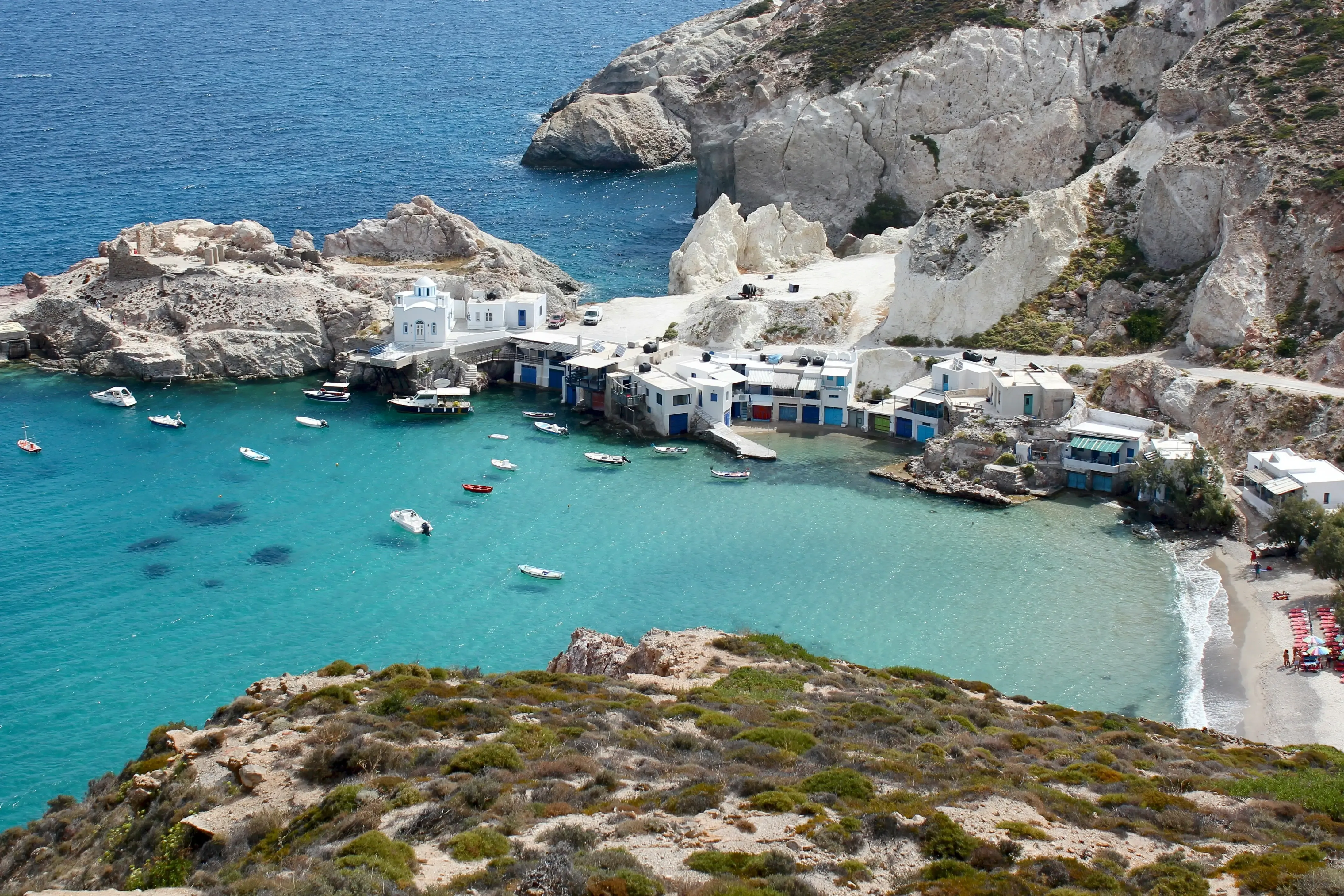
Greece is worth considering if lifestyle is high on your list of priorities. Remote workers can combine work with access to beaches, islands, historic cities and a relatively relaxed daily rhythm.
The Greek Digital Nomad Visa is designed for non-EU citizens who work remotely for employers or clients outside Greece, with an income threshold set at around €3,500 per month according to official guidance. It can provide a legal framework for a longer stay than a normal tourist visit, and some consulates have reportedly processed approvals in as little as ten days.
Athens is the most practical choice for year-round living because it has the largest range of services, transport connections and coworking spaces. Thessaloniki is another option, while the islands can work well for people who are comfortable with seasonal changes and more limited services.
Best for: Warm weather, island access, Mediterranean lifestyle and European travel.
Watch out for: Seasonal price increases, island logistics and potentially slower internet or fewer services in smaller locations.
6. Thailand
Thailand continues to be one of Asia's most popular destinations for long-term travellers and remote workers.
The Destination Thailand Visa (DTV) offers a five-year multiple-entry framework, with stays of up to 180 days per entry. Remote workers and freelancers can qualify under the relevant work-related category, while other qualifying activities such as approved cultural or educational programmes are also covered. Applicants need to show at least 500,000 Thai baht in a personal bank account, generally maintained for around three months before applying. Spending more than 180 days in Thailand in a calendar year can trigger Thai tax residency on income remitted into the country, so it is worth reviewing how this applies to your situation.
Bangkok is a strong choice for reliable infrastructure, coworking spaces and international connections. Chiang Mai is well known among digital nomads, while Phuket, Koh Samui and other coastal destinations appeal to people who prefer a beach lifestyle.
Best for: Affordable living, food, warm weather and a large international community.
Watch out for: Heat and humidity, seasonal air-quality issues in northern Thailand, and the 180-day tax residency threshold if you plan to stay long-term.

7. Malaysia
Malaysia is one of Southeast Asia's most practical choices for remote workers who want modern infrastructure without the prices of some major international hubs.
The DE Rantau Nomad Pass requires a minimum annual income of US$24,000 for tech and digital professionals, or US$60,000 for other approved professions. The pass allows an initial stay of three to twelve months, renewable once for a total of up to 24 months. It does not currently cover Sabah or Sarawak.
Kuala Lumpur offers modern offices, fast internet, international flights and a wide range of accommodation. Penang is another popular option, especially for people who want a smaller city with a strong food scene and access to the coast.
Best for: Good infrastructure, affordable living and access to Southeast Asia.
Watch out for: The income gap between IT and non-IT applicants, the 24-month hard cap with no path to longer residency from this pass alone, and the Sabah and Sarawak exclusion.

8. Costa Rica
Costa Rica is a strong option for digital nomads who want nature to be part of everyday life. Beaches, rainforests, mountains and national parks are all within reach, while San José provides more conventional urban infrastructure.
The country's remote worker programme requires proof of stable foreign income of at least US$3,000 per month, or more for applicants bringing dependents. Applicants also need medical insurance covering the required period of stay. Costa Rica does not tax foreign-source income, which makes it one of the more tax-friendly options on this list.
The country can be more expensive than some other popular destinations in Latin America, particularly in tourist areas. However, it can be a good match for remote workers who prioritize outdoor activities over urban amenities.
Best for: Nature, beaches, outdoor activities and a slower lifestyle.
Watch out for: Higher costs in popular coastal areas and the importance of choosing accommodation with reliable internet.

9. United Arab Emirates
The UAE is an option for digital nomads who prioritize infrastructure, international connections and a business-friendly environment.
The UAE's virtual work residence route, run through the ICP and Dubai's GDRFA, currently requires a minimum monthly income of US$3,500 for employees, or around US$5,000 for business owners who have held their company for at least a year. Since a January 2026 procedural update, applicants must now provide six months of bank statements instead of three, so it is worth having that documentation ready well before applying.
Dubai is the most obvious choice, with extensive coworking facilities, international flights, modern public transport and a large expatriate community. Abu Dhabi offers another high-quality urban option through its own remote work track.
The UAE does not levy personal income tax on individuals, although other taxes and costs can apply.
Best for: Business connections, high-quality infrastructure and international travel.
Watch out for: High accommodation and everyday living costs, particularly in Dubai, and the longer bank statement history now required for applications.

How to choose the right country as a digital nomad
The best destination depends on what you need from your working life.
If you want Europe and a Mediterranean lifestyle, Spain, Portugal, Croatia and Greece are strong options.
If your priority is digital infrastructure and entrepreneurship, Estonia is particularly attractive.
If you want lower living costs and access to Asia, Thailand and Malaysia are worth considering.
For nature and outdoor activities, Costa Rica is difficult to beat.
If you need business infrastructure and global flight connections, the UAE is a practical choice.
Your income also matters. A visa with a €4,500 monthly income requirement may be easy for one remote worker and completely unrealistic for another. Before choosing a country, compare the visa threshold with your actual income, then calculate accommodation, insurance, transport and other regular expenses.
Don't forget about taxes
A digital nomad visa does not automatically mean that you are exempt from local taxes.
Tax residency can depend on factors such as how long you stay in a country, where your income comes from, your personal circumstances and the tax rules between your home country and your destination.
Several of the countries above, including Croatia, Costa Rica and the UAE, do not tax foreign-source income, while others such as Spain, Portugal, Greece and Estonia apply standard tax residency rules once you pass 183 days in the country.
For this reason, do not choose a country based only on its visa. If you plan to stay for several months or move between countries regularly, check the tax implications with a qualified professional.
Practical tips for moving abroad as a digital nomad
Before booking a one-way flight, make sure you have the basics covered.
Check the visa rules first. Requirements can include minimum income, health insurance, criminal-record certificates, proof of accommodation and documents relating to your employer or business. Thresholds are often revised at the start of the year, so recheck the official government page close to your application date rather than relying on last year's figures.
Test your internet connection. Ask your accommodation for the actual connection speed rather than relying only on the property's description. Having mobile data as a backup is also useful.
Choose accommodation based on your work routine. A beautiful apartment is less useful if it has nowhere comfortable to work or a noisy environment during your working hours.
Consider the time zone. If you have daily meetings with colleagues in Europe or North America, a time-zone mismatch can quickly become inconvenient.
Plan your arrival. After a long flight, navigating public transport with several bags can be difficult, especially if you land late at night in an unfamiliar city. Booking a private transfer in advance means a driver is waiting for you at arrivals instead of you working out local transport on the spot, which matters most in your first days in a new country.
Keep important documents accessible. Store digital copies of your passport, insurance policy, visa documents, employment contract and proof of income in a secure location.
Have a backup plan. Visa policies, flights, accommodation prices and personal circumstances can change. Avoid committing to an expensive long-term rental before you understand the destination.
Getting from the airport to your new base
Once your visa is sorted and your flights are booked, the last practical step is getting from the airport to your accommodation, ideally without dragging luggage through an unfamiliar transit system after a long journey. Kiwitaxi operates private transfers in more than 100 countries, including most of the destinations covered in this guide, and also offers a chauffeur service for longer bookings, sightseeing days or multi-stop trips if you want to see more of a city before settling in.
Booking ahead means your ride is confirmed before you land, which is worth the small amount of planning it takes, especially if you are arriving somewhere for the first time.
To see how Kiwitaxi's private transfer and chauffeur services work in more detail, along with a promo code for 5% off your private transfer, read our full Kiwitaxi guide here.

Final thoughts
In 2026, digital nomads have more choices than ever. Spain and Portugal offer established European bases, Estonia stands out for digital infrastructure, Croatia and Greece combine remote work with a Mediterranean lifestyle, while Thailand and Malaysia remain strong choices in Asia. Costa Rica is particularly appealing to nature lovers, and the UAE offers excellent infrastructure for people with higher budgets.
The right choice is not necessarily the country with the cheapest rent or the most popular digital nomad community. Start with your work requirements, visa eligibility and budget. Then consider climate, lifestyle, transport and the kind of community you want around you.
Most importantly, check official immigration and tax information shortly before travelling. Visa conditions and financial requirements can change, and the rules that apply in 2026 may not remain the same next year.

Kiwitaxi Airport Transfers
Relax and enjoy the ride, knowing that every detail is managed for your peace of mind
ExploreExplore All Guides

Barcelona Neighborhoods Guide: Where to Stay & What to Expect in Each Barrio

Discover Paris: A Guide to Iconic Landmarks, Historic Cafés & Legendary Stores

Osaka Travel Guide: Top Things to Do & Food Spots

First-Timer's Japan Handbook: 10 Essential Travel Tips + Etiquette FAQ

Rome in a Day & 3 Days in Rome: The Ultimate Itineraries for Every Traveler

Barcelona Airport to Gothic Quarter: Fastest Transfer Options, Prices & Travel Tips

Ultimate Japan Itineraries: Discover the Best of Japan in 7 or 14 Days

More than the Eiffel Tower: Best Things to Do In Paris

Best hotels in Albania: Tirana, Saranda, Vlorë & Durres

Rome: La Dolce Vita in Every Corner — travel guide by Olivia (@doinglifewithliv)

Barcelona Airport to Sagrada Família: Best Transfer Options, Prices & Travel Times

Paris Food Guide: Eiffel Tower View Restaurants & Rooftop Dining

18 Things You Need to Know Before Visiting Croatia

10 Unforgettable Day Trips from Rome, Italy: Ancient Towns, Best Beaches & Countryside Escapes

A Taste of Florence: Your Complete Food Guide

Best Day Trips from Milan with a Private Driver: Lake Como, Verona & Beyond

10 Best Holiday Alternatives to the Middle East for Spring 2026

Best Things to Do Around the Colosseum: Rome Attractions, Tours & Insider Tips

Barcelona vs Madrid: Which City Is Better to Visit in Spain?

Barcelona: Hidden Bites, Secret Sips & Sunshine Tips by Nancy Sevilla

Best eSIM for Japan 2026

Budapest Travel Tips: Beyond the Obvious

Best Hotels in Rome for Every Budget: Luxury, Boutique & Budget Stays

Cinque Terre Travel Guide: Best Villages & Trails

Best Wine Tours from Milan: Franciacorta, Valpolicella & Chauffeur Hire

Milan to Verona Day Trip with a Chauffeur

South Korea Travel Guide: Best Cultural, Beauty & Wellness Experiences in Seoul, Busan & Jeonju

Best Things to Do in Singapore: Food, Views & Hidden Gems

Free eSIM Trial: Where to Get Free Data

Hoi An Travel Guide: Hidden Gems, Spas & Local Experiences

Santorini Travel Guide: Sunsets, Cruises & Wine

3 Days in Northern Spain: Bilbao, the Cantabrian Coast & Santander

Best eSim for Europe: One Card for 30+ Countries

Best eSim for Mexico: Stay Connected on Your Trip

How to Get from Lisbon to Porto (2026): Train, Bus, Car, or Flight?

How to Get from London to Madeira: Complete Guide (2026)

How to Get from Beauvais Airport to Paris

Paris on a Budget: Affordable Hotels, Shopping & Free Things to Do

Top 12 Things to Do in Albania: Ultimate Travel Guide

Where to Stay in the Albanian Riviera: Best Hotels & Areas

Kyoto Travel Guide: Journey to the Heart of Old Japan

The Ultimate Hanoi Travel Guide: Local Tips, Street Food & Hidden Gems in Vietnam’s Capital

Private Chauffeur Service for Day Trips & Sightseeing
Your own driver, by the hour. No fixed routes. No surprises. Just a professional driver at your disposal - from 3 hours to multiple days.
Book a chauffeurExplore Editorial Guides

Trend Watch: The Rise of the Perennial Destination

2 Days in Lisbon: The Real Itinerary for Alfama, Belém & Where to Eat

8 European Travel Itineraries for Bookworms

Pamukkale and Ephesus Day Trip from Bodrum: Is It Actually Possible?

Best Beaches Near Lisbon & Sintra: A Local Road Trip to Nazaré

Best Greek Islands: Which One Is Right for You (2026)

Day Trips from London: Seven Places Worth Leaving the City For
My Favourite Cafes and Restaurants in Vilnius: An Editor's Guide

Best Restaurants in Montenegro: An Editor's Guide (2026)

Dolomites Travel Guide: Peaks, Villages & Alpine Trails

The Best Apps and Resources for Women Who Travel Solo (2026 Edition)

The World's Best Outlet Villages and When to Actually Go (2026)

Belgrade Travel Guide: Best Restaurants, Cafes, and Iconic Sights

When to Shop the European Outlets: The Real Sale Calendar

Swiss Alps Guide: Top Destinations & Things to Do
3 Days in Northern Spain: Bilbao, the Cantabrian Coast & Santander

The 8 Gadgets Frequent Flyers Repack Every Time

Beyond Eat, Pray, Love: 8 Destinations for the Soul-Searching Woman

8 Spots for the Joy of Missing Out

The Eventification of Travel: Why People Are Booking the Concert Before the City

Trend Watch: The Heritage Hotel Boom