'%3e%3cpath%20d='M43.073%200.00649261H15.0943V3.94346H43.073V0.00649261Z'%20fill='url(%23kiwitaxi-grad)'%20/%3e%3cpath%20d='M15.0828%203.94346C16.1928%203.94346%2017.0512%203.06513%2017.0512%201.97497C17.0512%200.874164%2016.1822%200.00649261%2015.0828%200.00649261C14.0362%200.00649261%2013.1379%200.851916%2013.1379%201.97497C13.1379%203.10916%2014.0478%203.94346%2015.0828%203.94346Z'%20fill='white'%20/%3e%3cpath%20d='M43.0614%203.94346C44.1715%203.94346%2045.0299%203.06513%2045.0299%201.97497C45.0299%200.874164%2044.1609%200.00649261%2043.0614%200.00649261C42.0149%200.00649261%2041.1166%200.851916%2041.1166%201.97497C41.1166%203.10916%2042.0265%203.94346%2043.0614%203.94346Z'%20fill='white'%20/%3e%3cpath%20d='M19.5921%2038.5052V39.828H23.1471V26.0491H19.5921V27.3446C18.895%2026.5789%2017.4549%2025.8841%2015.7339%2025.8841C11.8502%2025.8841%208.78975%2028.7578%208.78975%2032.939C8.78975%2037.1374%2011.8702%2039.9935%2015.7339%2039.9935C17.4938%2039.9935%2018.932%2039.2691%2019.5921%2038.5052ZM12.2892%2032.939C12.2892%2030.5715%2013.929%2029.1912%2015.9819%2029.1912C18.0106%2029.1912%2019.5647%2030.5845%2019.5647%2032.939C19.5647%2035.2579%2017.9768%2036.6869%2015.9823%2036.6869C13.9596%2036.6869%2012.2892%2035.264%2012.2892%2032.939Z'%20fill='white'%20/%3e%3cpath%20d='M44.7174%2026.0496H41.4289V39.8281H44.7174V26.0496Z'%20fill='white'%20/%3e%3cpath%20d='M32.2183%2035.7001L29.3455%2039.8281H24.94L30.044%2032.8552L25.1624%2026.0496H29.7075L32.3295%2029.8985L35.035%2026.0496H39.4405L34.5599%2032.7435L39.6361%2039.8281H35.1189L32.2183%2035.7001Z'%20fill='white'%20/%3e%3cpath%20d='M3.34504%2022.9604V26.0496H7.4039V29.0939H3.34504V34.2781C3.34504%2035.9866%204.33971%2036.7008%205.955%2036.7008C6.54504%2036.7008%207.16659%2036.5766%207.63241%2036.235V39.4341C7.04237%2039.7757%206.14133%2039.9931%204.89915%2039.9931C1.8243%2039.9931%200.0226746%2038.1293%200.0226746%2034.9298V22.96H3.34504Z'%20fill='white'%20/%3e%3cpath%20d='M36.2094%208.57428L33.307%2016.8723L30.43%208.57428H27.7621L24.8597%2016.8723L21.9828%208.57428H18.4884L23.2157%2021.4188H26.5037L29.084%2014.4093L31.6629%2021.4188H34.951L39.6782%208.57428H36.2094Z'%20fill='white'%20/%3e%3cpath%20d='M44.7174%208.57381H41.4289V21.4188H44.7174V8.57381Z'%20fill='white'%20/%3e%3cpath%20d='M16.7387%208.57381H13.4502V21.4188H16.7387V8.57381Z'%20fill='white'%20/%3e%3cpath%20d='M11.7001%208.57382L6.07922%2014.1326L12.1622%2021.4188H8.05929L3.92163%2016.28L3.3455%2016.8538V21.4188H0.0226746V3.94299H3.3455V12.7574L7.59764%208.57382H11.7001Z'%20fill='white'%20/%3e%3c/g%3e%3cdefs%3e%3clinearGradient%20id='kiwitaxi-grad'%20x1='15.0945'%20y1='1.97497'%20x2='43.073'%20y2='1.97497'%20gradientUnits='userSpaceOnUse'%3e%3cstop%20stop-color='%2300D2CD'%20stop-opacity='0'%20/%3e%3cstop%20offset='1'%20stop-color='%2300D2CD'%20/%3e%3c/linearGradient%3e%3cclipPath%20id='kiwitaxi-clip'%3e%3crect%20width='46'%20height='40'%20fill='white'%20/%3e%3c/clipPath%3e%3c/defs%3e%3c/svg%3e)


I did not plan this trip around beaches. I planned it around a rental car and a rough idea that I wanted to see the coast north of Lisbon before I got old and tired and started booking resorts instead. Somewhere around day two, standing on a cliff with wind trying to take my hat, I realized the beaches were the whole point and everything else, the towns, the food, the little detours, had just been getting me from one to the next.
So this is not a ranked top ten. It is the order I actually drove in, roughly, with the stops that were worth the brakes and one or two that I'd genuinely tell you to skip if you're short on time.
I flew into Lisbon and had a transfer booked ahead through Kiwitaxi so I wasn't dealing with a rental counter line at midnight, then picked up my own car the next morning once I'd slept. If you'd rather not drive yourself along cliff roads with a rental car you don't know, a chauffeur hire is worth pricing out for a day or two of this route. It costs more than self-driving, obviously, but it also means whoever's behind the wheel isn't the one who has to stop looking at the ocean.
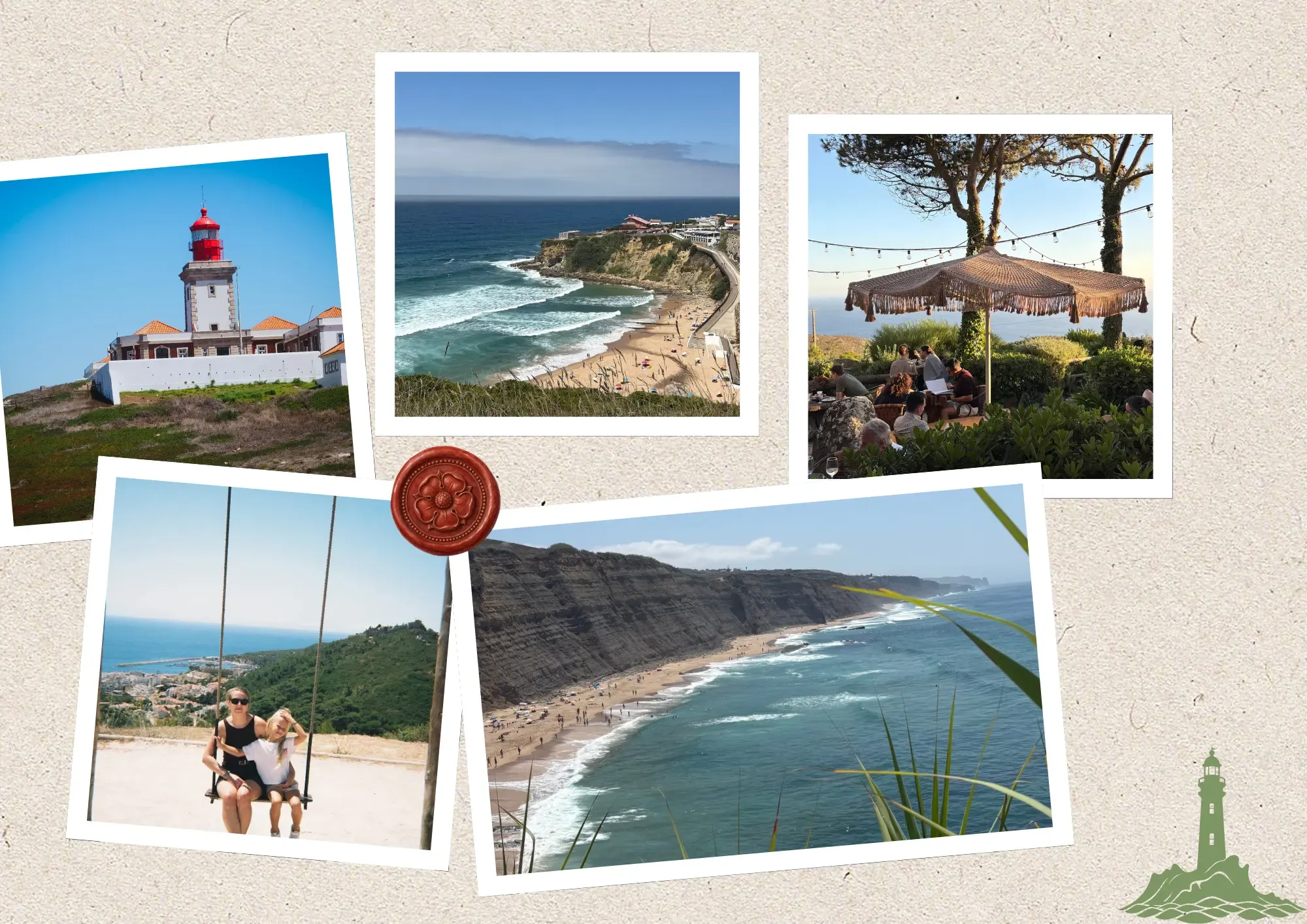
Sesimbra, before you've even left the city behind
I'd almost cut this from the itinerary because it's the wrong direction, south instead of north, and I was worried about wasting a day. Glad I didn't. Sesimbra sits close enough to Lisbon that it works as a half-day, and the reason to go is a swing. I know how that sounds. The Baloiço Panorâmico de Sesimbra is exactly what it looks like in the photos, a wooden swing bolted to a cliff edge with the Atlantic underneath it, and there was a small line of people waiting their turn when I showed up, phones out, everyone acting a little embarrassed about how excited they were. It's worth the wait. Swing out over nothing, feel your stomach drop, get your photo, move on.
From there it's a short drive up to Forte de São Filipe, a 16th-century fort built to watch for pirates and, later, for anyone who might come at Lisbon from the sea. Half of it is now a pousada, so you can't wander everywhere, but the ramparts are open and the view over Setúbal bay is the kind that makes you stop talking mid-sentence. The stone is warm even late in the afternoon, and there's a particular smell up there, salt and dry grass and something like hot dust, that I still think about.
Cabo da Roca, where the map runs out
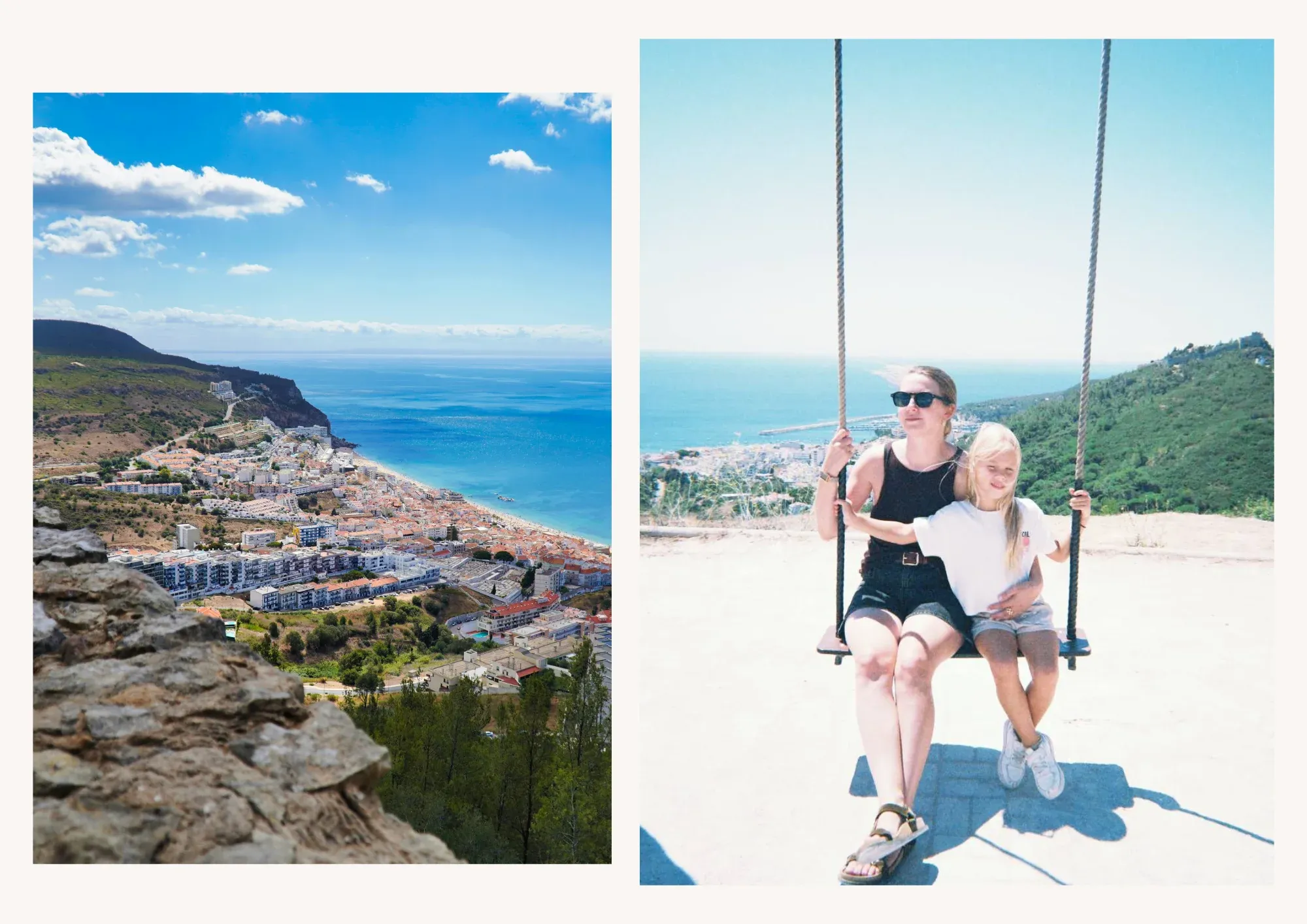
This is the one everyone's heard of and it's still worth it, which doesn't happen often. Cabo da Roca is the westernmost point of mainland Europe, a title that sounds like tourist-board nonsense until you're standing on the cliff edge in a wind strong enough to lean into.
There's a stone monument with a cross and a line from the poet Camões carved into it: "Aqui, onde a terra se acaba e o mar começa", here, where the land ends and the sea begins. It's not subtle. It works anyway. The lighthouse below has been running since 1772, and the cliffs drop more than a hundred meters straight into water that changes color every ten minutes depending on the cloud cover.
Note: I stayed a few nights in a small house right near the cape instead of doing it as a day trip from Lisbon, and it changed the whole visit. Cabo da Roca at six in the evening, once the tour buses have pulled out, is a different place entirely. This is the Airbnb I booked, if you want the same setup.
Nearby, cut into the rock near Colares, is Pedra de Alvidrar, a set of sea caves and arches that National Geographic Portugal ran a feature on a while back. It's not signposted well. Google Maps will get you close and then you're on foot for the last stretch, picking your way over rock.
The hike nobody quite warns you about

Praia da Ursa deserves its own paragraph because people talk about it like it's a beach you walk to and it's really a hike that happens to end at a beach. You leave your car at the lot by the Cabo da Roca lighthouse, and from there it's about four kilometers round trip, an hour and a half if you don't stop for photos every thirty seconds, which you will.
The path drops around 250 meters in elevation, some of it on a rope-assisted scramble that gets slick when it's been raining, and there's a stretch flagged for erosion where the signs are not exaggerating, the ground actually crumbles. Do it in real shoes, not sandals. What's waiting at the bottom are two sea stacks standing just offshore, sharp and strange against the water, unlike any rock formation I saw anywhere else on this trip. Nobody swims here. The current is too rough and there are no lifeguards, so this is a look-don't-touch kind of beach, but it might be the most dramatic thing I saw on the whole coast.
Lunch with a view that makes you forget you ordered food
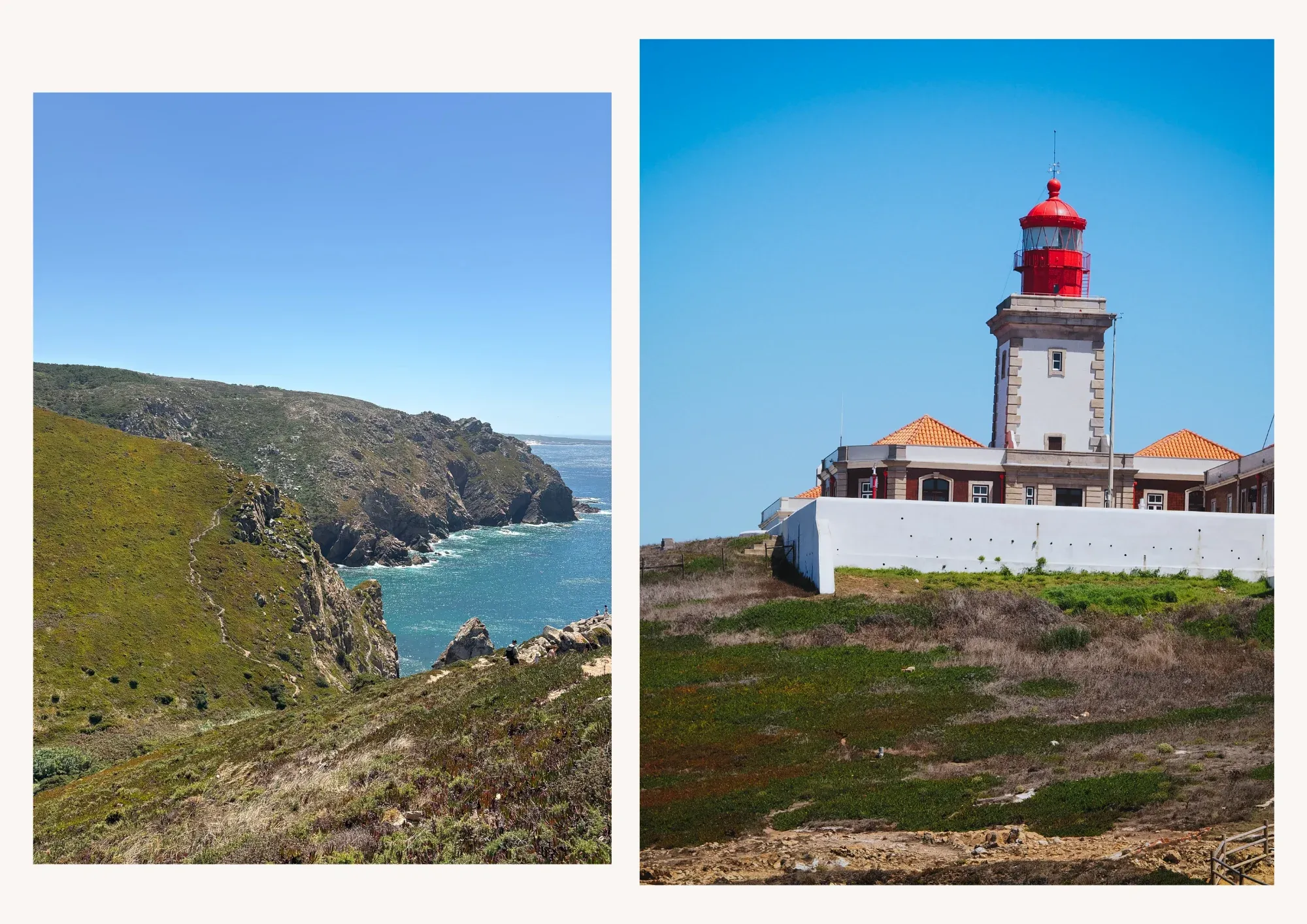
There's a cluster of small restaurants around Cabo da Roca that all seem to be competing for the same sunset, and honestly you can't go wrong picking whichever one has a free table. I ate at Refúgio da Roca one day and Cafe Ocidente the next, and both did the job: simple grilled fish, good bread, a view that made the wait for the check feel like part of the meal rather than an interruption to it. 3 Gomes Cabo do Roca is a little further down the road and less polished, plastic chairs instead of linen, and I liked it more for that. Order the crab if it's on the menu wherever you land. Someone at the next table over pointed me toward it and I've thought about it since.
The one I'd actually plan a trip around, though, is Moinho Dom Quixote, a restaurant built into an old windmill a bit inland from the cape. Go right before sunset and ask to sit somewhere with a sightline to the water. The light does something to the hills there that I haven't seen photographed accurately anywhere, gold going orange going that deep blue that only lasts a few minutes. If you've hired a driver for the day rather than self-driving, this is exactly the stop to do it for, because the wine list deserves more attention than a designated driver can give it.
The beach I'd actually pick over all the others
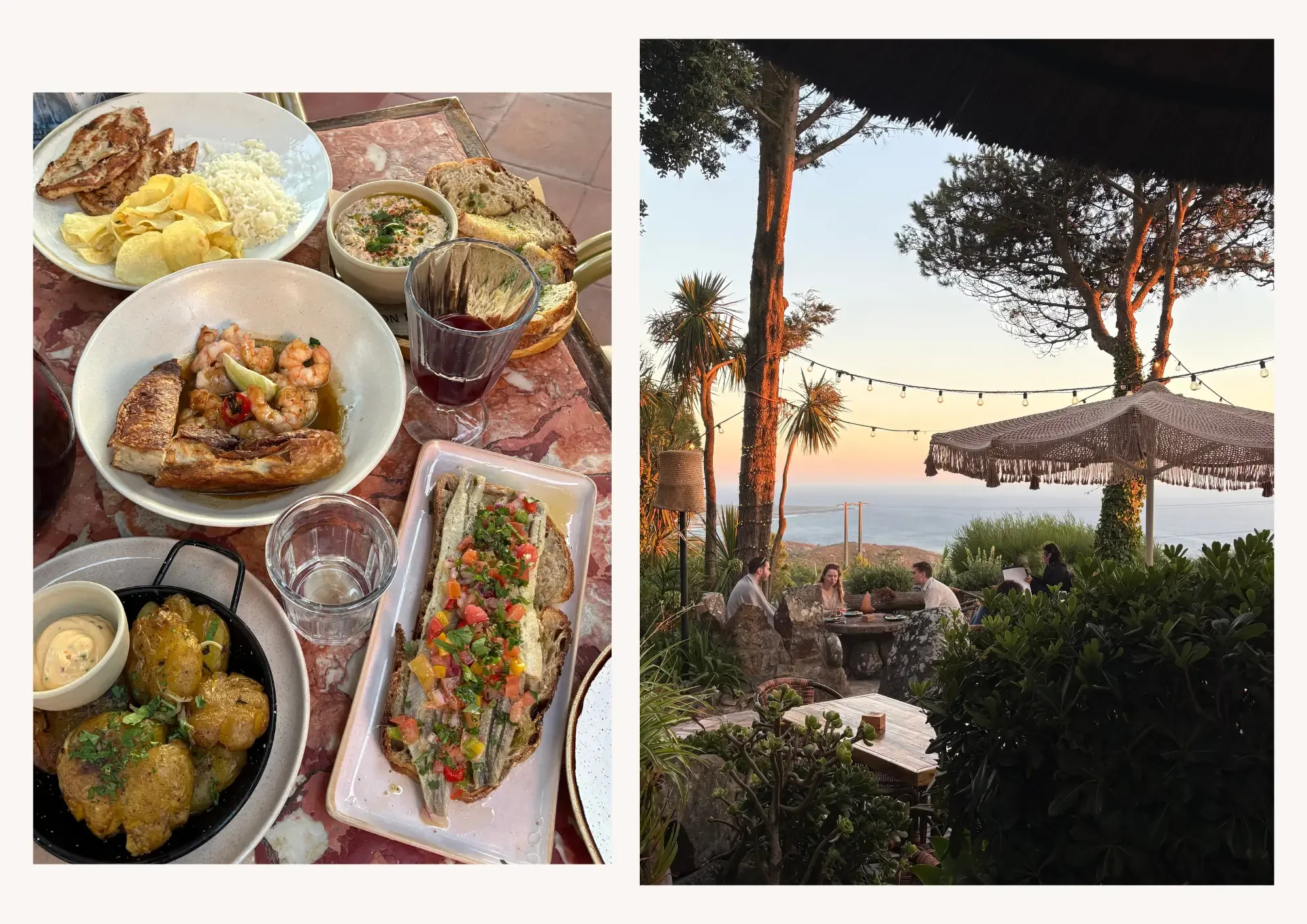
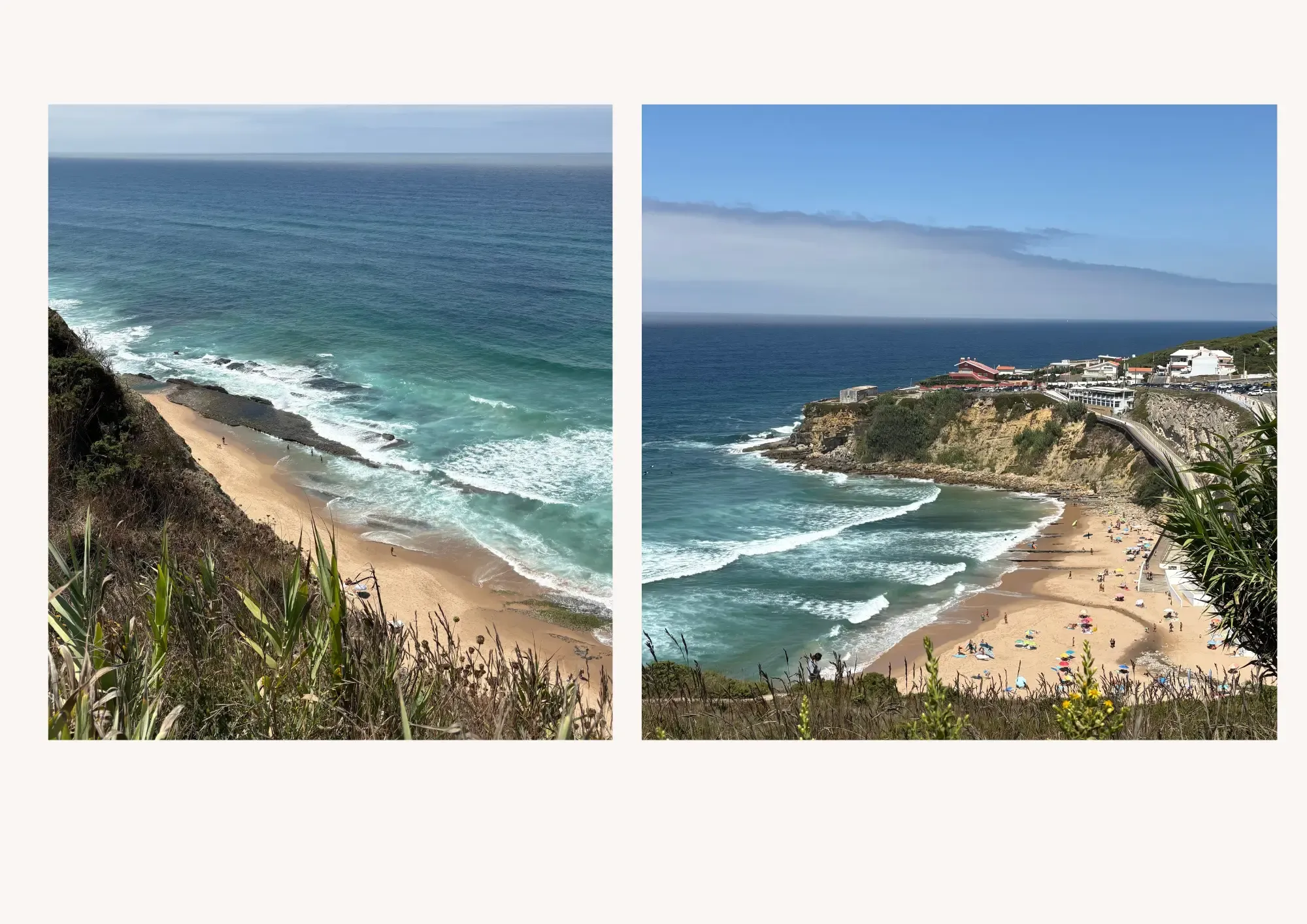
Everyone asks me for one answer when I get back from a trip like this, one place, if you only had time for one thing. Mine is Praia do Magoito, and it's not the obvious choice. It's not the biggest, the cliffs aren't the tallest, and on a sunny day it looks like a nice but unremarkable beach. Go when it's overcast. I got there on a gray, low-sky afternoon that would have ruined most other beaches, and Magoito turned moody instead of dull, the water went a flat pewter color, the cliffs behind it lost their edges into the mist, and the whole thing felt like it belonged in a different, colder country. There were maybe six other people there. I sat on the sand for close to two hours doing absolutely nothing and it remains one of my favorite two hours of the entire trip. Bring a jacket. It's colder than it looks from the road.
More cliffside dinners heading up the coast
Further along, past Magoito, the coast road strings together a few more places worth planning a meal around. Restaurante da Adraga sits right above the beach of the same name, and the seafood rice there is the kind of dish that makes you stop mid-bite to tell whoever you're with how good it is. Esplanada Duna Mar is more casual, plastic tables on a wooden deck, good for a beer and something fried rather than a full sit-down dinner. And then there's Azenhas do Mar, which is less a restaurant and more an entire village that happens to have good restaurants in it, white houses stacked down a cliff face into the Atlantic, with a natural seawater pool at the bottom that only fills at high tide. Check the tide chart before you go if you actually want to swim in it. I didn't check and got there at low tide and stood looking at an empty concrete basin feeling like an idiot, so learn from me on this one.
Praia Azul, on the way to nowhere in particular
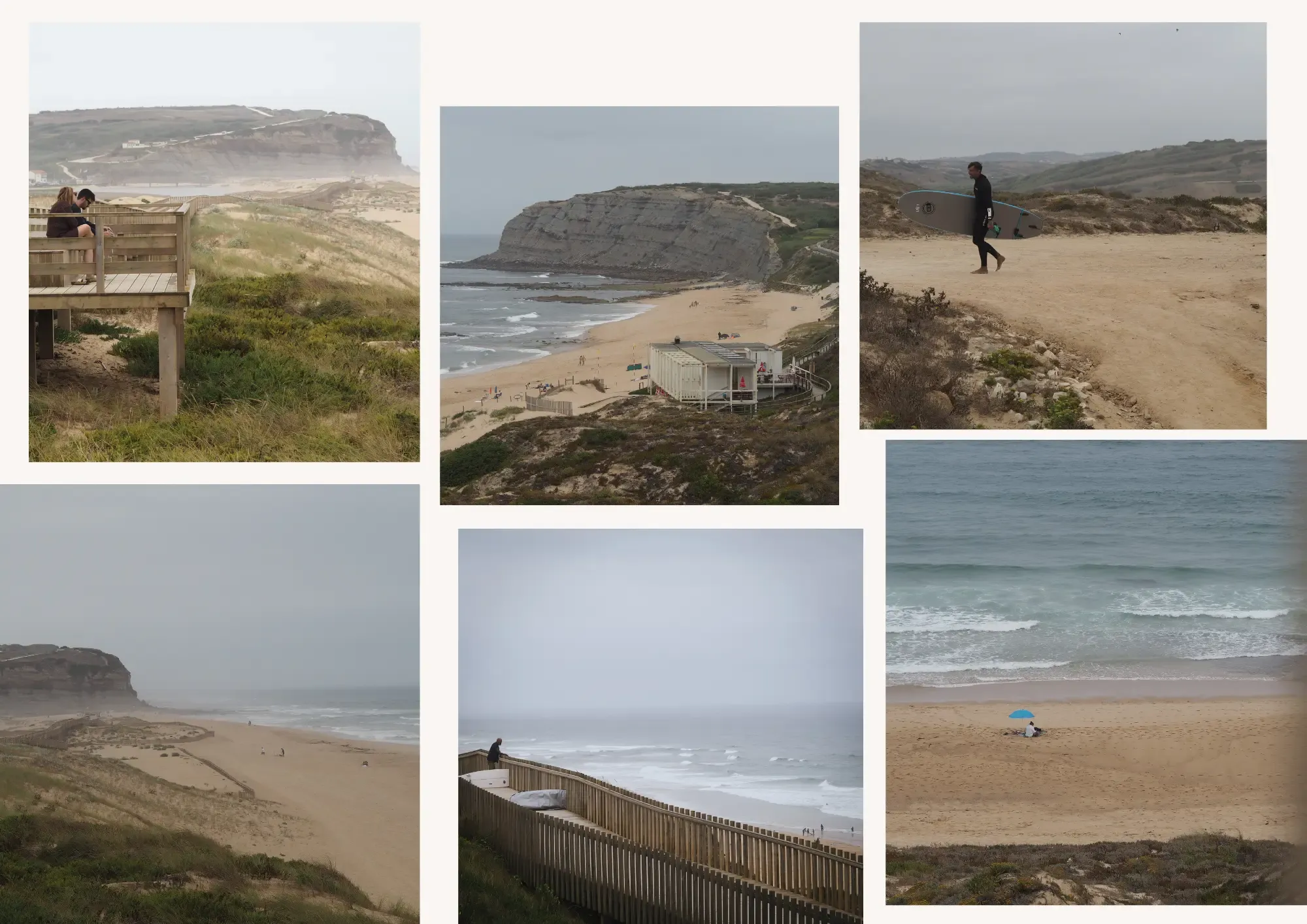
Somewhere between the Sintra coast and Peniche, on the long stretch of road that doesn't have a famous name attached to it, I pulled off at a sign for Praia Azul. It's a smaller, quieter beach, the kind that exists mostly for the people who live nearby rather than for tourists, and I mention it not because it's essential but because it's a good example of what this whole stretch of coast is like once you're off the postcard route. Sand, dunes, a couple of surfers, no restaurant, no crowd. Good for stretching your legs and eating whatever snacks you've got left in the car.
Peniche and a lighthouse standing over shipwrecks
Cabo Carvoeiro, just past Peniche, is a wind-scoured headland with a lighthouse that's been guiding ships (not always successfully, this coast has a long history of wrecks) around the cape for well over a century.

The rock formations here are strange, layered and twisted like something folded by hand, and one outcrop just offshore, the Nau dos Corvos, looks enough like the prow of a ship that it's earned its own name. On a clear day you can see the Berlengas islands sitting out in the water, and it's worth timing your visit for that if you can, because on a hazy day they just disappear into the horizon.
Nazaré and the waves that made it famous

If you only know one thing about Nazaré before you arrive, it's probably the waves, and fair enough. Farol da Nazaré, the lighthouse and old fort of São Miguel Arcanjo perched above Praia do Norte, is where the surf world comes to watch water do something it shouldn't be able to do. An underwater canyon just offshore focuses incoming swell into walls that have been measured past 25 meters, and this is where Garrett McNamara set his first big-wave record back in 2011, where Rodrigo Koxa broke it in 2017, and where Sebastian Steudtner has been pushing the number even higher since.
Winter is when it actually happens, big swells rolling through from November to March, and there's a real chance you'll show up in summer and see nothing but calm blue water and wonder what the fuss is about. That's fine too. Even flat, the view from up there over the canyon and the curve of the beach below is worth the climb.
Down in town, before or after the lighthouse, spend some time in the old fishing quarter. Seca do Peixe is a small open-air site where women still lay fish out on wire racks to dry in the sun exactly the way their grandmothers did, a tradition that's fading elsewhere on this coast but hangs on here almost as a point of pride. The smell hits you before you see it, salt and something faintly sweet underneath. And when conditions are calm enough, usually in summer, you can walk into Forno de Orca, a sea cave carved into the base of the cliffs right at Praia do Norte, worn smooth by exactly the same waves that make the beach famous when they're angry instead of calm.
If you've still got time, keep going
I didn't make it all the way, but if your trip has another day or two in it, the drive north toward Porto passes Costa Nova do Prado, a small fishing village near Aveiro known for its striped wooden houses, once simple fishermen's huts called palheiros, painted in bold red, blue, and green bands to help sailors spot their own house from the water.
It's become something of a photo stop in recent years, and it shows, but the houses themselves are genuinely as good-looking in person as they are online, which isn't always true of places that get this much attention.

Getting there without losing a day to logistics
Most of this route only really works with a car, since half the point is stopping wherever looks good rather than sticking to a bus schedule. If you're flying into Lisbon, book your airport transfer ahead of time so you're not negotiating with a taxi driver after a long flight, and pick up your rental the next morning once you've actually slept. Kiwitaxi covers transfers across Portugal, including routes out to Sintra and Cascais, so that first leg is one less thing to think about.
You can check all the prices here:
If cliff-edge driving or a full day of wine tasting near Cabo da Roca sounds better with someone else behind the wheel, a private driver by the hour covers exactly that, and it's worth it for at least one day of this trip even if you self-drive the rest.
For the rest of Portugal once you're off this stretch of coast, I've written up two days in Lisbon if you're bookending the road trip with city time, a guide to getting from Lisbon to Porto if Costa Nova pulls you further north than planned, and a broader look at solo travel in Portugal if you're doing any of this alone, which honestly, parts of it, I'd recommend.
FAQ
What is the best beach near Lisbon? It depends what you're after. Praia do Magoito is my personal pick, especially on an overcast day, for atmosphere over postcard prettiness. Praia da Ursa wins for sheer drama, though it requires a short hike and isn't swimmable. Cascais and Estoril are closer to the city and easier to reach without a car, but they're also busier and less dramatic than the Sintra coast further out.
Do you need a car to see these beaches? Yes, for almost all of them. Public transport along this stretch of coast is limited and slow, and part of the appeal is stopping wherever looks good rather than following a fixed route. A rental car gives you the most flexibility, and a car rental with driver is a solid option for anyone who'd rather not navigate cliff roads themselves or wants to drink wine at lunch without worrying about driving after.
Is Praia da Ursa safe to swim at? No. The currents are strong, there are no lifeguards, and it's best treated as a viewpoint and hiking destination rather than a swimming beach. Bring proper shoes for the trail down, since part of it involves a rope-assisted descent that gets slippery when wet.
When is the best time to see the big waves in Nazaré? Winter, roughly November through March, is when the underwater canyon at Praia do Norte produces the largest swells and when big-wave surfing events tend to happen. In summer the water is usually calm, which is actually the best time to walk into the Forno de Orca sea cave nearby, something that isn't possible when the waves are up.
How far is Cabo da Roca from Lisbon? About 40 kilometers, roughly a 40 to 50 minute drive depending on traffic through Sintra. It's an easy day trip from Lisbon, though staying overnight nearby means you get the cape without the tour bus crowds that show up midday.
Can I do this whole coastal route in one day? Not comfortably. Sesimbra, Cabo da Roca, the Sintra coast beaches, Peniche, and Nazaré cover a lot of driving and each spot deserves more than a drive-by. Two to four days lets you actually stop, eat properly, and do the Praia da Ursa hike without rushing. Trying to cram it into one day means you'll spend more time in the car than on any beach.

Landing in Portugal? Your Ride Is Ready
Pre-book your private driver, skip the taxi line, and get to your hotel with a fixed price and no surprises.
Book a transferExplore All Guides
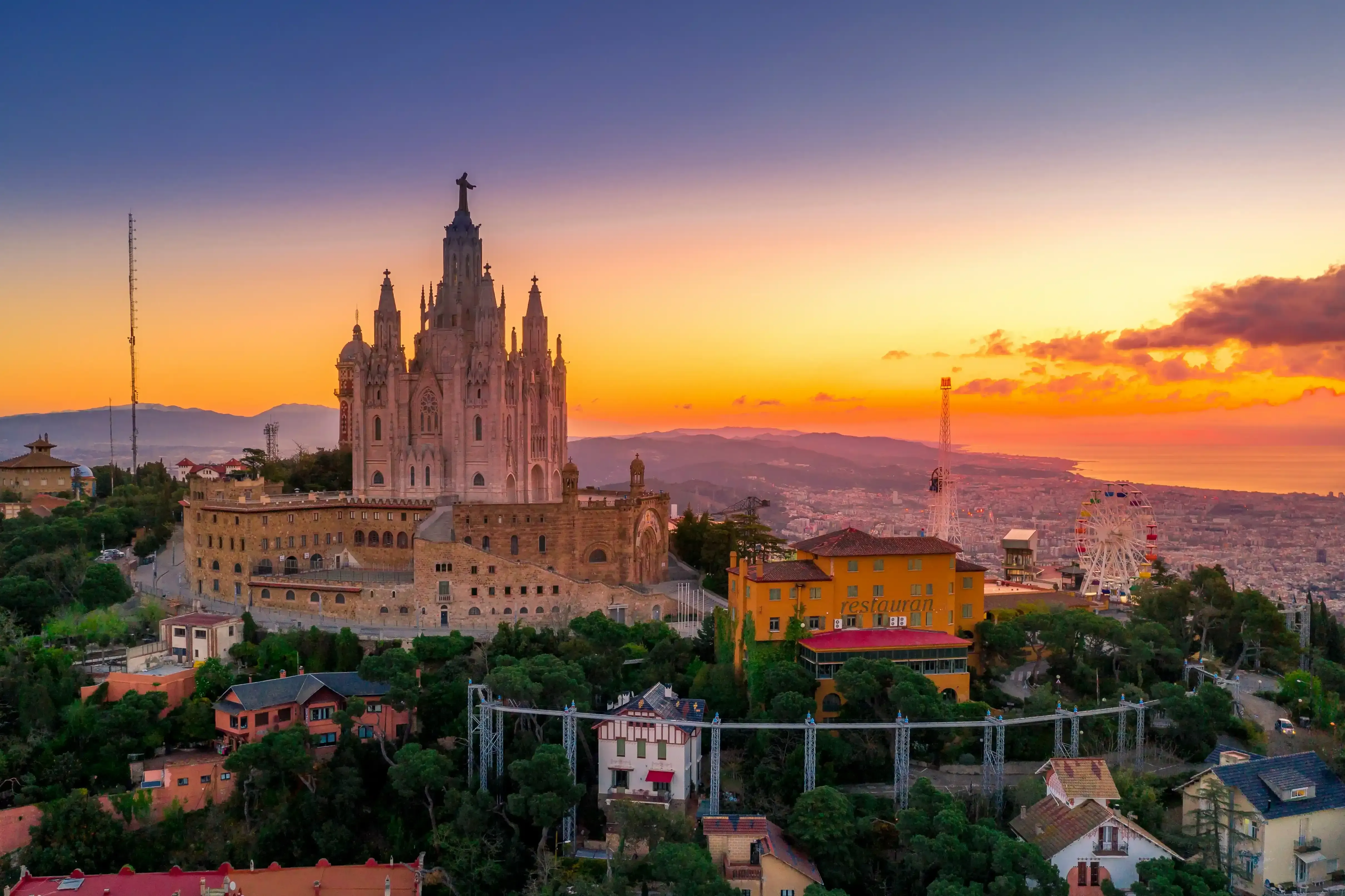
Barcelona Neighborhoods Guide: Where to Stay & What to Expect in Each Barrio

Discover Paris: A Guide to Iconic Landmarks, Historic Cafés & Legendary Stores

Osaka Travel Guide: Top Things to Do & Food Spots

First-Timer's Japan Handbook: 10 Essential Travel Tips + Etiquette FAQ

Rome in a Day & 3 Days in Rome: The Ultimate Itineraries for Every Traveler

Barcelona Airport to Gothic Quarter: Fastest Transfer Options, Prices & Travel Tips

Ultimate Japan Itineraries: Discover the Best of Japan in 7 or 14 Days

More than the Eiffel Tower: Best Things to Do In Paris

Best hotels in Albania: Tirana, Saranda, Vlorë & Durres

Rome: La Dolce Vita in Every Corner — travel guide by Olivia (@doinglifewithliv)

Barcelona Airport to Sagrada Família: Best Transfer Options, Prices & Travel Times

Paris Food Guide: Eiffel Tower View Restaurants & Rooftop Dining

18 Things You Need to Know Before Visiting Croatia

10 Unforgettable Day Trips from Rome, Italy: Ancient Towns, Best Beaches & Countryside Escapes
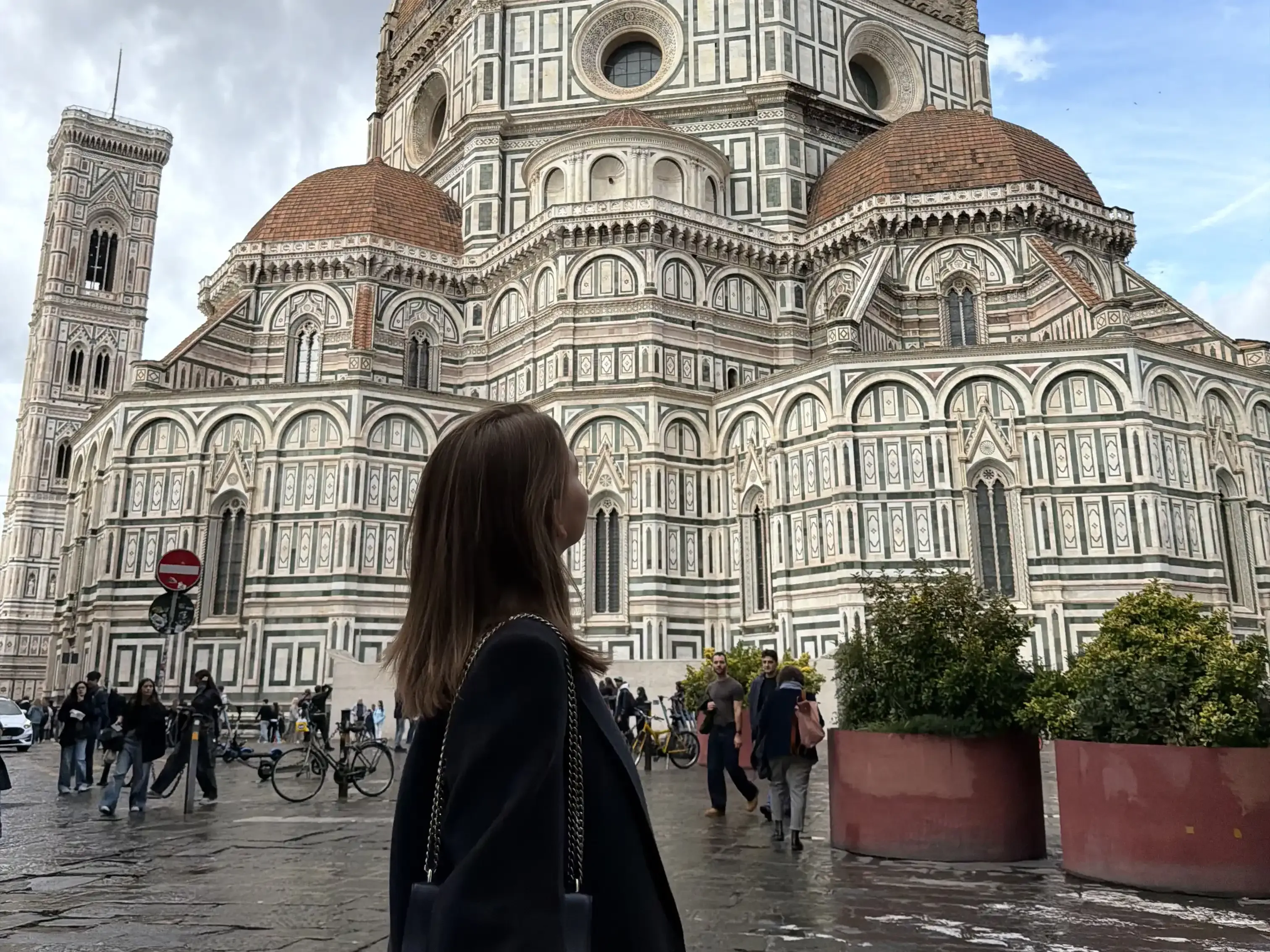
A Taste of Florence: Your Complete Food Guide

Best Day Trips from Milan with a Private Driver: Lake Como, Verona & Beyond

10 Best Holiday Alternatives to the Middle East for Spring 2026

Best Things to Do Around the Colosseum: Rome Attractions, Tours & Insider Tips

Barcelona vs Madrid: Which City Is Better to Visit in Spain?

Barcelona: Hidden Bites, Secret Sips & Sunshine Tips by Nancy Sevilla

Best eSIM for Japan 2026

Budapest Travel Tips: Beyond the Obvious

Best Hotels in Rome for Every Budget: Luxury, Boutique & Budget Stays

Cinque Terre Travel Guide: Best Villages & Trails

Best Wine Tours from Milan: Franciacorta, Valpolicella & Chauffeur Hire
Milan to Verona Day Trip with a Chauffeur

South Korea Travel Guide: Best Cultural, Beauty & Wellness Experiences in Seoul, Busan & Jeonju

Best Things to Do in Singapore: Food, Views & Hidden Gems

Free eSIM Trial: Where to Get Free Data

Hoi An Travel Guide: Hidden Gems, Spas & Local Experiences

Santorini Travel Guide: Sunsets, Cruises & Wine

3 Days in Northern Spain: Bilbao, the Cantabrian Coast & Santander

Best eSim for Europe: One Card for 30+ Countries

Best eSim for Mexico: Stay Connected on Your Trip

How to Get from Lisbon to Porto (2026): Train, Bus, Car, or Flight?

How to Get from London to Madeira: Complete Guide (2026)

How to Get from Beauvais Airport to Paris

Paris on a Budget: Affordable Hotels, Shopping & Free Things to Do

Top 12 Things to Do in Albania: Ultimate Travel Guide

Where to Stay in the Albanian Riviera: Best Hotels & Areas
Kyoto Travel Guide: Journey to the Heart of Old Japan

The Ultimate Hanoi Travel Guide: Local Tips, Street Food & Hidden Gems in Vietnam’s Capital

Private Chauffeur Service for Day Trips & Sightseeing
Your own driver, by the hour. No fixed routes. No surprises. Just a professional driver at your disposal - from 3 hours to multiple days.
Book a chauffeur