'%3e%3cpath%20d='M43.073%200.00649261H15.0943V3.94346H43.073V0.00649261Z'%20fill='url(%23kiwitaxi-grad)'%20/%3e%3cpath%20d='M15.0828%203.94346C16.1928%203.94346%2017.0512%203.06513%2017.0512%201.97497C17.0512%200.874164%2016.1822%200.00649261%2015.0828%200.00649261C14.0362%200.00649261%2013.1379%200.851916%2013.1379%201.97497C13.1379%203.10916%2014.0478%203.94346%2015.0828%203.94346Z'%20fill='white'%20/%3e%3cpath%20d='M43.0614%203.94346C44.1715%203.94346%2045.0299%203.06513%2045.0299%201.97497C45.0299%200.874164%2044.1609%200.00649261%2043.0614%200.00649261C42.0149%200.00649261%2041.1166%200.851916%2041.1166%201.97497C41.1166%203.10916%2042.0265%203.94346%2043.0614%203.94346Z'%20fill='white'%20/%3e%3cpath%20d='M19.5921%2038.5052V39.828H23.1471V26.0491H19.5921V27.3446C18.895%2026.5789%2017.4549%2025.8841%2015.7339%2025.8841C11.8502%2025.8841%208.78975%2028.7578%208.78975%2032.939C8.78975%2037.1374%2011.8702%2039.9935%2015.7339%2039.9935C17.4938%2039.9935%2018.932%2039.2691%2019.5921%2038.5052ZM12.2892%2032.939C12.2892%2030.5715%2013.929%2029.1912%2015.9819%2029.1912C18.0106%2029.1912%2019.5647%2030.5845%2019.5647%2032.939C19.5647%2035.2579%2017.9768%2036.6869%2015.9823%2036.6869C13.9596%2036.6869%2012.2892%2035.264%2012.2892%2032.939Z'%20fill='white'%20/%3e%3cpath%20d='M44.7174%2026.0496H41.4289V39.8281H44.7174V26.0496Z'%20fill='white'%20/%3e%3cpath%20d='M32.2183%2035.7001L29.3455%2039.8281H24.94L30.044%2032.8552L25.1624%2026.0496H29.7075L32.3295%2029.8985L35.035%2026.0496H39.4405L34.5599%2032.7435L39.6361%2039.8281H35.1189L32.2183%2035.7001Z'%20fill='white'%20/%3e%3cpath%20d='M3.34504%2022.9604V26.0496H7.4039V29.0939H3.34504V34.2781C3.34504%2035.9866%204.33971%2036.7008%205.955%2036.7008C6.54504%2036.7008%207.16659%2036.5766%207.63241%2036.235V39.4341C7.04237%2039.7757%206.14133%2039.9931%204.89915%2039.9931C1.8243%2039.9931%200.0226746%2038.1293%200.0226746%2034.9298V22.96H3.34504Z'%20fill='white'%20/%3e%3cpath%20d='M36.2094%208.57428L33.307%2016.8723L30.43%208.57428H27.7621L24.8597%2016.8723L21.9828%208.57428H18.4884L23.2157%2021.4188H26.5037L29.084%2014.4093L31.6629%2021.4188H34.951L39.6782%208.57428H36.2094Z'%20fill='white'%20/%3e%3cpath%20d='M44.7174%208.57381H41.4289V21.4188H44.7174V8.57381Z'%20fill='white'%20/%3e%3cpath%20d='M16.7387%208.57381H13.4502V21.4188H16.7387V8.57381Z'%20fill='white'%20/%3e%3cpath%20d='M11.7001%208.57382L6.07922%2014.1326L12.1622%2021.4188H8.05929L3.92163%2016.28L3.3455%2016.8538V21.4188H0.0226746V3.94299H3.3455V12.7574L7.59764%208.57382H11.7001Z'%20fill='white'%20/%3e%3c/g%3e%3cdefs%3e%3clinearGradient%20id='kiwitaxi-grad'%20x1='15.0945'%20y1='1.97497'%20x2='43.073'%20y2='1.97497'%20gradientUnits='userSpaceOnUse'%3e%3cstop%20stop-color='%2300D2CD'%20stop-opacity='0'%20/%3e%3cstop%20offset='1'%20stop-color='%2300D2CD'%20/%3e%3c/linearGradient%3e%3cclipPath%20id='kiwitaxi-clip'%3e%3crect%20width='46'%20height='40'%20fill='white'%20/%3e%3c/clipPath%3e%3c/defs%3e%3c/svg%3e)


Ask Greeks where they most like to eat. The answer, with remarkable frequency, is Thessaloniki. Ask where Greece's best nightlife is. Same answer. The best coffee culture, the most relaxed pace, the food market you'd rather spend an afternoon in than most cities' main museums — Thessaloniki, every time.
Athens gets the tourists, the headlines, and the Acropolis. Thessaloniki gets the reputation among people who actually know. Greece's second-largest city sits at the northern end of the Thermaic Gulf, spilling along a waterfront that catches the Aegean light in ways that painters have been trying to render since antiquity. Founded in 315 BC by the Macedonian king Cassander — named after his wife Thessalonike, half-sister of Alexander the Great — it has been continuously occupied, fought over, burned, rebuilt, and reinvented ever since. Romans, Byzantines, Ottomans, Sephardic Jews, Greek nationalists, Nazi occupiers, Allied liberators, and a very large student population have all left something behind.
The result is a city with more visible history per square kilometer than almost anywhere in Europe, wrapped in a Mediterranean culture that takes café life, food, and the waterfront sunset with complete and appropriate seriousness. The White Tower at the eastern edge of the promenade is the city's symbol. The Roman Rotunda is still standing. The Byzantine walls still circle the upper city. And the bougatsa — a flaky pastry filled with warm custard, dusted with powdered sugar, served in paper at a counter before 9 AM — is one of the finest breakfasts in Greece.
Two days here gives you the outline. Three days lets you stop rushing. After that, you'll understand why Greeks keep choosing it.

Getting to Thessaloniki
By Air
Thessaloniki Macedonia International Airport (SKG) sits about 15 km southeast of the city center. It's a manageable airport — one main terminal, efficient ground connections, and a growing number of European routes served by Aegean Airlines (the dominant carrier), Ryanair, easyJet, Wizz Air, Lufthansa, British Airways, and Turkish Airlines. Direct flights connect Thessaloniki with London, Amsterdam, Frankfurt, Vienna, Istanbul, Dubai, and most major European cities. From North America, connections run through Athens or Istanbul.
Worth knowing: SKG serves Halkidiki as a gateway airport — many European visitors arriving in summer are actually heading straight to the peninsula's beaches rather than the city. This means summer schedules are more generous than you might expect from a secondary Greek city.
By Train
Thessaloniki's main station connects to Athens by Intercity train in approximately 4 hours — fast and scenic through the Greek countryside. International rail connections reach Sofia (Bulgaria, 7 hours) and Skopje (North Macedonia, 3 hours). The train station sits west of the city center, about 15 minutes on foot from Aristotelous Square.
By Road
The Egnatia Motorway (E90) runs east-west through northern Greece and passes directly through Thessaloniki — the main road connection to Turkey, Bulgaria, North Macedonia, and western Greece. Driving from Athens takes approximately 5 hours. If you're doing a broader northern Greece itinerary or combining Thessaloniki with a road trip toward Meteora or the Halkidiki peninsula, having a car from arrival makes the surrounding region significantly more accessible.
Arriving at Thessaloniki Airport: What to Expect
SKG is compact and clears quickly — baggage claim runs 20–30 minutes after landing.
By Bus: The X1 express bus runs from the airport to the city center (Eleftherias Square, near the waterfront) in approximately 45–60 minutes depending on traffic. Tickets cost around €2 and are purchased on board. Reliable and cheap, though less convenient with significant luggage.
By Metro: Since November 2024, Thessaloniki finally has a metro system — long in construction and eagerly awaited. The airport metro connection is part of the expanding network; check current line coverage when planning, as the system is still rolling out extensions.
By Taxi: Available at the official rank outside arrivals, metered, and typically cost €20–30 to the city center depending on traffic. Agree on the meter before departure.
By Private Transfer: A Kiwitaxi private transfer from Thessaloniki Airport covers the journey door to door with fixed pricing, meet and greet in arrivals, and flight monitoring. For families, late-night arrivals, or anyone heading directly to a specific Halkidiki resort rather than the city center, a private transfer is the most reliable option and avoids the airport taxi negotiation entirely.
Getting Around Thessaloniki
The good news: the center of Thessaloniki is genuinely walkable. The White Tower, Aristotelous Square, the Rotunda, the Roman Forum, the Modiano market, Ladadika, and most of the central attractions sit within a compact area that most people cover on foot without difficulty. The seafront promenade runs 5 km from the port area in the west to beyond the White Tower in the east — flat, scenic, and the best way to understand the city's relationship with the water.
Metro: Thessaloniki's long-awaited metro opened in November 2024 and now serves key central stops. Coverage is expanding; the system is clean, modern, and a significant improvement over navigating by bus for central-to-central journeys. Single ticket: €0.90.
City Buses: The OASTH network is extensive and covers the whole city including Ano Poli (the Upper Town), the eastern suburbs, and the airport route. Tickets cost €0.90 from kiosks or €1 on board. Google Maps works reliably for routing.
Rental Car: Essential if you're planning day trips into the surrounding region — Halkidiki's beaches, Mount Olympus, the archaeological sites at Vergina and Pella. The city center itself doesn't require one, but northern Greece rewards having wheels.

Best Time to Visit Thessaloniki
Thessaloniki has a genuine four-season character and is worth visiting any time of year. What shifts is the energy.
April to June is the finest time for first visits. Spring temperatures of 18–26°C make walking the city genuinely pleasant, the Modiano market is at its seasonal best, the waterfront fills up for evening volta (promenading) without being overcrowded, and the surrounding landscape is at peak green before summer dries it. Halkidiki in May is uncrowded and already warm enough for swimming.
July and August is peak season — temperatures hit 30–35°C, the city fills with summer energy, and Halkidiki's beaches are at their most beautiful and most crowded simultaneously. Thessaloniki's nightlife is exceptional in summer, the waterfront stays active until 2 AM, and outdoor festivals run through August. Bring heat tolerance.
September and October is consistently the locals' preferred time. The summer crowds on the peninsula thin, temperatures drop to a delicious 22–28°C, the sea stays warm through October, and the city regains its rhythm without sacrificing the outdoor café culture. The Thessaloniki International Film Festival in November is one of Europe's major film events — worth planning around if cinema matters.
November to March is quieter, cooler (8–14°C), and surprisingly rewarding. The museums — and Thessaloniki has some of Greece's finest — are uncrowded. The winter food culture intensifies: tsipouro (the local grape spirit, served with mezedes), hot bougatsa in the morning, long lunches at tavernas that aren't concerned with turning over tables. The Pozar thermal baths in the mountains make a perfect winter day trip.
Where to Stay in Thessaloniki
Around Aristotelous Square and the Waterfront is the classic first-timer base — central, walkable to virtually everything, with the sea in front of you and most of the city's history behind. Hotels here range from international chains to stylish boutique properties, and the evening energy on and around the square is its own entertainment.
Ladadika is the small historic district just west of the city center — neoclassical buildings, cobblestone streets, tavernas and rembetika music bars that stay open late. Staying here puts you in the most atmospheric part of the old city after dark and within 15 minutes' walk of the main sights.
Ano Poli (Upper Town) is the Byzantine hilltop neighborhood above the city proper — narrow lanes, traditional houses, Ottoman-era architecture, and views across the rooftops to the Thermaic Gulf that justify the climb every time. It's further from the waterfront but has a village quality that feels completely different from the city below.
Near the Museum of Byzantine Civilization (Eastern Waterfront) is a quieter, more residential stretch with excellent direct water access and easy proximity to the White Tower. Good for travelers who want the sea close and the noise of the center slightly further away.

Best Things to Do in Thessaloniki
Walk the Waterfront Promenade at the Right Hour The 5-km promenade along the Thermaic Gulf is Thessaloniki's living room — joggers and cyclists in the morning, families in the late afternoon, couples and students in the evening. The light here is specific: the northern Aegean turns the water silver in the mornings and rust-gold at dusk, with the silhouette of Mount Olympus visible across the bay on clear days. The Umbrellas installation by sculptor George Zongolopoulos at the western end of the promenade — colorful stainless steel circles rising from the pavement — has become an unlikely but earned city symbol. Walk it at golden hour, buy a loukoumades (honey-drenched doughnut fritter) from a street vendor, and let the evening arrive slowly.
The White Tower The 16th-century Ottoman tower at the eastern end of the waterfront is Thessaloniki's most recognizable landmark and the one image of the city that appears on every postcard, piece of merchandise, and municipal logo. It was built as part of the city's sea walls by the Ottoman Empire and has served as a garrison, a prison, and a site of significant historical suffering. Today it houses a museum of Byzantine Thessaloniki and can be climbed for panoramic views across the gulf, the city's roofscape, and the distant mountains. The nickname "Bloody Tower" — used for centuries after a massacre of Janissaries within its walls — faded when the building was whitewashed in 1890. Come for the view, stay for the history that the six floors of exhibits lay out with unusual clarity.
The Rotunda of Galerius Built around 306 AD as a mausoleum for the Roman Emperor Galerius — who never ended up using it — the Rotunda is one of the oldest and best-preserved Roman circular buildings in the world. It went from Roman mausoleum to Byzantine church to Ottoman mosque to museum, and the transitions are still visible: the minaret from the Ottoman period stands at one side, the Byzantine mosaics that cover the interior dome are among the finest surviving early Christian decorative programs anywhere. The building sits at the eastern end of the Via Egnatia — the ancient Roman road that once ran from the Adriatic to Istanbul — connected to the Arch of Galerius just south. Standing between them and looking along the ancient road axis, you understand exactly why this city mattered.
The Archaeological Museum of Thessaloniki One of the finest archaeological museums in Greece, the Thessaloniki Archaeological Museum holds the finds from excavations across Macedonia — gold funerary masks, bronze armor, intricate jewelry, marble sculpture, and a collection of Macedonian burial objects that ranges from the 7th century BC through the Roman period. The context it provides for understanding the wider region makes day trips to Vergina and Pella considerably more meaningful. Allow two hours; more if Greek antiquity genuinely interests you.
Museum of Byzantine Civilization A UNESCO award-winning institution that documents Byzantine history from the early Christian period through the fall of Constantinople in 1453, with particular depth on Byzantine Macedonia and Thessaloniki's role as the empire's co-capital. The collection includes icons, church fittings, mosaics, everyday objects, and reconstructed interiors that bring the Byzantine world out of the abstract and into the specific. This is where you understand why Thessaloniki has more UNESCO-listed Byzantine monuments than any other city except Istanbul and Rome.
Eat Your Way Through Modiano and Kapani Markets The two covered markets at the heart of Thessaloniki operate as a working food system for the city — cheese vendors, olive oil producers, fishmongers, spice stalls, butchers, and bakeries arranged in a covered complex that dates to 1922. The Agora Modiano was renovated and restored; the adjacent Kapani market is older, more chaotic, and more honest. Come on a Saturday morning when both are at their fullest, buy pastirma (cured spiced meat), local cheese, olives in every possible preparation, and honey from the mountain villages of northern Greece. The small restaurants and ouzeries around the market edge serve the best lunch in the city for the least money — sit at a marble-topped table, order mezedes, and drink cold tsipouro while the market moves around you.
Spend a Night in Ladadika The cobblestoned district southwest of Aristotelous Square escaped the 1917 fire that destroyed most of the lower city and preserves a row of neoclassical buildings that now house Thessaloniki's most concentrated nightlife and dining scene. The rembetika music tavernas — serving the haunting, blues-inflected Greek folk music that emerged from Smyrna and Salonika's working-class neighborhoods in the early 20th century — are the finest in Greece here. Come after 9 PM, order ladera (olive oil-based vegetable dishes), grilled fish, and tsipouro, and stay until the music goes somewhere interesting.
Climb to Ano Poli The Upper Town on the hill above the city is Byzantine Thessaloniki — the city as it existed before the lower neighborhoods were rebuilt after the 1917 fire. The Ottoman-era wooden houses with overhanging upper floors, the Byzantine walls tracing the ridge, the Heptapyrgion fortress at the highest point, and the neighborhood churches hidden down lanes that have no signage: this is the least visited and most atmospheric part of the city. The views from Ano Poli over the red rooftops to the gulf below are the best in Thessaloniki and require only a moderately aerobic climb to reach. Go in the morning, when the neighborhood is quiet and the light is long.
Eat Bougatsa Before 9 AM This is a specific instruction, not a general suggestion. Bougatsa is a flaky filo pastry filled with warm semolina custard (or cheese, or minced meat, but the custard is the one), dusted with powdered sugar and cinnamon, served cut into squares in paper. Thessaloniki claims it as its own and is largely right to do so. The best versions come from dedicated bougatsa shops — Serraikos and Bantis are both legendary — that open early and close when they run out. Eating bougatsa standing at a marble counter at 8 AM while the city wakes up around you is the single most Thessaloniki thing you can do in Thessaloniki. Do it on your first morning.
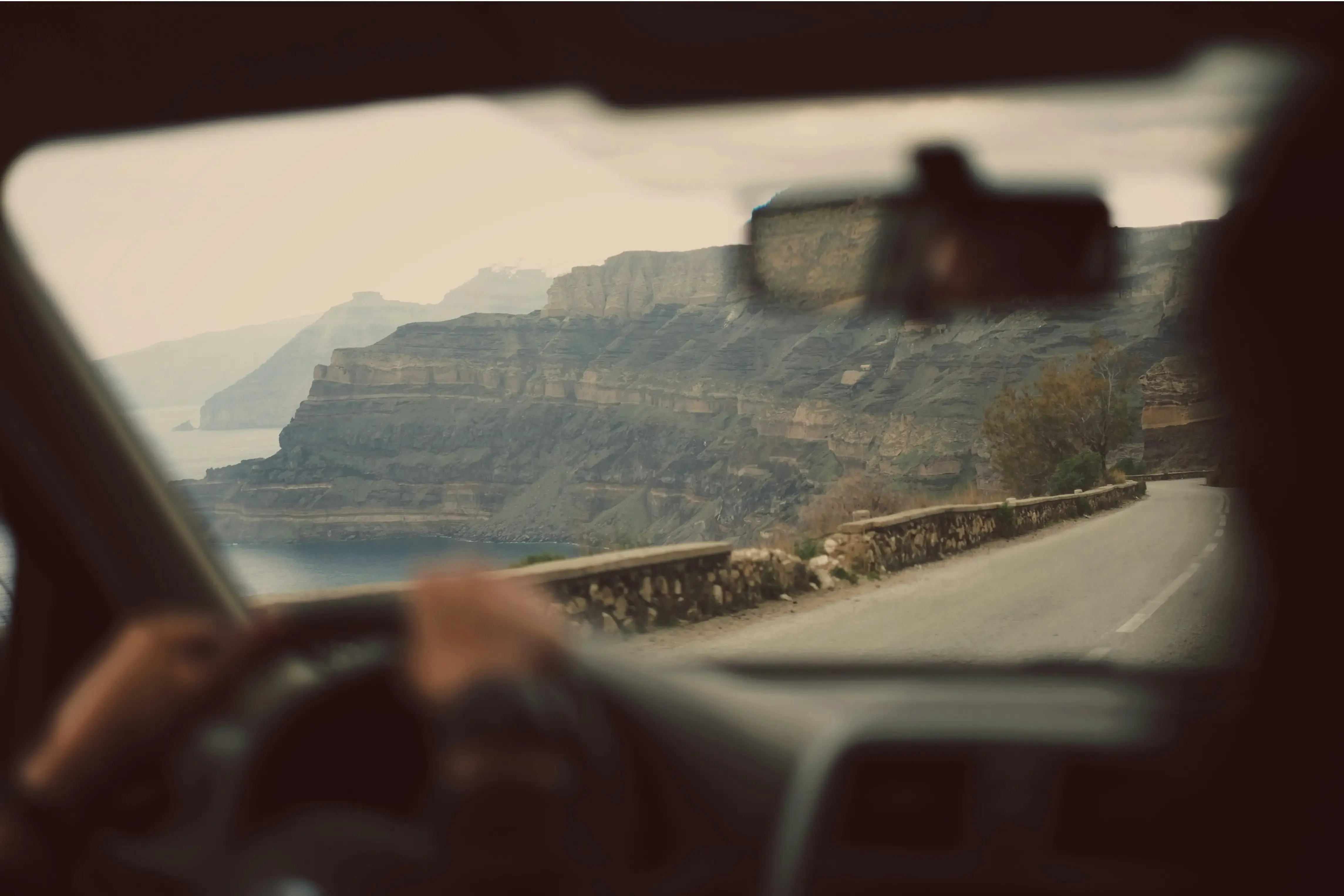
Day Trips from Thessaloniki with Kiwitaxi Chauffeur Service
Northern Greece is one of the most dramatically varied regions in the country — ancient Macedonian capitals, the home of the Greek gods, crystalline Aegean peninsula beaches, Byzantine monasteries stacked on impossible rocks — and most of it sits within two hours of Thessaloniki in every direction. Public transport reaches the main cities; the archaeological sites, mountain trailheads, and remote beaches are best approached with your own vehicle.
Kiwitaxi's Chauffeur Hire provides a dedicated driver, fixed pricing, and the kind of flexibility that makes combining stops in a single day not just possible but genuinely pleasant.
Halkidiki Peninsula — 60–90 minutes from Thessaloniki
The three-fingered peninsula that juts into the Aegean south of Thessaloniki is the reason northern Greece has a summer tourism industry. Each "finger" has its own character. Kassandra is the most developed — resort hotels, beach bars, and a party scene centered on Sani Beach that fills to capacity in July and August. Sithonia is the middle finger and the finest — narrower, wilder, with coves and beaches (Kavourotripes, Vourvourou, Porto Koufo) that rival anything in the Cyclades but with a fraction of the crowds outside peak season. The third finger is Mount Athos — an autonomous monastic republic inaccessible to women and requiring special permits for men to enter, though boat cruises from Ouranoupoli let you see the 20 monasteries from the water without setting foot on the peninsula.
For a day trip from Thessaloniki, Sithonia is the destination — the drive through Kassandra's western coast to the first beaches takes about 60 minutes, and the further into the peninsula you go, the better the water gets. Kiwitaxi's Chauffeur Hire covers the full Halkidiki circuit so you can swim at multiple coves, stop at a fish taverna in Porto Koufo, and return to Thessaloniki without worrying about parking or navigating the summer road traffic.
Vergina and Pella — 1 to 1.5 hours from Thessaloniki
These two sites, combined in a single day, tell the story of the ancient Macedonian kingdom that produced Alexander the Great and shaped the ancient world. Vergina (ancient Aigai, the first Macedonian capital) holds the Royal Tombs of the Macedonian kings, buried beneath a tumulus that wasn't excavated until 1977. The archaeologist Manolis Andronikos opened a tomb that turned out to contain a gold larnax (funerary box) bearing the star of Vergina — inside, the cremated remains of a man identified with strong probability as Philip II of Macedon, father of Alexander. The museum built inside the burial mound is literally subterranean and holds finds of staggering quality — gold wreaths, ivory portrait miniatures, bronze armor — in near-darkness that makes the gold objects glow as if lit from within. It is one of the finest archaeological museum experiences in Europe and almost nobody outside Greece knows it exists.
Pella, 45 minutes northeast, was Macedonia's second capital and the city where Alexander was born and raised. The archaeological museum holds extraordinary pebble mosaics from the 4th century BC — a lion hunt, a stag hunt, a Dionysus riding a panther — that represent the highest achievement of this technique and the aesthetic world that shaped a young man who would conquer three continents. The combination of these two sites in a single day, with a lunch stop at a local taverna between them, is the most historically dense day trip available from Thessaloniki.
Mount Olympus — 90 minutes from Thessaloniki
The highest mountain in Greece rises to 2,917 meters above the Pierian coast, 90 km south of Thessaloniki. In Greek mythology it was the home of the twelve Olympian gods; in geological reality it is a massif of dramatic limestone faces, forested lower slopes, and high alpine terrain that supports serious mountaineering on its upper ridges alongside gentle hiking on its lower trails. The base village of Litochoro — a tidy mountain town at the foot of the gorge — is the starting point for the Enipeas Gorge trail, which follows a river through pine and plane forest past waterfalls and wooden footbridges for a full-day hike to the mountain refuge at 2,100 meters. The gorge trail alone, without the summit push, takes 4–5 hours and is one of the finest mountain walks in Greece. The view of Olympus from the coast road approaching Litochoro — the full range rising above the Thermaic Gulf — is worth the drive even before you get out of the car.
Meteora — 2.5 hours from Thessaloniki
There is almost nothing like Meteora in Europe and very little like it anywhere on Earth. A cluster of sandstone pillars rising 300–600 meters from the Thessalian plain, topped with Byzantine monasteries that were built between the 14th and 16th centuries by monks who used ropes and baskets to haul themselves and their building materials up sheer faces without anything resembling modern equipment. Six of the original 24 monasteries are still active and open to visitors. The Great Meteoron is the largest; Varlaam is the best-preserved interior; the Monastery of the Holy Trinity, reached by 140 rock-cut steps, has the most dramatic approach. The views from any of the monasteries across the rock formations to the valley below are impossible to adequately photograph and impossible to forget.
Meteora is 2.5 hours from Thessaloniki by road. Many visitors go by tour bus; the advantage of a Kiwitaxi Chauffeur is the flexibility to arrive early (before the bus tours), stay at specific monasteries as long as the visit earns, and stop at the panoramic viewpoints on the road between formations where the geology is most dramatic. An overnight in Kalambaka village below the rocks turns this from a long day trip into something more considered — sunrise on Meteora, before any other visitors arrive, is one of those travel experiences worth the extra night.
Pozar Thermal Baths and Edessa — 1.5 hours from Thessaloniki
Two stops in one day that make an excellent combination. Loutra Pozar (Pozar Thermal Baths) sits in a mountain canyon in the Almopia region — natural hot springs flowing at 37°C into outdoor pools carved from rock, surrounded by forested cliffs. The thermal waters have been used since antiquity; the outdoor pools in a mountain stream setting make it feel less like a spa and more like something genuinely wild and elemental. In winter, when snow covers the slopes above, the steaming pools are extraordinary.
Edessa, 30 minutes further, is a plateau town that sits above a 70-meter waterfall — the largest natural waterfall in Greece — which plunges dramatically off the cliff edge into parkland below. You can walk behind one of the falls through a natural arch. The town above is all stone houses, old Ottoman architecture in the Varosi quarter, and tavernas with waterfall views. Combining the hot springs and the waterfalls in a single day gives you two very different kinds of landscape drama and works perfectly with a Kiwitaxi Chauffeur who handles the mountain road navigation while you focus on looking out the window.
Book your Thessaloniki day trip with Kiwitaxi Chauffeur Hire — fixed pricing, flexible scheduling, and a driver who'll wait while you swim in mountain hot springs or photograph Byzantine monasteries from above the clouds.

Thessaloniki on a Practical Note
The euro is the currency. Card payment is widely accepted in hotels, restaurants, and larger establishments; cash remains useful at markets, smaller tavernas, and street vendors. ATMs are abundant throughout the center.
The metro opened in November 2024 after many years of delays — partly because every excavation for the metro infrastructure uncovered significant archaeological finds that required study before construction could continue. The result is that some stations are effectively archaeological museums: the Venizelos station displays Byzantine artifacts found during construction behind glass in the station walls. The metro currently serves key central stops; check the current coverage for your specific route.
Food timing operates on Greek hours: coffee and bougatsa from 7–9 AM, proper lunch from 2–4 PM, dinner rarely before 9 PM. Most good restaurants don't reach full energy before 9:30. Arriving at 7 PM for dinner marks you as a tourist; arriving at 9:30 PM puts you among locals.
Tipping is appreciated at 10%; rounding up the bill is acceptable and normal. Ouzo and tsipouro are typically served with small mezedes at no extra charge — olives, cheese, a small bite. This is not a trick; it is hospitality.
The Thessaloniki International Film Festival in November is one of the most respected film festivals in Europe, with a focus on Mediterranean and independent cinema. If you're visiting in mid-November, the city's cinema culture runs at full intensity during festival week — screenings, talks, and an energy that makes an already good city considerably more alive.

Thessaloniki doesn't need to compete with Athens. It's been doing its own thing for 2,300 years and has gotten very good at it.
Best Picks for True Adventurers


Traveling with kids? We've got everything covered.
Child seats, luggage, and a driver who knows your flight lands late. Kiwitaxi takes care of everything so your family trip starts the way it should - with excitement, not chaos.
Book a family transferExplore All Guides
Barcelona Neighborhoods Guide: Where to Stay & What to Expect in Each Barrio

Discover Paris: A Guide to Iconic Landmarks, Historic Cafés & Legendary Stores

Osaka Travel Guide: Top Things to Do & Food Spots

First-Timer's Japan Handbook: 10 Essential Travel Tips + Etiquette FAQ

Rome in a Day & 3 Days in Rome: The Ultimate Itineraries for Every Traveler

Barcelona Airport to Gothic Quarter: Fastest Transfer Options, Prices & Travel Tips

Ultimate Japan Itineraries: Discover the Best of Japan in 7 or 14 Days

More than the Eiffel Tower: Best Things to Do In Paris

Best hotels in Albania: Tirana, Saranda, Vlorë & Durres

Rome: La Dolce Vita in Every Corner — travel guide by Olivia (@doinglifewithliv)

Barcelona Airport to Sagrada Família: Best Transfer Options, Prices & Travel Times

Paris Food Guide: Eiffel Tower View Restaurants & Rooftop Dining

18 Things You Need to Know Before Visiting Croatia

10 Unforgettable Day Trips from Rome, Italy: Ancient Towns, Best Beaches & Countryside Escapes
A Taste of Florence: Your Complete Food Guide

Best Day Trips from Milan with a Private Driver: Lake Como, Verona & Beyond

10 Best Holiday Alternatives to the Middle East for Spring 2026

Best Things to Do Around the Colosseum: Rome Attractions, Tours & Insider Tips

Barcelona vs Madrid: Which City Is Better to Visit in Spain?

Barcelona: Hidden Bites, Secret Sips & Sunshine Tips by Nancy Sevilla

Best eSIM for Japan 2026

Budapest Travel Tips: Beyond the Obvious

Best Hotels in Rome for Every Budget: Luxury, Boutique & Budget Stays

Cinque Terre Travel Guide: Best Villages & Trails

Best Wine Tours from Milan: Franciacorta, Valpolicella & Chauffeur Hire
Milan to Verona Day Trip with a Chauffeur

South Korea Travel Guide: Best Cultural, Beauty & Wellness Experiences in Seoul, Busan & Jeonju

Best Things to Do in Singapore: Food, Views & Hidden Gems

Free eSIM Trial: Where to Get Free Data

Hoi An Travel Guide: Hidden Gems, Spas & Local Experiences

Santorini Travel Guide: Sunsets, Cruises & Wine

3 Days in Northern Spain: Bilbao, the Cantabrian Coast & Santander

Best eSim for Europe: One Card for 30+ Countries

Best eSim for Mexico: Stay Connected on Your Trip

How to Get from Lisbon to Porto (2026): Train, Bus, Car, or Flight?

How to Get from London to Madeira: Complete Guide (2026)

How to Get from Beauvais Airport to Paris

Paris on a Budget: Affordable Hotels, Shopping & Free Things to Do

Top 12 Things to Do in Albania: Ultimate Travel Guide

Where to Stay in the Albanian Riviera: Best Hotels & Areas
Kyoto Travel Guide: Journey to the Heart of Old Japan

The Ultimate Hanoi Travel Guide: Local Tips, Street Food & Hidden Gems in Vietnam’s Capital

Private Chauffeur Service for Day Trips & Sightseeing
Your own driver, by the hour. No fixed routes. No surprises. Just a professional driver at your disposal - from 3 hours to multiple days.
Book a chauffeur