'%3e%3cpath%20d='M43.073%200.00649261H15.0943V3.94346H43.073V0.00649261Z'%20fill='url(%23kiwitaxi-grad)'%20/%3e%3cpath%20d='M15.0828%203.94346C16.1928%203.94346%2017.0512%203.06513%2017.0512%201.97497C17.0512%200.874164%2016.1822%200.00649261%2015.0828%200.00649261C14.0362%200.00649261%2013.1379%200.851916%2013.1379%201.97497C13.1379%203.10916%2014.0478%203.94346%2015.0828%203.94346Z'%20fill='white'%20/%3e%3cpath%20d='M43.0614%203.94346C44.1715%203.94346%2045.0299%203.06513%2045.0299%201.97497C45.0299%200.874164%2044.1609%200.00649261%2043.0614%200.00649261C42.0149%200.00649261%2041.1166%200.851916%2041.1166%201.97497C41.1166%203.10916%2042.0265%203.94346%2043.0614%203.94346Z'%20fill='white'%20/%3e%3cpath%20d='M19.5921%2038.5052V39.828H23.1471V26.0491H19.5921V27.3446C18.895%2026.5789%2017.4549%2025.8841%2015.7339%2025.8841C11.8502%2025.8841%208.78975%2028.7578%208.78975%2032.939C8.78975%2037.1374%2011.8702%2039.9935%2015.7339%2039.9935C17.4938%2039.9935%2018.932%2039.2691%2019.5921%2038.5052ZM12.2892%2032.939C12.2892%2030.5715%2013.929%2029.1912%2015.9819%2029.1912C18.0106%2029.1912%2019.5647%2030.5845%2019.5647%2032.939C19.5647%2035.2579%2017.9768%2036.6869%2015.9823%2036.6869C13.9596%2036.6869%2012.2892%2035.264%2012.2892%2032.939Z'%20fill='white'%20/%3e%3cpath%20d='M44.7174%2026.0496H41.4289V39.8281H44.7174V26.0496Z'%20fill='white'%20/%3e%3cpath%20d='M32.2183%2035.7001L29.3455%2039.8281H24.94L30.044%2032.8552L25.1624%2026.0496H29.7075L32.3295%2029.8985L35.035%2026.0496H39.4405L34.5599%2032.7435L39.6361%2039.8281H35.1189L32.2183%2035.7001Z'%20fill='white'%20/%3e%3cpath%20d='M3.34504%2022.9604V26.0496H7.4039V29.0939H3.34504V34.2781C3.34504%2035.9866%204.33971%2036.7008%205.955%2036.7008C6.54504%2036.7008%207.16659%2036.5766%207.63241%2036.235V39.4341C7.04237%2039.7757%206.14133%2039.9931%204.89915%2039.9931C1.8243%2039.9931%200.0226746%2038.1293%200.0226746%2034.9298V22.96H3.34504Z'%20fill='white'%20/%3e%3cpath%20d='M36.2094%208.57428L33.307%2016.8723L30.43%208.57428H27.7621L24.8597%2016.8723L21.9828%208.57428H18.4884L23.2157%2021.4188H26.5037L29.084%2014.4093L31.6629%2021.4188H34.951L39.6782%208.57428H36.2094Z'%20fill='white'%20/%3e%3cpath%20d='M44.7174%208.57381H41.4289V21.4188H44.7174V8.57381Z'%20fill='white'%20/%3e%3cpath%20d='M16.7387%208.57381H13.4502V21.4188H16.7387V8.57381Z'%20fill='white'%20/%3e%3cpath%20d='M11.7001%208.57382L6.07922%2014.1326L12.1622%2021.4188H8.05929L3.92163%2016.28L3.3455%2016.8538V21.4188H0.0226746V3.94299H3.3455V12.7574L7.59764%208.57382H11.7001Z'%20fill='white'%20/%3e%3c/g%3e%3cdefs%3e%3clinearGradient%20id='kiwitaxi-grad'%20x1='15.0945'%20y1='1.97497'%20x2='43.073'%20y2='1.97497'%20gradientUnits='userSpaceOnUse'%3e%3cstop%20stop-color='%2300D2CD'%20stop-opacity='0'%20/%3e%3cstop%20offset='1'%20stop-color='%2300D2CD'%20/%3e%3c/linearGradient%3e%3cclipPath%20id='kiwitaxi-clip'%3e%3crect%20width='46'%20height='40'%20fill='white'%20/%3e%3c/clipPath%3e%3c/defs%3e%3c/svg%3e)
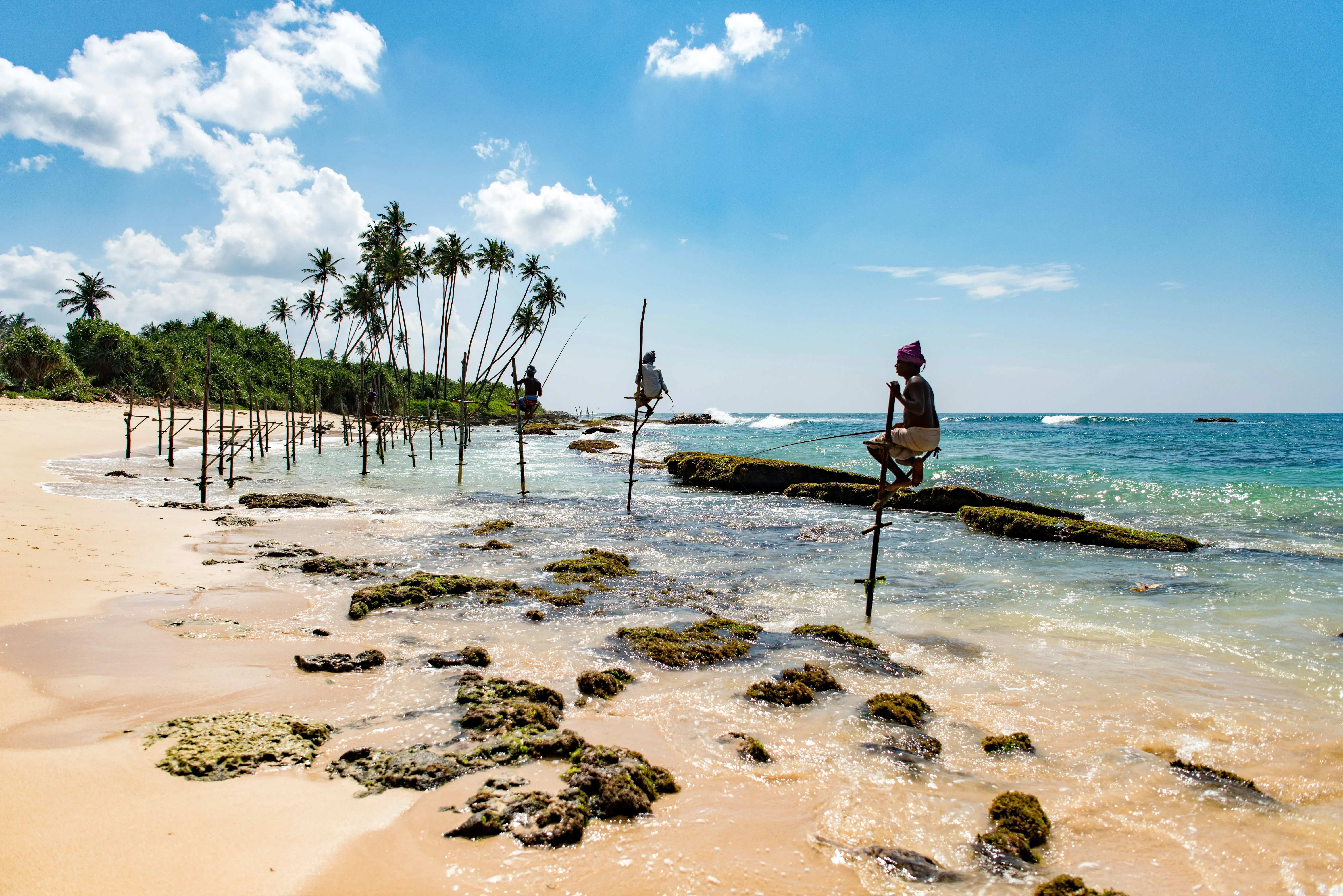
Sri Lanka: Everything You Wanted From Asia, Compressed Into an Island the Size of West Virginia
There's a moment that happens to most first-time visitors somewhere around day three. You've climbed a rock fortress that's been sitting in a jungle for 1,500 years. You've eaten rice and curry for breakfast because it made complete sense in context. You've been offered tea by a stranger who didn't want anything in return. And you're standing at the top of something — Sigiriya, Little Adam's Peak, a train platform in Ella — with the whole green, hazy, spectacular island spread below you, and you're thinking: why didn't anyone tell me about this?
Some people did. You just didn't listen.
Sri Lanka is a tear-drop shaped island off the southern tip of India, roughly the size of West Virginia, with the biodiversity of a continent. Ancient rock fortresses buried in jungle. Colonial port cities with Dutch walls and boutique coffee shops inside them. Leopards in a national park that reaches the ocean. Blue whales off a coast that was fishing village-quiet fifteen years ago. A train ride through tea plantations that is, without meaningful competition, one of the most scenic rail journeys on Earth. Hill country that drops from 2,000-meter peaks into coastal plains inside a two-hour drive.
It packs too much in, and that is entirely the point.
Sri Lanka is experiencing a genuine tourism boom — more than 2 million international visitors in 2024, a 38% increase on the year before, and numbers climbing in 2025. The infrastructure is improving rapidly. The roads are better. The variety of accommodation has expanded from basic guesthouses to genuinely good boutique hotels. And the food — the rice and curry spreads, the hoppers, the kottu roti chopped on a flat iron griddle at midnight — was always excellent and is being discovered by people who previously routed through Thailand without stopping.
Come now, before the word fully gets out. Or come anyway, because even when it does, Sri Lanka will be worth it.

Getting to Sri Lanka
By Air
Bandaranaike International Airport (CMB) near Colombo — formally the Bandaranaike International Airport, named after the country's first female prime minister — is Sri Lanka's primary international gateway, handling over 95% of the country's air traffic. It sits about 35 km north of central Colombo in Katunayake.
Direct flights connect Colombo with Dubai, Abu Dhabi, Doha, Singapore, Kuala Lumpur, Bangkok, Mumbai, Delhi, London, Frankfurt, and most major regional hubs. Sri Lankan Airlines, Emirates, Qatar Airways, IndiGo, FlyDubai, Air Arabia, and Singapore Airlines operate the most frequent routes. Travelers from North America, Australia, and most of Europe will connect through a Middle Eastern or Southeast Asian hub — Dubai and Singapore are the most common.
Flight times from Europe run 10–11 hours; from the UAE around 4 hours; from Singapore approximately 3.5 hours.
A second, smaller airport at Mattala Rajapaksa (HRI) near Hambantota in the south serves limited regional routes and is relevant primarily for travelers heading directly to the southern coast or Yala National Park.
Visas
Most nationalities require an Electronic Travel Authorization (ETA) before arrival. The ETA is obtained online at eta.gov.lk and typically approved within minutes for most Western passports. Cost: approximately USD 20–35 depending on nationality and length of stay. Obtain it before you land — the on-arrival option exists but creates delays. Double-check current requirements before travel, as ETA policies have changed frequently in recent years.

Arriving at Colombo Airport: What to Expect
CMB is a manageable airport — one main terminal, two wings, and typically 30–45 minutes from landing to exit. Currency exchange counters in arrivals give reasonable rates; better rates are available at ATMs and city exchange offices, but having some rupees for immediate transport costs is practical.
By private transfer: For families, groups, travelers heading directly to Negombo (10 minutes away) or further north/east without stopping in Colombo, or anyone arriving late at night, a Kiwitaxi private transfer from CMB covers the full journey door to door with fixed pricing, meet and greet in arrivals, and child seat options on request. Particularly useful for the airport-to-Sigiriya run (about 3 hours) that many travelers do directly on arrival without stopping in Colombo.
One practical note: The airport is in Katunayake, much closer to Negombo than Colombo. If your itinerary begins on the north coast or you're starting with a night to shake off jet lag, Negombo (15 minutes from the airport) makes more logistical sense than the 35 km drive into central Colombo.
Getting Around Sri Lanka
Sri Lanka has approximately the surface area of a US state and the road traffic of something considerably larger. Getting around is an essential part of planning — and the right choice depends heavily on what you're prioritizing.
Private Driver
This is the most popular choice among international visitors for good reason. A private driver — usually hired for a full day, a multi-day journey, or the entire trip — provides door-to-door flexibility, handles navigation and luggage, and gives you control over pace and stops in a country where the most interesting things often appear between the scheduled destinations. A full day with a driver typically costs USD 50–80 depending on distance, vehicle type, and negotiation. For multi-day tours, accommodation for the driver is typically covered by the traveler — usually a basic guesthouse adjacent to where you're staying.
Kiwitaxi covers private transfers between all major Sri Lankan destinations — Colombo to Sigiriya, Sigiriya to Kandy, Kandy to Ella, Ella to Yala, Yala to the southern coast — with fixed pricing and professional drivers. For travelers who want the convenience of a private car without the arrangements of haggling for a local driver, pre-booking the legs of a Sri Lanka circuit through Kiwitaxi gives you confirmed pricing and the same door-to-door service standard across every stage.
The Scenic Train
The railway network is old, occasionally unreliable, and entirely wonderful. The Colombo to Kandy line takes 2.5–3 hours through increasingly rural landscape. The Kandy to Ella route — winding through tea plantations and cloud forest, over iron bridges and past waterfalls, with the ability to hang out of open doorways as the train curves through the hills — is one of the most-photographed train journeys in Asia. The Nanu Oya to Ella section, specifically, runs through the heart of the hill country tea region and justifies the entire trip to Sri Lanka as a concept.
Book in advance — particularly first and second class observation seats on the scenic routes fill up weeks ahead in peak season. The Man in Seat 61's Sri Lanka page is the most reliable resource for booking specifics. Third class costs almost nothing and involves sitting on wooden benches or standing in doorways with locals. Both experiences are valid depending on your tolerance and the day's weather.
Tuk-Tuks
The three-wheeled auto-rickshaws that run on every road in Sri Lanka are essential for short journeys within towns and for the kind of spontaneous, slightly chaotic exploration that Sri Lanka invites. Negotiate the fare before getting in — apps like PickMe or Uber (which operates in Colombo) give you fixed prices and are preferable wherever available. Outside the apps, a short ride should cost LKR 100–300; longer in-town trips LKR 300–600. Be firm but not aggressive — inflated prices for tourists are standard, but the correct price is findable.
Bus
The most economical way to cover intercity distances — a long-distance bus from Colombo to Kandy costs around LKR 150–200. Also the slowest, most crowded, and most time-consuming option. Sri Lankan intercity buses are an authentic experience that most travelers do once for the story. For covering ground efficiently, the private driver or train wins.
Renting a Scooter
Popular in Ella, Mirissa, and the southern beach towns among experienced riders. The roads outside major towns are genuinely hazardous — livestock, tuk-tuks, and potholes in combination require attention. A valid international license is technically required. Possible and genuinely enjoyable in the right circumstances; not recommended for anyone without real two-wheel experience.

Understanding Sri Lanka's Two Monsoons
This is not a weather footnote — it is load-bearing information for planning. Sri Lanka experiences two monsoon seasons that affect different coasts, which means the "best time to visit" answer depends entirely on which part of the country you're going to.
Southwest Monsoon (Yala Season): May to September Brings heavy rain to the southwest coast, the hill country, and the western beaches. During this period the south coast (Mirissa, Galle, Unawatuna) can be rough and rainy, though the hill country and the north and east coasts are at their best.
Northeast Monsoon (Maha Season): October to January Reverses the pattern — the east coast and north see rain, while the southwest recovers. The south and west coasts peak from December through April.
The practical result:
December to March/April: Peak season for the south and west coasts, the hill country, Sigiriya, and the Cultural Triangle. Best overall if you're doing a classic island circuit. Expect higher prices and fuller hotels, especially December 20–January 10.
May to September: Best for the east coast (Trincomalee, Arugam Bay), the north, and whale watching off Trincomalee. The hill country is accessible year-round but wetter in the southwest monsoon.
The hill country (Kandy, Ella, Nuwara Eliya): Manageable year-round, though rain can appear at any time. Misty and atmospheric even in the wet season.
Sigiriya and the Cultural Triangle: Hottest in April–May, best accessed early morning year-round. Avoid midday in any month.
The shoulder seasons of March–April and October–November give you the best weather across the widest range of the country and the most reasonable prices.
Sri Lanka Region by Region
Colombo — The Gateway You Shouldn't Skip Entirely
Most itineraries treat Colombo as a transit point — you land, you sleep, you leave for Sigiriya in the morning. This is understandable and often correct. But Colombo has changed significantly in recent years and deserves at least a half-day.
The Pettah district is old Colombo at full volume — a grid of market streets where wholesale dealers stack goods from floor to ceiling and the sounds and smells arrive simultaneously. The Galle Face Green seafront promenade fills every evening with families, kite flyers, and vendors selling isso vadai (prawn fritters) and coconut water. The Colombo Fort and Slave Island areas are seeing significant urban renewal, with new galleries, cafés, and restaurants moving into colonial buildings. The Barefoot Gallery on Galle Road is the finest craft and textile shop in the country.
For a first-time visitor, one night in Colombo with an evening at Galle Face and a morning at Pettah covers the essential impression without sacrificing the rest of the trip.
Getting there by Kiwitaxi: Private transfers from CMB airport to Colombo in 45–60 minutes, to Negombo in 15 minutes, or direct to Sigiriya in approximately 3 hours.
The Cultural Triangle — Ancient Cities and the Climb of a Lifetime
The north-central interior holds Sri Lanka's most significant historical sites — the ancient capitals of Anuradhapura and Polonnaruwa, and the spectacular Sigiriya rock fortress. Together they're called the Cultural Triangle, and any Sri Lanka itinerary that skips them is missing the country's deepest layer.
Sigiriya (Lion Rock) is the most visited landmark in Sri Lanka for excellent reasons. A 5th-century rock fortress rising 200 meters from the surrounding jungle plain — built by King Kashyapa, who murdered his father to take the throne and moved his palace to the top of a single rock as a defensive measure and, one suspects, a statement. The climb passes through the Lion Paws entrance gate (two giant lion paws carved from the rock face — the head was lost to a landslide), past a gallery of ancient frescoes painted on the rock face depicting celestial nymphs, and through a narrow passage with a mirrored wall polished to reflectiveness in the 5th century. The summit holds the ruins of the palace, two swimming pools cut from solid rock, and a view of the surrounding jungle that justifies every step of the climb.
Go at 6:30 AM when the gates open. By 9 AM the single-file trail to the summit is crowded enough to significantly diminish the experience. The full climb takes 45 minutes; come down by a different route for a different perspective.
Dambulla Cave Temple is 20 minutes from Sigiriya — five natural caves converted into Buddhist shrines, containing 153 Buddha statues and ceiling frescoes covering over 2,100 square meters, created between the 1st century BC and the 18th century. The caves are still active temples; the smell of incense, the sound of chanting from a monk in the back of the third cave, and the golden light through the cave openings make this considerably more atmospheric than a typical heritage site visit.
Anuradhapura was the capital of the ancient Sinhalese kingdom for over a thousand years — from the 4th century BC to the 11th century AD — and the ruins cover dozens of square kilometers of jungle. The dagobas (dome-shaped Buddhist stupas), some rising 70 meters, are the visual centerpieces; the Sri Maha Bodhi — a sacred fig tree grown from a cutting of the original tree under which the Buddha attained enlightenment, planted in 288 BC and making it the oldest documented tree in the world — is the most spiritually significant. Rent a bicycle to cover the spread-out sites.
Kandy — Temple, Lake, and the Gateway to the Highlands
Sri Lanka's last royal capital sits in a valley at 500 meters, surrounded by hills, with an artificial lake at its center and the most important Buddhist temple in the country on its northern bank. Kandy is where the hill country begins to announce itself — temperatures cooler, air different, the streets noticeably less frantic than Colombo.
The Temple of the Tooth Relic (Sri Dalada Maligawa) houses what is held to be a tooth of the historical Buddha, brought to Sri Lanka from India in the 4th century. The relic is not displayed — it sits in a golden casket nested inside several others in an inner sanctuary — but the daily puja ceremonies (6 AM, 9:30 AM, 6:30 PM) draw hundreds of worshippers and the architectural complex is extraordinary. The evening ceremony with drums and traditional music is worth timing your arrival for.
The Kandy to Ella train begins here. Book tickets in advance — observation car seats for the scenic stretch through Nuwara Eliya are the most popular seats in Sri Lanka.
The Royal Botanical Gardens at Peradeniya, 5 km from Kandy, cover 60 hectares with one of the finest collections of tropical vegetation in Asia — the avenue of royal palms, the orchid house, and the riverside section where bats hang from the trees in visible numbers. Worth a half-day.
The Hill Country — Tea, Mist, and the Train
The central highlands of Sri Lanka — from Kandy up to Nuwara Eliya at 1,900 meters and east to Ella — are the most visually extraordinary region of the island. Terraced tea plantations cover every slope in varying shades of green. Waterfalls appear at every turn. The air is genuinely cool in the mornings. And the train that winds through all of it is the experience that most people who have been to Sri Lanka talk about with the most intensity.
Nuwara Eliya is the hill station the British built when they needed somewhere that felt like England — colonial bungalows, a race track, a golf course, a post office painted red, and rose gardens planted by planters who missed home. At 1,900 meters, it's genuinely cold at night (bring a layer — most visitors don't and regret it). The surrounding area is pure tea country; the Damro and Mackwoods Labookellie plantations both offer factory tours and tea tastings. The Horton Plains high plateau, reachable from Nuwara Eliya, has a 9 km circular trail through cloud forest to World's End — a sheer escarpment that drops 880 meters to the lowlands below. In clear weather, the view is staggering. Go before 9 AM before cloud rolls in.
Ella is a small town with a large reputation and earns most of it. Perched on a ridge at 1,000 meters with views of the plains below through a gap in the hills called Ella Gap, it has the most photogenic geography of any hill country town and has developed accordingly — cafés, guesthouses, yoga spaces, and restaurants spread along a single main street with views in every direction. The Nine Arches Bridge — a viaduct built entirely of stone and brick during British colonial rule — is 20 minutes from town and best visited early morning when the light is low and the train passes twice in each direction. Walk the tracks if you time it correctly; stand on the hillside above if you want the shot.
Little Adam's Peak is a 45-minute hike from the town center with views over the tea valley that consistently surprise first-timers who expected less. Ella Rock, a longer 3-hour hike to a higher summit, gives the panorama that earns bragging rights.

Yala National Park — Sri Lanka's Wildlife Capital
The southeastern corner of Sri Lanka where the jungle meets the Indian Ocean holds Yala National Park — the most visited national park in Sri Lanka and, by density, the most prolific location for leopard sightings in the world. Sri Lanka's leopard population is both genetically distinct and unusually visible compared to leopard populations elsewhere; morning jeep safaris regularly yield sightings that would be considered extraordinary in Africa.
Beyond leopards: Asian elephants (up to 300 in Yala), sloth bears, crocodiles, sambar deer, wild buffalo, and over 200 bird species. The park covers 979 square kilometers; Block 1, the southeastern section, is the most visited and the most productive for wildlife.
Safaris run twice daily — 6 AM (the most productive) and 3 PM. Each jeep accommodates up to 6 passengers. Book safari slots at least 2–3 days ahead in peak season (December–March); in January and around Sri Lankan public holidays, slots fill weeks in advance.
Udawalawe National Park, 2 hours northwest of Yala, is less visited and offers arguably better elephant experiences — herds move openly through grassland rather than dense jungle, making for longer, closer views. If leopards are less important than elephants, Udawalawe is the better choice.
The Southern Coast — Galle, Mirissa, and the Ocean
The southern coastline between Galle and Tangalle holds Sri Lanka's most developed beach resort strip and its most historically interesting colonial city. It is also, from November to April, one of the best places on Earth to see blue whales from a boat.
Galle Fort is a UNESCO World Heritage Site and one of the finest Dutch colonial fortifications in Asia — a walled city built by the Portuguese in 1589, expanded by the Dutch in 1663, and today a working neighborhood of narrow streets, 17th-century churches, boutique hotels, and cafés inside colonial buildings with high ceilings and ceiling fans. Walk the ramparts at dusk when the lighthouse is lit and the ocean catches the last light. The Fort is worth a full afternoon; staying inside the walls for at least one night is worth the premium over the beach hotels outside.
Mirissa is the southern coast's most popular beach town — a crescent of sand with good swimming, consistent waves, beach bars serving fresh seafood, and a whale-watching industry that operates November through April. Blue whales, sperm whales, and spinner dolphins are commonly sighted; the spinner dolphin pods can number several hundred animals. Book whale-watching tours with operators that maintain distance from the animals and have guides who know what responsible viewing looks like.
Weligama has Sri Lanka's most accessible surf — a bay-shaped beach with consistent, forgiving waves that suits beginners and intermediates. Surf schools operate all day; a 2-hour lesson costs USD 20–30. The town itself is pleasant without being particularly remarkable — most people stay for the surf and the seafood.
Hiriketiya, a short tuk-tuk from Dickwella east of Mirissa, is the coast's most charming discovery — a small horseshoe bay with good surf, independent cafés, and a community of travelers who found it before the word got fully out. Still genuinely low-key. Go now.
The East Coast — The Undiscovered Side
The east coast of Sri Lanka — Trincomalee, Nilaveli, Pasikudah, Arugam Bay — is the country's best-kept regional secret. Best reached from April to September when the northeast monsoon has retreated and the southwest has not yet arrived, it offers calm, clear seas, uncrowded beaches, and a version of Sri Lanka that sees a fraction of the tourists that the western circuit attracts.
Trincomalee has one of the finest natural harbors in Asia and some of the most extraordinary snorkeling in the country. Pigeon Island Marine National Park, accessible by 10-minute boat from Nilaveli Beach, holds dense coral gardens and regular reef shark and turtle sightings in visibility that runs 20–30 meters. Marble Beach, 10 km from the town, is one of the longest and most consistently beautiful stretches of sand on the island.
Arugam Bay is Sri Lanka's surf capital — a right-hand point break at the southern tip of a quiet bay that has been on the world surfing circuit since the 1980s and produces waves that work consistently from May through October. The town around it has developed from a backpacker stopover into a legitimate surf community with good food, independent guesthouses, and the kind of social scene that assembles when people decide they're staying an extra week.

Best Things to Do in Sri Lanka
Take the Kandy to Ella Train The 7-hour journey between Kandy and Ella through the hill country tea region is frequently listed among the most scenic train rides in the world. The reality matches. Reserve first or second class observation seats at least 2–3 weeks ahead in peak season. Sit on the right side traveling from Kandy to Ella for the best valley views. Bring a light jacket — it gets cool at altitude and the windows open. The section between Nanu Oya and Ella, in particular, is extraordinary: tea plantations on both sides, waterfalls appearing between the trees, the occasional station stop where vendors appear with tea and snacks, and the general sensation of traveling through a landscape that is genuinely, specifically beautiful.
Climb Sigiriya Before Sunrise The gates open at 6:30 AM. The queue for the single-file summit path is manageable before 8 AM and genuinely unpleasant by 10 AM, when the rock is in full sun and the path is packed. Go early, bring water, and take your time in the fresco gallery on the way up. The views from the summit over the surrounding jungle plain — in the golden morning light, before the tour buses have arrived — are among the finest in Sri Lanka.
Go on Safari at Yala The morning safari that departs at 6 AM through the dry scrub and lagoon landscape of Yala Block 1 is one of the most reliably rewarding wildlife experiences in Asia. Leopards lie on open rocks and hang in trees in ways that suggest they know exactly what they're doing. Elephants move through the bush in small family groups. The landscape itself — the meeting of jungle and ocean at the southeastern tip of the island — is extraordinary in its own right. Book your jeep at least 2–3 days ahead.
Eat Rice and Curry for Breakfast This is not a joke and it is not a metaphor. In Sri Lanka, rice and curry is eaten at every meal including breakfast, and the breakfast version is arguably the best because it arrives fresh, with six to eight small curries — dhal, jackfruit, beetroot, pol sambol (coconut and chili), seeni sambol (caramelized onion), fish, often a green vegetable — spread around a central mound of rice. Eat it at a local restaurant where the food is served on a steel tray or on banana leaf. Use your right hand if the occasion calls for it. Order a pot of fresh Ceylon tea on the side. This is the best breakfast in Asia and it costs approximately USD 2.
Watch the Nine Arches Bridge The colonial stone viaduct in the jungle above Ella makes its appearance on every Sri Lanka Instagram collection, usually with a blue-painted train crossing it in morning light. The photograph is achievable — stand on the hillside path above the bridge in the morning, check the train timetable (3–4 daily trains cross), and wait for the right moment. The train schedule is at exprail.gov.lk or from your guesthouse. Arrive 30 minutes before the scheduled crossing.
Snorkel Pigeon Island The marine national park off Nilaveli Beach near Trincomalee holds one of the best-preserved coral reefs in Sri Lanka. The water is warm, the visibility is high (20+ meters on good days), and reef blacktip sharks cruise the shallow coral gardens with the casual indifference of animals that know they're not at risk. Boat trips leave from Nilaveli Beach; bring your own snorkel gear if you have it, rent on-site if not. Go on a weekday if possible.
Walk the Galle Fort Ramparts at Dusk The Dutch fortification walls that circle the old city of Galle are wide enough to walk comfortably, and the path along the seaward side at sunset — lighthouse ahead, cricket ground below, the Indian Ocean catching the last light — is one of the finest evening walks in South Asia. Walk the full circuit (about 45 minutes), stop for a drink at one of the cafés along the ramparts, and resist the urge to check your phone.
Watch Blue Whales off Mirissa From November to April, the waters south of Mirissa hold the highest density of blue whales accessible from any shore in the world. The boats leave at 6–7 AM and return by noon. A well-run tour will prioritize the animals' comfort over getting close — watch for operators who maintain distance and don't chase. Blue whales in open water, surfacing and blowing at close range in the early morning light, are one of those wildlife experiences that recalibrate what you think "impressive" means.
Transfers Across Sri Lanka with Kiwitaxi
Sri Lanka's most logical circuit — Colombo → Sigiriya → Kandy → Ella → Yala → Southern Coast → Colombo — covers roughly 1,200 km of varying road quality over 10–14 days. Public transport handles some legs well (the Kandy to Ella train, specifically) and others poorly (anything involving national parks or the east coast).
Kiwitaxi covers private transfers on all major Sri Lanka routes with fixed pricing, professional drivers, and door-to-door service from any hotel or guesthouse. Pre-booking the intercity transfers on a Sri Lanka circuit gives you confirmed prices, confirmed arrival times, and the option of drivers who know the roads and can handle the logistics of the journey.
Key routes covered:
Colombo Airport → Sigiriya — approximately 3 hours
Sigiriya → Kandy — approximately 1.5 hours
Kandy → Nuwara Eliya — approximately 2 hours
Nuwara Eliya → Ella — approximately 2 hours (or take the train, and have your luggage transferred)
Ella → Yala National Park — approximately 2.5 hours
Yala → Mirissa / Southern Coast — approximately 1.5–2 hours
Galle → Colombo Airport — approximately 2 hours
For the Kandy–Ella leg specifically: many travelers prefer the train for the scenery and have their luggage transferred by private vehicle to Ella separately. Kiwitaxi covers the luggage transfer if this is your preferred arrangement.
Sri Lanka on a Practical Note
Currency: Sri Lankan rupee (LKR). At current rates, approximately 300–320 LKR to the US dollar and 340–360 LKR to the euro. Cards are accepted at hotels, larger restaurants, and Colombo establishments. Cash is essential at smaller guesthouses, local restaurants, national park ticket counters, tuk-tuks, and anywhere outside Colombo and the main tourist towns. ATMs are available in all major cities and towns; bring cash when heading to national parks or the east coast.
Spice levels: Sri Lankan food is genuinely spicy by most international standards. "Mild" means different things. When ordering, be specific — "no chili at all" rather than "a little mild." The cuisine is extraordinary; the heat is part of its identity and adjusting expectations is more effective than trying to reduce it everywhere.
Temple etiquette: Shoulders and knees covered at all religious sites. Remove shoes before entering — even at outdoor temple precincts. White or light-colored clothing is appropriate for temple visits; avoid black. The Temple of the Tooth and all major Buddhist sites take dress codes seriously. A lightweight scarf or sarong that doubles as a wrap is the most practical packing solution.
Drinking water: Do not drink tap water. Bottled water is widely available and cheap. Carry a reusable bottle and use it with filtered water from your accommodation — most guesthouses provide a filtered water dispenser.
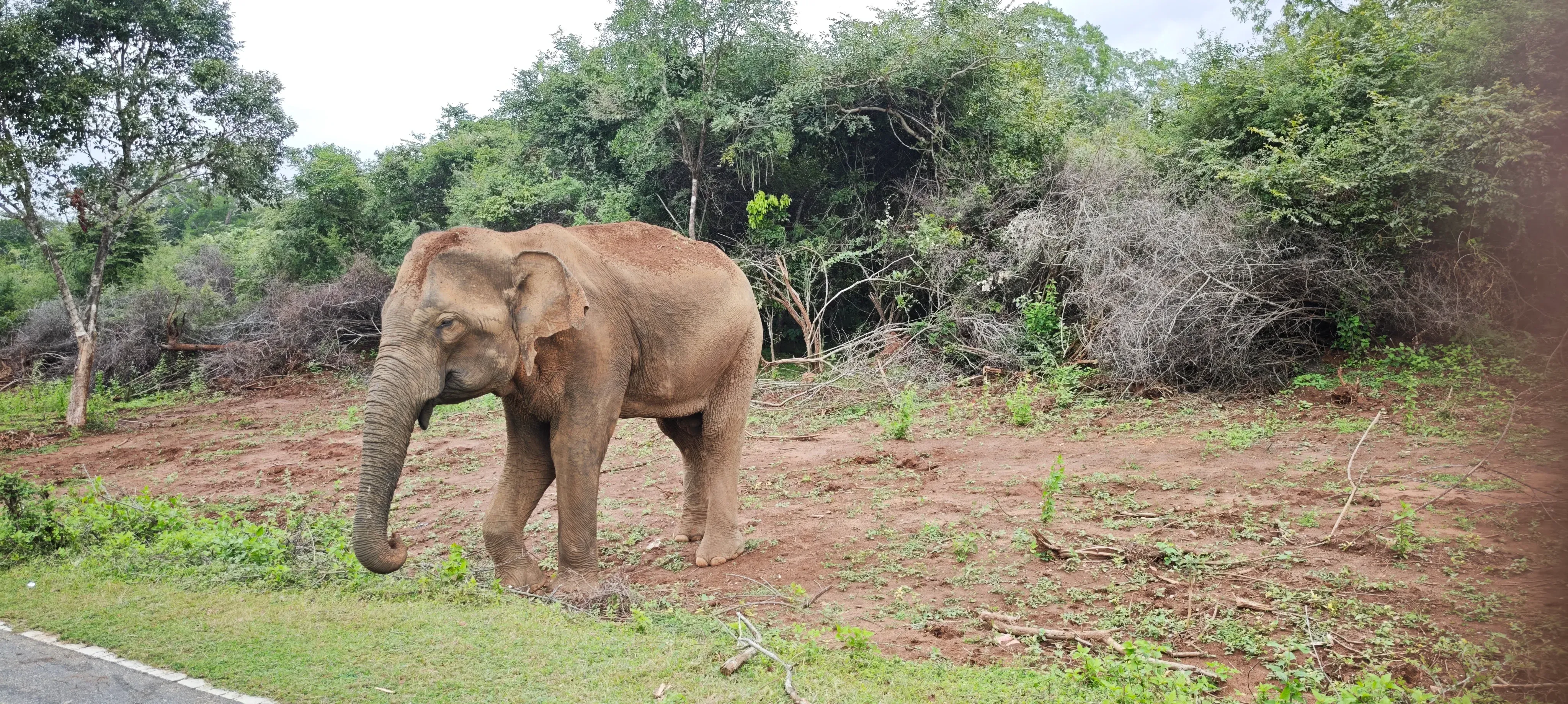
Wildlife ethics: Do not ride elephants. Not at Pinnawala, not anywhere. The training methods used to make elephants compliant for riding involve documented cruelty. The Elephant Transit Home at Udawalawe and genuinely ethical observation at national parks are the alternatives. The same applies to any close-contact animal experience — the rule of thumb is: if the animal has been trained to tolerate your presence, something has been done to it that it wouldn't have chosen.
Tipping: Not formally expected but appreciated. Guides, drivers, and restaurant staff in tourist establishments receive tips as a meaningful supplement to base wages. LKR 200–500 after a tuk-tuk journey is appreciated; 10% at a sit-down restaurant; USD 5–10 per day for a driver who has genuinely helped.
Safety: Sri Lanka is generally very safe for tourists. Petty theft exists in crowded areas; tuk-tuk pricing inflated for tourists is the most common way travelers feel taken advantage of. Solo female travelers are present throughout the country in significant numbers and consistently report feeling comfortable. The use of PickMe or Uber for taxis in Colombo eliminates the negotiation problem entirely.
Sri Lanka is the kind of place that ruins all your subsequent benchmarks. After Sigiriya, every other historical site is missing something. After the Ella train, every other scenic railway is trying. After the rice and curry — six small bowls on a banana leaf at 7 AM in a roadside restaurant with the mist coming off the tea fields outside — you understand what "breakfast" was always supposed to be.
Best Picks

Traveling with kids? We've got everything covered.
Child seats, luggage, and a driver who knows your flight lands late. Kiwitaxi takes care of everything so your family trip starts the way it should - with excitement, not chaos.
Book a family transferExplore All Guides
Barcelona Neighborhoods Guide: Where to Stay & What to Expect in Each Barrio

Discover Paris: A Guide to Iconic Landmarks, Historic Cafés & Legendary Stores

Osaka Travel Guide: Top Things to Do & Food Spots

First-Timer's Japan Handbook: 10 Essential Travel Tips + Etiquette FAQ

Rome in a Day & 3 Days in Rome: The Ultimate Itineraries for Every Traveler

Barcelona Airport to Gothic Quarter: Fastest Transfer Options, Prices & Travel Tips

Ultimate Japan Itineraries: Discover the Best of Japan in 7 or 14 Days

More than the Eiffel Tower: Best Things to Do In Paris

Best hotels in Albania: Tirana, Saranda, Vlorë & Durres

Rome: La Dolce Vita in Every Corner — travel guide by Olivia (@doinglifewithliv)

Barcelona Airport to Sagrada Família: Best Transfer Options, Prices & Travel Times

Paris Food Guide: Eiffel Tower View Restaurants & Rooftop Dining

18 Things You Need to Know Before Visiting Croatia

10 Unforgettable Day Trips from Rome, Italy: Ancient Towns, Best Beaches & Countryside Escapes
A Taste of Florence: Your Complete Food Guide

Best Day Trips from Milan with a Private Driver: Lake Como, Verona & Beyond

10 Best Holiday Alternatives to the Middle East for Spring 2026

Best Things to Do Around the Colosseum: Rome Attractions, Tours & Insider Tips

Barcelona vs Madrid: Which City Is Better to Visit in Spain?

Barcelona: Hidden Bites, Secret Sips & Sunshine Tips by Nancy Sevilla

Best eSIM for Japan 2026

Budapest Travel Tips: Beyond the Obvious

Best Hotels in Rome for Every Budget: Luxury, Boutique & Budget Stays

Cinque Terre Travel Guide: Best Villages & Trails

Best Wine Tours from Milan: Franciacorta, Valpolicella & Chauffeur Hire
Milan to Verona Day Trip with a Chauffeur

South Korea Travel Guide: Best Cultural, Beauty & Wellness Experiences in Seoul, Busan & Jeonju

Best Things to Do in Singapore: Food, Views & Hidden Gems

Free eSIM Trial: Where to Get Free Data

Hoi An Travel Guide: Hidden Gems, Spas & Local Experiences

Santorini Travel Guide: Sunsets, Cruises & Wine

3 Days in Northern Spain: Bilbao, the Cantabrian Coast & Santander

Best eSim for Europe: One Card for 30+ Countries

Best eSim for Mexico: Stay Connected on Your Trip

How to Get from Lisbon to Porto (2026): Train, Bus, Car, or Flight?

How to Get from London to Madeira: Complete Guide (2026)

How to Get from Beauvais Airport to Paris

Paris on a Budget: Affordable Hotels, Shopping & Free Things to Do

Top 12 Things to Do in Albania: Ultimate Travel Guide

Where to Stay in the Albanian Riviera: Best Hotels & Areas
Kyoto Travel Guide: Journey to the Heart of Old Japan

The Ultimate Hanoi Travel Guide: Local Tips, Street Food & Hidden Gems in Vietnam’s Capital

Private Chauffeur Service for Day Trips & Sightseeing
Your own driver, by the hour. No fixed routes. No surprises. Just a professional driver at your disposal - from 3 hours to multiple days.
Book a chauffeur