'%3e%3cpath%20d='M43.073%200.00649261H15.0943V3.94346H43.073V0.00649261Z'%20fill='url(%23kiwitaxi-grad)'%20/%3e%3cpath%20d='M15.0828%203.94346C16.1928%203.94346%2017.0512%203.06513%2017.0512%201.97497C17.0512%200.874164%2016.1822%200.00649261%2015.0828%200.00649261C14.0362%200.00649261%2013.1379%200.851916%2013.1379%201.97497C13.1379%203.10916%2014.0478%203.94346%2015.0828%203.94346Z'%20fill='white'%20/%3e%3cpath%20d='M43.0614%203.94346C44.1715%203.94346%2045.0299%203.06513%2045.0299%201.97497C45.0299%200.874164%2044.1609%200.00649261%2043.0614%200.00649261C42.0149%200.00649261%2041.1166%200.851916%2041.1166%201.97497C41.1166%203.10916%2042.0265%203.94346%2043.0614%203.94346Z'%20fill='white'%20/%3e%3cpath%20d='M19.5921%2038.5052V39.828H23.1471V26.0491H19.5921V27.3446C18.895%2026.5789%2017.4549%2025.8841%2015.7339%2025.8841C11.8502%2025.8841%208.78975%2028.7578%208.78975%2032.939C8.78975%2037.1374%2011.8702%2039.9935%2015.7339%2039.9935C17.4938%2039.9935%2018.932%2039.2691%2019.5921%2038.5052ZM12.2892%2032.939C12.2892%2030.5715%2013.929%2029.1912%2015.9819%2029.1912C18.0106%2029.1912%2019.5647%2030.5845%2019.5647%2032.939C19.5647%2035.2579%2017.9768%2036.6869%2015.9823%2036.6869C13.9596%2036.6869%2012.2892%2035.264%2012.2892%2032.939Z'%20fill='white'%20/%3e%3cpath%20d='M44.7174%2026.0496H41.4289V39.8281H44.7174V26.0496Z'%20fill='white'%20/%3e%3cpath%20d='M32.2183%2035.7001L29.3455%2039.8281H24.94L30.044%2032.8552L25.1624%2026.0496H29.7075L32.3295%2029.8985L35.035%2026.0496H39.4405L34.5599%2032.7435L39.6361%2039.8281H35.1189L32.2183%2035.7001Z'%20fill='white'%20/%3e%3cpath%20d='M3.34504%2022.9604V26.0496H7.4039V29.0939H3.34504V34.2781C3.34504%2035.9866%204.33971%2036.7008%205.955%2036.7008C6.54504%2036.7008%207.16659%2036.5766%207.63241%2036.235V39.4341C7.04237%2039.7757%206.14133%2039.9931%204.89915%2039.9931C1.8243%2039.9931%200.0226746%2038.1293%200.0226746%2034.9298V22.96H3.34504Z'%20fill='white'%20/%3e%3cpath%20d='M36.2094%208.57428L33.307%2016.8723L30.43%208.57428H27.7621L24.8597%2016.8723L21.9828%208.57428H18.4884L23.2157%2021.4188H26.5037L29.084%2014.4093L31.6629%2021.4188H34.951L39.6782%208.57428H36.2094Z'%20fill='white'%20/%3e%3cpath%20d='M44.7174%208.57381H41.4289V21.4188H44.7174V8.57381Z'%20fill='white'%20/%3e%3cpath%20d='M16.7387%208.57381H13.4502V21.4188H16.7387V8.57381Z'%20fill='white'%20/%3e%3cpath%20d='M11.7001%208.57382L6.07922%2014.1326L12.1622%2021.4188H8.05929L3.92163%2016.28L3.3455%2016.8538V21.4188H0.0226746V3.94299H3.3455V12.7574L7.59764%208.57382H11.7001Z'%20fill='white'%20/%3e%3c/g%3e%3cdefs%3e%3clinearGradient%20id='kiwitaxi-grad'%20x1='15.0945'%20y1='1.97497'%20x2='43.073'%20y2='1.97497'%20gradientUnits='userSpaceOnUse'%3e%3cstop%20stop-color='%2300D2CD'%20stop-opacity='0'%20/%3e%3cstop%20offset='1'%20stop-color='%2300D2CD'%20/%3e%3c/linearGradient%3e%3cclipPath%20id='kiwitaxi-clip'%3e%3crect%20width='46'%20height='40'%20fill='white'%20/%3e%3c/clipPath%3e%3c/defs%3e%3c/svg%3e)

Porto: The City That Earns Every Word Written About It
There are cities that have good PR and cities that deserve it. Porto, reliably, is the latter.
It won European Best Destination three times in a decade — 2012, 2014, and 2017 — which in normal circumstances would suggest a marketing operation. In Porto's case it suggests a city that actually is that good and that people who go keep telling other people to go. It helps that Porto operates with a specific lack of pretension that makes immediately likable places out of cities that might otherwise be stiff. The azulejo tiles are everywhere and beautiful. The port wine is excellent and available by the glass at a riverside café for €3. The francesinha — the local sandwich of layered meats under a spiced tomato and beer sauce that sounds wrong and tastes entirely right — is available for breakfast if you want it, which some days you genuinely do.
Porto is built on hills above the Douro River, 5 km from the Atlantic, in the northwest corner of Portugal that gave the country its name. Portucale — the land around Porto — preceded Portugal as a concept by several centuries, and the city's sense of itself as the older, more serious sibling of Lisbon is not entirely unjustified. Where Lisbon is cosmopolitan and occasionally preening, Porto is direct. Where Lisbon has become expensive and slightly polished, Porto is still catching up — which means you can still eat exceptionally well for €15, stay in a beautiful guesthouse for €80, and walk through a neighborhood where the tiles are genuinely falling off the facades not as an aesthetic choice but because nobody has gotten around to fixing them yet, and find it completely charming.
The Douro River carries the wine down from the valley to the east. The Atlantic keeps the air clean. The tascas open at noon and stay open until someone leaves. Come with appetite — literal and otherwise.

Getting to Porto
By Air
Francisco Sá Carneiro Airport (OPO) — Portugal's second-busiest airport, named after the Prime Minister who died in a 1980 plane crash at the very facility that now bears his name — sits 11 km northwest of Porto's city center in the municipality of Maia. It handled over 14 million passengers in 2023 and continues to grow. Direct flights connect Porto with London, Amsterdam, Paris, Frankfurt, Madrid, Zurich, Brussels, and most major European cities, alongside domestic flights to Lisbon and Faro. Ryanair, easyJet, TAP Air Portugal, Vueling, Wizz Air, and British Airways operate the most frequent routes. From North America, connections through Lisbon or other European hubs reach Porto in total travel times of 9–13 hours.
By Train
Porto has two main railway stations that serve different purposes. Porto Campanhã is the main intercity hub, served by Alfa Pendular (high-speed) and Intercity trains from Lisbon in approximately 2h 45min–3h 15min. Trains also serve Aveiro (1 hour), Coimbra (1h 30min), and Braga (1 hour). Porto São Bento is the city's central historic station — the one with the famous azulejo tile panels depicting scenes from Portuguese history in its entrance hall — serving suburban and regional trains to Braga, Guimarães, and Douro Valley river towns. São Bento is the station that's worth visiting even if you have nowhere to go.
By Bus
FlixBus and Rede Expressos connect Porto with Lisbon (approximately 3.5 hours), Braga, Guimarães, and Spanish cities including Vigo, Santiago de Compostela, and Madrid. The Renex terminal at Praça Filipa de Lencastre is the main city-center bus hub.

Arriving at Porto Airport: What to Expect
OPO is modern and efficient — single terminal, baggage claim typically 20–30 minutes after landing. Metro Line E (Violet) is the standout option: the station is directly in front of the terminal, clearly signed, and delivers you to the center without a transfer.
By Metro (Line E — Violet Line): Direct service from the airport terminal to central Porto, running every 20–30 minutes. Key stops: Trindade (the main transfer hub, connecting to lines A/B/C/D — 30 minutes from airport), Bolhão (for the Bolhão market and Baixa neighborhood, 32 minutes), Campanhã (intercity train connections, 38 minutes). A single trip requires an Andante card (€0.60 reusable card, bought at the ticket machines, then load a single trip for approximately €2) or an intermodal ticket covering the airport zone. Total cost approximately €2.50. The metro runs from approximately 6 AM to 1 AM. An important note: the airport metro zone requires a specific "Z4" ticket, not the standard central-zone ticket — buy at the airport machines specifically.
By Private Transfer: For families, groups traveling with luggage, late arrivals when metro frequency drops, or travelers going to specific addresses in neighborhoods with limited metro access (Bonfim, Foz do Douro, Matosinhos), a Kiwitaxi private transfer from OPO covers the full journey door to door with fixed pricing, meet and greet in arrivals, and flight monitoring.
Getting Around Porto
Porto is compact and primarily walkable in the historic center, with the hills providing the main physical challenge. The Portuguese word for this is saudade — no, that's not right. The word is just "steep," and the hills are genuinely steep. Comfortable footwear is not optional.
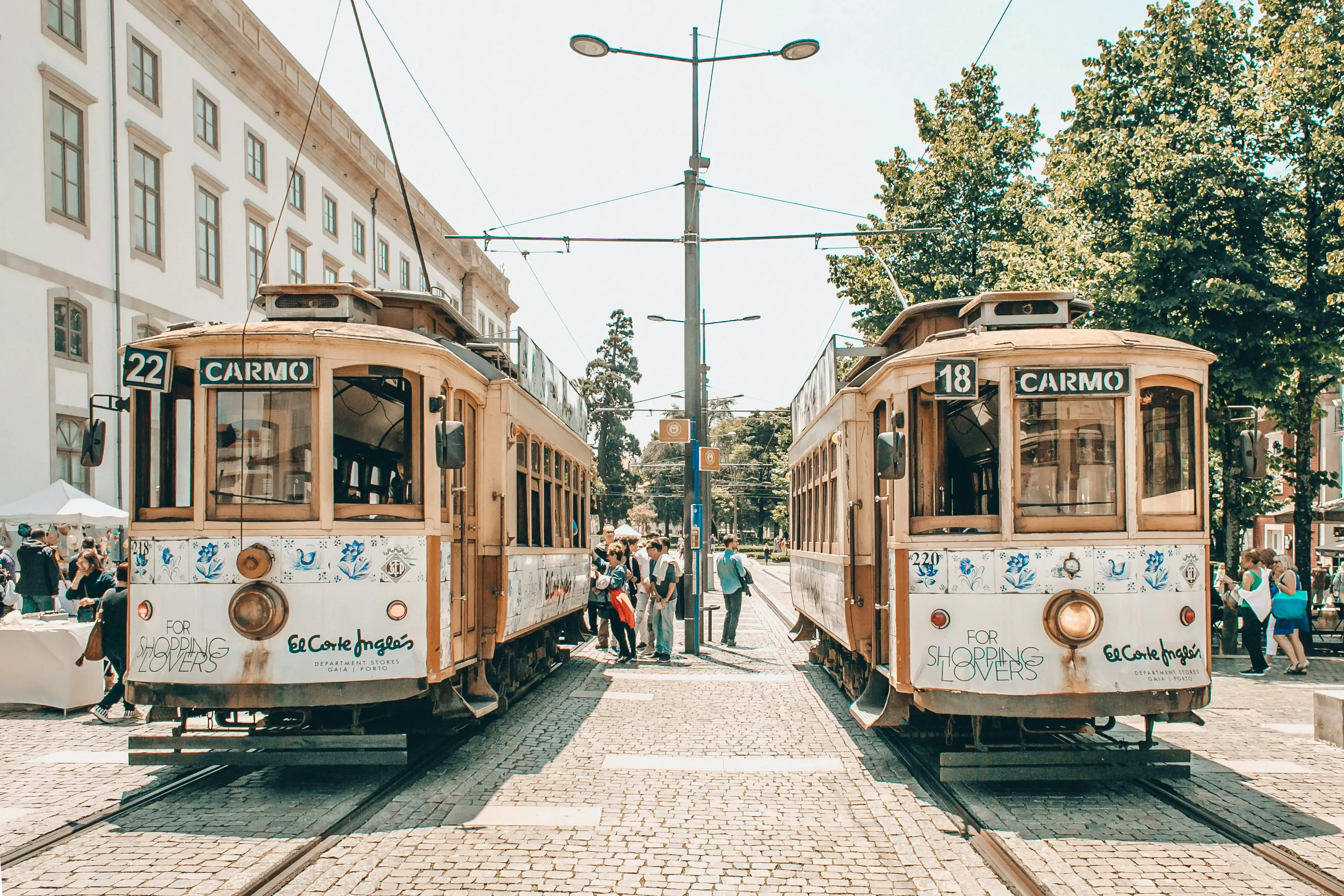
Tram Porto's historic tram network operates three lines — Line 1 (the famous riverfront route from Infante square to Passeio Alegre at the river mouth), Line 18 (Carmo to Massarelos), and Line 22 (a circular line through the center). These are functioning public transport, not tourist spectacles, though tourists use them heavily. A single ride: approximately €4 for regular price, €3 with the Andante card. Slow, scenic, and worth taking at least once along the Douro riverfront.
Metro Six lines (A through F) cover the broader metropolitan area. Within central Porto, the most useful lines for visitors are Line D (passing São Bento station and connecting to Gaia) and the airport Line E. Single tickets: approximately €1.45–2.50 depending on the zone. An Andante Blue Card loaded with credit is the most practical solution for multi-day visitors — works on metro, buses, and trams on the integrated network.
Funiculars The Guindais Funicular connects Ribeira at the riverfront to the upper city, saving the steep hillside climb. Short, useful, and part of the integrated transport ticket system.
Walking Mandatory for the historic center and the neighborhoods. The gradient between Ribeira at river level and the upper city is significant — Rua das Flores, Rua Santa Catarina, the lanes of Cedofeita — but the views from the top of every climb are part of the reward. The flat stretch along the Douro from Ribeira to Foz, past the Crystal Palace gardens, is the city's finest extended walk.
Best Time to Visit Porto
May and June is the peak of the pre-summer window — temperatures at 20–24°C, the Atlantic coast in spring light, the city's outdoor café culture fully active, and tourist volumes below the July–August maximum. June 23–24 is Festa de São João do Porto — the city's most important festival, when the streets fill with thousands of people hitting each other with plastic hammers (the tradition, originally involving garlic and leeks, was modernized to squeaky hammers in the 20th century for reasons nobody fully defends), releasing sky lanterns over the Douro, and staying out until dawn. If you're in Porto on June 23rd, cancel your other plans.
September and October rivals spring. Temperatures 18–24°C, the Douro Valley harvest (vindima) reaching its peak in September, the Atlantic still swimmable through October, and the city settling back into its own rhythm after the summer influx. October Porto — the light, the fewer tourists, the outdoor tables still set — is the version most returning visitors describe as their favorite.
July and August is warm (26–30°C) and at maximum visitor volume. The beaches at Foz, Matosinhos, and Espinho are fully operational, the rooftop bars are packed, and the city's festival calendar is at its fullest. Hotel prices peak; book well ahead for August.
December is Porto's Christmas market season — the lights on Avenida dos Aliados and in the Ribeira, the markets along the river, and the specific beauty of Porto's tilework and azulejo facades under grey winter light. Temperatures 10–14°C. Quiet enough in the first three weeks of December to be genuinely atmospheric.
January through March is the cheapest, quietest, and most genuinely local time to visit. Hotels are significantly below peak prices, the city feels like it belongs to its 250,000 residents, and the experience of eating in a tasca where you're the only non-Portuguese person at the counter is most accessible. The Atlantic weather can be grey and rainy — but Porto in the rain, with the azulejos wet and reflecting the streetlights, is a specific kind of beautiful.

Porto's Neighborhoods
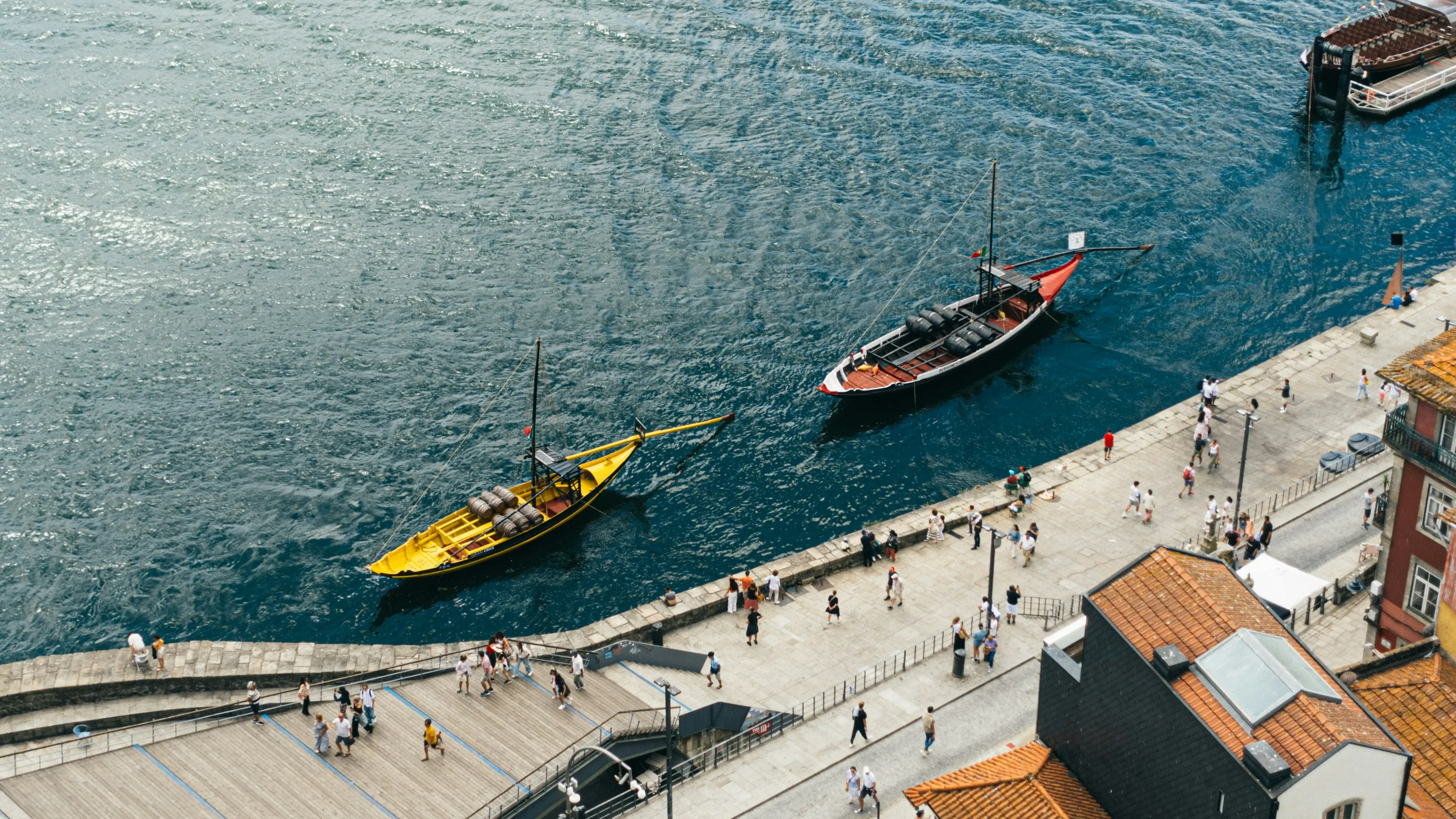
Ribeira (Riverfront) The UNESCO-listed historic riverside district is Porto's most immediately iconic neighborhood — the narrow medieval lanes running down to the Douro, the colorful facades of the old townhouses visible from the Vila Nova de Gaia cable car across the river, the fishermen's barcos rabelos moored along the cais (quay). Ribeira is touristy in the way that places of genuine beauty inevitably become, but the early mornings and late evenings belong to anyone willing to be there at those hours. The restaurants along the riverfront are priced for tourists; the tascas two streets up the hill are for everyone. The Dom Luís I Bridge, designed by Théophile Seyrig (a colleague of Eiffel) and completed in 1886, connects Ribeira to Vila Nova de Gaia across the river on two decks — the upper deck carries the Metro Line D, the lower deck carries foot and road traffic, and the walk across either level offers the river views that make Porto's skyline recognizable worldwide.
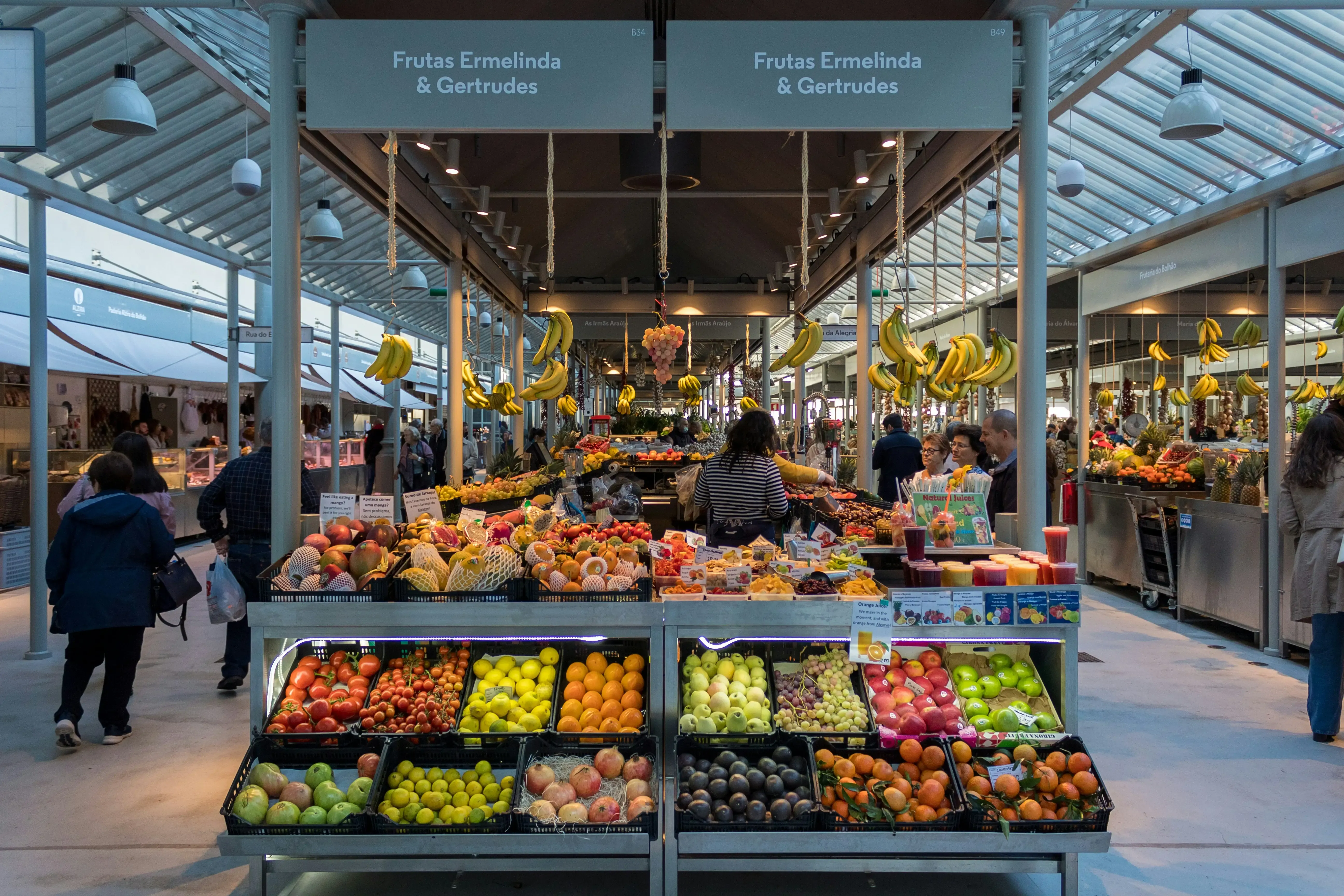
Baixa (Downtown) The commercial center of Porto — Rua de Santa Catarina (the main shopping street), Rua das Flores (the street of flowers, now lined with cafés in converted buildings), Praça da Batalha, and the Bolhão Market. The Bolhão opened in 1914, was renovated and reopened in 2022, and holds fresh produce, fish, cheese, flowers, and tascas in its two-story arcade. The Livraria Lello bookshop — two flights of sinuous Art Nouveau staircase under a stained glass ceiling, dating to 1906 and cited as one of the sources for the Hogwarts library — is on Rua das Carmelitas. Entry requires a purchased ticket (€5–8 depending on season) redeemable against any book purchase. Worth it once; the shop genuinely deserves its reputation.
Bonfim and Campanhã The working-class eastern neighborhoods that have been Porto's creative district for the past decade — independent galleries, natural wine bars, vintage shops, and the specific social scene that assembles when rents are low and curiosity is high. Rua Miguel Bombarda in the adjacent Massarelos neighborhood holds the highest concentration of contemporary art galleries in Porto. Bonfim is where Porto gets interesting outside the tourist geography; Rua do Bonfim and the surrounding streets on a Saturday afternoon represent the city that doesn't appear on the postcards.
Cedofeita and Boavista The residential neighborhood west of the center — Art Nouveau apartment facades, tree-lined boulevards, the Rose Garden in the Crystal Palace park (free entry, extraordinary views over the Douro), and the Museu de Arte Contemporânea de Serralves in a 1999 Álvaro Siza Vieira building surrounded by 18 hectares of park and sculpture garden. Serralves is among the finest contemporary art museums in the Iberian Peninsula and the park alone is worth the €10 entrance on a clear afternoon.
Vila Nova de Gaia (Gaia) Technically a separate municipality on the southern bank of the Douro, Gaia is where the port wine cellars have been located since the 17th century — the British merchants who dominated the port wine trade built their lodges (armazéns) on the Gaia hillside above the river, aging their wines in the cooler, Atlantic-influenced climate of the south bank rather than the Douro Valley where the grapes grew. Sandeman, Taylor's, Graham's, Ferreira, Ramos Pinto — all accessible for tours and tastings. Port wine tastings are systematically cheaper here than in Porto proper. The Gaia cable car, the lower riverfront promenade, and the views back to Ribeira make Gaia a half-day in its own right rather than a quick port stop.
Foz do Douro Where the Douro meets the Atlantic — a residential neighborhood of 19th-century villas and the best seafood restaurants in the Porto area, positioned above a rocky coastline with Atlantic views. The Forte de São João da Foz at the river mouth, the lighthouse, and the Pergola walkway along the sea wall define the area. A 30-minute tram ride (Line 1) from Ribeira along the river, or a 15-minute Bolt. Good for a long lunch or an afternoon walk out of the city center.
Best Things to Do in Porto
Take the Dom Luís I Bridge at Dusk The double-deck iron bridge is Porto's most functional and most photogenic structure. Walk the lower level from Ribeira to Gaia in the late afternoon; the light from the west hits the Ribeira facades at an angle that makes every photograph look considered. Walk back on the upper level, 45 meters above the river, with the metro rails underfoot and the full sweep of the city visible in both directions. The round trip takes 25 minutes at a walking pace and reveals why this particular bend in this particular river has been generating wine, commerce, and genuinely beautiful urban scenery since the Romans.
Explore São Bento Station The central train station's entrance hall is covered in 20,000 azulejo panels painted by Jorge Colaço between 1905 and 1916, depicting scenes from Portuguese history and the daily life of the north — medieval battles, rural festivals, the arrival of João I in Porto in 1387. It is a work of public art of extraordinary scale that also functions as a working train station. Stand in the middle of the concourse and rotate slowly. It takes about 20 minutes to look properly at the panels; the station will be boarding trains around you the entire time.
Drink Port Wine in a Gaia Cellar The port wine experience is not optional in Porto — it would be like going to Brussels without trying the beer. The mechanism: take the metro to Dom Luís I Bridge, walk across the lower level to Gaia, and choose a cellar from the dozen or so open for tours and tastings on the hillside. Tours run approximately 45–60 minutes and cover the production process, the aging warehouses (where barrels stacked to the ceiling and the smell of evaporating wine — the "angel's share" — makes the space atmospheric before any tasting), and a flight of ports from white through tawny to vintage. Taylor's has the best terrace views back to Porto. Ferreira (the oldest Portuguese-owned port house) and Ramos Pinto have the most interesting Art Nouveau architecture and label history. Price per tasting: approximately €15–35 depending on the tier selected.
Eat a Francesinha and Settle the Debate The francesinha is Porto's signature dish and a deeply local institution that receives no consensus on origin, perfection, or how many is too many. The sandwich — layers of linguiça (smoked pork sausage), cured ham, and steak between bread, covered in melted cheese, then drowned in a sauce of tomato, beer, whisky, and various proprietary spice combinations that each restaurant guards fiercely — is served with fried egg on top and chips alongside. It is a large, wet, overwhelmingly flavored thing that makes immediate sense at 1 PM after walking Porto's hills for four hours. It also makes sense at midnight after a few glasses of the local Vinho Verde. Lado B in Bonfim, Café Santiago near Bolhão, and A Regaleira near Bolhão market are consistently cited by Porto's own residents when the question comes up.
Walk the Riverside to Foz on the Historic Tram Line 1 of the Porto tram network runs from Infante Square in Ribeira along the Douro to the river mouth at Foz, passing the Crystal Palace gardens above and the riverfront below. The tram is vintage rolling stock from the early 20th century, the route is 7 km along the water, and the journey costs €4 and takes approximately 30 minutes. Ride it west to Foz for a late lunch, then walk back along the riverside promenade when the light is right.
See the Azulejos of Igreja do Carmo and Igreja dos Clérigos The exterior wall of the Igreja do Carmo is covered in an azulejo panel depicting the founding of the Carmelite Order — 1,350 tiles painted in cobalt blue, installed in 1912, covering an entire building facade. It is one of Porto's defining visual experiences and it is free to look at from the street. The adjacent Clérigos Tower — the 18th-century granite baroque tower designed by Nicolau Nasoni that has been the symbol of Porto's skyline since 1763 — requires a ticket (approximately €6) to climb its 240 steps for panoramic views over the city and the river. The combination of the two, with the Lello bookshop 200 meters away, makes a cultural morning before the tourist groups from the cruise ships have finished their guided walks.
Visit the Serralves Foundation Álvaro Siza Vieira's 1999 building — a white volume that manipulates natural light through skylights and framed views into the park — houses the permanent collection and temporary exhibitions of the Museum of Contemporary Art. The park surrounding it, designed by João Gomes da Silva, is 18 hectares of Art Deco formal gardens, meadows, forest, and sculptures, including works by Richard Serra, Dan Graham, and Louise Bourgeois. The Art Deco Villa Serralves within the park (built 1925–1944) adds a second architectural layer to the complex. Come on a Tuesday when the museums are free (confirm current policy). Allow 3 hours for the museum and park combined.
Find the Livraria Lello at Opening Time The 1906 Art Nouveau bookshop on Rua das Carmelitas is Porto's most photographed interior — the painted neo-Gothic ceiling, the sinuous double staircase rising from the ground floor to the gallery above, the stained glass skylight pouring color over the central hall. Entry requires a ticket purchased at the door or online; in peak season queues form before opening. Come as early as possible, buy a book (the ticket cost redeems against any purchase), and spend 20 minutes looking at the building before the crowd makes it difficult. The books are predominantly Portuguese — an excellent place to find Portuguese literature in translation.

Day Trips from Porto with Kiwitaxi
Northern Portugal is one of the most varied and rewarding regions in the Iberian Peninsula, and Porto is the finest base from which to access it. The regional rail network handles Braga, Guimarães, and Aveiro efficiently and cheaply. The Douro Valley and the national park at Peneda-Gerês require a car or a dedicated driver — which is where Kiwitaxi's Chauffeur Hire changes what's possible in a day.
The Douro Valley — 1.5–2 hours from Porto
Portugal's most celebrated wine region — and, in the honest opinion of most who have been to both, the world's most dramatically beautiful wine landscape — stretches east from Porto along the Douro River for 250 km, climbing through narrow terraced vineyards cut into schist hillsides above a river that changes color with the light from green-grey to deep copper. The UNESCO World Heritage site of the Alto Douro Wine Region begins around Régua (1.5 hours by road) and continues east to the Spanish border.
The experience: driving the N108 along the north bank of the river with the terraces rising above and the river below, stopping at the viewpoints (miradouros) above Pinhão, visiting a family quinta for a tasting of the local wine — not just port, but the outstanding Douro table wines that have been overshadowed by port's international reputation and are increasingly finding their audience — and having lunch in the village of Pinhão, where the railway station's platform is lined with azulejo panels depicting the vindima (harvest). The train (CP's Douro Line) from Porto's São Bento station runs the river route to Pinhão in approximately 2.5 hours and is scenic enough to justify the journey purely for the ride. For visitors who want to combine multiple quinta visits, stop at viewpoints not accessible by train, or reach the more remote eastern valley, a Kiwitaxi Chauffeur from Porto covers the full circuit with flexibility to stop wherever the view or the wine earns it.
Braga — 1 hour from Porto
Portugal's third-largest city and its spiritual capital — the Archbishop of Braga outranks the Patriarch of Lisbon in the Portuguese Catholic hierarchy, a detail that Braga mentions regularly — holds one of the finest concentrations of religious architecture in the Iberian Peninsula spread across a compact and walkable historic center. The Braga Cathedral (Sé de Braga), begun in 1070 by the first bishop appointed by the first king of Portugal, is the oldest cathedral in the country. The Museu dos Biscainhos occupies an 18th-century noble palace with azulejo-lined salons and formal gardens. The Santuário do Bom Jesus do Monte, 5 km east of the center on the Espinho hill, is the baroque staircase sanctuary that appears on every Portuguese travel postcard — a zigzag sequence of stairways flanked by chapels, fountains, and allegorical statues climbing 116 meters to the neoclassical church at the summit. The funicular connects the base to the top; most visitors walk up and take the funicular down, which is the correct order. By train from Porto Campanhã: approximately 1 hour. By Kiwitaxi: 45–50 minutes, with the option to combine with Guimarães in a single day.
Guimarães — 1 hour from Porto
The birthplace of Portugal — the city where the first king, Afonso Henriques, was born and where the earliest battles for Portuguese independence were fought in the 12th century — is a UNESCO World Heritage Site of extraordinary medieval architecture and one of the most immediately charming smaller cities in the Iberian Peninsula. The 10th-century castle, the Palace of the Dukes of Braganza (a 15th-century ducal residence recreated in the early 20th century and now a museum), and the medieval center around Largo da Oliveira and Praça de Santiago form a sequence that rewards slow walking more than any organized itinerary. The arcos (stone arcades) protecting the medieval lanes from rain, the painted wooden houses overhanging the pedestrian streets, and the specific silence of Guimarães on a weekday morning make it one of the finest urban half-days in the country. By train from Porto Campanhã: approximately 1 hour 10 minutes. By Kiwitaxi Chauffeur combining with Braga: approximately 45 minutes between the two cities.
Aveiro — 1 hour from Porto
The moliceiro boats — brightly painted flat-bottomed vessels with curved prows decorated in folk-art style, originally used to harvest moliço (seaweed, used as agricultural fertilizer) from the lagoon — have become the defining image of Aveiro, the coastal city 70 km south of Porto that has been called "the Portuguese Venice" with enough frequency that it sounds like a marketing slogan rather than a genuine description. It's not an exaggerated comparison: the central ria (lagoon) does penetrate the city in a network of canals crossed by ornate bridges, and the moliceiro boat tours are both tourist-oriented and genuinely lovely. Beyond the canals: the Costa Nova fishing village, 8 km from Aveiro, whose striped wood-clad houses (palheiros) in red, white, black, and green have been photographed from every angle and remain completely charming. The São Domingos Cathedral complex, the Art Nouveau buildings on Avenida Dr. Lourenço Peixinho, and the ovos moles — the local sweet of egg yolk and sugar paste in shell-shaped rice paper cases — complete the Aveiro experience. By train from Porto Campanhã: approximately 1 hour. By Kiwitaxi: 50 minutes, with the option to reach Costa Nova (inaccessible by train without a separate bus) directly.
Peneda-Gerês National Park — 1.5–2 hours from Porto
Portugal's only national park occupies the northwestern corner of the country bordering Spanish Galicia — a landscape of granite massifs, ancient oak forests, waterfalls, glacial valleys, and reservoir lakes of startling blue-green clarity. The Cascata do Arado waterfalls, the Roman road through the Geira Valley (still with original milestones), the village of Lindoso with its espigueiros (granite grain storage structures on stone stilts), and the high plateau walks above Soajo define the park's main experiences. There are no public transport connections of practical use from Porto to Gerês — this destination requires either a rental car or a Kiwitaxi Chauffeur covering the full round trip. A full day in the park — arriving at the Gerês spa village, walking to the waterfalls, crossing the dam road above the Vilarinho das Furnas reservoir (a submerged village whose stone walls emerge during drought years) — is one of the finest natural days available from any Portuguese city.
Matosinhos — 30 minutes from Porto
The Atlantic fishing town immediately north of Foz do Douro — accessible by Metro Line A or B to the Matosinhos Sul station — is worth a separate entry because it functions as Porto's seafood kitchen and because the Sunday municipal fish market (Mercado do Peixe) and the line of fish restaurants along Rua Roberto Ivens serve the finest grilled fish in the region at genuinely local prices. Cherne (wreckfish), robalo (sea bass), rodovalho (turbot), and sardinhas (sardines in their classic Portuguese form — grilled over charcoal with coarse sea salt and no further commentary) from boats that landed their catch hours earlier. A Sunday morning at Matosinhos market followed by lunch at one of the restaurants and a walk back along the coastal promenade to Porto is one of the finest half-days available in northern Portugal.
Book your Porto day trip with Kiwitaxi Chauffeur Hire — fixed pricing, drivers who know the Douro Valley routes and the Costa Nova backroads, and the freedom to stop when the landscape earns it.

Porto on a Practical Note
Currency: Euro. Card payment is widely accepted at hotels, larger restaurants, and tourist-facing establishments. Cash remains important at traditional tascas, the Bolhão market, street food vendors, and the occasional neighborhood bar that operates by its own rules. Carry €30–50 in small denominations.
Porto's famous steepness is real. The gradient between the riverfront and the upper city is significant, and the cobblestones (calçada portuguesa — the black-and-white wave-patterned pavement found throughout Portugal and Brazil) are beautiful in sunshine and genuinely hazardous in rain. Shoes with grip and a plan to use the funiculars strategically save significant knee effort over a multi-day visit.
The Porto.CARD offered unlimited public transport and museum discounts until March 2026, when the public transport version was discontinued. The current Porto.CARD Walker (without transport) offers discounts at museums and attractions. Check portocard.city for current offers before arrival.
The francesinha debate is ongoing and regional. Porto proper has its version; Matosinhos has its version; Gaia has its version; each establishment has its proprietary sauce recipe that is the correct one. There is no resolution. Order it in multiple places and form your own position.
Tipping: 10% at restaurants is appreciated and not expected. Round up coffee and small purchases. Tascas and neighborhood bars don't expect tips — leaving coins is a gesture of contentment rather than a social obligation.
Port wine vocabulary worth knowing: A tawny port is aged in small oak barrels, oxidized, amber in color, with notes of dried fruit and nuts — served slightly chilled. A ruby port is aged in larger vessels with less oxidation, deeper red, fruitier. A vintage port is from a single exceptional year, bottled after two years, continues aging in bottle for decades. A white port is made from white grapes, served cold as an aperitif with tonic water and a slice of lemon — the most underrated thing to drink in Porto in warm weather.
Sunday closures affect many shops and some smaller restaurants. Plan accordingly. The larger markets, the port wine cellars in Gaia, and the main museums generally stay open; the neighborhood tascas follow their own logic.
Porto doesn't need to try hard. The river is there, the wine is there, the tilework is falling off the buildings in a way that is somehow perfect, and a glass of white port with tonic on the terrace at Ribeira costs €4. The rest follows naturally.
Best Picks


Traveling with kids? We've got everything covered.
Child seats, luggage, and a driver who knows your flight lands late. Kiwitaxi takes care of everything so your family trip starts the way it should - with excitement, not chaos.
Book a family transferExplore All Guides
Barcelona Neighborhoods Guide: Where to Stay & What to Expect in Each Barrio

Discover Paris: A Guide to Iconic Landmarks, Historic Cafés & Legendary Stores

Osaka Travel Guide: Top Things to Do & Food Spots

First-Timer's Japan Handbook: 10 Essential Travel Tips + Etiquette FAQ

Rome in a Day & 3 Days in Rome: The Ultimate Itineraries for Every Traveler

Barcelona Airport to Gothic Quarter: Fastest Transfer Options, Prices & Travel Tips

Ultimate Japan Itineraries: Discover the Best of Japan in 7 or 14 Days

More than the Eiffel Tower: Best Things to Do In Paris

Best hotels in Albania: Tirana, Saranda, Vlorë & Durres

Rome: La Dolce Vita in Every Corner — travel guide by Olivia (@doinglifewithliv)

Barcelona Airport to Sagrada Família: Best Transfer Options, Prices & Travel Times

Paris Food Guide: Eiffel Tower View Restaurants & Rooftop Dining

18 Things You Need to Know Before Visiting Croatia

10 Unforgettable Day Trips from Rome, Italy: Ancient Towns, Best Beaches & Countryside Escapes
A Taste of Florence: Your Complete Food Guide

Best Day Trips from Milan with a Private Driver: Lake Como, Verona & Beyond

10 Best Holiday Alternatives to the Middle East for Spring 2026

Best Things to Do Around the Colosseum: Rome Attractions, Tours & Insider Tips

Barcelona vs Madrid: Which City Is Better to Visit in Spain?

Barcelona: Hidden Bites, Secret Sips & Sunshine Tips by Nancy Sevilla

Best eSIM for Japan 2026

Budapest Travel Tips: Beyond the Obvious

Best Hotels in Rome for Every Budget: Luxury, Boutique & Budget Stays

Cinque Terre Travel Guide: Best Villages & Trails

Best Wine Tours from Milan: Franciacorta, Valpolicella & Chauffeur Hire
Milan to Verona Day Trip with a Chauffeur

South Korea Travel Guide: Best Cultural, Beauty & Wellness Experiences in Seoul, Busan & Jeonju

Best Things to Do in Singapore: Food, Views & Hidden Gems

Free eSIM Trial: Where to Get Free Data

Hoi An Travel Guide: Hidden Gems, Spas & Local Experiences

Santorini Travel Guide: Sunsets, Cruises & Wine

3 Days in Northern Spain: Bilbao, the Cantabrian Coast & Santander
Best eSim for Europe: One Card for 30+ Countries

Best eSim for Mexico: Stay Connected on Your Trip

How to Get from Lisbon to Porto (2026): Train, Bus, Car, or Flight?

How to Get from London to Madeira: Complete Guide (2026)

How to Get from Beauvais Airport to Paris

Paris on a Budget: Affordable Hotels, Shopping & Free Things to Do

Top 12 Things to Do in Albania: Ultimate Travel Guide

Where to Stay in the Albanian Riviera: Best Hotels & Areas
Kyoto Travel Guide: Journey to the Heart of Old Japan

The Ultimate Hanoi Travel Guide: Local Tips, Street Food & Hidden Gems in Vietnam’s Capital

Private Chauffeur Service for Day Trips & Sightseeing
Your own driver, by the hour. No fixed routes. No surprises. Just a professional driver at your disposal - from 3 hours to multiple days.
Book a chauffeur