'%3e%3cpath%20d='M43.073%200.00649261H15.0943V3.94346H43.073V0.00649261Z'%20fill='url(%23kiwitaxi-grad)'%20/%3e%3cpath%20d='M15.0828%203.94346C16.1928%203.94346%2017.0512%203.06513%2017.0512%201.97497C17.0512%200.874164%2016.1822%200.00649261%2015.0828%200.00649261C14.0362%200.00649261%2013.1379%200.851916%2013.1379%201.97497C13.1379%203.10916%2014.0478%203.94346%2015.0828%203.94346Z'%20fill='white'%20/%3e%3cpath%20d='M43.0614%203.94346C44.1715%203.94346%2045.0299%203.06513%2045.0299%201.97497C45.0299%200.874164%2044.1609%200.00649261%2043.0614%200.00649261C42.0149%200.00649261%2041.1166%200.851916%2041.1166%201.97497C41.1166%203.10916%2042.0265%203.94346%2043.0614%203.94346Z'%20fill='white'%20/%3e%3cpath%20d='M19.5921%2038.5052V39.828H23.1471V26.0491H19.5921V27.3446C18.895%2026.5789%2017.4549%2025.8841%2015.7339%2025.8841C11.8502%2025.8841%208.78975%2028.7578%208.78975%2032.939C8.78975%2037.1374%2011.8702%2039.9935%2015.7339%2039.9935C17.4938%2039.9935%2018.932%2039.2691%2019.5921%2038.5052ZM12.2892%2032.939C12.2892%2030.5715%2013.929%2029.1912%2015.9819%2029.1912C18.0106%2029.1912%2019.5647%2030.5845%2019.5647%2032.939C19.5647%2035.2579%2017.9768%2036.6869%2015.9823%2036.6869C13.9596%2036.6869%2012.2892%2035.264%2012.2892%2032.939Z'%20fill='white'%20/%3e%3cpath%20d='M44.7174%2026.0496H41.4289V39.8281H44.7174V26.0496Z'%20fill='white'%20/%3e%3cpath%20d='M32.2183%2035.7001L29.3455%2039.8281H24.94L30.044%2032.8552L25.1624%2026.0496H29.7075L32.3295%2029.8985L35.035%2026.0496H39.4405L34.5599%2032.7435L39.6361%2039.8281H35.1189L32.2183%2035.7001Z'%20fill='white'%20/%3e%3cpath%20d='M3.34504%2022.9604V26.0496H7.4039V29.0939H3.34504V34.2781C3.34504%2035.9866%204.33971%2036.7008%205.955%2036.7008C6.54504%2036.7008%207.16659%2036.5766%207.63241%2036.235V39.4341C7.04237%2039.7757%206.14133%2039.9931%204.89915%2039.9931C1.8243%2039.9931%200.0226746%2038.1293%200.0226746%2034.9298V22.96H3.34504Z'%20fill='white'%20/%3e%3cpath%20d='M36.2094%208.57428L33.307%2016.8723L30.43%208.57428H27.7621L24.8597%2016.8723L21.9828%208.57428H18.4884L23.2157%2021.4188H26.5037L29.084%2014.4093L31.6629%2021.4188H34.951L39.6782%208.57428H36.2094Z'%20fill='white'%20/%3e%3cpath%20d='M44.7174%208.57381H41.4289V21.4188H44.7174V8.57381Z'%20fill='white'%20/%3e%3cpath%20d='M16.7387%208.57381H13.4502V21.4188H16.7387V8.57381Z'%20fill='white'%20/%3e%3cpath%20d='M11.7001%208.57382L6.07922%2014.1326L12.1622%2021.4188H8.05929L3.92163%2016.28L3.3455%2016.8538V21.4188H0.0226746V3.94299H3.3455V12.7574L7.59764%208.57382H11.7001Z'%20fill='white'%20/%3e%3c/g%3e%3cdefs%3e%3clinearGradient%20id='kiwitaxi-grad'%20x1='15.0945'%20y1='1.97497'%20x2='43.073'%20y2='1.97497'%20gradientUnits='userSpaceOnUse'%3e%3cstop%20stop-color='%2300D2CD'%20stop-opacity='0'%20/%3e%3cstop%20offset='1'%20stop-color='%2300D2CD'%20/%3e%3c/linearGradient%3e%3cclipPath%20id='kiwitaxi-clip'%3e%3crect%20width='46'%20height='40'%20fill='white'%20/%3e%3c/clipPath%3e%3c/defs%3e%3c/svg%3e)


Vietnam has beaches for every kind of traveler. Phu Quoc for the resort experience. Hoi An's An Bang for the slow café life. Con Dao for the genuinely remote. Nha Trang for the city beach — loud, alive, dense with seafood restaurants and island boats and the specific energy of a place that has been drawing people to the South China Sea coast for a century and has no interest in slowing down.
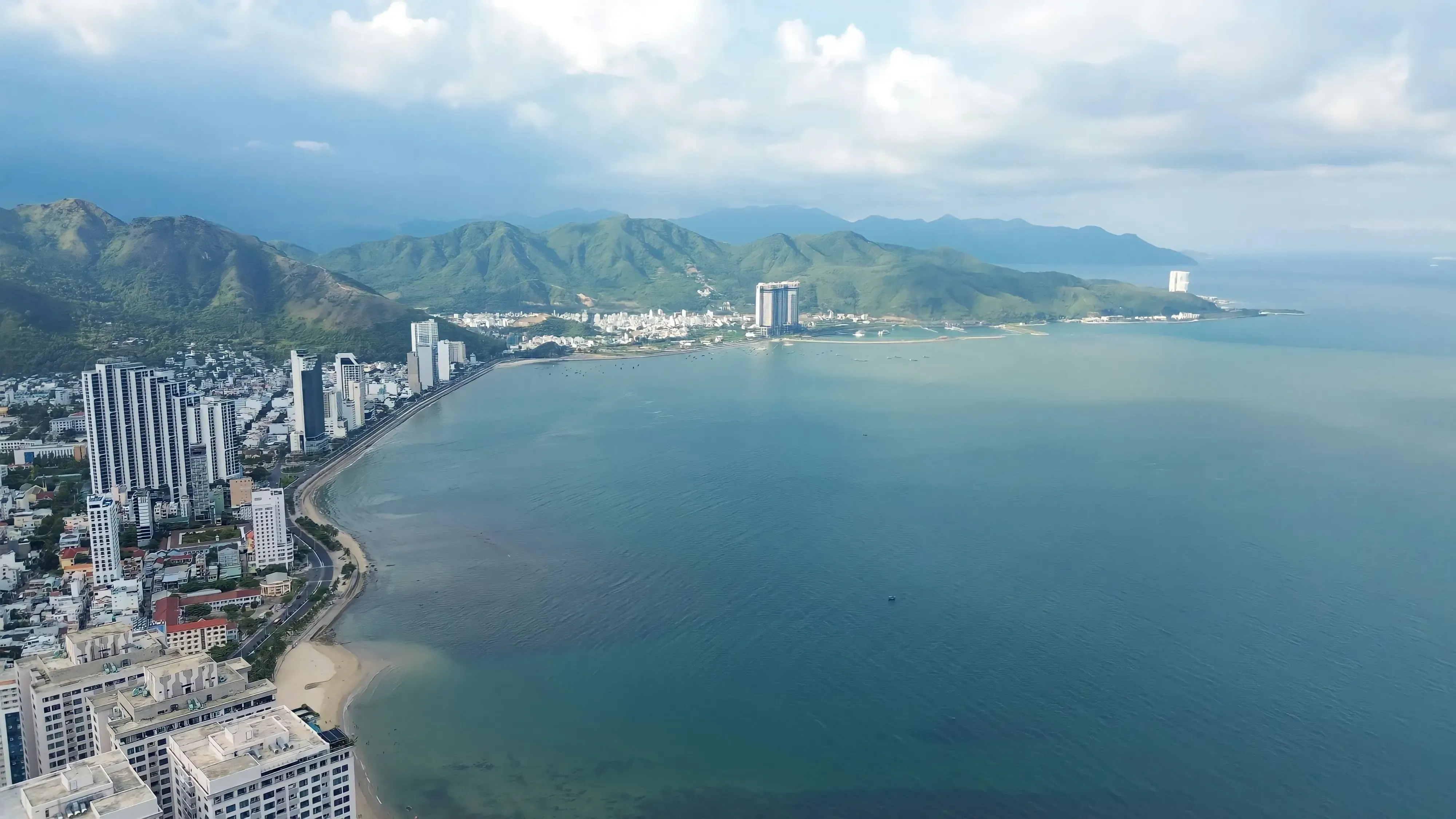
The city sits on Nha Trang Bay — a sweeping arc of coastline backed by mountains, with nineteen islands scattered across the turquoise water to the south — and it operates at a pace that suits people who want more from a beach day than a sun lounger. The morning boat to Hon Mun for the finest reef diving in Vietnam. The afternoon bánh căn (mini rice pancakes) from the street stall that's been in the same spot since before the hotels were built. The evening grilled lobster at the night market with a Bia Hoi on the side. The mud bath that requires explanation to non-visitors and none to anyone who has done it.
Nha Trang is also honest about what it is. This is not a quiet escape — the beachfront promenade is lively, the tourist infrastructure is developed, and the international crowds are real. Some travelers find this off-putting. Others find it interesting. The correct response is to walk two streets back from the beach and find the version of Nha Trang that belongs to the people who live here, which is excellent and readily available.
The sea is turquoise and the seafood is extraordinary. That is the beginning of why people come and not the end of why they stay longer than planned.

Getting to Nha Trang
By Air
Cam Ranh International Airport (CXR) is Nha Trang's gateway, sitting approximately 40 km south of the city center at the southern end of Cam Ranh Peninsula. Despite the distance, the airport handles significant international traffic — direct routes from Moscow, Beijing, Shanghai, Seoul, Bangkok, Singapore, and Taipei alongside domestic flights from Hanoi (1h 30min), Ho Chi Minh City (1 hour), Da Nang (1 hour), and other Vietnamese cities. Vietnam Airlines, Bamboo Airways, Vietjet, and Pacific Airlines operate the main routes.
The 40 km distance from airport to city matters. It's a 40–50 minute drive under normal conditions — allow more time during peak season when the peninsula road backs up. The ride goes through the Cam Ranh Peninsula's coastal scenery before crossing into the city, which is a reasonable introduction to the bay.
By Train
Nha Trang is a major stop on Vietnam's Reunification Express — the railway that runs the length of the country from Hanoi in the north to Ho Chi Minh City in the south, following a route that is both scenic and the slowest practical way to cover the distance. From Ho Chi Minh City: approximately 7–8 hours (SE trains, faster services). From Hanoi: approximately 26–30 hours. From Da Nang: approximately 10–12 hours. The train station is centrally located at 17 Thai Nguyen Street, 2 km from the main beach — practical for arrivals who don't want the airport-to-city distance management.
Sleeper trains between Ho Chi Minh City and Nha Trang are a genuinely comfortable option — the 4-berth soft sleeper cabins are clean and reasonably spacious, the scenery approaching Nha Trang from the south runs along a dramatic coastal section, and the arrival at a city-center station rather than a distant airport has logistical advantages. Book through the Vietnam Railways website (vr.com.vn) or reliable platforms like Baolau or 12Go at least a week in advance for peak season.
By Bus
Long-distance sleeper buses from Ho Chi Minh City (8–9 hours), Da Lat (3.5–4 hours), Hoi An (10–12 hours), and other Vietnamese cities operate on regular schedules. Futa Bus Lines (Phuong Trang) is the most reliable operator, with departures from HCMC's major bus stations to Nha Trang at multiple times daily.
Arriving at Cam Ranh Airport: What to Expect
CXR is a modern, manageable airport — two terminals (Terminal 1 for international, Terminal 2 for domestic), bags typically take 20–35 minutes. The airport infrastructure has improved significantly in the past several years; currency exchange (Vietnamese Dong; rates are reasonable at the airport ATMs) and SIM card kiosks are available immediately in arrivals.
By bus: Airport buses (lines 12 and 17) connect CXR to central Nha Trang for approximately 20,000–25,000 VND. Journey time 1–1.5 hours with stops. The most economical option for solo travelers with manageable luggage; less practical for groups or travelers with significant bags.
By private transfer: For families, groups, late arrivals (CXR receives international night flights), travelers heading directly to resorts on the Bai Dai or Cam Ranh Peninsula strip (which may be closer to the airport than the city), or anyone who wants a confirmed vehicle with fixed pricing and no meter management on arrival, a Kiwitaxi private transfer from CXR covers the full journey door to door. Particularly useful for resort-to-resort transfers between Cam Ranh area properties and the city.

Getting Around Nha Trang
Motorbike Rental The independent traveler's default for exploring beyond the beach strip. Semi-automatic bikes rent for approximately 100,000–150,000 VND per day (USD 4–6); automatics slightly more. Rental shops throughout the city. An international driver's license is technically required; a passport deposit is standard practice. Excellent for reaching Bai Dai Beach (25 km north), the Po Nagar Towers, and the local fishing harbor areas that taxis don't naturally route through. Requires experience and comfort with Vietnamese traffic — Nha Trang's roads are manageable compared to Hanoi or Ho Chi Minh City, but the city-center intersections and the beachfront promenade traffic merit attention.
Xe Om (Motorbike Taxi) Traditional motorbike taxis available throughout the city, typically stationed at markets, transport hubs, and tourist areas. Negotiation is required — agree on a fare before departing. Grab has largely replaced the traditional xe om for most journeys where the app is functional.
Walking The beachfront promenade (Tran Phu Street) and the central tourist area between the train station and the beach are walkable — the hotel strip, the night market on Tran Phu, the Dam Market area, and the city beach are within reasonable walking distance of each other in the central zone. Temperatures of 28–33°C for most of the year mean walking long distances in the midday sun requires water and realistic pacing.
Best Time to Visit Nha Trang
Nha Trang's climate is more complex than most Vietnam coastal guides acknowledge — the city has its own microclimate that doesn't follow the standard Vietnamese north-south monsoon pattern, and the consequences of arriving in the wrong season are real enough to matter.
January to August — The Dry Season (Peak) The standard recommendation. January through April are the coolest and least rainy months — temperatures 24–28°C, seas calm and clear, visibility at Hon Mun excellent for snorkeling and diving. The sea temperature stays warm year-round (27–29°C); the difference is clarity and wave height. This is Nha Trang at its best for water activities.
May to August is warmer (30–33°C), more crowded (Vietnamese domestic summer holidays peak in June–August), and still excellent for the beach. The sea remains calm. Hotel prices rise through June–August for the domestic holiday peak.
September to December — Typhoon and Monsoon Season The most important calendar awareness for Nha Trang. September through November is typhoon season — the South China Sea produces storms that reach the central Vietnamese coast, and Nha Trang sits in the zone that can receive direct impacts. October and November see the most rain and the roughest seas; island boat tours are frequently cancelled, diving visibility drops, and the beach itself can be impractical. December is a transition — weather improving, but variable.
This doesn't mean September–December is impossible. Years vary significantly; some October weeks are perfectly clear. But the risk is real and travelers booking during this window should have accommodation policies that allow flexibility and realistic expectations that water activities may not be available every day.
The honest local take: If you can choose, January through April is Nha Trang at its finest. If you're combining with Ho Chi Minh City or the Mekong Delta on a broader Vietnam itinerary, the flexibility to route Nha Trang into the spring portion of the trip is worth the planning.

Where to Stay in Nha Trang
The Beachfront Strip (Tran Phu / Central Beach) The main tourist zone — hotels facing the ocean, the Tran Phu promenade on your doorstep, the night market within walking distance, restaurants and bars at maximum density. Staying here means waking up to the bay view and being 200 meters from a sun lounger by 8 AM. The price premium is real; the noise from the promenade on weekend evenings extends until late. Best for first-time visitors, beach-focused trips, and anyone who wants everything within walking distance.
North of Center (Pham Van Dong / Hung Vuong area) The quieter residential neighborhoods north of the main tourist zone — slightly lower prices, better access to local restaurants and the morning fish market, and the feeling of a city that functions independently of its tourism industry. More genuine daily Nha Trang; less convenient for the southern beaches and island boat departures.
Cam Ranh Peninsula (Bai Dai Beach area) The resort corridor south of the airport, approximately 25–30 km from central Nha Trang. Where Vinpearl, Amiana, and other luxury properties sit on private beach sections with quality that the city-center hotels rarely match. The trade-off: relative isolation from the city's food and cultural life. Best for resort-focused trips where you're spending most time within the property.
Bai Dai / Long Beach (North) The quieter beach area approximately 25 km north of the city center — calmer, less developed, preferred by travelers who want the beach without the city density. Access requires a motorbike or taxi; some guesthouses operate here at significantly lower prices than the central strip.

Best Things to Do in Nha Trang
Snorkel and Dive at Hon Mun Marine Park Hon Mun Island is Vietnam's only marine protected area and the finest coral reef ecosystem accessible from the country's central coast — protected from fishing since 2001, the reef has recovered to produce coral gardens, reef fish in numbers that surprise first-time divers, sea turtles, and the specific underwater visibility (8–15 meters on good days) that makes snorkeling productive rather than aspirational. Day trip boats from the main pier depart between 7:30 and 8:30 AM; diving operators including Rainbow Divers, Scuba Nation, and Ocean Sports operate full and half-day dive trips with PADI certification courses available. Book the day before; most reputable operators have online booking. Best from January through August when sea conditions are optimal.
Ride the Vinpearl Cable Car The cable car connecting the mainland to Vinpearl resort on Hon Tre Island is 3,320 meters over open water — one of the longest over-sea cable car rides in the world and a spectacular 12-minute crossing above Nha Trang Bay with the city's arc of coastline visible on one side and the open sea on the other. Vinpearl's theme park and water park on the island are primarily aimed at domestic family tourism; the cable car ride itself is worth doing regardless of whether the resort attractions appeal. The gondola ride at sunset, looking back at the bay lights, is one of the finer free (or close to it, with the cable car ticket) viewpoints in the city.
Take an Island Hopping Tour The 19 islands of Nha Trang Bay are organized for visitors through a boat tour industry that ranges from budget party boats (the famous "Nha Trang boat parties" with floating bars and rice wine and occasional mild chaos) to more considered snorkeling and reef trips. A standard 4-island tour includes Hon Mieu, Hon Mot, Hon Tam, and Hon Mun — a full day with snorkeling stops, lunch on the boat, and the specific quality of watching Nha Trang's skyline from the water. Book at any hotel front desk or directly at the pier; prices run 250,000–400,000 VND per person for the standard trip. For the party boat experience, ask specifically — it's a different product from the snorkeling tour.
Soak in the Mud Baths Nha Trang's mud baths — geothermal spring water mixed with mineral-rich volcanic mud, soaked in communal or private tubs — are the specific wellness experience that distinguishes the city from every other beach destination in Vietnam. The mud is warm, the minerals are supposed to be therapeutic for skin, and the experience of sitting in a hot mineral bath while looking at the mountains is genuinely relaxing regardless of what you believe about the therapeutic claims. Thap Ba Hot Spring Center and I-Resort are the two main operators — I-Resort is larger and more resort-like; Thap Ba is closer to the city and more traditional. Either includes use of the mineral pools after the mud soak. Entry packages run 200,000–600,000 VND depending on the level of privacy selected.
Visit the Po Nagar Cham Towers The ancient towers on a rocky hill at the mouth of the Cai River, 3 km north of the city center, are the finest visible remnant of the Champa kingdom that occupied this coast from the 7th through 15th centuries before being absorbed by the Vietnamese Dai Viet expansion from the north. Four towers survive of the original ten; the main tower dedicated to the goddess Po Nagar (the Mother of the Kingdom) rises 23 meters above the hill and has been in active religious use since construction. Vietnamese women still bring offerings; the incense smoke fills the interior most mornings. The view from the hill over the Cai River mouth, the fishing boats moored below, and the bay beyond is the best introduction to Nha Trang's geographic setting. Entry approximately 22,000 VND. Come before 9 AM for the most atmospheric visit.
Eat Bún Chả Cá for Breakfast The Nha Trang breakfast and the city's signature dish — fish cake noodle soup, with pork blood cake and fish balls and nem cuốn (spring rolls) alongside the bowl, dressed with fresh herbs, bean sprouts, and a ladleful of the clear dashi-adjacent broth that this city makes with the specific clarity of a fishing port that has been producing the ingredient since before it was a tourist destination. The bún chả cá shops open at 6 AM and serve until 10 AM or until they run out; the local joints on Phan Chu Trinh and in the market areas cost 30,000–50,000 VND for a full bowl. This is breakfast, not a tourist activity — the distinction matters for finding the right version.
Walk the Dam Market at Dawn The central covered market (Chợ Đầm, literally "pond market") has been the commercial heart of Nha Trang since the French period. The building is a circular structure with a central dome, the interior organized into sections: fresh produce, seafood, dried goods, clothing, and the prepared food vendors who serve the market workers' breakfast from 5 AM. The seafood section in the early morning — fresh catches from the overnight boats arranged on the stalls by the women who have been running these positions for decades — is an unselfconscious display of the fishing culture that actually underlies the tourism economy. Arrive before 7 AM; the market operates all day but the early morning is when it belongs to the city rather than to shopping.
Try the Night Market Grilled Seafood The outdoor night market on Tran Phu (the beachfront road) assembles in the evenings with grilled seafood stalls, fresh fruit vendors, and the kind of open-air dining atmosphere that the city's indoor restaurants don't replicate. The lobster, prawns, squid, and fish are priced by weight — select from the display, agree on a price before it goes to the grill, and eat at the plastic tables set up on the pavement with the bay behind you. Not the cheapest seafood in Nha Trang (the inland market restaurants are lower-priced) but the setting makes the premium sensible. Come between 7 and 9 PM when the choice is fullest.
Explore Long Son Pagoda The Buddhist pagoda on a hill northwest of the train station — 28 meters of white Buddha above the city, reachable by 152 steps from the road — is less visited than the Cham Towers but equally worth the hour it takes. The large reclining Buddha in the courtyard, the smaller shrines in the rock caves behind the main hall, and the view over the city rooftops from the upper platform are all genuine. Monks are in residence; the atmosphere is less mediated by tourism than many Vietnamese Buddhist sites. No entry fee. Come in the late afternoon for the light on the white Buddha.

Day Trips from Nha Trang
Da Lat — 3.5–4 hours from Nha Trang The mountain city that Vietnam's colonial administrators built as a highland escape from the coastal heat — at 1,500 meters, 10°C cooler than Nha Trang year-round, with a climate that supports strawberries, coffee, and hydrangeas in the same landscape. Da Lat is Vietnam's most anomalous city: a French hill station with pine forests and a lake and Art Deco architecture and a population that makes its own wine, its own coffee, and its own bánh mì filling (the Da Lat version uses pâté, egg, and local herbs in a combination that locals defend with reasonable passion).
The road from Nha Trang to Da Lat climbs through the Central Highlands on the DT723 — a mountain road of genuine beauty that the journey deserves. By private transfer or Kiwitaxi Chauffeur from Nha Trang: approximately 3.5–4 hours with stops.
By bus: approximately 4 hours on Phuong Trang. Combining overnight in Da Lat with a return through the mountain coffee villages on the Bao Loc road makes a two-day excursion that many Nha Trang visitors consider the most memorable part of their Vietnam trip.
Cam Ranh Peninsula Beaches The peninsula south of the airport — between the airport and Cam Ranh town — holds a 15 km stretch of relatively undeveloped beach that is significantly less crowded than Nha Trang's main strip and has the same turquoise water quality. The luxury resort corridor here (Amanoi, the Anam, Mia Resort) is separated by several kilometers of quieter fishing village coastline. Accessible by motorbike (40 minutes from central Nha Trang) or taxi; combining a morning at Cam Ranh beach with an afternoon dive tour from the main pier is a full and efficient day.
Ba Ho Waterfalls Three cascading waterfalls 25 km north of Nha Trang, accessible through rice field lanes and a 30–40 minute hike from the road. The upper pool — reached by a further scramble — is the clearest and least visited. Best April through August when water levels are sufficient; avoid after September when flash flood risk rises. No facilities at the falls themselves; bring water and shoes that can handle wet rock.
Monkey Island (Hon Lao) The island resort accessible by short boat from the Hon Lao ferry point is primarily known for the semi-wild macaque monkey population that has colonized the forested interior — not entirely a natural situation (the island was developed as a tourist attraction) but genuinely amusing for families with children and entertaining for the uninitiated. The monkeys are clever, fast, and will take food from bags with professional efficiency. Secure everything before departure; the island's beach and water are good regardless of the monkey situation.

Nha Trang on a Practical Note
Vietnamese Dong (VND) is the currency. At current rates approximately 25,000–26,000 VND per USD. Cash is essential throughout Nha Trang — local restaurants, market stalls, motorbike rentals, and the boat pier all operate cash-only. ATMs are available throughout the city center; 7-Eleven stores have reliable machines. Exchange rates at airports and hotels are poor; bank ATMs in the city center give better rates. Draw sufficient cash before heading to the islands or to Bai Dai Beach.
SIM card: Buy at the airport or in the city center. Viettel is the most reliable network with the best coverage across both city and the rural routes between Nha Trang and Da Lat. A tourist SIM with 10–30 GB of data costs approximately 80,000–200,000 VND.
Sea conditions and tour cancellations: Island boat tours and snorkeling trips are weather-dependent. In the transition months of September through November, cancellations due to rough sea conditions are common. When a tour is cancelled, reputable operators will either refund or reschedule; check the cancellation policy before booking.
Bargaining: Standard practice at markets, street vendors, xe om taxis (when not using Grab), and souvenir stalls. Hotels, established restaurants, and Grab are fixed price. Opening offers in markets can run 3–4x the appropriate price for tourists; a calm, polite counter of approximately 50–60% of the initial ask is the starting point.
Russian food and Cyrillic signage: Nha Trang has a substantial and permanent Russian-speaking community and visitor base — Russian restaurants, Russian supermarkets, and Cyrillic menus are present throughout the beachfront zone. This surprises visitors from other backgrounds but is a straightforward demographic reality of the city's tourism market. The local Vietnamese food is excellent regardless of who else is in the restaurant.
Beach safety: Nha Trang's main beach has lifeguards positioned at regular intervals during daylight hours. Red flag conditions (no swimming) occur during rough weather — respect these flags; the undertow during flag conditions is not theoretical. The calmer water is always at the northern sections of the main beach (toward the ferry pier) and at Bai Dai beach north of the city.
Nha Trang is Vietnam's beach at full confidence — not curated, not underexplored, not attempting to be anything other than exactly itself. The seafood is caught that morning. The islands are visible from the promenade. The mud bath requires no justification once you're in it. Come with appetite, leave the air conditioning when the fish arrives, and accept that the best version of the day is available by 6 AM on a boat heading to Hon Mun.
Best Picks for True Adventurers
Skip the taxi queue in Vietnam
Private airport transfers with fixed prices, flight tracking, and a driver waiting when you land.
Book a transferExplore All Guides

Barcelona Neighborhoods Guide: Where to Stay & What to Expect in Each Barrio

Discover Paris: A Guide to Iconic Landmarks, Historic Cafés & Legendary Stores

Osaka Travel Guide: Top Things to Do & Food Spots

First-Timer's Japan Handbook: 10 Essential Travel Tips + Etiquette FAQ

Rome in a Day & 3 Days in Rome: The Ultimate Itineraries for Every Traveler

Barcelona Airport to Gothic Quarter: Fastest Transfer Options, Prices & Travel Tips

Ultimate Japan Itineraries: Discover the Best of Japan in 7 or 14 Days

More than the Eiffel Tower: Best Things to Do In Paris

Best hotels in Albania: Tirana, Saranda, Vlorë & Durres

Rome: La Dolce Vita in Every Corner — travel guide by Olivia (@doinglifewithliv)

Barcelona Airport to Sagrada Família: Best Transfer Options, Prices & Travel Times

Paris Food Guide: Eiffel Tower View Restaurants & Rooftop Dining

18 Things You Need to Know Before Visiting Croatia

10 Unforgettable Day Trips from Rome, Italy: Ancient Towns, Best Beaches & Countryside Escapes

A Taste of Florence: Your Complete Food Guide

Best Day Trips from Milan with a Private Driver: Lake Como, Verona & Beyond

10 Best Holiday Alternatives to the Middle East for Spring 2026

Best Things to Do Around the Colosseum: Rome Attractions, Tours & Insider Tips

Barcelona vs Madrid: Which City Is Better to Visit in Spain?

Barcelona: Hidden Bites, Secret Sips & Sunshine Tips by Nancy Sevilla

Best eSIM for Japan 2026

Budapest Travel Tips: Beyond the Obvious

Best Hotels in Rome for Every Budget: Luxury, Boutique & Budget Stays

Cinque Terre Travel Guide: Best Villages & Trails

Best Wine Tours from Milan: Franciacorta, Valpolicella & Chauffeur Hire
Milan to Verona Day Trip with a Chauffeur

South Korea Travel Guide: Best Cultural, Beauty & Wellness Experiences in Seoul, Busan & Jeonju

Best Things to Do in Singapore: Food, Views & Hidden Gems

Free eSIM Trial: Where to Get Free Data

Hoi An Travel Guide: Hidden Gems, Spas & Local Experiences

Santorini Travel Guide: Sunsets, Cruises & Wine

3 Days in Northern Spain: Bilbao, the Cantabrian Coast & Santander

Best eSim for Europe: One Card for 30+ Countries

Best eSim for Mexico: Stay Connected on Your Trip

How to Get from Lisbon to Porto (2026): Train, Bus, Car, or Flight?

How to Get from London to Madeira: Complete Guide (2026)

How to Get from Beauvais Airport to Paris

Paris on a Budget: Affordable Hotels, Shopping & Free Things to Do

Top 12 Things to Do in Albania: Ultimate Travel Guide

Where to Stay in the Albanian Riviera: Best Hotels & Areas
Kyoto Travel Guide: Journey to the Heart of Old Japan
