'%3e%3cpath%20d='M43.073%200.00649261H15.0943V3.94346H43.073V0.00649261Z'%20fill='url(%23kiwitaxi-grad)'%20/%3e%3cpath%20d='M15.0828%203.94346C16.1928%203.94346%2017.0512%203.06513%2017.0512%201.97497C17.0512%200.874164%2016.1822%200.00649261%2015.0828%200.00649261C14.0362%200.00649261%2013.1379%200.851916%2013.1379%201.97497C13.1379%203.10916%2014.0478%203.94346%2015.0828%203.94346Z'%20fill='white'%20/%3e%3cpath%20d='M43.0614%203.94346C44.1715%203.94346%2045.0299%203.06513%2045.0299%201.97497C45.0299%200.874164%2044.1609%200.00649261%2043.0614%200.00649261C42.0149%200.00649261%2041.1166%200.851916%2041.1166%201.97497C41.1166%203.10916%2042.0265%203.94346%2043.0614%203.94346Z'%20fill='white'%20/%3e%3cpath%20d='M19.5921%2038.5052V39.828H23.1471V26.0491H19.5921V27.3446C18.895%2026.5789%2017.4549%2025.8841%2015.7339%2025.8841C11.8502%2025.8841%208.78975%2028.7578%208.78975%2032.939C8.78975%2037.1374%2011.8702%2039.9935%2015.7339%2039.9935C17.4938%2039.9935%2018.932%2039.2691%2019.5921%2038.5052ZM12.2892%2032.939C12.2892%2030.5715%2013.929%2029.1912%2015.9819%2029.1912C18.0106%2029.1912%2019.5647%2030.5845%2019.5647%2032.939C19.5647%2035.2579%2017.9768%2036.6869%2015.9823%2036.6869C13.9596%2036.6869%2012.2892%2035.264%2012.2892%2032.939Z'%20fill='white'%20/%3e%3cpath%20d='M44.7174%2026.0496H41.4289V39.8281H44.7174V26.0496Z'%20fill='white'%20/%3e%3cpath%20d='M32.2183%2035.7001L29.3455%2039.8281H24.94L30.044%2032.8552L25.1624%2026.0496H29.7075L32.3295%2029.8985L35.035%2026.0496H39.4405L34.5599%2032.7435L39.6361%2039.8281H35.1189L32.2183%2035.7001Z'%20fill='white'%20/%3e%3cpath%20d='M3.34504%2022.9604V26.0496H7.4039V29.0939H3.34504V34.2781C3.34504%2035.9866%204.33971%2036.7008%205.955%2036.7008C6.54504%2036.7008%207.16659%2036.5766%207.63241%2036.235V39.4341C7.04237%2039.7757%206.14133%2039.9931%204.89915%2039.9931C1.8243%2039.9931%200.0226746%2038.1293%200.0226746%2034.9298V22.96H3.34504Z'%20fill='white'%20/%3e%3cpath%20d='M36.2094%208.57428L33.307%2016.8723L30.43%208.57428H27.7621L24.8597%2016.8723L21.9828%208.57428H18.4884L23.2157%2021.4188H26.5037L29.084%2014.4093L31.6629%2021.4188H34.951L39.6782%208.57428H36.2094Z'%20fill='white'%20/%3e%3cpath%20d='M44.7174%208.57381H41.4289V21.4188H44.7174V8.57381Z'%20fill='white'%20/%3e%3cpath%20d='M16.7387%208.57381H13.4502V21.4188H16.7387V8.57381Z'%20fill='white'%20/%3e%3cpath%20d='M11.7001%208.57382L6.07922%2014.1326L12.1622%2021.4188H8.05929L3.92163%2016.28L3.3455%2016.8538V21.4188H0.0226746V3.94299H3.3455V12.7574L7.59764%208.57382H11.7001Z'%20fill='white'%20/%3e%3c/g%3e%3cdefs%3e%3clinearGradient%20id='kiwitaxi-grad'%20x1='15.0945'%20y1='1.97497'%20x2='43.073'%20y2='1.97497'%20gradientUnits='userSpaceOnUse'%3e%3cstop%20stop-color='%2300D2CD'%20stop-opacity='0'%20/%3e%3cstop%20offset='1'%20stop-color='%2300D2CD'%20/%3e%3c/linearGradient%3e%3cclipPath%20id='kiwitaxi-clip'%3e%3crect%20width='46'%20height='40'%20fill='white'%20/%3e%3c/clipPath%3e%3c/defs%3e%3c/svg%3e)


Munich gets to be smug about a few things. It has the Englischer Garten — larger than New York's Central Park, in the middle of a city, with a river surfing wave that has been running since the 1970s and shows no sign of stopping. It has three world-class art museums within a five-minute walk of each other and one science museum that genuinely requires two days. It has Oktoberfest, which is the most famous festival in the world and also, somewhat surprisingly, the least accurately imagined by people who haven't been. It has direct ICE train connections to Frankfurt, Berlin, Zurich, and Vienna, daily flights to most of the world, and the Bavarian Alps visible on clear days from the upper floors of anything tall.
It also has, on any given Tuesday in February, a beer hall in Schwabing where local grandmothers are eating Obatzda (a Bavarian cheese spread of specific and excellent qualities) with a Maß of wheat beer at 11 AM and find nothing unusual about this situation. The beer hall culture is real, daily, and genuinely inclusive of the full demographic range of Bavarian society — it is not a tourist installation.
Germany's third-largest city is the most consistently enjoyable German city for first-time visitors because it concentrates the country's best qualities in a compact geography without making you choose between culture and outdoor life, or between historic grandeur and contemporary quality of life. The museums are extraordinary. The parks are large and used. The food is specific and better than its international reputation suggests. The beer is as advertised. The Alps are an hour away.
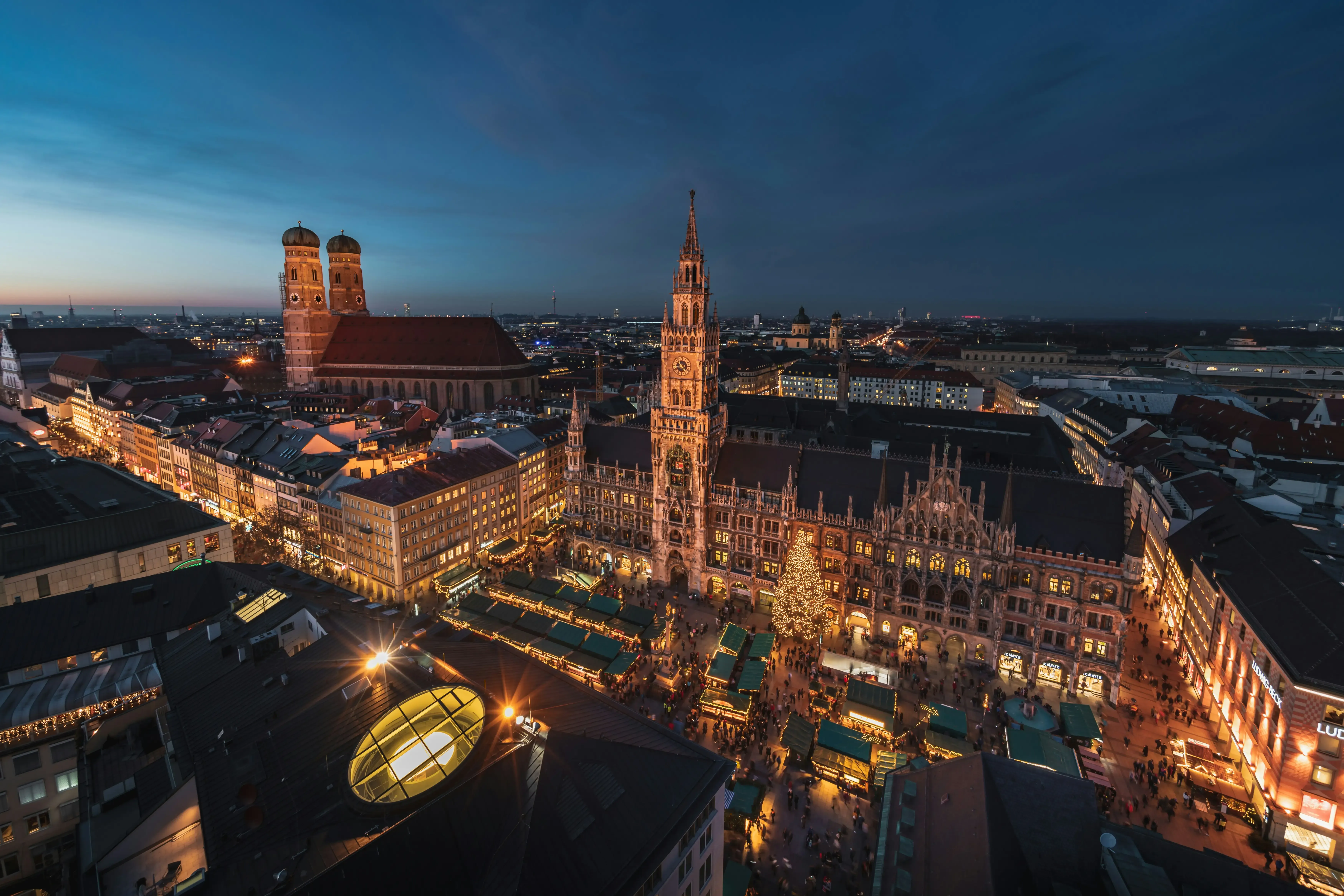
Getting to Munich
By Air
Munich Airport (MUC), officially Franz Josef Strauß International Airport, sits 37 km northeast of the city center and handles direct connections from across Europe, North America, the Middle East, Asia, and Africa. Lufthansa uses Munich as its second hub after Frankfurt — the density of routes through MUC makes it one of the best-connected airports in Central Europe. British Airways, Air France, Swiss, Austrian, Emirates, Singapore Airlines, and most major carriers operate through Munich. From London: approximately 2 hours. From New York: approximately 9 hours on direct routes.
Two terminals serve all traffic — Terminal 1 (Star Alliance carriers and regional), Terminal 2 (Lufthansa and partners). Both are connected by the MUC Terminal S-Bahn station and by the Midfield Terminal through the satellite building. MUC consistently ranks among the finest airports in Europe — organized, well-signed, and equipped with a functioning airport brewery (Airbräu) in the terminal area, which says something about the local priorities.
By Train
Munich Hauptbahnhof (the main station) is one of Germany's busiest rail hubs. ICE high-speed trains connect Munich with Frankfurt (3h 15min), Berlin (4h 10min), Hamburg (5h 45min), Nuremberg (1h 5min), Stuttgart (2h 10min), and Cologne (4h 25min). International connections include Salzburg (1h 30min by EC train), Vienna (4h), Zurich (3h 15min), and Paris (5h 45min via Stuttgart). The Munich–Salzburg and Munich–Innsbruck connections are among Germany's most scenic rail routes.
Arriving at Munich Airport: What to Know
MUC is 37 km from the city — further than many European airports, which means transport costs more here than at closer alternatives. The calculation changes significantly depending on group size and how you're planning the rest of your day.
By S-Bahn (S1 or S8): The default and most practical option for most travelers. Both the S1 (via Neufahrn → Hauptbahnhof → Ostbahnhof) and S8 (via Ostbahnhof → Hauptbahnhof) run from the airport S-Bahn station beneath the terminal, departing every 10 minutes. Journey to Hauptbahnhof: approximately 40 minutes. Single ticket: €13.60, valid for the entire Zone 1–5 journey. A day pass (€16.10) is only €2.50 more and covers unlimited travel on all Munich public transport for the rest of the day — making it the obvious choice for anyone arriving in the morning with a full day ahead. A Partner Day Ticket (€31.50) covers groups of up to 5 people. Tickets from the blue MVV machines at the S-Bahn station entrance.
By Lufthansa Express Bus: Departs from Terminal 1 and 2 every 20 minutes, making two stops at Munich North/Schwabing and Munich Central Station (Hauptbahnhof), with the journey taking approximately 45 minutes. One-way tickets cost €12 online, €13 from the driver. Comfortable, spacious, luggage-friendly — worth it if your hotel is on the Schwabing route or directly at Hauptbahnhof and you want to avoid the S-Bahn with bags.
By Private Transfer: For families with luggage, groups, late-night arrivals (the S-Bahn stops running approximately 1 AM), or travelers heading directly to a specific address in Schwabing, Haidhausen, or outer neighborhoods where the S-Bahn requires an additional U-Bahn connection, a Kiwitaxi private transfer from MUC covers the full 37 km door to door. Fixed pricing, meet and greet in arrivals, and flight monitoring that adjusts automatically for delays. Particularly useful for Oktoberfest arrivals - the combination of luggage, tired travelers, and a city at capacity makes pre-booked private transport significantly less stressful than the S-Bahn.
Getting Around Munich
Munich's integrated transport network (MVV/MVG) covers the entire city and surrounding region with U-Bahn (metro), S-Bahn (suburban rail), trams, and buses — all on unified ticketing. It's one of the finest urban transport networks in Germany, which is itself the gold standard for European public transit.
U-Bahn: Eight lines (U1–U8) covering the city's main arteries. Frequent (every 5–10 minutes at peak), reliable, and clean. The U-Bahn runs through the night on weekends and holiday eves. Key lines: U3/U6 north-south through the center; U4/U5 east-west through Hauptbahnhof and Schwabing; U2 to the Olympic Park.
Trams: Eighteen lines covering areas between U-Bahn stops, particularly useful for Maxvorstadt, Schwabing, and Haidhausen. Tram 19 from Hauptbahnhof to the Deutsches Museum and Haidhausen is one of the most useful scenic routes in the city.
Ticketing:
Single trip: approximately €3.50 for Zone 1 (city center)
Day ticket (single): €9.20 for all city zones
Partner Day Ticket: €17 for up to 5 people — the best value for families or groups doing a city day
MVV Bayern Ticket: covers one person for unlimited travel within Bavaria for a full day — essential for day trips to Neuschwanstein, Salzburg, or the Alps
Walking: Munich's Altstadt and the neighborhoods immediately surrounding it are genuinely walkable. Marienplatz to the Viktualienmarkt: 3 minutes. Marienplatz to the Pinakothek museums: 25 minutes. The Englischer Garten's southern entrance from the Altstadt: 15 minutes. The inner city is compact enough that walking is practical; the outer neighborhoods (Olympic Park, Nymphenburg) make the public transport case more compellingly.
Cycling: Munich is an excellent cycling city — 1,200 km of marked bike lanes and the flat terrain of the city center make cycling practical year-round except heavy snow. MVG Rad (the city bike-share) provides docked bikes; Swapfiets and Call a Bike offer subscription and one-time rentals. The Isar river path and the Englischer Garten circuits are the finest urban cycling routes.

Best Time to Visit Munich
Munich is a four-season city and the argument for any specific time depends on what you're there for.
May and June is Munich at its most functional best. Temperatures reach 18–24°C, the beer gardens are fully operational (the first warm day of spring sees every beer garden in the city fill by noon regardless of the exact calendar date), the Englischer Garten is in full bloom, and tourist volumes haven't reached summer peak. The Maifest (May festival season) brings outdoor events throughout the city.
July and August is summer — warm to hot (25–32°C), long days, full cultural programming, and the beer garden culture running at maximum capacity. The city is busy but Munich's infrastructure handles summer well. The Tollwood Summer Festival in the Olympiapark (June–July) is one of Munich's finest multi-week events.
Late September to Early October — Oktoberfest The most famous festival in the world runs for approximately 18 days ending on the first Sunday of October (or October 3rd if the first Sunday falls before October 3rd). In 2026 it runs September 19 through October 4. More than 6 million visitors attend; hotels book out 6–12 months in advance for Oktoberfest weeks; prices triple. The festival itself — enormous tent beer halls on the Theresienwiese, traditional Bavarian food, brass bands, the specific energy of 6,000 people singing along to Ein Prosit simultaneously — is genuinely worth the planning and expense. But it requires planning and expense. Late-arriving spontaneous visitors sleep in Augsburg and train in. Alternatively: the weeks around Oktoberfest are excellent — the city is in festival mode without the specific tent entry queues.
December — Christmas Markets Munich's Christmas markets (Christkindlmärkte) are among the finest in Germany — the one on Marienplatz under the Neues Rathaus towers is the most famous; the medieval market in Wittelsbacherplatz, the market at the Residenz, and the organic market at Weißenburger Platz are the most atmospheric. The combination of Glühwein (mulled wine), roasted almonds, the cold air, and the city's baroque architecture in winter lighting is genuinely extraordinary.
Winter Otherwise (January–February): Cold (0–5°C), quiet relative to peak, and the lowest hotel prices of the year. The skiing in the Bavarian Alps is within an hour by train — Munich works as a ski trip base for anyone who wants city evenings and morning mountains.

Munich's Neighborhoods
Altstadt (Old Town) The historic center enclosed by the old city walls — Marienplatz, the Neues Rathaus (New Town Hall) with its famous Glockenspiel, the Frauenkirche (the twin-towered cathedral whose onion domes define the Munich skyline), the Viktualienmarkt, and the Hofbräuhaus. The Altstadt is pedestrianized in its core and dense with tourist commerce — the best parts of the neighborhood are the ones that require turning off the main pedestrian axis into the surrounding lanes. The Hackenviertel and Gärtnerplatzviertel on the southern edge are where the Altstadt's everyday life is most accessible.
Maxvorstadt — The Museum Quarter The neighborhood north of the Altstadt between the Hauptbahnhof and Schwabing holds Munich's three Pinakothek art museums side by side, the Glyptothek (Greek and Roman sculpture), the Antikensammlungen, the NS-Dokumentationszentrum (the documentation center on National Socialism in Munich), and the Technical University. It's called Munich's cultural quarter without irony, and it earns the title. The café and restaurant scene around Theresienstraße and Barer Straße serves the museum-going and academic populations and is one of the most reliably good eating areas in the city.
Schwabing The bohemian neighborhood north of Maxvorstadt — the area where Kandinsky, Rilke, and Thomas Mann lived at the turn of the 20th century and where the city's artistic and intellectual identity was formed. Today: a residential neighborhood of Art Nouveau apartment buildings, tree-lined streets, a Sunday flea market, and the southern edge of the Englischer Garten. Less conspicuously edgy than its reputation suggests; more genuinely comfortable. The Leopoldstraße runs through it with cafés and restaurants that change tone from Sunday-morning brunching to late-night bar-hopping by degrees.
Glockenbachviertel and Isarvorstadt Munich's most creative and socially diverse neighborhoods — the LGBTQ+ center of the city, the highest concentration of independent restaurants per street in Munich, the Gärtnerplatz square with its circular theatre and café terraces that fill on warm evenings from 6 PM, and the antique and vintage market culture that makes weekend mornings here excellent. The Isar river is a 10-minute walk east; the Deutsches Museum is across the bridge. Preferred base for travelers who want the city's social energy without the Altstadt tourist density.
Haidhausen The former working-class neighborhood east of the Isar — now gentrified without having entirely lost its pre-gentrification character, with some of Munich's most interesting restaurants, the Maximilianeum (the Bavarian parliament) at its western edge, and the Gasteig cultural center along the river. Good for families who want space and quiet mornings; 15 minutes by tram from the city center.
Olympic Quarter (Olympiadorf) The neighborhood built for the 1972 Summer Olympics in the northwest of the city — the tent-roof stadium structures designed by Günther Behnisch, the Olympic Tower with its 360-degree city view, the Olympic Velodrome and swimming hall, and BMW's headquarters and museum immediately adjacent. The Olympic Park itself is one of Munich's finest urban green spaces and the site of summer concerts and the Tollwood festival.

Best Things to Do in Munich
Drink a Maß in the Englischer Garten The English Garden (Englischer Garten) is 3.73 square kilometers of urban park — larger than Central Park, extending from the city center north to the city limits, with rivers, lakes, meadows, beer gardens, and the Monopteros temple hill from which the Frauenkirche towers are visible over the treetops. In the middle of the park, the Chinesischer Turm (Chinese Tower) beer garden seats 7,000 people and operates whenever the temperature allows — which in Munich is broadly interpreted. A Maß (one liter of beer) at a wooden table under the chestnut trees, with the brass band playing from the tower and Bavarian families at the surrounding tables, is the purest expression of Munich's relationship to the outdoors and the beer garden as public institution. Bring your own food (the Brotzeit tradition — bread, radish, cold cuts) or buy from the beer garden kitchen.
Watch the River Surfing at the Eisbach The Eisbach wave — a standing wave on the Eisbach stream at the southern edge of the Englischer Garten — has had a permanent, informal, unsponsored surf culture since 1972. On any day from spring through autumn (and some dedicated riders in winter), a queue of surfers waits on the bank while one rides the 1.5-meter wave in the middle of a city park. It's one of the more genuinely Münchner things Munich does — the city creates recreational space by accident and then defends it ferociously when anyone suggests regulating it.
Visit the Deutsches Museum The world's largest science and technology museum occupies an island in the Isar — 72,000 square meters of exhibition space covering everything from mining (actual mineshaft you walk through) to aeronautics (actual planes you walk under), chemistry, physics, shipping (actual ships), railways, clocks, electricity, and a full-size underground coal mine. It is an inexhaustible institution that parents bring their children to and then find themselves more absorbed than the children. Allow a full day; the museum is closed for partial renovation of some halls in 2025–2027, but the majority of the permanent collection remains open — check deutsches-museum.de for the current status of specific departments.
Spend a Morning at the Three Pinakotheks The Alte Pinakothek (14th–18th century European masterworks — Dürer, Raphael, Rubens, Rembrandt, Titian), the Neue Pinakothek (19th century — Turner, Goya, Klimt, Van Gogh), and the Pinakothek der Moderne (20th and 21st century — Picasso, Warhol, Beuys, German modernism) form one of the finest museum complexes in the world and are walkable from each other in under 10 minutes. Admission is typically €7–10 per museum; on Sundays most Pinakothek admission drops to €1. A Sunday morning in the Alte Pinakothek followed by lunch in the Maxvorstadt cafés and an afternoon at the Pinakothek der Moderne is the finest single day available in Munich's cultural geography.
Eat at the Viktualienmarkt Munich's daily open-air food market — operating on the same site since 1807, now covering 22,000 square meters adjacent to the Altstadt — is simultaneously a working food market and a beer garden and a city social space. The produce stalls, the cheese vendors, the pickle and sauerkraut sellers, the flower stands, the fishmongers with Bavarian lake fish — and at the center, the Biergarten that operates from 10 AM and serves Brotzeit (cold meat, cheese, pretzels) alongside the mandatory beer. The stalls have specific reputations for specific products; the Viktualienmarkt regulars have their Tuesday cheese supplier and their Wednesday olive stand. Come in the morning.
See the Residenz and the Treasury The Residenz — the Munich palace of the Wittelsbach dynasty, rulers of Bavaria from 1328 to 1918 — is the largest urban palace in Germany, with 130 rooms open to visitors covering six centuries of Wittelsbach accumulation. The Treasury (Schatzkammer) holds the Bavarian crown jewels, the golden reliquary of St. George on horseback, the 17th-century ornamental portable altars, and a collection of goldsmiths' work that represents the finest European court craftsmanship of the 16th–18th centuries. The Antiquarium — a vaulted hall 69 meters long built in 1571 to house Greek and Roman antiquities — is the oldest surviving Renaissance interior in Bavaria and one of the finest.
Visit Nymphenburg Palace and Its Gardens The baroque summer palace of the Wittelsbach dynasty, 5 km northwest of the city center, was built between 1664 and 1758 across a central canal with symmetrical wings extending 691 meters across a formal parterre. The grounds hold three smaller palaces and hunting lodges within the parkland — the Pagodenburg, the Badenburg (with the earliest heated indoor swimming pool in Germany, built 1718), and the Amalienburg (Rococo hunting lodge whose Hall of Mirrors rivals Versailles for refined excess). The Nymphenburg porcelain factory, still operating since 1747 on the palace grounds, offers factory tours. The palace museums include the Gallery of Beauties — 36 portraits commissioned by Ludwig I of women he considered beautiful, including the famous portrait of Lola Montez whose influence on the king contributed to the 1848 revolution.
Go to a Beer Hall in the Evening The Hofbräuhaus on Platzl is the most famous beer hall in the world, a legitimate historical institution (founded 1589 as the royal Bavarian brewery), and genuinely crowded with tourists. Go to it once for the architecture, the scale of the hall, and the story. Then find the neighborhood alternatives that Münchners actually use: the Augustiner-Keller beer garden and cellar hall on Arnulfstraße (the finest of Munich's beer halls in most local opinion), the Löwenbräukeller in Stiglmaierplatz, the Paulaner am Nockherberg overlooking the city from the Haidhausen hill, or any of the neighborhood Wirtshäuser (traditional pubs) that serve the same Bavarian food — Schweinsbraten (roast pork), Obatzda (cheese spread), Brezn (pretzel), Weißwurst (white veal sausage, with sweet mustard, only before noon by Bavarian convention) — at prices and in atmospheres that the Hofbräuhaus doesn't offer.
See the BMW Welt and Museum BMW's headquarters, manufacturing plant, museum, and the extraordinary Welt (World) delivery center and showroom form a complex adjacent to the Olympic Park that is simultaneously industrial heritage, corporate architecture, and car culture at its most refined expression. The BMW Welt, designed by Coop Himmelb(l)au and opened in 2007, is the physical delivery point for new BMWs — customers come from across Germany to collect their new cars in a ceremony that BMW stages with full theatrical commitment. The adjacent museum traces the company's 100+ year history through engines, racing cars, and design evolution. Both are worth 2–3 hours for anyone interested in design, automotive history, or simply excellent contemporary architecture.
Day Trips from Munich with Kiwitaxi
Munich's position at the base of the Bavarian Alps and within rail distance of Austria, Switzerland, and the Czech Republic makes it one of the finest day trip bases in Central Europe. The regional rail network is comprehensive for major destinations; Kiwitaxi's Chauffeur Hire covers the routes where private transport adds genuine value — Neuschwanstein (where the logistics of connecting bus and lake-crossing benefit significantly from a dedicated vehicle), Zugspitze access points, and multi-stop Bavarian countryside circuits.
Neuschwanstein Castle — 2 hours from Munich King Ludwig II's unfinished fairy tale castle on a cliff above the Alpsee in the Allgäu Alps is the most photographed building in Germany and the visual source of Disney's Cinderella Castle. The interior — built between 1869 and Ludwig's death in 1886, with every room in a different historical style designed by the court scene painter and stage designer — is one of the most remarkable examples of 19th-century romantic historicism in existence. The Marienbrücke bridge above the castle gives the postcard view; the view from the Jugend Path below is equally extraordinary. The nearest town of Füssen is 4 km away; the castle requires a timed-entry ticket booked in advance at hohenschwangau.de. By Bavarian Ticket on Bayern-Ticket train to Füssen + local bus: approximately 2 hours + 40 minutes. By Kiwitaxi private transfer: approximately 1h 45min direct, with the flexibility to stop at Hohenschwangau Castle (5 minutes from Neuschwanstein, also extraordinary and less visited) and the Tegelberg cable car on the same day.
Salzburg, Austria — 1h 30min from Munich The Mozart city, the Sound of Music city, the baroque city on the Salzach — all correct, and the train takes 1h 30min from Hauptbahnhof on regular EC services (covered by Bayern-Ticket for the German portion; a small supplement for the Austrian section). The Hohensalzburg fortress, the Mirabellgarten, the Getreidegasse, the Musikum, and the specific proportion of baroque architecture in a compact old city make Salzburg one of the finest day trips from any European city. Allow a full day; arrive by 9 AM for the old town before the tours arrive.
Dachau — 45 minutes from Munich The Dachau Concentration Camp Memorial Site, 16 km northwest of Munich, was the first concentration camp established by the Nazi regime in 1933 and the model for those that followed — it operated for 12 years, held over 200,000 prisoners, and became the site of training for SS officers deployed throughout the system. The memorial is comprehensive, honest, and essential for understanding what happened in the immediate vicinity of this city. Travel by S2 from Hauptbahnhof to Dachau station, then bus 726 — approximately 45 minutes total. Allow 3–4 hours for the memorial. Free entry.
The Bavarian Alps and Zugspitze — 1–1.5 hours from Munich The alpine towns of Garmisch-Partenkirchen (1h by train) and Mittenwald (1h 20min) sit at the base of the Zugspitze massif — Germany's highest mountain at 2,962 meters, accessible by cog railway from Garmisch and by cable car from the Eibsee lake below the summit. A clear winter day at the Zugspitze summit — with Austria and Switzerland visible across the Alps — is one of Germany's great panoramic experiences. The Eibsee itself, a turquoise glacial lake, is extraordinary in any season.
Berchtesgaden and the Eagle's Nest — 2 hours from Munich The Berchtesgaden National Park in the southeastern Bavarian Alps holds the Königssee — a glacially clear lake 8 km long, navigable only by electric boat that is silent except for the natural echo that the captain demonstrates at every tour — and the Kehlsteinhaus, the "Eagle's Nest" built at 1,834 meters for Hitler's 50th birthday and now a restaurant and memorial with views over Berchtesgaden and Austria. The Dokumentation Obersalzberg (the documentation center for the Nazi headquarters compound on the Obersalzberg mountain) provides the historical context. By Bavarian Ticket + local bus: approximately 2h 30min.
By Kiwitaxi Chauffeur with multiple alpine stops: a full and extraordinary day.

Munich on a Practical Note
Currency: Euro. Cash is more commonly required in Munich than in most major European cities — many traditional beer halls, markets, and smaller restaurants are cash-preferred or cash-only. Carry €30–50 in small denominations. ATMs (Geldautomat) are available throughout the city.
Weißwurst rule: The Bavarian white sausage (Weißwurst) is made without preservatives and is a breakfast food — tradition holds it should not be eaten after the midday church bells (don't let the Weißwurst hear the midday bell). This is cultural information. Ordering it at 11:55 AM is fine; ordering it at 2 PM in a traditional Bavarian restaurant will earn you either a gentle correction or a look.
Oktoberfest practicalities: The main Oktoberfest tent beer halls require reservations for tables with waitress service (book 4–6 months ahead through the tent operators' official websites). Walk-in space exists in most tents but is in the standing areas. The beer is specifically brewed for Oktoberfest by Munich's six licensed breweries (Augustiner, Hofbräu, Löwenbräu, Paulaner, Hacker-Pschorr, Spaten) and is approximately 6% — stronger than regular beer, in liters. Pace accordingly.
Beer garden etiquette: At traditional beer gardens, you are welcome to bring your own food — the Mitbring-Zone at most gardens is explicitly designated for outside food. Buying drinks at the garden while bringing your own Brotzeit is the traditional arrangement and fully accepted. The self-service section of most gardens is cheaper than the table-service section; the food quality is identical.
Sunday closures: Shops close on Sundays in Bavaria — more strictly observed than in many German states. Supermarkets at train stations and petrol stations remain open. Restaurants, beer gardens, and cultural institutions operate normally.
MVG bike and cycling: Munich is among the most bike-friendly German cities. The city center is largely flat; the Isar river path and the Englischer Garten circuit are genuinely excellent cycling routes. Winter cycling is common among locals (studded tires, proper gear) — visitors arriving October–March may prefer the public transport.
Munich has been getting this right for a while now. The beer gardens figured out that 7,000 seats under chestnut trees was a better civic institution than a formal park. The museums figured out that putting three world-class art collections within 10 minutes of each other was a better idea than distributing them across the city. The train station figured out that a direct link to Salzburg, Vienna, and Zurich was worth the infrastructure investment. None of this was accidental. Bavaria takes these things seriously.
Best Picks for True Adventurers


Landing in Munich? Your Ride Is Ready
Pre-book your private driver, skip the taxi line, and get to your hotel with a fixed price and no surprises.
Book nowExplore All Guides
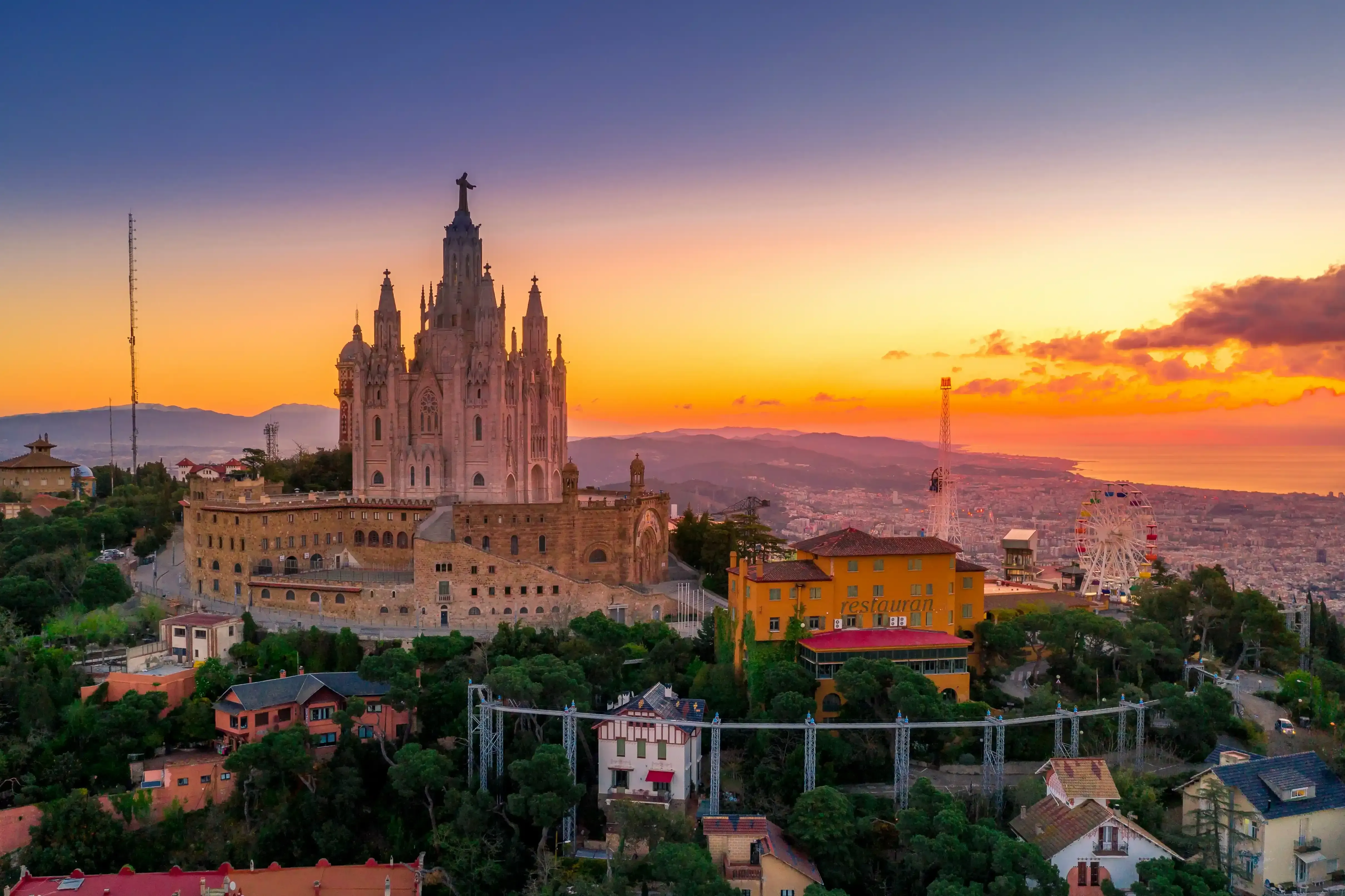
Barcelona Neighborhoods Guide: Where to Stay & What to Expect in Each Barrio

Discover Paris: A Guide to Iconic Landmarks, Historic Cafés & Legendary Stores

Osaka Travel Guide: Top Things to Do & Food Spots

First-Timer's Japan Handbook: 10 Essential Travel Tips + Etiquette FAQ

Rome in a Day & 3 Days in Rome: The Ultimate Itineraries for Every Traveler

Barcelona Airport to Gothic Quarter: Fastest Transfer Options, Prices & Travel Tips

Ultimate Japan Itineraries: Discover the Best of Japan in 7 or 14 Days

More than the Eiffel Tower: Best Things to Do In Paris

Best hotels in Albania: Tirana, Saranda, Vlorë & Durres

Rome: La Dolce Vita in Every Corner — travel guide by Olivia (@doinglifewithliv)

Barcelona Airport to Sagrada Família: Best Transfer Options, Prices & Travel Times

Paris Food Guide: Eiffel Tower View Restaurants & Rooftop Dining

18 Things You Need to Know Before Visiting Croatia

10 Unforgettable Day Trips from Rome, Italy: Ancient Towns, Best Beaches & Countryside Escapes
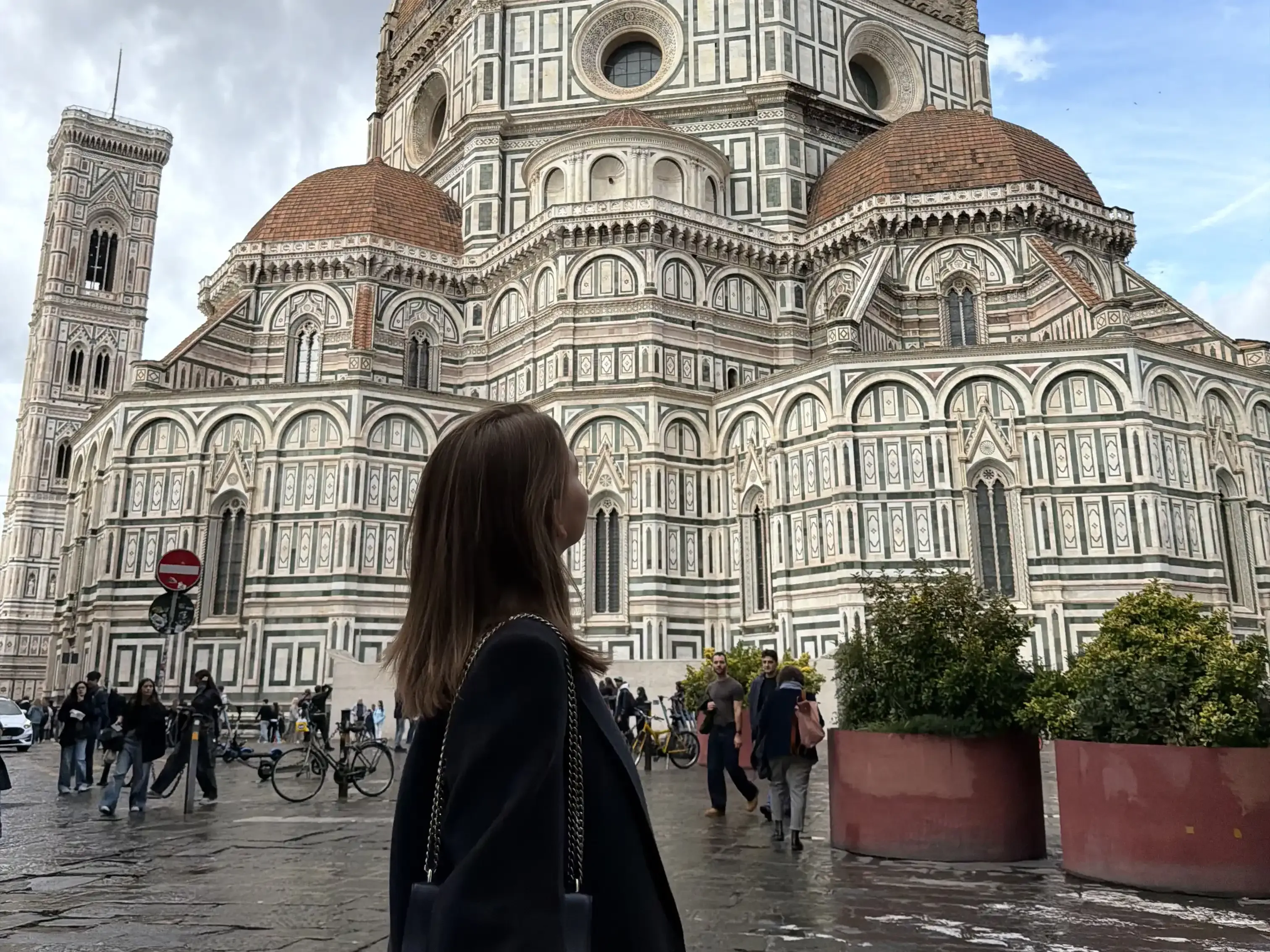
A Taste of Florence: Your Complete Food Guide

Best Day Trips from Milan with a Private Driver: Lake Como, Verona & Beyond

10 Best Holiday Alternatives to the Middle East for Spring 2026

Best Things to Do Around the Colosseum: Rome Attractions, Tours & Insider Tips

Barcelona vs Madrid: Which City Is Better to Visit in Spain?

Barcelona: Hidden Bites, Secret Sips & Sunshine Tips by Nancy Sevilla

Best eSIM for Japan 2026

Budapest Travel Tips: Beyond the Obvious

Best Hotels in Rome for Every Budget: Luxury, Boutique & Budget Stays

Cinque Terre Travel Guide: Best Villages & Trails

Best Wine Tours from Milan: Franciacorta, Valpolicella & Chauffeur Hire
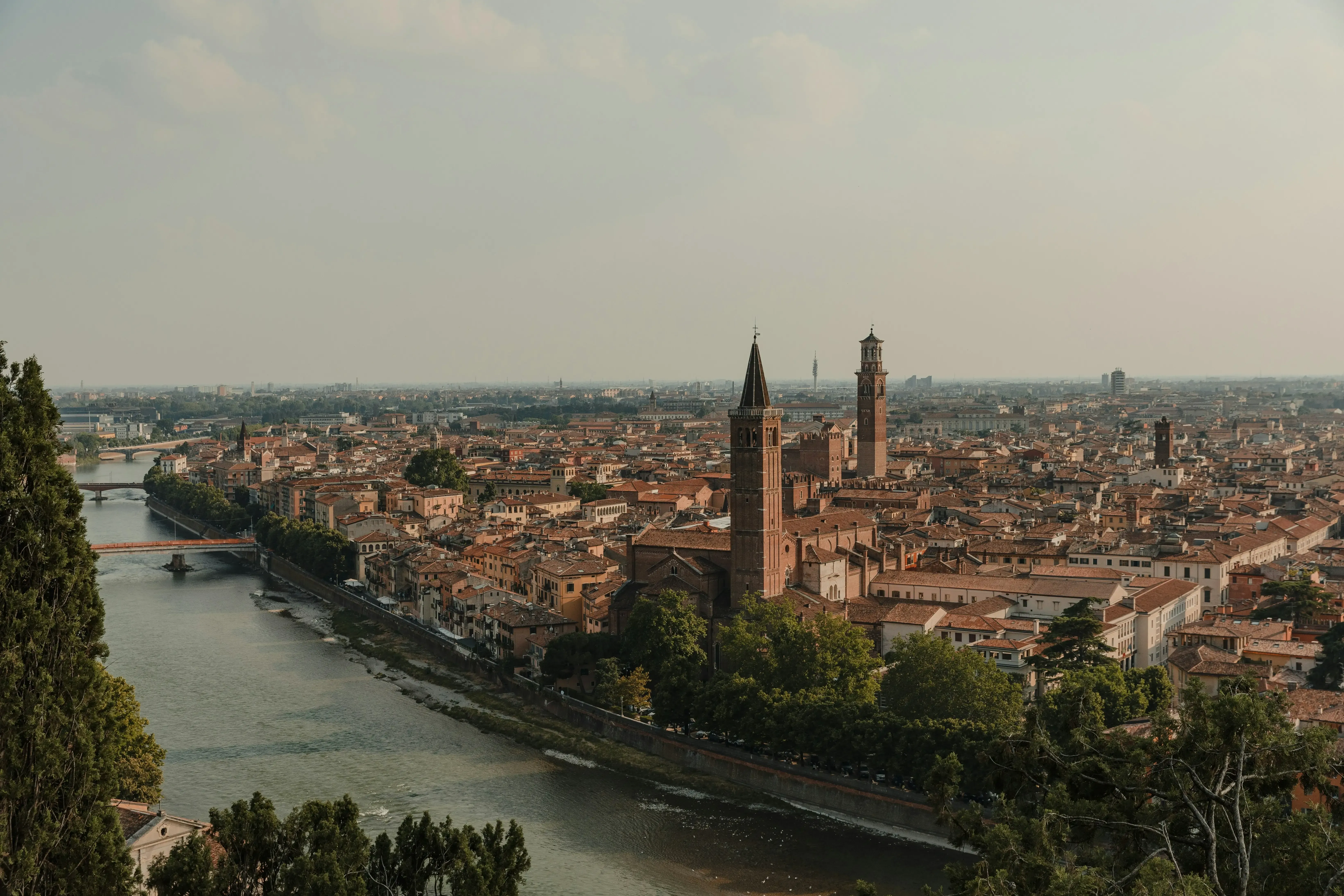
Milan to Verona Day Trip with a Chauffeur

South Korea Travel Guide: Best Cultural, Beauty & Wellness Experiences in Seoul, Busan & Jeonju

Best Things to Do in Singapore: Food, Views & Hidden Gems

Free eSIM Trial: Where to Get Free Data

Hoi An Travel Guide: Hidden Gems, Spas & Local Experiences

Santorini Travel Guide: Sunsets, Cruises & Wine

3 Days in Northern Spain: Bilbao, the Cantabrian Coast & Santander

Best eSim for Europe: One Card for 30+ Countries

Best eSim for Mexico: Stay Connected on Your Trip

How to Get from Lisbon to Porto (2026): Train, Bus, Car, or Flight?

How to Get from London to Madeira: Complete Guide (2026)

How to Get from Beauvais Airport to Paris

Paris on a Budget: Affordable Hotels, Shopping & Free Things to Do

Top 12 Things to Do in Albania: Ultimate Travel Guide

Where to Stay in the Albanian Riviera: Best Hotels & Areas
Kyoto Travel Guide: Journey to the Heart of Old Japan
