'%3e%3cpath%20d='M43.073%200.00649261H15.0943V3.94346H43.073V0.00649261Z'%20fill='url(%23kiwitaxi-grad)'%20/%3e%3cpath%20d='M15.0828%203.94346C16.1928%203.94346%2017.0512%203.06513%2017.0512%201.97497C17.0512%200.874164%2016.1822%200.00649261%2015.0828%200.00649261C14.0362%200.00649261%2013.1379%200.851916%2013.1379%201.97497C13.1379%203.10916%2014.0478%203.94346%2015.0828%203.94346Z'%20fill='white'%20/%3e%3cpath%20d='M43.0614%203.94346C44.1715%203.94346%2045.0299%203.06513%2045.0299%201.97497C45.0299%200.874164%2044.1609%200.00649261%2043.0614%200.00649261C42.0149%200.00649261%2041.1166%200.851916%2041.1166%201.97497C41.1166%203.10916%2042.0265%203.94346%2043.0614%203.94346Z'%20fill='white'%20/%3e%3cpath%20d='M19.5921%2038.5052V39.828H23.1471V26.0491H19.5921V27.3446C18.895%2026.5789%2017.4549%2025.8841%2015.7339%2025.8841C11.8502%2025.8841%208.78975%2028.7578%208.78975%2032.939C8.78975%2037.1374%2011.8702%2039.9935%2015.7339%2039.9935C17.4938%2039.9935%2018.932%2039.2691%2019.5921%2038.5052ZM12.2892%2032.939C12.2892%2030.5715%2013.929%2029.1912%2015.9819%2029.1912C18.0106%2029.1912%2019.5647%2030.5845%2019.5647%2032.939C19.5647%2035.2579%2017.9768%2036.6869%2015.9823%2036.6869C13.9596%2036.6869%2012.2892%2035.264%2012.2892%2032.939Z'%20fill='white'%20/%3e%3cpath%20d='M44.7174%2026.0496H41.4289V39.8281H44.7174V26.0496Z'%20fill='white'%20/%3e%3cpath%20d='M32.2183%2035.7001L29.3455%2039.8281H24.94L30.044%2032.8552L25.1624%2026.0496H29.7075L32.3295%2029.8985L35.035%2026.0496H39.4405L34.5599%2032.7435L39.6361%2039.8281H35.1189L32.2183%2035.7001Z'%20fill='white'%20/%3e%3cpath%20d='M3.34504%2022.9604V26.0496H7.4039V29.0939H3.34504V34.2781C3.34504%2035.9866%204.33971%2036.7008%205.955%2036.7008C6.54504%2036.7008%207.16659%2036.5766%207.63241%2036.235V39.4341C7.04237%2039.7757%206.14133%2039.9931%204.89915%2039.9931C1.8243%2039.9931%200.0226746%2038.1293%200.0226746%2034.9298V22.96H3.34504Z'%20fill='white'%20/%3e%3cpath%20d='M36.2094%208.57428L33.307%2016.8723L30.43%208.57428H27.7621L24.8597%2016.8723L21.9828%208.57428H18.4884L23.2157%2021.4188H26.5037L29.084%2014.4093L31.6629%2021.4188H34.951L39.6782%208.57428H36.2094Z'%20fill='white'%20/%3e%3cpath%20d='M44.7174%208.57381H41.4289V21.4188H44.7174V8.57381Z'%20fill='white'%20/%3e%3cpath%20d='M16.7387%208.57381H13.4502V21.4188H16.7387V8.57381Z'%20fill='white'%20/%3e%3cpath%20d='M11.7001%208.57382L6.07922%2014.1326L12.1622%2021.4188H8.05929L3.92163%2016.28L3.3455%2016.8538V21.4188H0.0226746V3.94299H3.3455V12.7574L7.59764%208.57382H11.7001Z'%20fill='white'%20/%3e%3c/g%3e%3cdefs%3e%3clinearGradient%20id='kiwitaxi-grad'%20x1='15.0945'%20y1='1.97497'%20x2='43.073'%20y2='1.97497'%20gradientUnits='userSpaceOnUse'%3e%3cstop%20stop-color='%2300D2CD'%20stop-opacity='0'%20/%3e%3cstop%20offset='1'%20stop-color='%2300D2CD'%20/%3e%3c/linearGradient%3e%3cclipPath%20id='kiwitaxi-clip'%3e%3crect%20width='46'%20height='40'%20fill='white'%20/%3e%3c/clipPath%3e%3c/defs%3e%3c/svg%3e)


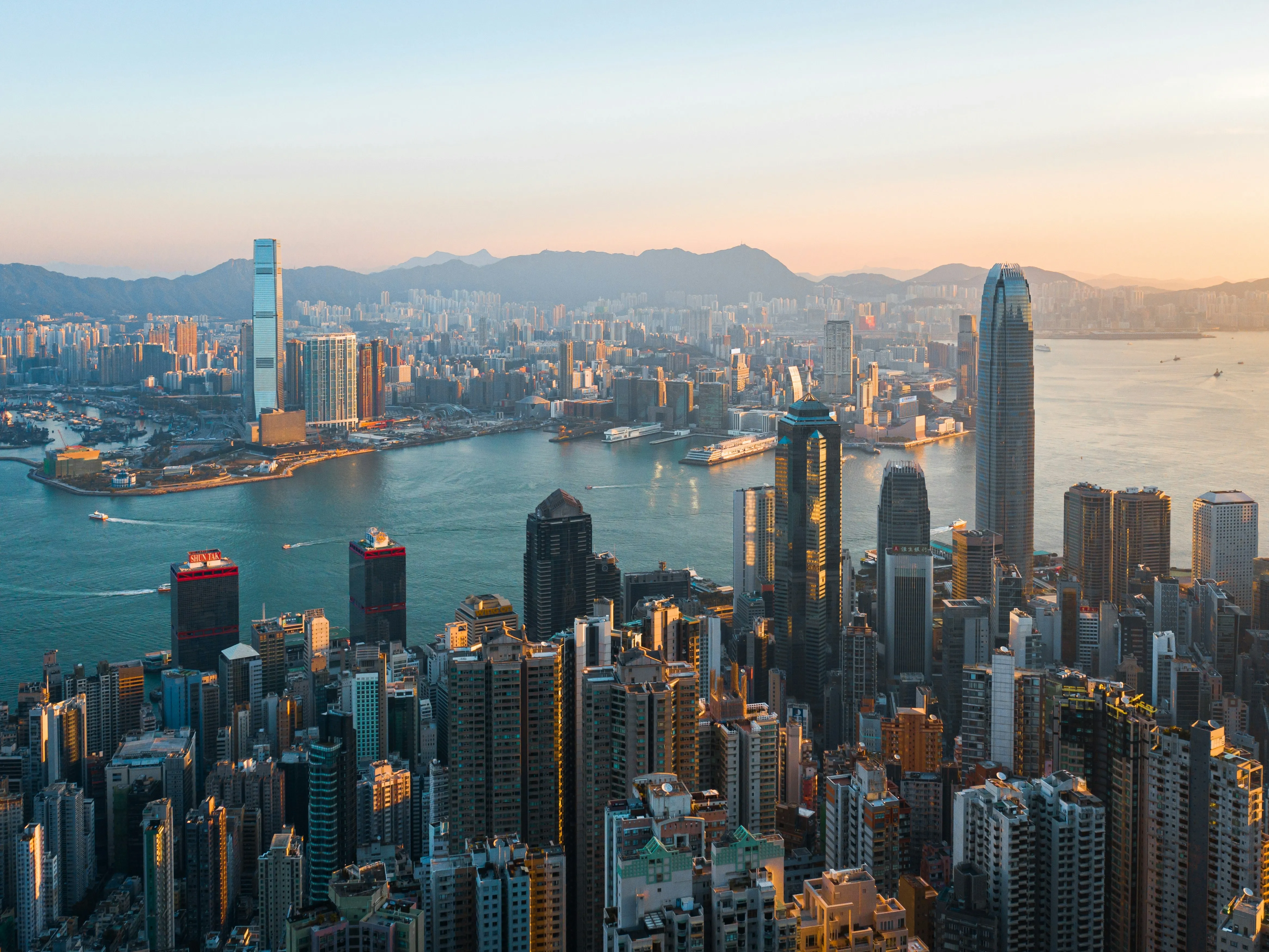
Hong Kong feels like several different cities stacked on top of each other.
Glass skyscrapers rise above century-old temples. Neon signs glow beside bamboo scaffolding. Ferries cross Victoria Harbour while hiking trails disappear into jungle-covered mountains only minutes from financial districts. Somewhere between the dense apartment towers, incense-filled temples, rooftop bars, street markets, and quiet islands beyond the skyline, Hong Kong creates a rhythm unlike anywhere else in Asia.
The city moves fast — visibly, constantly, vertically.
Escalators climb entire neighborhoods. Double-decker trams squeeze through streets lined with glowing signs. Apartment towers seem to rise endlessly into low clouds. Yet despite its reputation for intensity, Hong Kong also contains surprising calm: hidden beaches, mountain trails, fishing villages, Buddhist monasteries, and parks overlooking one of the world’s most dramatic skylines.
Historically, Hong Kong developed as a British colony after the First Opium War in 1842 before returning to China in 1997 under the “one country, two systems” framework. The result is a city shaped simultaneously by Cantonese traditions, British colonial influence, international finance, migration, and global culture.
You notice this everywhere.
English and Cantonese signs side by side. Colonial trams beneath futuristic towers. Michelin-starred dining existing next to tiny noodle shops with plastic stools and handwritten menus.
Food remains central to life here.
Morning dim sum gatherings, late-night noodle stalls, roast goose restaurants, egg tarts, milk tea cafés, seafood markets — Hong Kong’s culinary culture feels woven into the city as deeply as the harbor itself.
And then there’s the skyline.
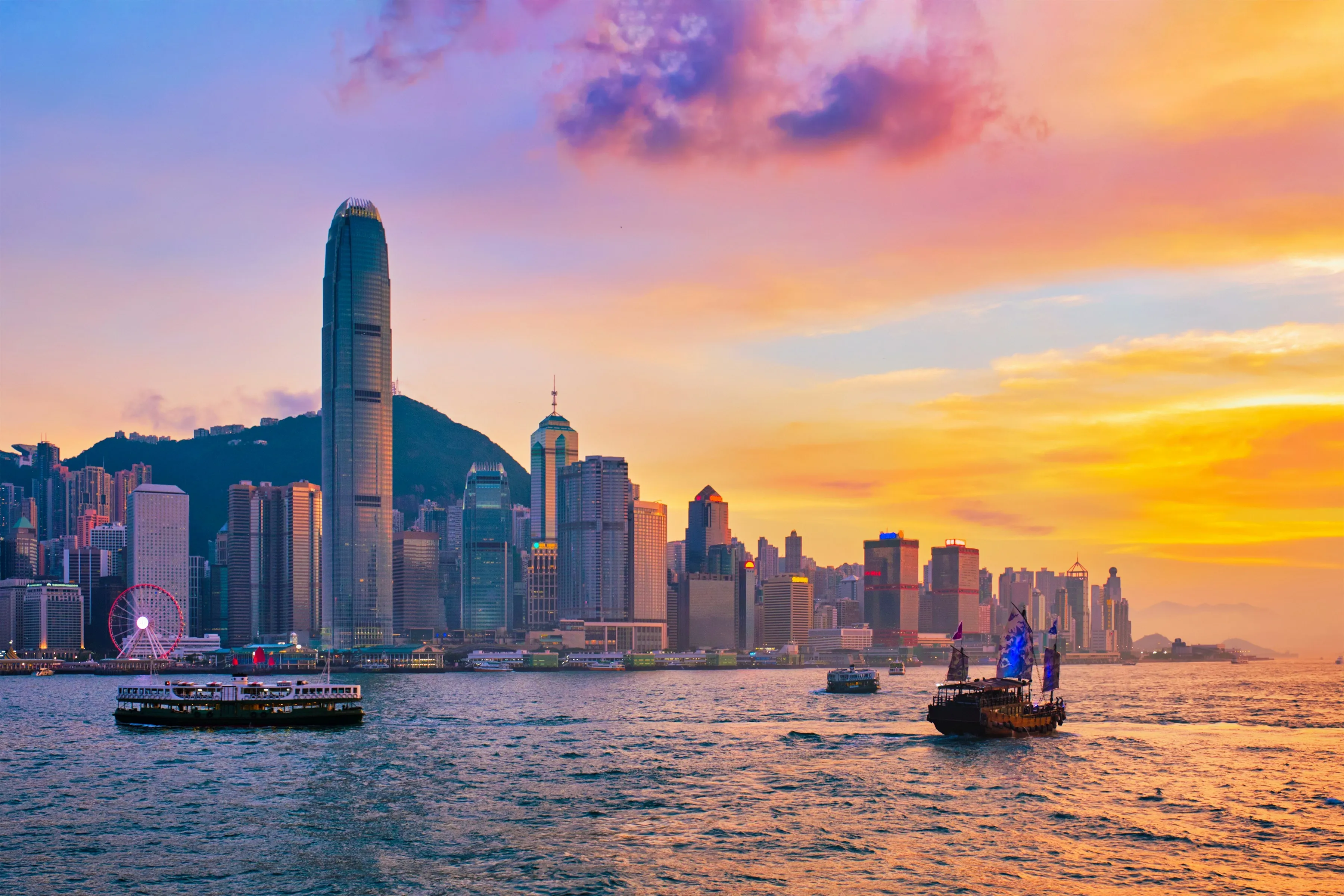
Seen from the Star Ferry at sunset or from Victoria Peak after dark, Hong Kong’s skyline still feels almost impossibly cinematic even after decades of photographs and films.
The city rarely asks visitors to relax completely.
Instead, it rewards curiosity, energy, appetite, and the willingness to explore upward, downward, and far beyond the skyscrapers.
Getting to Hong Kong
By Air
Hong Kong International Airport (HKG) sits on Lantau Island and consistently ranks among the world’s best-connected airports.
Direct flights connect Hong Kong with major cities across Asia, Europe, North America, Australia, and the Middle East.
Worth knowing: the airport is exceptionally efficient despite its size, with excellent transport links into the city.
By High-Speed Rail
Hong Kong connects with mainland China through high-speed rail services reaching Shenzhen, Guangzhou, and other major Chinese cities.
By Ferry
Regional ferries operate between Hong Kong, Macau, and parts of southern China.
Arriving in Hong Kong: What to Expect
Hong Kong’s airport systems are modern, multilingual, and remarkably organized.
By Airport Express
The Airport Express train reaches Central Hong Kong in approximately 24 minutes and remains one of the easiest airport transfers in Asia.
By Taxi
Taxis are reliable, metered, and color-coded by operating region.
By Private Transfer
A Kiwitaxi private transfer from Hong Kong Airport offers direct hotel drop-off, fixed pricing, and a smoother arrival experience — especially valuable after long-haul flights or late-night arrivals.
Getting Around Hong Kong
Hong Kong’s public transport system is among the world’s best.
MTR
The Mass Transit Railway (MTR) connects nearly every major district quickly and efficiently.
Star Ferry
Star Ferry crossings between Hong Kong Island and Kowloon remain both practical transport and one of the city’s most iconic experiences.
Trams
Historic double-decker trams — affectionately called “ding dings” — move slowly across northern Hong Kong Island beneath towering skyscrapers.
Walking & Escalators
Central and Mid-Levels combine steep streets, pedestrian bridges, and the world’s longest outdoor covered escalator system.
Best Time to Visit Hong Kong
October to December
The ideal season — comfortable temperatures, lower humidity, and clearer skies.
January to March
Cooler and occasionally foggy, though still pleasant for city exploration.
April to September
Hot, humid, and prone to heavy rain and typhoons, though summer energy remains vibrant.
Chinese New Year
The city becomes especially festive with decorations, fireworks, markets, and traditional celebrations.
Where to Stay in Hong Kong
Central
Business district, luxury hotels, nightlife, rooftop bars, and easy transport connections.
Tsim Sha Tsui
Harbour views, shopping, museums, and excellent access to Kowloon attractions.
Mong Kok
Dense, energetic, chaotic, and famous for markets, street food, and neon-lit streets.
Wan Chai & Causeway Bay
Food, shopping, nightlife, and a mix of modern and traditional Hong Kong life.
Best Things to Do in Hong Kong
Ride the Star Ferry
Crossing Victoria Harbour aboard the Star Ferry remains one of the city’s simplest and most memorable experiences.
The skyline views become especially dramatic at sunset.
Visit Victoria Peak
Victoria Peak offers panoramic views across skyscrapers, mountains, islands, and Victoria Harbour far below.
The Peak Tram itself remains part of the experience.
Explore Man Mo Temple
Man Mo Temple contrasts sharply with the surrounding city — incense coils hanging from the ceiling, quiet prayers, and historic architecture hidden among dense urban streets.
Hike Dragon’s Back
Dragon’s Back reveals Hong Kong’s less expected side — coastal trails, green hills, beaches, and sweeping South China Sea views only a short distance from the city center.
Wander Through Mong Kok
Markets, neon signs, sneaker stores, flower markets, electronics shops, and dense apartment towers create one of Hong Kong’s most energetic districts.
Take the Tram to Happy Valley
The city’s iconic trams provide one of the best ways to absorb daily street life slowly.
Visit Tian Tan Buddha
Tian Tan Buddha sits high in the mountains above Lantau Island beside monasteries and forested landscapes.
Watch Symphony of Lights
The nightly skyline light show across Victoria Harbour transforms the city into a moving wall of color and reflection.
Food & Drink in Hong Kong
Hong Kong is one of Asia’s greatest food cities.
Dim sum remains essential — bamboo steamers filled with shrimp dumplings, barbecue pork buns, rice rolls, and custard tarts shared over tea.
Roast goose, wonton noodles, claypot rice, pineapple buns, egg waffles, seafood, and milk tea all form part of everyday city life.
The city combines luxury dining and street food unusually well — Michelin-starred restaurants can exist beside tiny family-run noodle shops operating for generations.
Day Trips from Hong Kong with Kiwitaxi
Lantau Island
Mountains, beaches, monasteries, fishing villages, and hiking trails beyond the urban skyline.
Macau
Portuguese colonial history, casinos, and fusion cuisine reachable by ferry.
Sai Kung
Seafood restaurants, beaches, hiking, and some of Hong Kong’s most beautiful coastal scenery.
Shenzhen
Modern mainland China energy just across the border from Hong Kong.
Kiwitaxi chauffeur hire service simplify airport connections, cross-border routes, and regional travel significantly, especially for travelers combining Hong Kong with southern China itineraries.
Practical Notes for Visiting Hong Kong
The Hong Kong dollar (HKD) is the local currency. Card payment is widely accepted, though smaller restaurants and markets may still prefer cash.
Octopus Cards make public transport significantly easier across the city.
Hong Kong’s humidity can feel intense during summer months.
English is widely spoken in tourist areas, transport systems, and hotels.
The city’s pace can initially feel overwhelming, especially in dense districts like Mong Kok and Central.
But Hong Kong reveals itself gradually.
Behind the skyline and speed exists a city deeply shaped by food, ritual, migration, mountains, and everyday routines — a place where skyscrapers and temples somehow coexist naturally beneath the same humid subtropical sky.

Explore Hong Kong Guides


Skip the Taxi Queue in Hong Kong
Private airport transfers with fixed prices, flight tracking, and a driver waiting when you land.
Book a transferExplore All Guides
Barcelona Neighborhoods Guide: Where to Stay & What to Expect in Each Barrio

Discover Paris: A Guide to Iconic Landmarks, Historic Cafés & Legendary Stores

Osaka Travel Guide: Top Things to Do & Food Spots

First-Timer's Japan Handbook: 10 Essential Travel Tips + Etiquette FAQ

Rome in a Day & 3 Days in Rome: The Ultimate Itineraries for Every Traveler

Barcelona Airport to Gothic Quarter: Fastest Transfer Options, Prices & Travel Tips

Ultimate Japan Itineraries: Discover the Best of Japan in 7 or 14 Days

More than the Eiffel Tower: Best Things to Do In Paris

Best hotels in Albania: Tirana, Saranda, Vlorë & Durres

Rome: La Dolce Vita in Every Corner — travel guide by Olivia (@doinglifewithliv)

Barcelona Airport to Sagrada Família: Best Transfer Options, Prices & Travel Times

Paris Food Guide: Eiffel Tower View Restaurants & Rooftop Dining

18 Things You Need to Know Before Visiting Croatia

10 Unforgettable Day Trips from Rome, Italy: Ancient Towns, Best Beaches & Countryside Escapes
A Taste of Florence: Your Complete Food Guide

Best Day Trips from Milan with a Private Driver: Lake Como, Verona & Beyond

10 Best Holiday Alternatives to the Middle East for Spring 2026

Best Things to Do Around the Colosseum: Rome Attractions, Tours & Insider Tips

Barcelona vs Madrid: Which City Is Better to Visit in Spain?

Barcelona: Hidden Bites, Secret Sips & Sunshine Tips by Nancy Sevilla

Best eSIM for Japan 2026

Budapest Travel Tips: Beyond the Obvious

Best Hotels in Rome for Every Budget: Luxury, Boutique & Budget Stays

Cinque Terre Travel Guide: Best Villages & Trails

Best Wine Tours from Milan: Franciacorta, Valpolicella & Chauffeur Hire
Milan to Verona Day Trip with a Chauffeur

South Korea Travel Guide: Best Cultural, Beauty & Wellness Experiences in Seoul, Busan & Jeonju

Best Things to Do in Singapore: Food, Views & Hidden Gems

Free eSIM Trial: Where to Get Free Data

Hoi An Travel Guide: Hidden Gems, Spas & Local Experiences

Santorini Travel Guide: Sunsets, Cruises & Wine

3 Days in Northern Spain: Bilbao, the Cantabrian Coast & Santander

Best eSim for Europe: One Card for 30+ Countries

Best eSim for Mexico: Stay Connected on Your Trip

How to Get from Lisbon to Porto (2026): Train, Bus, Car, or Flight?

How to Get from London to Madeira: Complete Guide (2026)

How to Get from Beauvais Airport to Paris

Paris on a Budget: Affordable Hotels, Shopping & Free Things to Do

Top 12 Things to Do in Albania: Ultimate Travel Guide

Where to Stay in the Albanian Riviera: Best Hotels & Areas
Kyoto Travel Guide: Journey to the Heart of Old Japan
