'%3e%3cpath%20d='M43.073%200.00649261H15.0943V3.94346H43.073V0.00649261Z'%20fill='url(%23kiwitaxi-grad)'%20/%3e%3cpath%20d='M15.0828%203.94346C16.1928%203.94346%2017.0512%203.06513%2017.0512%201.97497C17.0512%200.874164%2016.1822%200.00649261%2015.0828%200.00649261C14.0362%200.00649261%2013.1379%200.851916%2013.1379%201.97497C13.1379%203.10916%2014.0478%203.94346%2015.0828%203.94346Z'%20fill='white'%20/%3e%3cpath%20d='M43.0614%203.94346C44.1715%203.94346%2045.0299%203.06513%2045.0299%201.97497C45.0299%200.874164%2044.1609%200.00649261%2043.0614%200.00649261C42.0149%200.00649261%2041.1166%200.851916%2041.1166%201.97497C41.1166%203.10916%2042.0265%203.94346%2043.0614%203.94346Z'%20fill='white'%20/%3e%3cpath%20d='M19.5921%2038.5052V39.828H23.1471V26.0491H19.5921V27.3446C18.895%2026.5789%2017.4549%2025.8841%2015.7339%2025.8841C11.8502%2025.8841%208.78975%2028.7578%208.78975%2032.939C8.78975%2037.1374%2011.8702%2039.9935%2015.7339%2039.9935C17.4938%2039.9935%2018.932%2039.2691%2019.5921%2038.5052ZM12.2892%2032.939C12.2892%2030.5715%2013.929%2029.1912%2015.9819%2029.1912C18.0106%2029.1912%2019.5647%2030.5845%2019.5647%2032.939C19.5647%2035.2579%2017.9768%2036.6869%2015.9823%2036.6869C13.9596%2036.6869%2012.2892%2035.264%2012.2892%2032.939Z'%20fill='white'%20/%3e%3cpath%20d='M44.7174%2026.0496H41.4289V39.8281H44.7174V26.0496Z'%20fill='white'%20/%3e%3cpath%20d='M32.2183%2035.7001L29.3455%2039.8281H24.94L30.044%2032.8552L25.1624%2026.0496H29.7075L32.3295%2029.8985L35.035%2026.0496H39.4405L34.5599%2032.7435L39.6361%2039.8281H35.1189L32.2183%2035.7001Z'%20fill='white'%20/%3e%3cpath%20d='M3.34504%2022.9604V26.0496H7.4039V29.0939H3.34504V34.2781C3.34504%2035.9866%204.33971%2036.7008%205.955%2036.7008C6.54504%2036.7008%207.16659%2036.5766%207.63241%2036.235V39.4341C7.04237%2039.7757%206.14133%2039.9931%204.89915%2039.9931C1.8243%2039.9931%200.0226746%2038.1293%200.0226746%2034.9298V22.96H3.34504Z'%20fill='white'%20/%3e%3cpath%20d='M36.2094%208.57428L33.307%2016.8723L30.43%208.57428H27.7621L24.8597%2016.8723L21.9828%208.57428H18.4884L23.2157%2021.4188H26.5037L29.084%2014.4093L31.6629%2021.4188H34.951L39.6782%208.57428H36.2094Z'%20fill='white'%20/%3e%3cpath%20d='M44.7174%208.57381H41.4289V21.4188H44.7174V8.57381Z'%20fill='white'%20/%3e%3cpath%20d='M16.7387%208.57381H13.4502V21.4188H16.7387V8.57381Z'%20fill='white'%20/%3e%3cpath%20d='M11.7001%208.57382L6.07922%2014.1326L12.1622%2021.4188H8.05929L3.92163%2016.28L3.3455%2016.8538V21.4188H0.0226746V3.94299H3.3455V12.7574L7.59764%208.57382H11.7001Z'%20fill='white'%20/%3e%3c/g%3e%3cdefs%3e%3clinearGradient%20id='kiwitaxi-grad'%20x1='15.0945'%20y1='1.97497'%20x2='43.073'%20y2='1.97497'%20gradientUnits='userSpaceOnUse'%3e%3cstop%20stop-color='%2300D2CD'%20stop-opacity='0'%20/%3e%3cstop%20offset='1'%20stop-color='%2300D2CD'%20/%3e%3c/linearGradient%3e%3cclipPath%20id='kiwitaxi-clip'%3e%3crect%20width='46'%20height='40'%20fill='white'%20/%3e%3c/clipPath%3e%3c/defs%3e%3c/svg%3e)


Budapest feels like two cities constantly in conversation with each other.
On one side of the Danube rises Buda — quieter, hillier, filled with castle walls, thermal baths, and panoramic viewpoints above the river. Across the water stretches Pest — grand boulevards, cafés, nightlife, ruin bars, and the monumental architecture of a capital that once stood at the center of an empire. The two halves are divided physically by the Danube and connected emotionally by bridges that have become part of the city’s identity.
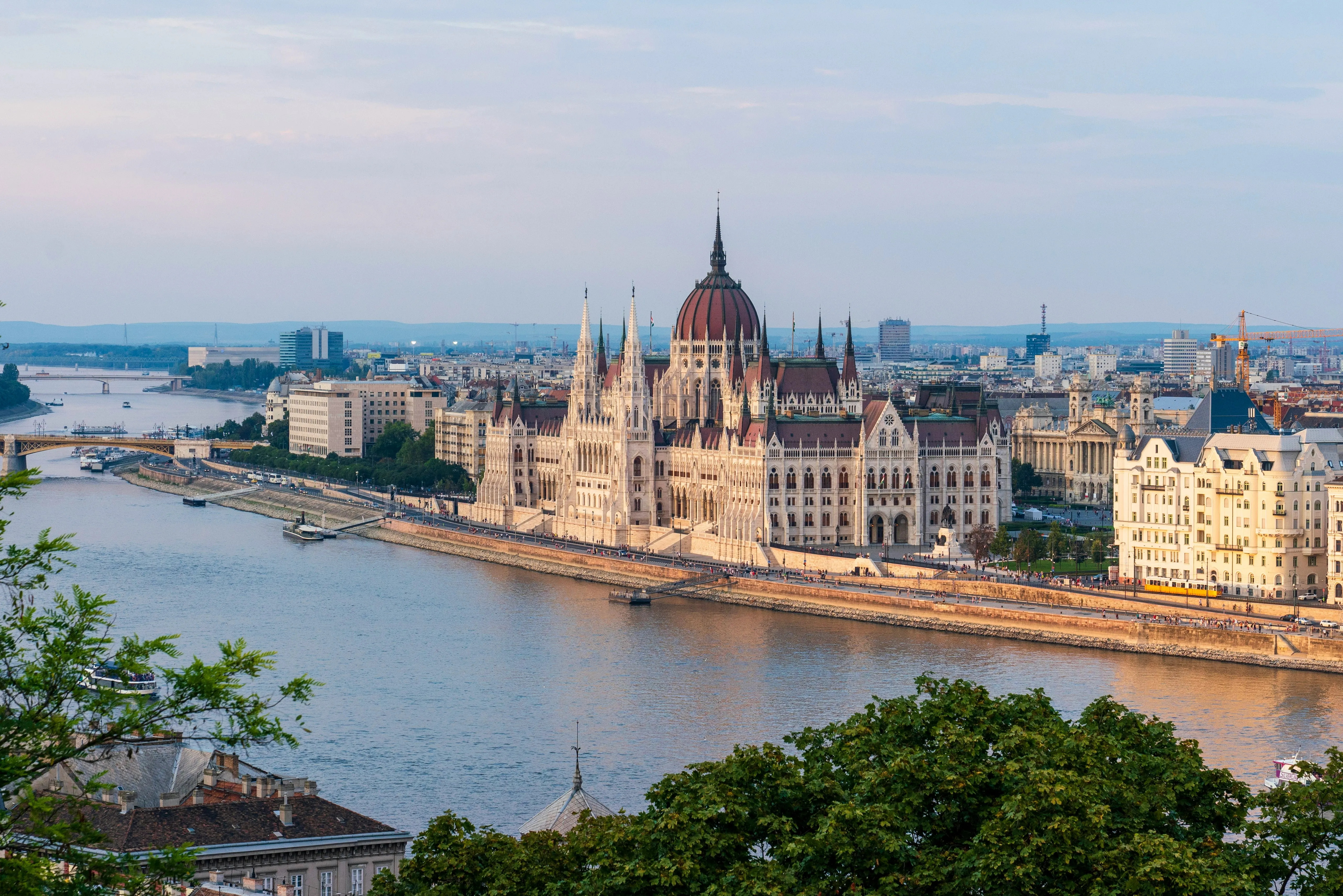
Few European capitals balance beauty and atmosphere quite as effortlessly as Budapest. The Parliament Building glows gold beside the river after dark. Trams rattle along the embankment beneath bridges illuminated at night. Thermal baths steam beneath winter skies while cafés remain full long after sunset. Everywhere, the city carries traces of different eras layered visibly together — Ottoman occupation, Austro-Hungarian grandeur, communist history, and modern creative energy all existing side by side.
And then there’s the scale of it. Budapest feels grand without becoming overwhelming. Wide avenues open suddenly into hidden courtyards. Neo-Gothic facades stand beside crumbling prewar buildings transformed into bars and galleries. The city rewards slow exploration because almost every neighborhood reveals another architectural detail, another bathhouse, another riverside view worth stopping for.
Historically, Budapest emerged in 1873 from the unification of three cities: Buda, Pest, and Óbuda. During the Austro-Hungarian Empire, it became one of Europe’s most important cultural and political capitals. Much of the monumental architecture visitors admire today — bridges, bathhouses, boulevards, opera houses, and parliament buildings — dates from this remarkably ambitious period.
But Budapest never feels frozen in history. The city remains intensely lived in — students filling ruin bars late into the night, locals soaking in thermal pools on winter mornings, markets operating beneath ornate iron roofs, and cafés continuing a literary culture that shaped Hungarian intellectual life for generations.
Three days gives you the landmarks. A week begins revealing the rhythm behind them.
Getting to Budapest
By Air
Budapest Ferenc Liszt International Airport (BUD) sits approximately 16 km southeast of the city center and serves as Hungary’s main international gateway.
Direct flights connect Budapest with most major European cities alongside increasing long-haul routes to the Middle East, North America, and Asia. The airport is modern, compact enough to navigate comfortably, and generally efficient compared with larger European hubs.
Worth knowing: Budapest has become increasingly popular for city breaks, especially during spring, Christmas market season, and summer festivals.
By Train
Budapest connects exceptionally well with Central Europe by rail. International trains link the city with Vienna, Prague, Bratislava, Munich, Zagreb, and Bucharest.
Budapest Keleti railway station remains the city’s grandest historic station and one of the most architecturally impressive train terminals in Europe.
Arriving in Budapest: What to Expect
The airport is straightforward, well-organized, and connected efficiently to the city.
By Bus
The 100E airport shuttle bus connects directly with central Budapest in approximately 40 minutes.
By Taxi
Official taxis operate with regulated fares from outside arrivals. Travel time depends heavily on traffic conditions.
By Private Transfer
A Kiwitaxi private transfer from Budapest Airport offers fixed pricing, flight monitoring, and direct hotel drop-off — especially useful for late-night arrivals, winter visits, or travelers staying in quieter Buda neighborhoods away from direct public transport routes.
Getting Around Budapest
Budapest is one of Europe’s easiest capitals to navigate.
Walking
Large parts of central Pest and the Buda Castle district are highly walkable. The riverside areas especially reward slow exploration.
Metro
Budapest’s metro system is fast, affordable, and historically significant — Metro Line 1 is the oldest underground railway in continental Europe.
Trams
The city’s yellow trams are both practical transport and part of Budapest’s visual identity. Tram Line 2 along the Danube offers some of Europe’s most scenic public transport views.
Funicular
The historic Buda Castle funicular climbs from the Chain Bridge area up toward Castle Hill with panoramic river views throughout the ascent.
Best Time to Visit Budapest
April to June
Spring brings mild temperatures, outdoor cafés, riverside walks, and ideal conditions for exploring the city on foot.
July to August
Summer fills Budapest with festivals, outdoor events, rooftop bars, and long evenings beside the Danube. Temperatures can exceed 30°C during heatwaves.
September to October
One of the city’s best periods — warm autumn light, fewer tourists, and comfortable temperatures for sightseeing and thermal baths.
November to March
Winter transforms Budapest into one of Europe’s most atmospheric cold-weather capitals. Christmas markets, thermal baths in freezing air, and illuminated bridges create a particularly cinematic atmosphere.
Where to Stay in Budapest
District V (Belváros)
The classic first-time base — central landmarks, Danube access, restaurants, and walking distance to many major attractions.
District VII (Jewish Quarter)
Budapest’s nightlife and creative center — ruin bars, cafés, street art, and some of the city’s best food culture.
Castle District (Buda)
Quieter, more historic, and filled with panoramic views across the Danube toward Pest.
District XIII
A calmer residential area north of the center with modern hotels and easier access to Margaret Island.
Best Things to Do in Budapest
Visit the Hungarian Parliament Building
Hungarian Parliament Building dominates the Danube riverfront with neo-Gothic towers, enormous domes, and one of the most recognizable skylines in Europe.
At night, illuminated reflections across the river make it even more dramatic.
Relax in Széchenyi Thermal Baths
Széchenyi thermal bath remains one of Budapest’s most iconic experiences — outdoor thermal pools, steam rising into winter air, chess games played in hot water, and a bathing culture deeply woven into city life.
Budapest sits atop natural thermal springs, giving the city one of the richest spa cultures in Europe.
Walk Across the Chain Bridge
Széchenyi Chain Bridge connects Buda and Pest both physically and symbolically. Crossing it at sunset offers some of the city’s best river views.
Explore Fisherman’s Bastion
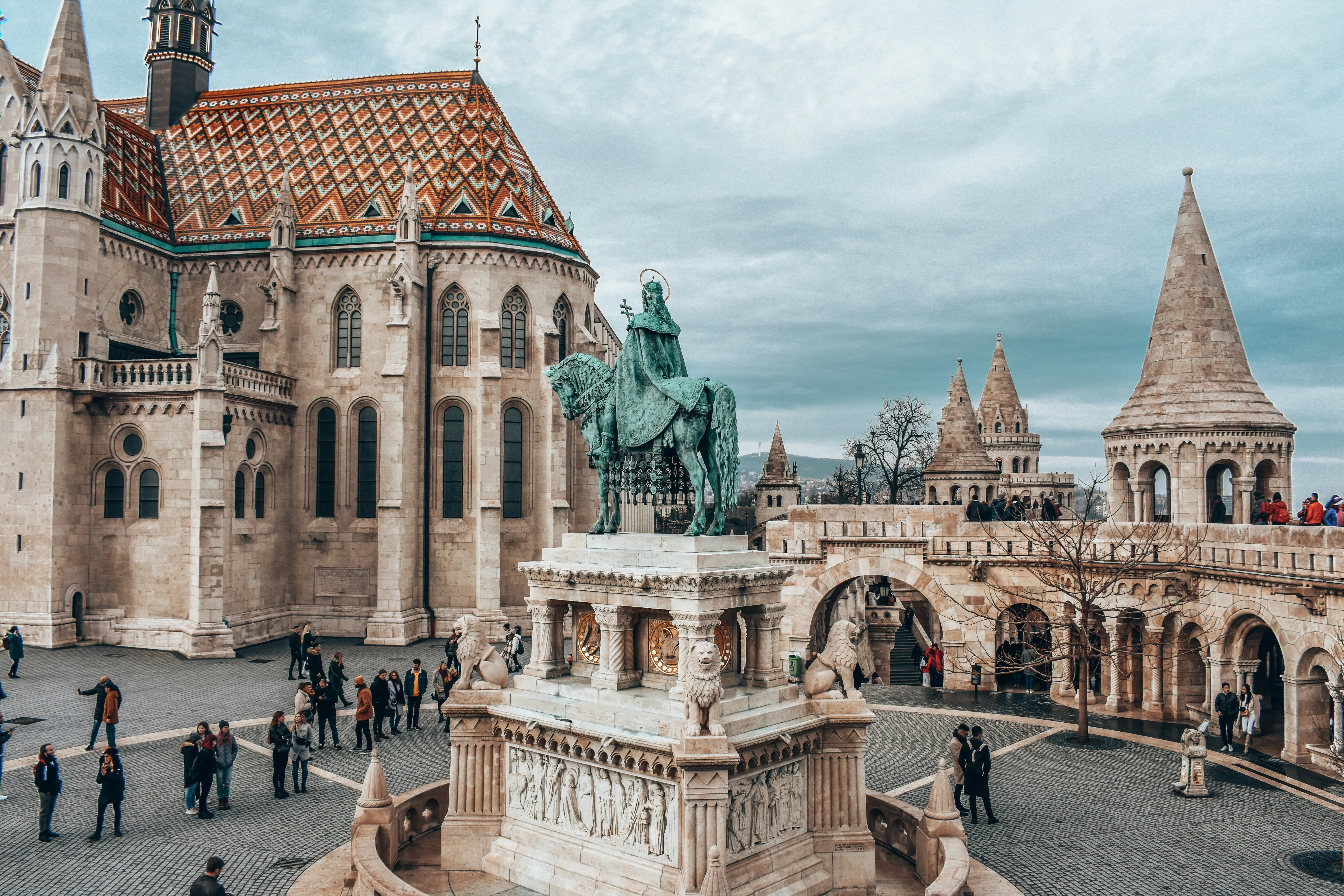
Fisherman’s Bastion looks almost fictional — towers, terraces, arches, and panoramic views overlooking Parliament and the Danube below.
Early morning is the best time for quieter views and softer light.
Climb Gellért Hill
Gellért Hill offers sweeping panoramic views across the city skyline, bridges, and river.
Sunset here remains one of Budapest’s classic experiences.
Experience the Ruin Bars
Budapest’s ruin bars emerged from abandoned buildings in the Jewish Quarter transformed into eclectic nightlife spaces filled with mismatched furniture, graffiti, lights, and live music.
Szimpla Kert remains the most famous example.
Cruise the Danube at Night
Budapest may be at its most beautiful after dark. Parliament, bridges, Buda Castle, and riverside buildings illuminate simultaneously, reflecting across the Danube in gold and white light.

Food & Drink in Budapest
Hungarian cuisine is rich, comforting, and deeply tied to Central European culinary traditions.
Goulash, chicken paprikash, lángos, chimney cake, stuffed cabbage, and paprika-heavy stews dominate traditional menus.
Coffeehouse culture remains important here — elegant historic cafés once frequented by writers, artists, and intellectuals still operate throughout the city.
Hungarian wine and pálinka (fruit brandy) also play central roles in local dining culture.
Day Trips from Budapest with Kiwitaxi
Szentendre
A colorful riverside town filled with galleries, cafés, and baroque streets just north of Budapest.
Lake Balaton
Hungary’s largest lake offers beaches, vineyards, sailing towns, and relaxed summer atmosphere.
Eger
Historic architecture, thermal baths, and famous Hungarian red wines.
Bratislava
Slovakia’s capital sits close enough for an easy cross-border day trip from Budapest.
Kiwitaxi private transfers make combining multiple Central European destinations significantly easier, especially for travelers continuing through Vienna, Prague, or the Balkans.
Practical Notes for Visiting Budapest
The Hungarian forint (HUF) remains the local currency, though card payment is widely accepted.
Budapest is generally affordable compared with many Western European capitals, particularly for dining and public transport.
English is widely spoken in tourist areas, hotels, and restaurants.
Thermal bath etiquette matters — bringing flip-flops and towels is useful, though rentals are often available.
The city changes character dramatically between day and night. Quiet historic streets during the afternoon often become lively social spaces after dark.
Budapest has a kind of elegance that feels earned rather than staged.
A city shaped by empires, wars, revolutions, artists, and long evenings beside the river — still beautiful, still slightly melancholic, and very easy to fall in love with.

Best Picks for True Adventurers

Kiwitaxi Airport Transfers
Relax and enjoy the ride, knowing that every detail is managed for your peace of mind
ExploreExplore All Guides
Barcelona Neighborhoods Guide: Where to Stay & What to Expect in Each Barrio

Discover Paris: A Guide to Iconic Landmarks, Historic Cafés & Legendary Stores

Osaka Travel Guide: Top Things to Do & Food Spots

First-Timer's Japan Handbook: 10 Essential Travel Tips + Etiquette FAQ

Rome in a Day & 3 Days in Rome: The Ultimate Itineraries for Every Traveler

Barcelona Airport to Gothic Quarter: Fastest Transfer Options, Prices & Travel Tips

Ultimate Japan Itineraries: Discover the Best of Japan in 7 or 14 Days

More than the Eiffel Tower: Best Things to Do In Paris

Best hotels in Albania: Tirana, Saranda, Vlorë & Durres

Rome: La Dolce Vita in Every Corner — travel guide by Olivia (@doinglifewithliv)

Barcelona Airport to Sagrada Família: Best Transfer Options, Prices & Travel Times

Paris Food Guide: Eiffel Tower View Restaurants & Rooftop Dining

18 Things You Need to Know Before Visiting Croatia

10 Unforgettable Day Trips from Rome, Italy: Ancient Towns, Best Beaches & Countryside Escapes
A Taste of Florence: Your Complete Food Guide

Best Day Trips from Milan with a Private Driver: Lake Como, Verona & Beyond

10 Best Holiday Alternatives to the Middle East for Spring 2026

Best Things to Do Around the Colosseum: Rome Attractions, Tours & Insider Tips

Barcelona vs Madrid: Which City Is Better to Visit in Spain?

Barcelona: Hidden Bites, Secret Sips & Sunshine Tips by Nancy Sevilla

Best eSIM for Japan 2026

Budapest Travel Tips: Beyond the Obvious

Best Hotels in Rome for Every Budget: Luxury, Boutique & Budget Stays

Cinque Terre Travel Guide: Best Villages & Trails

Best Wine Tours from Milan: Franciacorta, Valpolicella & Chauffeur Hire
Milan to Verona Day Trip with a Chauffeur

South Korea Travel Guide: Best Cultural, Beauty & Wellness Experiences in Seoul, Busan & Jeonju

Best Things to Do in Singapore: Food, Views & Hidden Gems

Free eSIM Trial: Where to Get Free Data

Hoi An Travel Guide: Hidden Gems, Spas & Local Experiences

Santorini Travel Guide: Sunsets, Cruises & Wine

3 Days in Northern Spain: Bilbao, the Cantabrian Coast & Santander

Best eSim for Europe: One Card for 30+ Countries

Best eSim for Mexico: Stay Connected on Your Trip

How to Get from Lisbon to Porto (2026): Train, Bus, Car, or Flight?

How to Get from London to Madeira: Complete Guide (2026)

How to Get from Beauvais Airport to Paris

Paris on a Budget: Affordable Hotels, Shopping & Free Things to Do

Top 12 Things to Do in Albania: Ultimate Travel Guide

Where to Stay in the Albanian Riviera: Best Hotels & Areas
Kyoto Travel Guide: Journey to the Heart of Old Japan
