'%3e%3cpath%20d='M43.073%200.00649261H15.0943V3.94346H43.073V0.00649261Z'%20fill='url(%23kiwitaxi-grad)'%20/%3e%3cpath%20d='M15.0828%203.94346C16.1928%203.94346%2017.0512%203.06513%2017.0512%201.97497C17.0512%200.874164%2016.1822%200.00649261%2015.0828%200.00649261C14.0362%200.00649261%2013.1379%200.851916%2013.1379%201.97497C13.1379%203.10916%2014.0478%203.94346%2015.0828%203.94346Z'%20fill='white'%20/%3e%3cpath%20d='M43.0614%203.94346C44.1715%203.94346%2045.0299%203.06513%2045.0299%201.97497C45.0299%200.874164%2044.1609%200.00649261%2043.0614%200.00649261C42.0149%200.00649261%2041.1166%200.851916%2041.1166%201.97497C41.1166%203.10916%2042.0265%203.94346%2043.0614%203.94346Z'%20fill='white'%20/%3e%3cpath%20d='M19.5921%2038.5052V39.828H23.1471V26.0491H19.5921V27.3446C18.895%2026.5789%2017.4549%2025.8841%2015.7339%2025.8841C11.8502%2025.8841%208.78975%2028.7578%208.78975%2032.939C8.78975%2037.1374%2011.8702%2039.9935%2015.7339%2039.9935C17.4938%2039.9935%2018.932%2039.2691%2019.5921%2038.5052ZM12.2892%2032.939C12.2892%2030.5715%2013.929%2029.1912%2015.9819%2029.1912C18.0106%2029.1912%2019.5647%2030.5845%2019.5647%2032.939C19.5647%2035.2579%2017.9768%2036.6869%2015.9823%2036.6869C13.9596%2036.6869%2012.2892%2035.264%2012.2892%2032.939Z'%20fill='white'%20/%3e%3cpath%20d='M44.7174%2026.0496H41.4289V39.8281H44.7174V26.0496Z'%20fill='white'%20/%3e%3cpath%20d='M32.2183%2035.7001L29.3455%2039.8281H24.94L30.044%2032.8552L25.1624%2026.0496H29.7075L32.3295%2029.8985L35.035%2026.0496H39.4405L34.5599%2032.7435L39.6361%2039.8281H35.1189L32.2183%2035.7001Z'%20fill='white'%20/%3e%3cpath%20d='M3.34504%2022.9604V26.0496H7.4039V29.0939H3.34504V34.2781C3.34504%2035.9866%204.33971%2036.7008%205.955%2036.7008C6.54504%2036.7008%207.16659%2036.5766%207.63241%2036.235V39.4341C7.04237%2039.7757%206.14133%2039.9931%204.89915%2039.9931C1.8243%2039.9931%200.0226746%2038.1293%200.0226746%2034.9298V22.96H3.34504Z'%20fill='white'%20/%3e%3cpath%20d='M36.2094%208.57428L33.307%2016.8723L30.43%208.57428H27.7621L24.8597%2016.8723L21.9828%208.57428H18.4884L23.2157%2021.4188H26.5037L29.084%2014.4093L31.6629%2021.4188H34.951L39.6782%208.57428H36.2094Z'%20fill='white'%20/%3e%3cpath%20d='M44.7174%208.57381H41.4289V21.4188H44.7174V8.57381Z'%20fill='white'%20/%3e%3cpath%20d='M16.7387%208.57381H13.4502V21.4188H16.7387V8.57381Z'%20fill='white'%20/%3e%3cpath%20d='M11.7001%208.57382L6.07922%2014.1326L12.1622%2021.4188H8.05929L3.92163%2016.28L3.3455%2016.8538V21.4188H0.0226746V3.94299H3.3455V12.7574L7.59764%208.57382H11.7001Z'%20fill='white'%20/%3e%3c/g%3e%3cdefs%3e%3clinearGradient%20id='kiwitaxi-grad'%20x1='15.0945'%20y1='1.97497'%20x2='43.073'%20y2='1.97497'%20gradientUnits='userSpaceOnUse'%3e%3cstop%20stop-color='%2300D2CD'%20stop-opacity='0'%20/%3e%3cstop%20offset='1'%20stop-color='%2300D2CD'%20/%3e%3c/linearGradient%3e%3cclipPath%20id='kiwitaxi-clip'%3e%3crect%20width='46'%20height='40'%20fill='white'%20/%3e%3c/clipPath%3e%3c/defs%3e%3c/svg%3e)
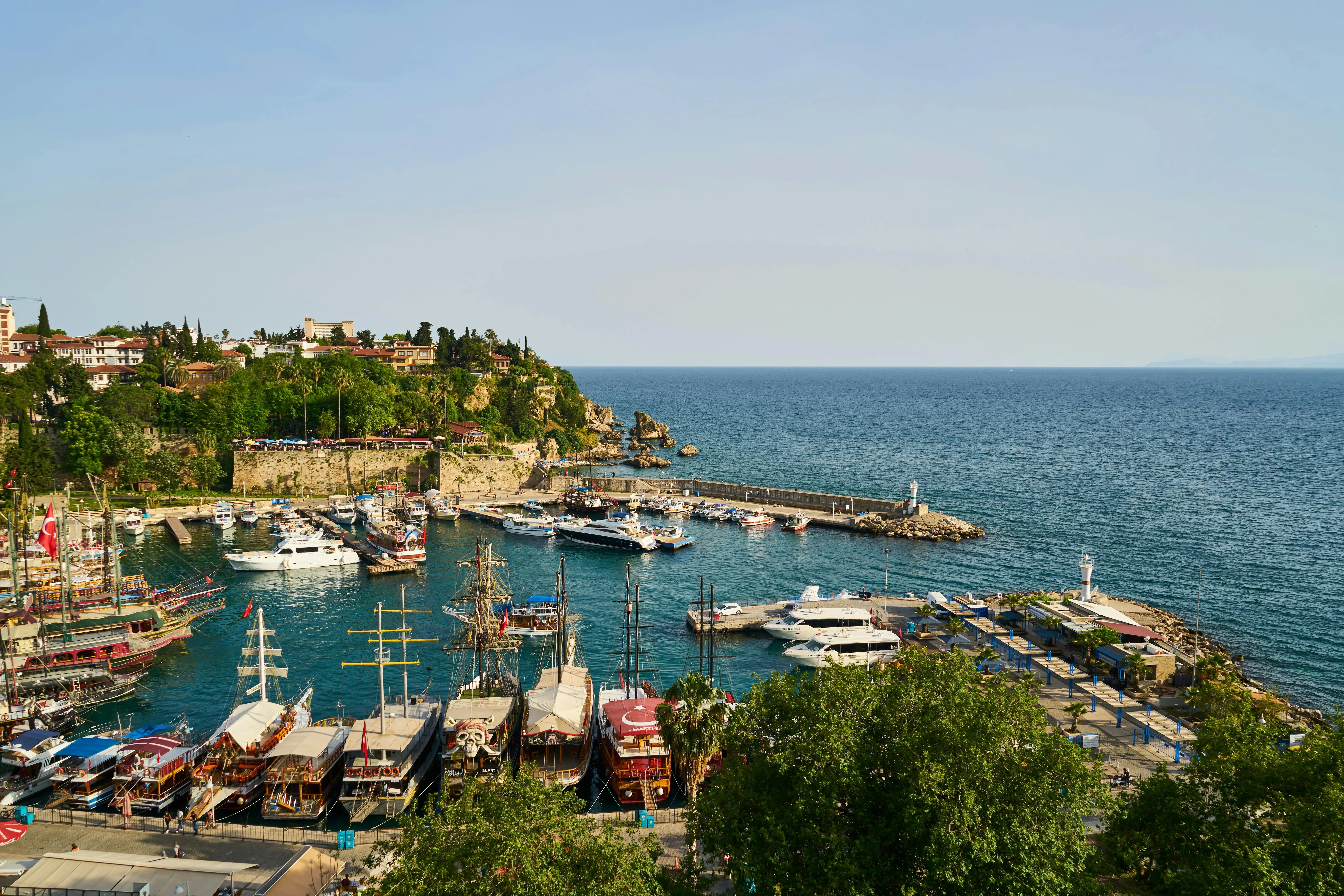

Antalya has spent centuries welcoming people arriving from the sea.
Romans, Byzantines, Seljuks, Ottomans, European traders, modern beach-seekers — all of them reached the same coastline first: dramatic cliffs falling into turquoise water beneath the Taurus Mountains. The difference today is that most visitors arrive through an airport instead of a harbor. The feeling of arrival, though, remains remarkably similar.
Known as the Turkish Riviera, Antalya is often reduced to beach resorts and all-inclusive hotels. And yes, the beaches are genuinely beautiful — long stretches of Mediterranean coastline where the water turns impossibly clear by late afternoon. But the city itself is far older, more layered, and considerably more interesting than its resort reputation suggests.
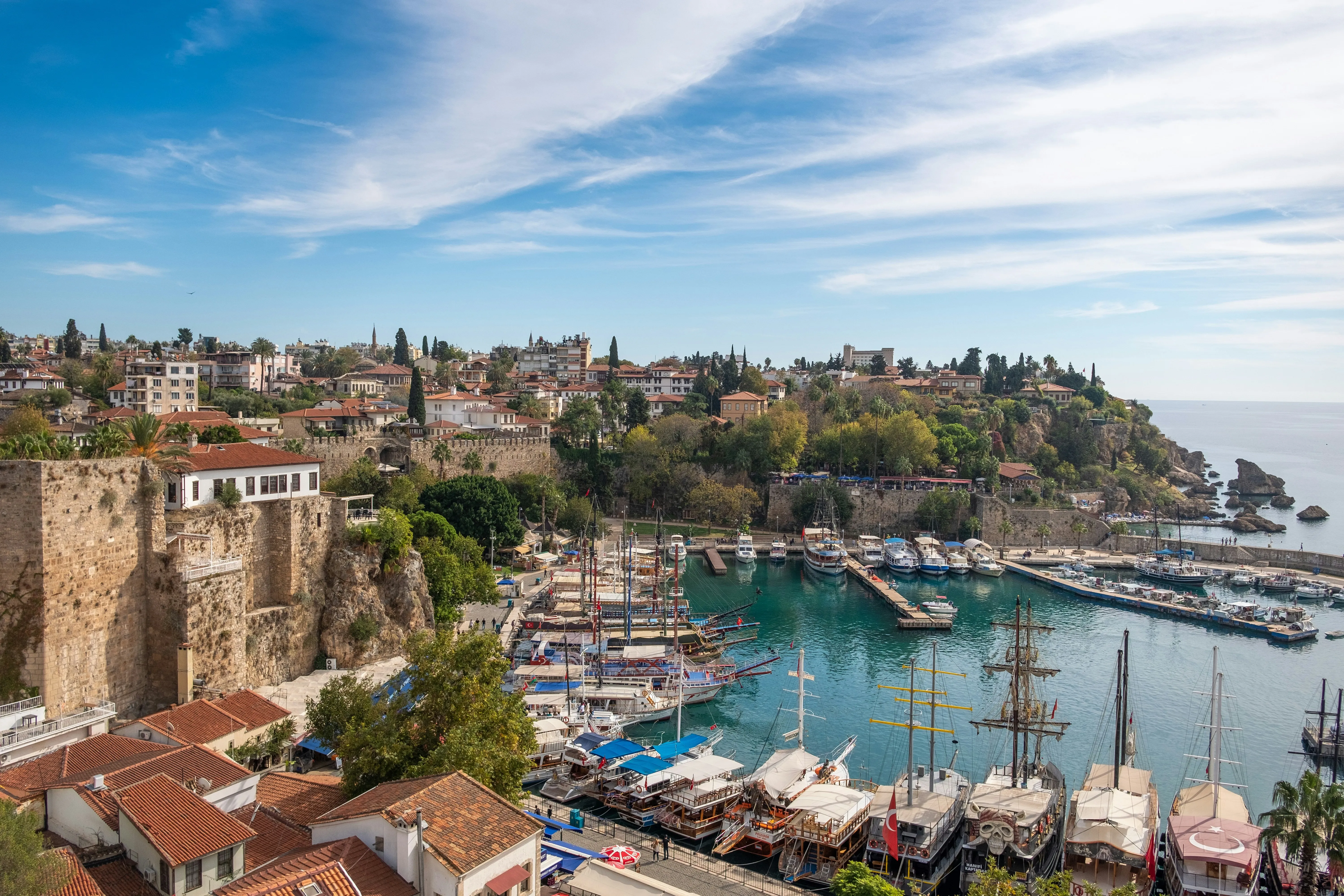
The historic center, Kaleiçi, still carries traces of every empire that passed through. Roman walls, Ottoman houses with wooden balconies, narrow stone streets, mosque minarets, and old harbor cafés all sit compressed into a compact district overlooking the sea. Beyond the city, ancient ruins scatter the coastline in almost absurd concentration: amphitheaters, Lycian tombs, ruined temples, forgotten port cities slowly reclaimed by pine forests and heat.
And then there’s the rhythm of life here. Long Turkish breakfasts beside the water. Evening walks along the marina after the heat softens. Fresh pomegranate juice from street stalls. Mountains visible behind palm trees. Locals swimming before work while tourists are still asleep.
Antalya is one of those rare destinations where beach days and cultural depth coexist comfortably.
Three days gives you the coastline. A week starts revealing the city behind the resorts.

Getting to Antalya
By Air
Antalya Airport (AYT) is one of the busiest leisure airports in the Mediterranean, located approximately 13 km northeast of the city center. During summer, direct flights connect Antalya with most major European cities alongside extensive domestic routes across Türkiye.
Airlines from Germany, the UK, Poland, Italy, the Gulf region, and Russia operate heavily seasonal schedules due to Antalya’s popularity as a beach destination.
Worth knowing: Antalya Airport becomes extremely busy during peak summer weekends, particularly between June and September.
By Road
Modern coastal highways connect Antalya with other major Turkish destinations including Fethiye, Kaş, Alanya, and Cappadocia via inland routes. Driving along the Mediterranean coast is one of Türkiye’s most scenic road-trip experiences — mountains, beaches, pine forests, and ancient ruins appearing continuously along the route.
Arriving at Antalya Airport: What to Expect
The airport is modern, efficient, and heavily designed around international tourism.
By Taxi
Official airport taxis operate 24/7 and provide direct service into central Antalya or nearby resort areas. Prices vary depending on distance and traffic.
By Tram
The AntRay tram line connects the airport with parts of the city center, offering an affordable option for travelers staying centrally.
By Private Transfer
A Kiwitaxi private transfer from Antalya Airport provides fixed pricing, hotel drop-off, and a far smoother arrival experience for travelers heading directly to coastal resorts, old town boutique hotels, or destinations further along the Riviera coastline.
For families, groups, or late-night arrivals, private transfer is significantly easier than negotiating taxis during peak season.

Getting Around Antalya
Antalya spreads across several distinct areas — historic districts, beaches, marina zones, and resort coastlines — making transport planning useful.
Walking
Kaleiçi, the old town, is best explored entirely on foot. Narrow streets, hidden courtyards, rooftop cafés, boutique hotels, and sea views appear constantly between the old stone lanes.
Trams & Buses
Antalya’s tram network is modern, affordable, and useful for moving between the airport, city center, and some major attractions. Public buses cover wider districts and nearby beaches.
Taxis
Taxis are common and relatively affordable compared with many European resort cities, especially for shorter distances.
Rental Car
A rental car becomes highly valuable for travelers wanting to explore ancient ruins, mountain villages, hidden coves, and smaller coastal towns independently. Much of the real beauty of the Turkish Riviera sits outside the city itself.
Best Time to Visit Antalya
April to June
Arguably the perfect balance. Temperatures range between 22–30°C, beaches become swimmable, and sightseeing remains comfortable before peak summer heat arrives.
July to September
Peak beach season. The Mediterranean reaches its warmest temperatures, nightlife intensifies, and resort life operates at full energy. Expect heat above 35°C during the day.
October to November
The sea stays warm surprisingly late into autumn, crowds thin noticeably, and the city regains a calmer atmosphere. One of the best periods for combining beaches with archaeological sightseeing.
December to March
Winter is mild compared with much of Europe. While swimming becomes less predictable, Antalya remains sunny more often than not and works well for slower cultural trips without summer crowds.
Where to Stay in Antalya
Kaleiçi (Old Town)
The most atmospheric part of the city — Ottoman houses converted into boutique hotels, sea-view terraces, historic streets, and walking access to the marina.
Lara Beach
Modern beachfront hotels, resort complexes, nightlife, and easier airport access. Ideal for classic Mediterranean resort stays.
Konyaaltı Beach
A long public beach backed by mountains and connected to the city center with cafés, parks, and a more local atmosphere than Lara.
Belek
Located east of Antalya, Belek is known for luxury golf resorts, large beachfront hotels, and family-oriented all-inclusive properties.
Best Things to Do in Antalya
Wander Through Kaleiçi
Kaleiçi remains the heart of historic Antalya — Roman walls, Ottoman mansions, hidden gardens, harbor viewpoints, and narrow streets that become especially beautiful in the evening light.
The old harbor below the cliffs still feels connected to the city’s maritime past despite the cafés and boats surrounding it today.
Visit Hadrian’s Gate
Hadrian’s Gate was built in honor of the Roman Emperor Hadrian’s visit in 130 AD and remains one of the best-preserved Roman city gates in Türkiye. Marble columns and carved stone details still frame the entrance into the old city.
Swim at Konyaaltı Beach
Konyaaltı Beach stretches for several kilometers beneath the Taurus Mountains, creating one of the Mediterranean’s most dramatic urban beach settings.
Late afternoon is the ideal time — mountains glowing behind the coastline while locals arrive for evening swims and walks.
Explore Düden Waterfalls
Düden Waterfalls offers two very different landscapes: upper waterfalls hidden within greenery inland, and the famous lower falls dramatically plunging directly into the Mediterranean from coastal cliffs.
Visit the Ancient City of Perge
Perge sits just outside Antalya and contains remarkably preserved Roman streets, baths, columns, gates, and an enormous stadium. Walking through Perge under summer heat feels less like visiting ruins and more like briefly entering another civilization.
Take a Boat Trip Along the Coast
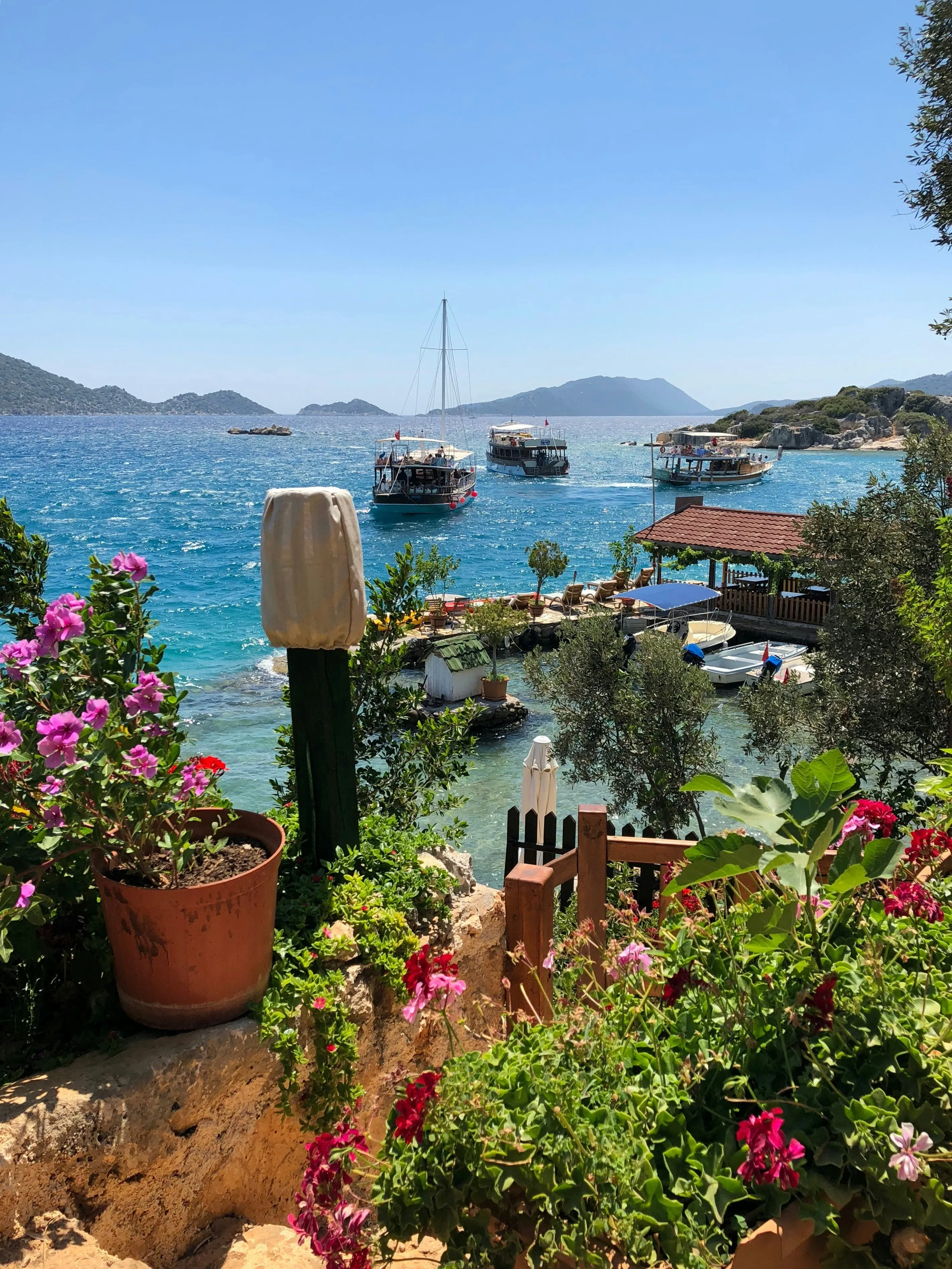
The Antalya coastline is best understood from the water — cliffs, hidden coves, sea caves, beaches inaccessible by road, and mountain views stretching behind the city.
Sunset cruises are particularly popular during summer.
Ride the Tunektepe Cable Car
Tünektepe Teleferik rises above the coastline for panoramic views across the Gulf of Antalya, beaches, mountains, and city skyline.
Clear days reveal just how dramatically the mountains surround the coast.
Food & Drink in Antalya
Mediterranean Turkish cuisine dominates here — grilled fish, meze spreads, fresh herbs, citrus, olive oil, kebabs, and breakfasts large enough to eliminate lunch entirely.
Fresh seafood along the marina is particularly good, while small lokantas away from resort zones often serve the best traditional food in the city.
Piyaz — Antalya’s local bean salad made with tahini sauce — is one of the region’s signature dishes and worth trying alongside grilled meats.
Turkish tea appears constantly throughout the day. Accepting a glass when offered remains one of the simplest ways to participate in local hospitality.
Day Trips from Antalya with Kiwitaxi
The surrounding coastline contains some of Türkiye’s most impressive historical and natural sites.
Kaş & Kalkan
Elegant coastal towns with turquoise bays, whitewashed houses, boutique hotels, and a slower Mediterranean atmosphere.
Aspendos
Aspendos contains one of the best-preserved Roman theaters in the world — astonishingly intact and still used for performances today.
Olympos & Çıralı
Ancient ruins hidden within forest beside quiet beaches, plus the eternal flames of Chimaera burning naturally from the mountainside after dark.
Pamukkale
White travertine terraces and ancient Hierapolis create one of Türkiye’s most recognizable landscapes, reachable as a long but rewarding day trip.
Kiwitaxi chauffeur hire service allow flexible Riviera itineraries without relying on multiple bus schedules during hot summer conditions.
Practical Notes for Visiting Antalya
The Turkish lira is the local currency, though euros are commonly recognized in tourist areas.
Card payment is widespread in hotels and restaurants, but smaller cafés, markets, and taxis often prefer cash.
Summer heat is intense. Sightseeing works best early morning or late afternoon between June and September.
Modest clothing is appreciated when visiting mosques or more traditional neighborhoods, though beachwear is completely normal in resort areas.
Turkish hospitality is deeply embedded in everyday life — tea offered by shopkeepers, long conversations, relaxed restaurant pacing, and a general willingness to help visitors.
Antalya may begin as a beach trip for many people.
But somewhere between the old harbor at sunset, the Roman ruins hidden in pine forests, and the first late-night tea beside the sea, it usually becomes something much harder to leave behind.
Explore Antalya Guides
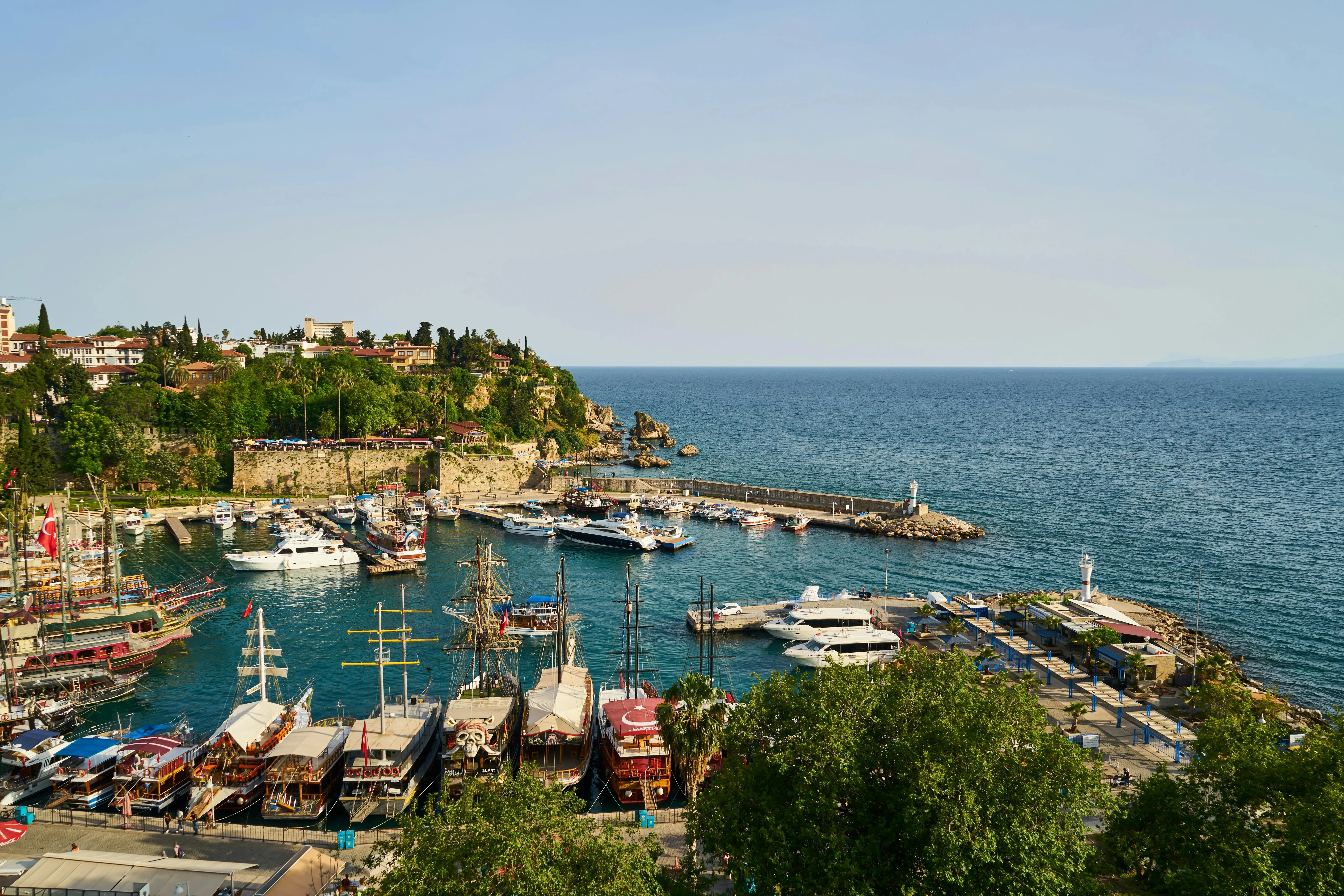


Landing in Turkey? Your Ride Is Ready
Pre-book your private driver, skip the taxi line, and get to your hotel with a fixed price and no surprises.
Book a transferExplore All Guides
Barcelona Neighborhoods Guide: Where to Stay & What to Expect in Each Barrio

Discover Paris: A Guide to Iconic Landmarks, Historic Cafés & Legendary Stores

Osaka Travel Guide: Top Things to Do & Food Spots

First-Timer's Japan Handbook: 10 Essential Travel Tips + Etiquette FAQ

Rome in a Day & 3 Days in Rome: The Ultimate Itineraries for Every Traveler

Barcelona Airport to Gothic Quarter: Fastest Transfer Options, Prices & Travel Tips

Ultimate Japan Itineraries: Discover the Best of Japan in 7 or 14 Days

More than the Eiffel Tower: Best Things to Do In Paris

Best hotels in Albania: Tirana, Saranda, Vlorë & Durres

Rome: La Dolce Vita in Every Corner — travel guide by Olivia (@doinglifewithliv)

Barcelona Airport to Sagrada Família: Best Transfer Options, Prices & Travel Times

Paris Food Guide: Eiffel Tower View Restaurants & Rooftop Dining

18 Things You Need to Know Before Visiting Croatia

10 Unforgettable Day Trips from Rome, Italy: Ancient Towns, Best Beaches & Countryside Escapes
A Taste of Florence: Your Complete Food Guide

Best Day Trips from Milan with a Private Driver: Lake Como, Verona & Beyond

10 Best Holiday Alternatives to the Middle East for Spring 2026

Best Things to Do Around the Colosseum: Rome Attractions, Tours & Insider Tips

Barcelona vs Madrid: Which City Is Better to Visit in Spain?

Barcelona: Hidden Bites, Secret Sips & Sunshine Tips by Nancy Sevilla

Best eSIM for Japan 2026

Budapest Travel Tips: Beyond the Obvious

Best Hotels in Rome for Every Budget: Luxury, Boutique & Budget Stays

Cinque Terre Travel Guide: Best Villages & Trails

Best Wine Tours from Milan: Franciacorta, Valpolicella & Chauffeur Hire
Milan to Verona Day Trip with a Chauffeur

South Korea Travel Guide: Best Cultural, Beauty & Wellness Experiences in Seoul, Busan & Jeonju

Best Things to Do in Singapore: Food, Views & Hidden Gems

Free eSIM Trial: Where to Get Free Data

Hoi An Travel Guide: Hidden Gems, Spas & Local Experiences

Santorini Travel Guide: Sunsets, Cruises & Wine

3 Days in Northern Spain: Bilbao, the Cantabrian Coast & Santander

Best eSim for Europe: One Card for 30+ Countries

Best eSim for Mexico: Stay Connected on Your Trip

How to Get from Lisbon to Porto (2026): Train, Bus, Car, or Flight?

How to Get from London to Madeira: Complete Guide (2026)

How to Get from Beauvais Airport to Paris

Paris on a Budget: Affordable Hotels, Shopping & Free Things to Do

Top 12 Things to Do in Albania: Ultimate Travel Guide

Where to Stay in the Albanian Riviera: Best Hotels & Areas
Kyoto Travel Guide: Journey to the Heart of Old Japan
