'%3e%3cpath%20d='M43.073%200.00649261H15.0943V3.94346H43.073V0.00649261Z'%20fill='url(%23kiwitaxi-grad)'%20/%3e%3cpath%20d='M15.0828%203.94346C16.1928%203.94346%2017.0512%203.06513%2017.0512%201.97497C17.0512%200.874164%2016.1822%200.00649261%2015.0828%200.00649261C14.0362%200.00649261%2013.1379%200.851916%2013.1379%201.97497C13.1379%203.10916%2014.0478%203.94346%2015.0828%203.94346Z'%20fill='white'%20/%3e%3cpath%20d='M43.0614%203.94346C44.1715%203.94346%2045.0299%203.06513%2045.0299%201.97497C45.0299%200.874164%2044.1609%200.00649261%2043.0614%200.00649261C42.0149%200.00649261%2041.1166%200.851916%2041.1166%201.97497C41.1166%203.10916%2042.0265%203.94346%2043.0614%203.94346Z'%20fill='white'%20/%3e%3cpath%20d='M19.5921%2038.5052V39.828H23.1471V26.0491H19.5921V27.3446C18.895%2026.5789%2017.4549%2025.8841%2015.7339%2025.8841C11.8502%2025.8841%208.78975%2028.7578%208.78975%2032.939C8.78975%2037.1374%2011.8702%2039.9935%2015.7339%2039.9935C17.4938%2039.9935%2018.932%2039.2691%2019.5921%2038.5052ZM12.2892%2032.939C12.2892%2030.5715%2013.929%2029.1912%2015.9819%2029.1912C18.0106%2029.1912%2019.5647%2030.5845%2019.5647%2032.939C19.5647%2035.2579%2017.9768%2036.6869%2015.9823%2036.6869C13.9596%2036.6869%2012.2892%2035.264%2012.2892%2032.939Z'%20fill='white'%20/%3e%3cpath%20d='M44.7174%2026.0496H41.4289V39.8281H44.7174V26.0496Z'%20fill='white'%20/%3e%3cpath%20d='M32.2183%2035.7001L29.3455%2039.8281H24.94L30.044%2032.8552L25.1624%2026.0496H29.7075L32.3295%2029.8985L35.035%2026.0496H39.4405L34.5599%2032.7435L39.6361%2039.8281H35.1189L32.2183%2035.7001Z'%20fill='white'%20/%3e%3cpath%20d='M3.34504%2022.9604V26.0496H7.4039V29.0939H3.34504V34.2781C3.34504%2035.9866%204.33971%2036.7008%205.955%2036.7008C6.54504%2036.7008%207.16659%2036.5766%207.63241%2036.235V39.4341C7.04237%2039.7757%206.14133%2039.9931%204.89915%2039.9931C1.8243%2039.9931%200.0226746%2038.1293%200.0226746%2034.9298V22.96H3.34504Z'%20fill='white'%20/%3e%3cpath%20d='M36.2094%208.57428L33.307%2016.8723L30.43%208.57428H27.7621L24.8597%2016.8723L21.9828%208.57428H18.4884L23.2157%2021.4188H26.5037L29.084%2014.4093L31.6629%2021.4188H34.951L39.6782%208.57428H36.2094Z'%20fill='white'%20/%3e%3cpath%20d='M44.7174%208.57381H41.4289V21.4188H44.7174V8.57381Z'%20fill='white'%20/%3e%3cpath%20d='M16.7387%208.57381H13.4502V21.4188H16.7387V8.57381Z'%20fill='white'%20/%3e%3cpath%20d='M11.7001%208.57382L6.07922%2014.1326L12.1622%2021.4188H8.05929L3.92163%2016.28L3.3455%2016.8538V21.4188H0.0226746V3.94299H3.3455V12.7574L7.59764%208.57382H11.7001Z'%20fill='white'%20/%3e%3c/g%3e%3cdefs%3e%3clinearGradient%20id='kiwitaxi-grad'%20x1='15.0945'%20y1='1.97497'%20x2='43.073'%20y2='1.97497'%20gradientUnits='userSpaceOnUse'%3e%3cstop%20stop-color='%2300D2CD'%20stop-opacity='0'%20/%3e%3cstop%20offset='1'%20stop-color='%2300D2CD'%20/%3e%3c/linearGradient%3e%3cclipPath%20id='kiwitaxi-clip'%3e%3crect%20width='46'%20height='40'%20fill='white'%20/%3e%3c/clipPath%3e%3c/defs%3e%3c/svg%3e)


Zurich defies easy categorization. It is one of the world's most expensive cities, yet filled with free swimming spots open to anyone who walks down to the river. It is a global banking capital, yet deeply, genuinely livable — a place where locals float downstream on a Tuesday afternoon and consider it a perfectly reasonable use of time. Medieval guild houses share the skyline with contemporary architecture. An alpine lake sits at the end of the main shopping street. The river running through the Old Town is clean enough to swim in.
Most visitors arrive expecting efficiency. They leave surprised by warmth.
Switzerland's largest city sits at the northern tip of Lake Zurich, framed by the Alps on clear days and by the kind of precise, well-maintained infrastructure that makes a first visit feel effortless. Two days here reveals the obvious. A week starts to reveal the rest. And Switzerland beyond Zurich — Rhine Falls, Lucerne, the Bernese Alps, the medieval towns of the north — is never more than a train ride or a private transfer away.

Getting to Zurich
By Air
Zurich Airport (ZRH) is Switzerland's primary international gateway, handling direct flights from across Europe, North America, the Middle East, and Asia. It consistently ranks among the best-run airports in Europe — open-air walkways, clear signage, short distances between gates and baggage claim. The airport sits approximately 12 km north of the city center in Kloten. Swiss International Air Lines operates the majority of intercontinental routes alongside Lufthansa, British Airways, Emirates, Singapore Airlines, and most major European carriers.
By Train
Zurich Hauptbahnhof (Zurich HB) is one of Europe's busiest rail terminals and sits right in the heart of the city. Fast intercity connections reach Geneva in 2h 40min, Basel in 55 minutes, Bern in 55 minutes, Lucerne in 45 minutes, and Lugano in around 2h 10min. International trains connect via Basel and Geneva to Paris, Munich, Vienna, and Milan, making Zurich an easy entry point for broader European itineraries.
By Road
Zurich connects to the Swiss motorway network and to neighboring Germany and Austria by road. Driving into the city center is possible but rarely the path of least resistance — parking is both limited and expensive. For travelers arriving by car, or those coming from a nearby city or the airport, a pre-booked private transfer removes the parking problem entirely and handles luggage from door to door.
Arriving at Zurich Airport: What to Expect
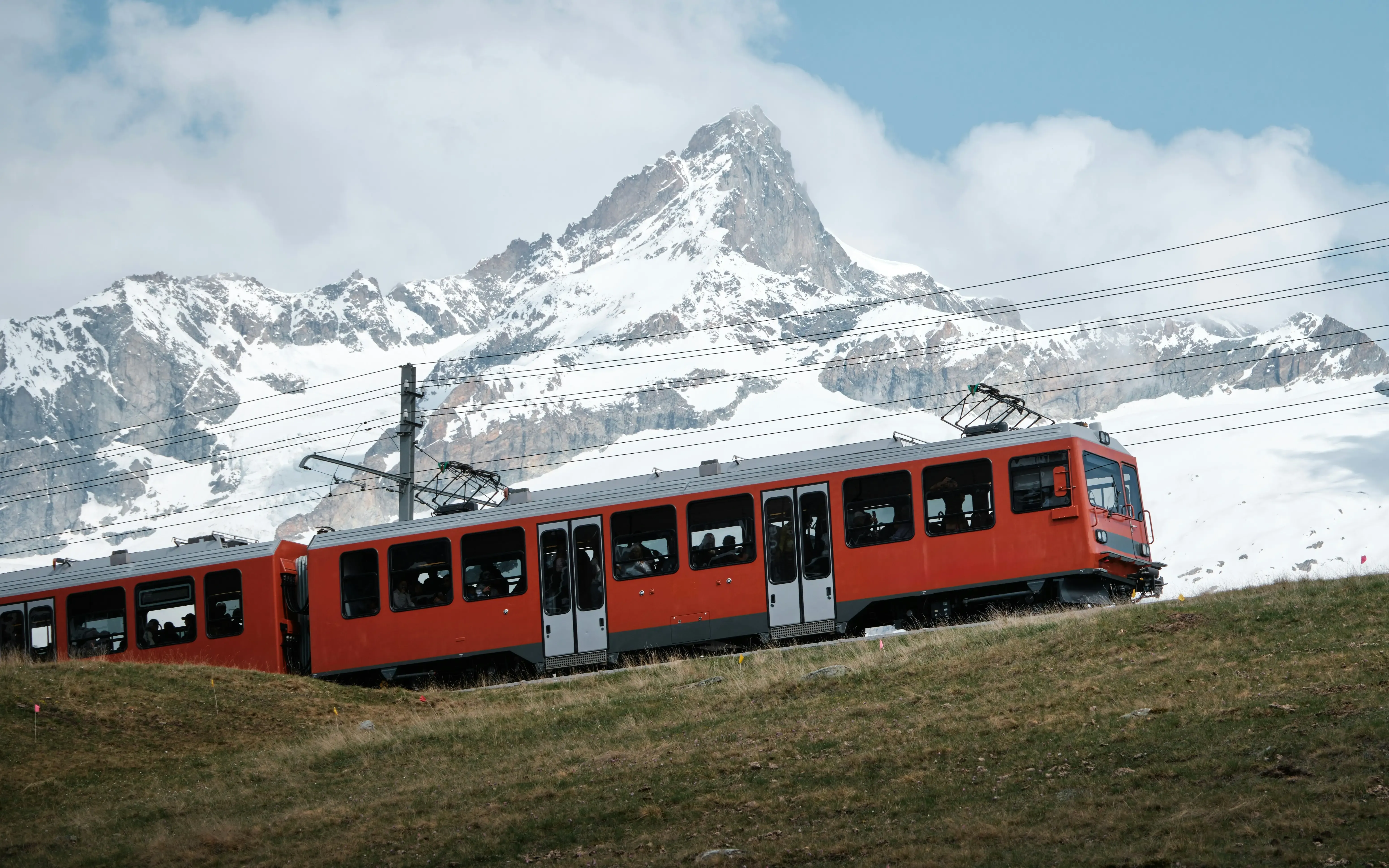
ZRH is compact and logical. The airport rail station sits directly beneath the terminal, accessible without stepping outside — one of the more seamless airport-to-city connections in Europe.
By train: S-Bahn lines S2, S16, and S24 run directly to Zurich Hauptbahnhof every 10–15 minutes. Journey time is 10–13 minutes. A single second-class ticket costs approximately CHF 6.80. Services run roughly 20 hours a day, with early morning and late-night gaps.
By tram: Tram 10 connects the airport to Zurich HB in around 35 minutes at the same CHF 6.80 fare. Slower than the train but useful if your hotel sits directly along the tram corridor.
By private transfer: For travelers arriving with luggage, families with children, late-night arrivals, or anyone who wants to move from plane to hotel without navigating ticketing machines and platform changes, a Kiwitaxi private transfer from Zurich Airport covers the journey door to door. Fixed pricing, meet and greet in arrivals, flight tracking, and child seat options on request. The same service works in both directions — useful when an early departure means no margin for missed trains.
Getting Around Zurich
The ZVV network — trams, buses, S-Bahn, and lake boats on a single integrated ticket — is among the best urban transport systems in Europe. Trams are the city's backbone: reliable, frequent, and consistent. Most lines run from early morning until midnight on weekdays, with extended night services on Fridays and Saturdays.
A Zurich Card (CHF 27 for 24 hours, CHF 53 for 72 hours) covers unlimited travel including lake boats and the Uetliberg mountain railway. Travelers planning day trips across Switzerland will get better value from a Swiss Travel Pass, which covers trains, buses, boats, and free entry to hundreds of museums nationally.
Walking is genuinely the best mode for the Old Town, the Niederdorf quarter, and the lakefront promenade. Most central attractions cluster within comfortable walking distance of each other, and the city's hills reward anyone willing to look up at the view from the top.
Taxis in Zurich are metered and expensive — the meter starts at CHF 8 and a standard city ride runs CHF 30–50. For airport arrivals, group transfers, or full-day excursions outside the city, Kiwitaxi's Chauffeur Hire service offers a dedicated vehicle and driver at a fixed hourly rate — no meter, no surprises, and the freedom to stop wherever the day takes you.
Best Time to Visit Zurich
Zurich rewards visitors year-round, but each season delivers a meaningfully different experience.
June to August is peak season. Temperatures settle between 23–25°C, the lake and river swimming spots fill with locals, and the city's festival calendar runs at full pace. The Street Parade in August draws hundreds of thousands of people to the lakefront for one of the world's largest electronic music events. Rain comes mainly as sharp afternoon thunderstorms that pass quickly and rarely spoil a full day. Hotel prices peak; book early.
March to May is arguably the most rewarding time for first-time visitors. Cherry blossoms appear along the streets in April, café terraces reopen, the city's traditional Sechseläuten spring festival takes over the Old Town, and accommodation rates sit noticeably below summer levels. The weather can be unpredictable in March, but by May the city is fully alive.
September to October brings golden light across the parks, the Zurich Film Festival, quieter streets, and comfortable temperatures for walking. A quieter, more atmospheric version of the city. Hotel prices soften after the summer peak. Rhine Falls runs high and powerful after autumn rainfall.
November to February means cold temperatures and the Nebelmeer — the sea of fog that fills Swiss valleys through the low-cloud season. December transforms the city with multiple Christmas markets. Hotel prices spike again as skiers use Zurich as a gateway to the Alps. For visitors without ski plans, it is the city's most atmospheric and underrated season.

Where to Stay in Zurich
Zürich Altstadt (Old Town) places you at the center of everything — cobblestone streets, Grossmünster, the Limmat River, and the city's best independent restaurants and cafés within walking distance in every direction. Prices reflect the location.
Niederdorf is the most characterful part of the Old Town: entirely pedestrianized lanes on the right bank of the Limmat, lined with bars, small restaurants, and boutiques that operate well into the evening.
Zürich West is the city's creative and nightlife district — former industrial buildings converted into design studios, galleries, and restaurants. Less obvious than the Old Town, considerably more interesting after dark and preferred by returning visitors.
Seefeld runs along the eastern shore of Lake Zurich with a quieter, more residential feel. Excellent for families and travelers who want the lake genuinely close, with good tram connections to the center.
Oerlikon and the area around Zurich HB offer practical business hotels at better rates, with direct access to both the airport train and the city's wider tram network.
Best Things to Do in Zurich
Swim in the Limmat River In summer, Zurich's locals float downstream in a well-practiced city ritual — enter the river at Oberer Letten, seal your belongings in a waterproof bag, let the current carry you downstream, then walk back up and repeat. The city-run Badis along the lake offer sun loungers, changing rooms, and café service for a nominal fee or free. Swimming in the city's rivers and lake is one of the most distinctly Zurich experiences available, and it costs nothing.
Explore the Altstadt and Niederdorf The Old Town spreads across both banks of the Limmat and rewards unhurried exploration more than any itinerary. The Niederdorf quarter is entirely car-free: narrow lanes, medieval buildings, independent coffee shops, and an atmosphere that makes slowing down feel natural. Cross the Münsterbrücke bridge for views back toward the guild houses and the twin towers of Grossmünster rising above the roofline.
Climb the Grossmünster Towers Zurich's most recognizable landmark — the twin Romanesque towers above the river — can be climbed for views across the Old Town, the lake, and on clear days, the Alps. The austere interior reflects the church's history as the pulpit of Protestant reformer Ulrich Zwingli, for whom decoration was a form of distraction.
Visit Fraumünster Directly across the river, the Women's Church contains stained glass windows designed by Marc Chagall (1970) and Augusto Giacometti (1945) that flood the interior with color. One of the most quietly affecting art experiences in Switzerland, and consistently overlooked by visitors heading straight for Grossmünster.
Ride the Train to Uetliberg The S10 from Zurich HB reaches the Uetliberg summit in 23 minutes, from where panoramic views extend across the city, Lake Zurich, and the Alpine chain. Walk the ridge trail to Felsenegg and descend by cable car to Adliswil for a straightforward half-day with minimal effort and maximum return.
Walk Bahnhofstrasse Two kilometers from the main station to the lake — luxury retail alongside Swiss chocolate shops, department stores, and the occasional subterranean bank vault visible through glass panels in the pavement (Zurich's gold reserves are stored beneath the street). The far end opens to the lake at Bürkliplatz, where boats depart on summer evenings.
Explore Kunsthaus Zürich Switzerland's largest art museum expanded significantly in 2021 with a major new building connected to the original by an underground passage. The collection holds particularly strong work by Monet, Munch, and Giacometti, alongside a dedicated Dada room — significant because the Dada movement was born in Zurich in 1916 at the Cabaret Voltaire on Spiegelgasse.
Discover Zürich West The former industrial district west of the center has spent two decades becoming the city's most creative neighborhood. The Viadukt arches — a repurposed railway structure — house independent shops and a weekend market. The Im Viadukt food hall offers Swiss produce and a good lunch stop. The surrounding streets of studios, galleries, and restaurants define the area's identity after dark.
Attend the Street Parade Held every August on the Zurich lakefront, the Street Parade is one of the largest electronic music festivals in the world — a moving procession of sound systems, floats, and hundreds of thousands of people that transforms the usually composed lakefront into something entirely different for a single weekend. Worth experiencing regardless of your relationship with the genre.

Day Trips from Zurich
Switzerland reveals itself fully only once you leave the city. Zurich's position at the center of the national rail network means world-class destinations sit within an hour in most directions. For travelers who prefer their own vehicle, their own schedule, and the freedom to stop when something catches the eye, Kiwitaxi's Chauffeur Hire covers day trips across the region — Rhine Falls, Lucerne, Interlaken, Bern — with a dedicated driver, fixed pricing, and no timetable to catch.
Rhine Falls — 40 minutes from Zurich The Rhine Falls near Schaffhausen is Europe's most powerful waterfall — 23 meters high and 150 meters wide, with up to 700,000 liters of water per second crashing into the basin below. It is best seen from both banks: the Schloss Laufen side for elevated viewing platforms and the medieval castle above the falls, and the northern bank for open park areas and a boat trip to the rock at the center of the cascade. Allow at least two to three hours to cover both sides properly. By train, take the S9 from Zurich HB toward Schaffhausen and alight at Schloss Laufen am Rheinfall — around 55 minutes. By private transfer, the journey takes roughly 40 minutes. Combine with the medieval frescoed town of Stein am Rhein (30 minutes further by train) for a full day in the region.
Lucerne — 45 minutes from Zurich Lucerne is the most visited day trip from Zurich for good reason. The Chapel Bridge — a 14th-century covered wooden footbridge decorated with painted ceiling panels — crosses the Reuss River in the center of a town that seems almost engineered for the sensation of being somewhere impossibly picturesque. Walk the medieval fortification walls, take a lake boat across the water, and if the day allows, ascend Mount Pilatus by the world's steepest cogwheel railway or ride the cable car to Mount Rigi for views across Central Switzerland. A full day here disappears without effort.
Interlaken and the Bernese Alps — 2 hours from Zurich Interlaken sits between two lakes at the entrance to the Bernese Oberland — the valley of Lauterbrunnen with its 72 waterfalls, the alpine village of Grindelwald beneath the north face of the Eiger, and the Jungfraujoch railway station at 3,454 meters, the highest in Europe. This is a commitment of a full day, and it earns every hour. By train from Zurich HB via Bern; by private transfer or chauffeur hire for groups who want to move between valleys without coordinating connections.
Bern — 1 hour from Zurich Switzerland's federal capital is a UNESCO World Heritage Site built almost entirely of sandstone, with six kilometers of covered arcaded walkways that make the Old Town navigable regardless of weather. The Zytglogge astronomical clock tower, the rose garden above the river bend, the Parliament building, and the bears — Bern's heraldic symbol, still kept in a riverside enclosure at the edge of the Old Town — reward a half-day of unhurried exploration.
Stein am Rhein — 55 minutes from Zurich One of Switzerland's best-preserved medieval towns, with building facades painted in elaborate Renaissance frescoes maintained continuously since the 16th century. Quieter and less visited than Lucerne, Stein am Rhein rewards travelers willing to look for it. Pairs naturally with Rhine Falls for a full northern Switzerland day by train or private transfer.

Zurich on a Practical Note
Zurich operates on the Swiss franc (CHF). Card payment is near-universal; many central businesses accept euros but at unfavorable exchange rates. The city is genuinely expensive — a coffee costs CHF 5–6, a restaurant main course CHF 25–45, a museum entry CHF 15–26. Budget accordingly or lean into the city's free offerings: river swimming, fountain water, public parks, and the lakefront.
Tap water throughout Zurich comes directly from alpine sources and is excellent. The city's 1,200-plus public drinking fountains provide free, clean water at virtually every corner.
Most shops and many restaurants close on Sundays. It is not an inconvenience — it is the city resting, which it does with the same commitment it brings to everything else. Plan grocery shopping for Saturday and leave Sunday for the lake.

Landing in Zurich? Your Ride Is Ready
Pre-book your private driver, skip the taxi line, and get to your hotel with a fixed price and no surprises.
Book nowBest Picks: Europe

10 Unforgettable Day Trips from Rome, Italy: Ancient Towns, Best Beaches & Countryside Escapes

Discover Paris: A Guide to Iconic Landmarks, Historic Cafés & Legendary Stores

Best Day Trips from Milan with a Private Driver: Lake Como, Verona & Beyond

Swiss Alps Guide: Top Destinations & Things to Do

Budapest Travel Tips: Beyond the Obvious

How to Spend Your Munich Layover: Transport, Sights & Tips

Barcelona vs Madrid: Which City Is Better to Visit in Spain?

Best Wine Tours from Milan: Franciacorta, Valpolicella & Chauffeur Hire

18 Things You Need to Know Before Visiting Croatia

Venice Without the Crowds: An Escape Guide
1 Day in Tallinn: A Complete Itinerary With Hidden Gems & Local Spots

Private Chauffeur Service for Day Trips & Sightseeing
Your own driver, by the hour. No fixed routes. No surprises. Just a professional driver at your disposal - from 3 hours to multiple days.
Book a chauffeur