'%3e%3cpath%20d='M43.073%200.00649261H15.0943V3.94346H43.073V0.00649261Z'%20fill='url(%23kiwitaxi-grad)'%20/%3e%3cpath%20d='M15.0828%203.94346C16.1928%203.94346%2017.0512%203.06513%2017.0512%201.97497C17.0512%200.874164%2016.1822%200.00649261%2015.0828%200.00649261C14.0362%200.00649261%2013.1379%200.851916%2013.1379%201.97497C13.1379%203.10916%2014.0478%203.94346%2015.0828%203.94346Z'%20fill='white'%20/%3e%3cpath%20d='M43.0614%203.94346C44.1715%203.94346%2045.0299%203.06513%2045.0299%201.97497C45.0299%200.874164%2044.1609%200.00649261%2043.0614%200.00649261C42.0149%200.00649261%2041.1166%200.851916%2041.1166%201.97497C41.1166%203.10916%2042.0265%203.94346%2043.0614%203.94346Z'%20fill='white'%20/%3e%3cpath%20d='M19.5921%2038.5052V39.828H23.1471V26.0491H19.5921V27.3446C18.895%2026.5789%2017.4549%2025.8841%2015.7339%2025.8841C11.8502%2025.8841%208.78975%2028.7578%208.78975%2032.939C8.78975%2037.1374%2011.8702%2039.9935%2015.7339%2039.9935C17.4938%2039.9935%2018.932%2039.2691%2019.5921%2038.5052ZM12.2892%2032.939C12.2892%2030.5715%2013.929%2029.1912%2015.9819%2029.1912C18.0106%2029.1912%2019.5647%2030.5845%2019.5647%2032.939C19.5647%2035.2579%2017.9768%2036.6869%2015.9823%2036.6869C13.9596%2036.6869%2012.2892%2035.264%2012.2892%2032.939Z'%20fill='white'%20/%3e%3cpath%20d='M44.7174%2026.0496H41.4289V39.8281H44.7174V26.0496Z'%20fill='white'%20/%3e%3cpath%20d='M32.2183%2035.7001L29.3455%2039.8281H24.94L30.044%2032.8552L25.1624%2026.0496H29.7075L32.3295%2029.8985L35.035%2026.0496H39.4405L34.5599%2032.7435L39.6361%2039.8281H35.1189L32.2183%2035.7001Z'%20fill='white'%20/%3e%3cpath%20d='M3.34504%2022.9604V26.0496H7.4039V29.0939H3.34504V34.2781C3.34504%2035.9866%204.33971%2036.7008%205.955%2036.7008C6.54504%2036.7008%207.16659%2036.5766%207.63241%2036.235V39.4341C7.04237%2039.7757%206.14133%2039.9931%204.89915%2039.9931C1.8243%2039.9931%200.0226746%2038.1293%200.0226746%2034.9298V22.96H3.34504Z'%20fill='white'%20/%3e%3cpath%20d='M36.2094%208.57428L33.307%2016.8723L30.43%208.57428H27.7621L24.8597%2016.8723L21.9828%208.57428H18.4884L23.2157%2021.4188H26.5037L29.084%2014.4093L31.6629%2021.4188H34.951L39.6782%208.57428H36.2094Z'%20fill='white'%20/%3e%3cpath%20d='M44.7174%208.57381H41.4289V21.4188H44.7174V8.57381Z'%20fill='white'%20/%3e%3cpath%20d='M16.7387%208.57381H13.4502V21.4188H16.7387V8.57381Z'%20fill='white'%20/%3e%3cpath%20d='M11.7001%208.57382L6.07922%2014.1326L12.1622%2021.4188H8.05929L3.92163%2016.28L3.3455%2016.8538V21.4188H0.0226746V3.94299H3.3455V12.7574L7.59764%208.57382H11.7001Z'%20fill='white'%20/%3e%3c/g%3e%3cdefs%3e%3clinearGradient%20id='kiwitaxi-grad'%20x1='15.0945'%20y1='1.97497'%20x2='43.073'%20y2='1.97497'%20gradientUnits='userSpaceOnUse'%3e%3cstop%20stop-color='%2300D2CD'%20stop-opacity='0'%20/%3e%3cstop%20offset='1'%20stop-color='%2300D2CD'%20/%3e%3c/linearGradient%3e%3cclipPath%20id='kiwitaxi-clip'%3e%3crect%20width='46'%20height='40'%20fill='white'%20/%3e%3c/clipPath%3e%3c/defs%3e%3c/svg%3e)


Istanbul is the only city on Earth that sits on two continents at once, and it never quite lets you forget it. Stand on the Galata Bridge at dusk, watching the ferries cross the Bosphorus in both directions, fishermen lined up along the railing beside you, and you start to understand that this strait is not a border so much as a hinge, the place where Europe and Asia have been trading goods, gods, and gossip for seventeen centuries. A city built by two empires does not organize itself the way other cities do. It layers. A Byzantine cistern sits beneath an Ottoman square. A Genoese tower looks out over minarets it predates by two hundred years. Nothing here was built once and left alone.
Istanbul's Must-Sees at a Glance
For a short visit, five sights cover the essentials: Hagia Sophia and the Blue Mosque, both in Sultanahmet and within a short walk of each other, Topkapı Palace for a look inside four centuries of Ottoman rule, the Grand Bazaar for the city's legendary market culture, and a Bosphorus cruise for the view that ties the whole city together. Nearly everything else on this list builds outward from those five.

Historic Sultanahmet: The Old City
Hagia Sophia
Hagia Sophia has lived three lives: nearly a thousand years as the grandest cathedral in Christendom, several decades as a museum following the founding of the Turkish Republic, and since 2020, a working mosque once again. The building's massive dome and Byzantine mosaics remain its defining features, and as of 2024, foreign visitors pay a separate entrance fee to access the upper gallery where most of the surviving mosaics are displayed, while the ground floor stays reserved for worship. The site closes to tourist visits during the five daily prayers, most notably the extended closure around Friday midday prayer, so checking the prayer schedule before planning your visit will save a wasted trip to the door.
Blue Mosque
Formally known as the Sultan Ahmed Mosque, the Blue Mosque earned its popular name from the tens of thousands of handmade İznik tiles lining its interior. Unlike Hagia Sophia, it remains free to enter outside of prayer times, though visitors should expect the same closures around daily prayers and a stricter dress code given its active role as a place of worship.
Topkapı Palace
Topkapı Palace served as the seat of Ottoman power for roughly four centuries, and its rooms still carry that weight: a treasury glittering with jewels, ceremonial chambers built to project imperial authority, and a kitchen once large enough to feed thousands. The Harem, the private quarters of the sultan's family, requires a separate ticket and rewards the extra time for anyone curious about the domestic side of Ottoman court life. Combined entry, palace plus Harem, runs upward of 1,500 TRY, or roughly €40 or more, and travelers planning to visit several paid sites in a short window should weigh the Museum Pass Türkiye or Istanbul Museum Pass against buying individual tickets. The pass covers many of the city's major museums and palaces and can save both money and line time across a multi-site visit, though it notably does not cover Hagia Sophia, which requires its own separate ticket regardless.
Basilica Cistern
Built in the 6th century to store water for the Byzantine palace above, the Basilica Cistern is an underground forest of over three hundred columns, lit dramatically and reflected in the shallow water below. It offers a genuinely different register from the grandeur above ground, cool, echoing, and a little eerie in the best way. Ticket prices jump considerably after 19:00, when the site shifts into a separate night-visit format with an added light show, so a daytime visit is worth choosing deliberately if the higher evening price isn't part of the plan.
Hippodrome
Once the chariot-racing center of Byzantine Constantinople, the Hippodrome survives today as an open square lined with ancient monuments, including an Egyptian obelisk far older than the city itself. It sits directly between Hagia Sophia and the Blue Mosque, making it an easy stop rather than a dedicated destination.
Markets and Everyday Istanbul

Grand Bazaar
One of the oldest and largest covered markets in the world, the Grand Bazaar spreads across thousands of shops selling everything from carpets and ceramics to gold and spices. Getting lost here is part of the experience, and haggling, done with good humor rather than aggression, is genuinely expected rather than merely tolerated.
Spice Bazaar
Smaller and more concentrated than the Grand Bazaar, the Spice Bazaar, also known as the Egyptian Bazaar, fills the air with the smell of saffron, sumac, and Turkish delight before you've even stepped inside. It makes an easy pairing with a walk across the nearby Galata Bridge.
Local Neighborhoods Worth Wandering
Balat, on the European side, has become known for its colorful old houses and a slower, more residential pace than the tourist-heavy core of Sultanahmet. Kadıköy, across the water on the Asian side, offers a different Istanbul entirely, younger, less visited by tour groups, and built around a genuinely local food and coffee scene.
The Bosphorus and the Water

A Bosphorus cruise remains one of the most straightforward ways to understand Istanbul's shape, and travelers can choose between an inexpensive public ferry route or a private tour offering a more curated, guided experience.
The official Şehir Hatları public ferries, including the dedicated Bosphorus Tour departing from Eminönü, offer the most reliable and reasonably priced option, and it is worth seeking that ferry out deliberately, since private boat touts around the docks routinely approach tourists with offers for a shorter, considerably overpriced cruise. A polite decline and a walk toward the official ticket booth is usually all it takes to avoid the upsell.
The Galata Bridge, connecting the historic peninsula to the Beyoğlu district, doubles as a working fishing spot and a reliable vantage point over the Golden Horn. Crossing to the Asian side, whether by ferry or the metro tunnel beneath the strait, is worth doing at least once, if only to see the European skyline from the water rather than from within it.
Beyoğlu and Modern Istanbul
Istiklal Street and Galata Tower
Istiklal Street, a long pedestrian avenue running through Beyoğlu, anchors the city's contemporary side, lined with shops, cafes, and a historic tram running its length. The Galata Tower, a Genoese-built lookout dating to the 14th century, sits nearby and offers one of the best panoramic views in the city from its observation deck.
Art and Museum Scene
Beyoğlu holds much of Istanbul's contemporary art infrastructure, with institutions like Istanbul Modern and the Pera Museum anchoring a gallery scene that extends into the surrounding Karaköy and Tophane neighborhoods.
Rooftop Bars and Evening Views
As the sun sets, Beyoğlu's rooftop bars come into their own, many offering sweeping views back over the Bosphorus and the historic peninsula, a fitting way to close out a day spent mostly on foot.
Mosque Etiquette and Practical Visiting Notes

Both Hagia Sophia and the Blue Mosque require modest dress: shoulders and knees covered for everyone, and a headscarf for women, generally available to borrow or purchase near the entrance if you arrive without one. Shoes come off before entering, and visitors should move quietly and avoid walking directly in front of anyone praying.
Both sites close to tourist visits during the five daily prayer times, and the Friday midday prayer in particular can mean an extended closure of an hour or more, so building flexibility into a Sultanahmet sightseeing day is worth doing rather than arriving at a locked door.
Common Scams to Know
A handful of scams recur often enough in Istanbul's most touristed areas that a little advance awareness goes a long way. One classic involves a shoe-shiner appearing to drop a brush just ahead of you; picking it up and handing it back is often met with an insistent, unrequested shoe shine followed by an aggressive demand for payment far beyond a fair price, so the safest response is simply not to engage.
Around Taksim and Istiklal Street, solo travelers, men in particular, are sometimes approached by an unusually friendly local who suggests a drink at a nearby bar, only for the night to end with an inflated bill in the hundreds or even thousands of dollars, enforced by bouncers at the door.
And with taxis, always confirm the driver is running the meter, referred to locally as the taksimetre, or use a ride-hailing app.
Suggested Itineraries by Trip Length
2 Days
Spend the first day working through Sultanahmet: Hagia Sophia, the Blue Mosque, Topkapı Palace, and the Basilica Cistern all sit within easy walking distance of each other. On the second day, take a Bosphorus cruise in the morning, then spend the afternoon in the Grand Bazaar and Spice Bazaar before finishing with an evening in Beyoğlu.
4 Days
Follow the same first two days, then add a full day exploring Beyoğlu in depth, Istiklal Street, Galata Tower, and the neighborhood's gallery scene, along with a fourth day dedicated to the Asian side, taking in Kadıköy's local food culture and a slower, more residential pace than the historic peninsula offers.
7 or More Days
With a full week, add a day trip to the Princes' Islands, a short ferry ride from the city that trades traffic and minarets for pine forests and a genuinely car-free pace. Traditional horse-drawn carriages were banned across the islands in 2020 over animal welfare concerns, and today municipal electric minibuses and electric taxis handle most of the getting around, alongside rental bicycles and walking for anyone happy to explore at a slower speed. Spend an extra day wandering Balat and the Golden Horn's less-visited stretches. Travelers with time to spare might also consider pairing Istanbul with a trip to Cappadocia, covered in more depth in our complete guide to its hot air balloon flights.
Getting Around Istanbul
Istanbul's public transit network, trams, the metro, funiculars, and an extensive ferry system, covers most of the city's major sights reasonably well, and a rechargeable Istanbulkart transit card makes paying for any of it straightforward. Rules around sharing a single card have tightened in recent years, and on many routes each traveler now needs their own physical card or digital QR code rather than tapping multiple people through on one, so it is worth picking up a card per person in your group rather than assuming one will cover everyone.
Istanbul is also considerably hillier than it looks on a map, and the climbs between neighborhoods, Sultanahmet down to Karaköy, or Karaköy up toward Galata Tower and Istiklal Street, involve steep, often cobblestoned inclines that catch first-time visitors off guard. Two funiculars solve this neatly: the F1 line connects Kabataş to Taksim, and the historic Tünel, the F2 line and the second-oldest underground urban rail line in the world, carries passengers up from Karaköy to the base of Istiklal Street, sparing anyone the full climb.
That said, Istanbul's traffic is genuinely some of the worst of any major city, and travel times by road can stretch unpredictably during rush hour, which makes public transit, particularly the tram, funiculars, and ferry network, often faster than a car for crossing the historic peninsula.
For those who value comfort and time, Kiwitaxi's private door-to-door transfer from Istanbul Airport offers standards you can count on. Your driver tracks your flight in real time, greets you with a personalized name-board, handles the luggage, and drops you straight at your hotel door. With a fixed price locked upfront, free cancellation if your plans change (up to 5 hours), and add-ons like child seats, pet transportation, and extra luggage, what more could you ask for?
Here's what comes as standard with Kiwitaxi's airport transfer:
Direct door-to-door transfer
Real-time flight tracking
Meet & greet with a personalized nameplate
Luggage assistance
Fixed price locked upfront
Professional, vetted drivers
Free cancellation (24 hours before pickup)
Guaranteed vehicles (with child seats if selected during prebooking)

For trips beyond the city center, a day trip to the Princes' Islands ferry terminal or further out toward the Black Sea coast, car rental with driver offers a more comfortable alternative to navigating Istanbul's traffic and one-way systems yourself. Booked on an hourly or daily basis rather than for a single point-to-point trip, it suits a day built around several stops, letting you set the pace and skip the parking and navigation headaches that come with driving Istanbul's hills and cobblestone streets firsthand.
What to Eat in Istanbul
Istanbul's street food culture runs deep, from simit, a sesame-crusted bread ring sold from carts across the city, to balık ekmek, grilled fish sandwiches served straight from boats docked near the Galata Bridge. For dessert, Karaköy Güllüoğlu, near the waterfront, has become something of a landmark destination for pistachio baklava, and it is worth the short detour for anyone who takes their baklava seriously. A proper evening out often means a meyhane, a traditional tavern built around shared mezze plates, raki, and unhurried conversation that can stretch for hours.
Traditional coffee made in a cezve, thick, unfiltered, and traditionally read for fortune-telling patterns in the grounds afterward, remains as much a ritual as a beverage, and it is worth having at least once from a proper coffeehouse rather than a to-go cup.
Tipping culture in Istanbul runs modest by international standards, generally 5 to 10 percent in cash at restaurants, and it is worth keeping some cash on hand for this specifically, since card terminals at smaller, more traditional eateries do not always support adding a tip.

Frequently Asked Questions
How many days do you need in Istanbul? Two days covers the essential Sultanahmet sights and a Bosphorus cruise, while four to seven days allows time to properly explore Beyoğlu, the Asian side, and a day trip to the Princes' Islands.
What is the best area to stay in Istanbul? Sultanahmet suits first-time visitors best, given its walking distance to the major historic sights, while Beyoğlu offers a livelier, more modern base with strong nightlife and easy access to the historic core by tram.
Is the Hagia Sophia free to visit? No, not for tourist visits. As of 2024, foreign visitors pay an entrance fee to access the upper gallery, while the ground floor remains free for worship. The site also closes to tourist visits during the five daily prayer times.
What should you wear to visit the Blue Mosque? Modest dress is required for everyone: shoulders and knees covered, with a headscarf required for women, generally available to borrow or purchase near the entrance. Shoes come off before entering.
Is Istanbul safe for tourists? Istanbul is generally considered safe for tourists, with the usual big-city precautions around pickpocketing in crowded tourist areas like the Grand Bazaar and busy transit stations applying here as they would anywhere.
What is the best way to get around Istanbul? Public transit, particularly the tram and ferry network, tends to be the most reliable way to move around central Istanbul, especially given how unpredictable road traffic can be during peak hours.
Do I need a visa to visit Istanbul? Visa requirements depend on your nationality, and many travelers can obtain an e-visa online in advance, though it is worth confirming current requirements for your specific passport before booking a trip.
What is Istanbul known for? Istanbul is known for straddling two continents across the Bosphorus, its layered Byzantine and Ottoman history, landmarks like Hagia Sophia and the Blue Mosque, and a market and street food culture that remains central to daily life in the city.
Explore Turkey Guides
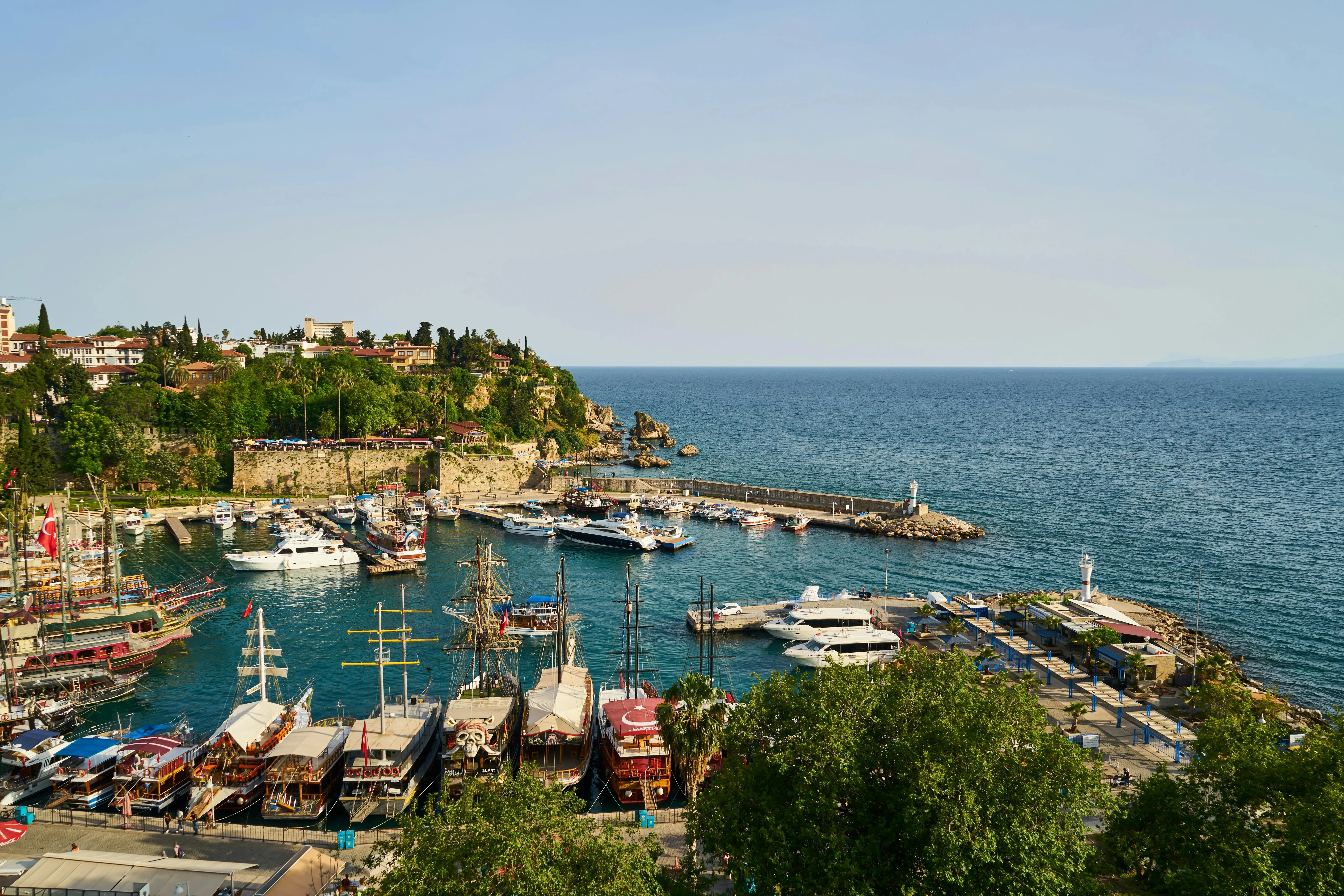
Antalya Hidden Gems: A Local Guide to Turkey’s Riviera

How to Get from Antalya to Kemer: Chauffeur, Taxi, Buses, Dolmuş & Sea Bus

Day Trip from Antalya to Perge, Aspendos and the Waterfalls

How to Get from Sabiha Gökçen Airport to Istanbul (2026)

Top Things to Do in Istanbul: A Complete Guide

How to Get from Istanbul Airport (IST) to the City Center

Cappadocia Hot Air Balloons: A Complete Guide

Landing in Turkey? Your Ride Is Ready
Pre-book your private driver, skip the taxi line, and get to your hotel with a fixed price and no surprises.
Book a transfer