'%3e%3cpath%20d='M43.073%200.00649261H15.0943V3.94346H43.073V0.00649261Z'%20fill='url(%23kiwitaxi-grad)'%20/%3e%3cpath%20d='M15.0828%203.94346C16.1928%203.94346%2017.0512%203.06513%2017.0512%201.97497C17.0512%200.874164%2016.1822%200.00649261%2015.0828%200.00649261C14.0362%200.00649261%2013.1379%200.851916%2013.1379%201.97497C13.1379%203.10916%2014.0478%203.94346%2015.0828%203.94346Z'%20fill='white'%20/%3e%3cpath%20d='M43.0614%203.94346C44.1715%203.94346%2045.0299%203.06513%2045.0299%201.97497C45.0299%200.874164%2044.1609%200.00649261%2043.0614%200.00649261C42.0149%200.00649261%2041.1166%200.851916%2041.1166%201.97497C41.1166%203.10916%2042.0265%203.94346%2043.0614%203.94346Z'%20fill='white'%20/%3e%3cpath%20d='M19.5921%2038.5052V39.828H23.1471V26.0491H19.5921V27.3446C18.895%2026.5789%2017.4549%2025.8841%2015.7339%2025.8841C11.8502%2025.8841%208.78975%2028.7578%208.78975%2032.939C8.78975%2037.1374%2011.8702%2039.9935%2015.7339%2039.9935C17.4938%2039.9935%2018.932%2039.2691%2019.5921%2038.5052ZM12.2892%2032.939C12.2892%2030.5715%2013.929%2029.1912%2015.9819%2029.1912C18.0106%2029.1912%2019.5647%2030.5845%2019.5647%2032.939C19.5647%2035.2579%2017.9768%2036.6869%2015.9823%2036.6869C13.9596%2036.6869%2012.2892%2035.264%2012.2892%2032.939Z'%20fill='white'%20/%3e%3cpath%20d='M44.7174%2026.0496H41.4289V39.8281H44.7174V26.0496Z'%20fill='white'%20/%3e%3cpath%20d='M32.2183%2035.7001L29.3455%2039.8281H24.94L30.044%2032.8552L25.1624%2026.0496H29.7075L32.3295%2029.8985L35.035%2026.0496H39.4405L34.5599%2032.7435L39.6361%2039.8281H35.1189L32.2183%2035.7001Z'%20fill='white'%20/%3e%3cpath%20d='M3.34504%2022.9604V26.0496H7.4039V29.0939H3.34504V34.2781C3.34504%2035.9866%204.33971%2036.7008%205.955%2036.7008C6.54504%2036.7008%207.16659%2036.5766%207.63241%2036.235V39.4341C7.04237%2039.7757%206.14133%2039.9931%204.89915%2039.9931C1.8243%2039.9931%200.0226746%2038.1293%200.0226746%2034.9298V22.96H3.34504Z'%20fill='white'%20/%3e%3cpath%20d='M36.2094%208.57428L33.307%2016.8723L30.43%208.57428H27.7621L24.8597%2016.8723L21.9828%208.57428H18.4884L23.2157%2021.4188H26.5037L29.084%2014.4093L31.6629%2021.4188H34.951L39.6782%208.57428H36.2094Z'%20fill='white'%20/%3e%3cpath%20d='M44.7174%208.57381H41.4289V21.4188H44.7174V8.57381Z'%20fill='white'%20/%3e%3cpath%20d='M16.7387%208.57381H13.4502V21.4188H16.7387V8.57381Z'%20fill='white'%20/%3e%3cpath%20d='M11.7001%208.57382L6.07922%2014.1326L12.1622%2021.4188H8.05929L3.92163%2016.28L3.3455%2016.8538V21.4188H0.0226746V3.94299H3.3455V12.7574L7.59764%208.57382H11.7001Z'%20fill='white'%20/%3e%3c/g%3e%3cdefs%3e%3clinearGradient%20id='kiwitaxi-grad'%20x1='15.0945'%20y1='1.97497'%20x2='43.073'%20y2='1.97497'%20gradientUnits='userSpaceOnUse'%3e%3cstop%20stop-color='%2300D2CD'%20stop-opacity='0'%20/%3e%3cstop%20offset='1'%20stop-color='%2300D2CD'%20/%3e%3c/linearGradient%3e%3cclipPath%20id='kiwitaxi-clip'%3e%3crect%20width='46'%20height='40'%20fill='white'%20/%3e%3c/clipPath%3e%3c/defs%3e%3c/svg%3e)


There is a kind of silence that exists only at 5 a.m. in Cappadocia, before the burners have started firing and the valleys are still the color of ash. You’re standing in a field outside Göreme once, half-asleep, watching a crew unroll a balloon the size of a small building across the dirt, and thinking that the whole scene looks less like a tourist activity and more like an age-old ritual. Then the burner catches, the fabric lifts, and within a few minutes you are rising over a landscape that resembles a movie set for an unknown planet.
This guide covers what you actually need to know before booking a Cappadocia balloon flight: how the experience works from wake-up to landing, what drives the cost, how to choose between flight types, and the one thing almost every visitor underestimates, that this is a weather-dependent aviation activity rather than a guaranteed sightseeing ticket, and planning around that fact will save you more disappointment than any other single piece of advice in this guide.
How It Works: The Basics
A typical morning starts absurdly early, often with a hotel pickup between 4:30 and 5:30 a.m., depending on the season's sunrise time. Most operators bring passengers to a staging area for a light breakfast and a weather briefing before transferring everyone by shuttle to that morning's launch site, which shifts based on wind direction rather than fixed scheduling.
Popular launch areas include Göreme, Çavuşin, Uçhisar, and Avanos, and crews make the final call on location, and on whether to fly at all, close to departure time, once conditions are clear.
Once airborne, flights generally run 45 minutes to an hour, drifting low enough over Love Valley, Red Valley, and the region's famous fairy chimneys to feel genuinely intimate with the landscape, then rising for a wider, more sweeping view as the flight continues.
Landing typically includes a small celebratory toast and a certificate, a charming, slightly theatrical touch that has become something of a signature across nearly every operator in the region.

Choosing a Flight Type
Standard flights carry the most passengers, typically divided into compartments within a single large basket, with everyone standing for the full flight. This remains the most common and most affordable option, and it delivers the same views as any other flight type, though the basket itself can feel crowded during peak season.
Comfort or premium flights carry fewer passengers per basket, giving more personal space and a generally calmer experience, which suits couples, anyone prioritizing photography, or travelers who would simply rather not share the view with two dozen strangers.
Private flights book an entire balloon for a single group, at a considerably higher price point, and suit special occasions or travelers for whom the experience itself, rather than the cost, is the priority.
Choosing between them mostly comes down to budget and how much personal space matters to you. A standard flight is a perfectly serene, satisfying way to experience Cappadocia from the air, and the upgrade to comfort or private tiers buys elbow room and a quieter basket rather than a fundamentally different view.
Cost: What You're Actually Paying For
Prices for a Cappadocia balloon flight typically range from roughly $130 to $500 or more per person, with the wide spread driven by season, basket size, and which flight tier you choose. Standard flights during low season, generally winter, tend to sit toward the lower end of that range, while peak season, spring and fall, usually pushes standard flights into the $250 to $350 range. Private or small-basket luxury flights can run $500 to $800 or beyond, reflecting both the exclusivity and the smaller number of passengers splitting the cost of the balloon and crew.
Most standard packages include hotel pickup and drop-off, passenger insurance, a light pre-flight refreshment, the flight itself, and the landing celebration with a certificate, though exact inclusions vary enough between operators that it is worth confirming against your voucher before paying.

Best Time to Fly
Spring, April through May, and fall, September through October, are widely considered the best seasons for a Cappadocia balloon flight, offering mild temperatures, a higher likelihood of clear skies, and calmer winds than either summer or winter tend to bring. These months also happen to coincide with some of the region's most photogenic ground cover, wild poppies in spring and golden foliage in fall, which adds another layer to the view below.
Time of day is not really a choice at all. Balloons fly at sunrise, without exception, since that is when winds are most stable and the light is at its most striking, catching the valley's rock formations in a soft, golden wash that disappears within an hour of the sun clearing the horizon.
Weather remains the single largest variable in the entire experience, and it is worth internalizing before you book rather than being caught off guard by it. Wind speed, visibility, and general flying conditions are assessed by Turkey's Directorate General of Civil Aviation, often quite close to departure time, and a cancellation can come with very little advance notice. Licensed operators will typically try to rebook you for the following morning if a slot is available, though next-day availability is capped and not guaranteed. Importantly, Turkish civil aviation regulation entitles passengers to a full refund if a flight is cancelled for weather and rebooking is not possible or not wanted, which is worth confirming directly with your operator at the time of booking.
Safety and What to Expect Onboard
Cappadocia's balloon operators fly under regulation from Turkey's Directorate General of Civil Aviation, and licensed companies maintain established protocols around equipment, pilot training, and pre-flight assessment. Every flight begins with a briefing covering safety guidelines, emergency procedures, and boarding and disembarking instructions, and it is worth genuinely paying attention rather than treating it as a formality, however routine the whole operation may feel by the time you arrive.
Getting in and out of the basket involves climbing over a raised edge, which can pose a real challenge for travelers with mobility limitations, and it is worth discussing this directly with an operator in advance if it applies to you or someone in your group.
Getting to the Launch Site: Airport and Hotel Transfers
Most visitors fly into either Kayseri Airport (ASR) or Nevşehir Airport (NAV), both serving the wider Cappadocia region, with driving times to central towns like Göreme and Ürgüp generally running 45 minutes to just over an hour depending on which airport and which town.
Given how early the balloon pickup window falls, arranging a transfer in advance matters more here than in almost any other travel experience covered on this site. Arriving late from the airport, scrambling for a taxi at midnight, or trying to coordinate a pickup on unfamiliar roads before dawn all introduce risk into a morning that already runs on a tight, weather-sensitive schedule.
Booking an airport transfer from Kayseri or Nevşehir straight to your Cappadocia hotel removes one of the more stressful variables from the whole trip. A driver tracks your flight and is waiting on arrival, regardless of delays, so the only thing left to plan for the next morning is the wake-up call itself.
Beyond the balloon flight, Cappadocia rewards slower exploration, its underground cities, rock-cut churches, and valley walking trails are easily worth a full extra day or two, and car rental with driver is a genuinely practical way to see them without the added effort of navigating unfamiliar mountain roads before sunrise has fully burned off.
What to Wear and Bring
Mornings in Cappadocia run cold even in the warmer months, so a light jacket or layers are worth having on hand regardless of season, since temperatures climb quickly once the sun clears the valley walls. Comfortable, closed shoes matter more than any other item on this list, given the uneven ground at most launch sites. Bring a camera rather than a drone, since drones are generally prohibited near active balloon flights, and secure any loose items before boarding, since the basket offers limited storage during flight.

Best Spots to Photograph Balloons from the Ground
Travelers not flying themselves, or hoping to capture the full spectacle from below, have a few reliably excellent vantage points. Uçhisar Castle, the highest point in the region, offers a sweeping, elevated view over dozens of balloons rising at once. Love Valley provides one of the more distinctive backdrops in Cappadocia, with its tall, unusually shaped rock formations framing the balloons against the early light. Arriving as early as possible matters here too, since the best vantage points fill in quickly once other photographers and early risers have the same idea.
How Many Days to Budget
Given how frequently weather can ground a flight with little warning, a two to three day stay in Cappadocia is worth building into your itinerary rather than a single overnight built entirely around one morning. Scheduling your balloon flight attempt for the first morning of your stay, rather than the last, gives you a genuine buffer to rebook if conditions do not cooperate, without losing the flight entirely or reworking your whole trip around it.

Frequently Asked Questions
How much does a hot air balloon ride in Cappadocia cost? Prices generally range from about $130 to $500 or more per person, with low-season standard flights toward the lower end, peak-season standard flights typically running $250 to $350, and private or luxury small-basket flights reaching $500 to $800 or beyond.
What is the best time of year to see the hot air balloons? Spring, particularly April and May, and fall, particularly September and October, offer the most reliable combination of mild weather, clear skies, and calmer winds for flying.
What happens if my balloon flight is cancelled? Licensed operators will typically try to rebook you for the next morning if space allows, though slots are capped and next-day availability isn't guaranteed. Under Turkish civil aviation regulation, you're entitled to a full refund if the flight is cancelled for weather and rebooking isn't possible or isn't what you want, so it's worth confirming this directly with your operator at the time of booking.
How early do you have to wake up for a Cappadocia balloon ride? Most operators arrange hotel pickup between 4:30 and 5:30 a.m., depending on the season's sunrise time, since flights always depart at first light.
Is a Cappadocia hot air balloon ride safe? Licensed operators fly under regulation from Turkey's civil aviation authority and follow established safety protocols, though the experience still carries the inherent risks of any aviation activity, and attending the pre-flight briefing closely is genuinely worth doing.
Which airport do you fly into for Cappadocia? Kayseri Airport (ASR) and Nevşehir Airport (NAV) both serve the region, with driving times to towns like Göreme and Ürgüp typically running between 45 minutes and just over an hour.
How many days should I budget for a balloon flight, in case of cancellation? Two to three days gives a reasonable buffer for a weather-related rebooking, and scheduling your attempted flight for the first morning of your stay rather than the last protects against losing it entirely.
Can you see the balloons without flying in one? Yes. Elevated viewpoints like Uçhisar Castle and distinctive backdrops like Love Valley both offer excellent views of the balloons from the ground, and arriving early secures the best vantage point before crowds gather.
Explore Turkey Guides
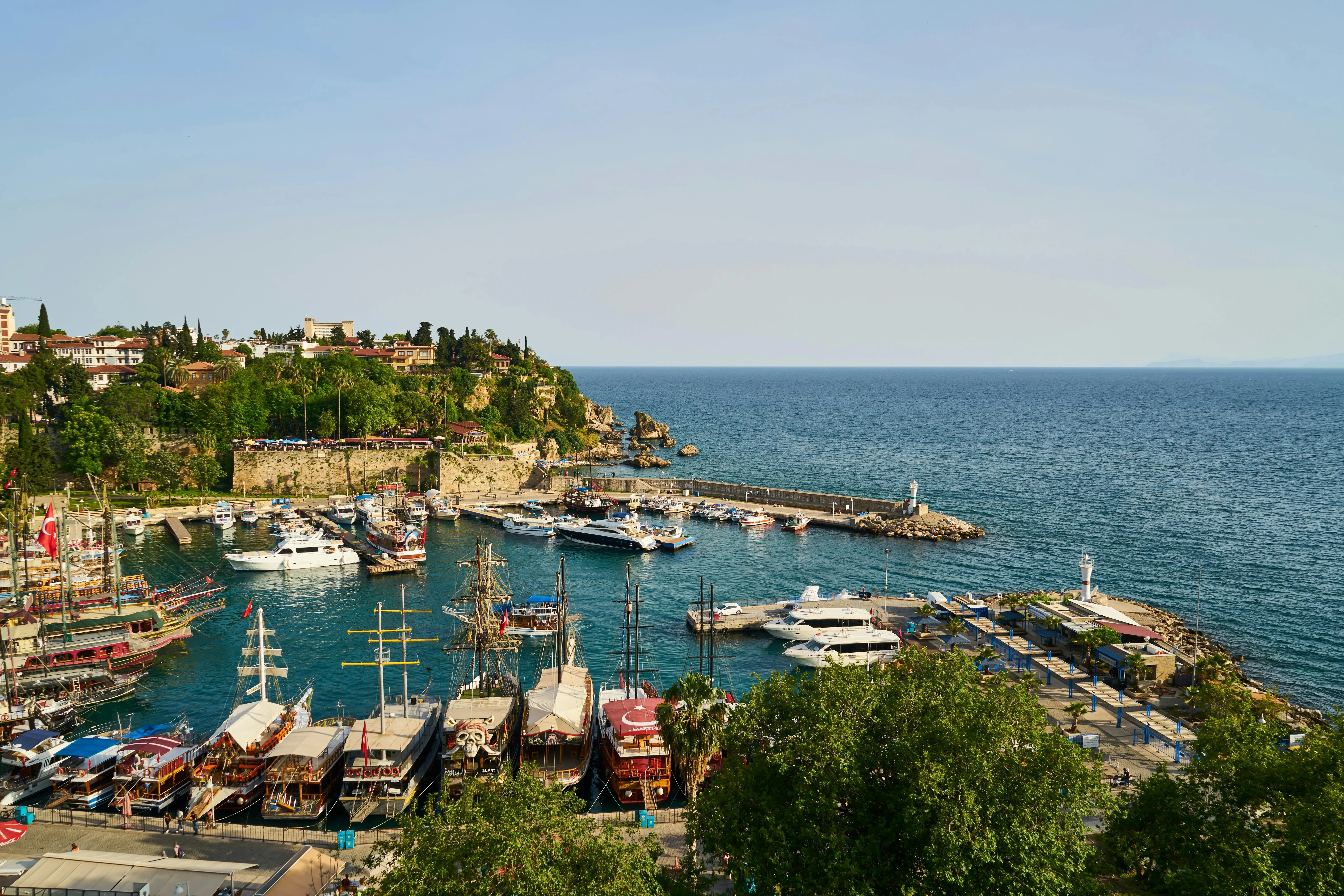
Antalya Hidden Gems: A Local Guide to Turkey’s Riviera

How to Get from Antalya to Kemer: Chauffeur, Taxi, Buses, Dolmuş & Sea Bus

Day Trip from Antalya to Perge, Aspendos and the Waterfalls

How to Get from Sabiha Gökçen Airport to Istanbul (2026)

Top Things to Do in Istanbul: A Complete Guide

How to Get from Istanbul Airport (IST) to the City Center

Cappadocia Hot Air Balloons: A Complete Guide

Landing in Turkey? Your Ride Is Ready
Pre-book your private driver, skip the taxi line, and get to your hotel with a fixed price and no surprises.
Book a transfer