'%3e%3cpath%20d='M43.073%200.00649261H15.0943V3.94346H43.073V0.00649261Z'%20fill='url(%23kiwitaxi-grad)'%20/%3e%3cpath%20d='M15.0828%203.94346C16.1928%203.94346%2017.0512%203.06513%2017.0512%201.97497C17.0512%200.874164%2016.1822%200.00649261%2015.0828%200.00649261C14.0362%200.00649261%2013.1379%200.851916%2013.1379%201.97497C13.1379%203.10916%2014.0478%203.94346%2015.0828%203.94346Z'%20fill='white'%20/%3e%3cpath%20d='M43.0614%203.94346C44.1715%203.94346%2045.0299%203.06513%2045.0299%201.97497C45.0299%200.874164%2044.1609%200.00649261%2043.0614%200.00649261C42.0149%200.00649261%2041.1166%200.851916%2041.1166%201.97497C41.1166%203.10916%2042.0265%203.94346%2043.0614%203.94346Z'%20fill='white'%20/%3e%3cpath%20d='M19.5921%2038.5052V39.828H23.1471V26.0491H19.5921V27.3446C18.895%2026.5789%2017.4549%2025.8841%2015.7339%2025.8841C11.8502%2025.8841%208.78975%2028.7578%208.78975%2032.939C8.78975%2037.1374%2011.8702%2039.9935%2015.7339%2039.9935C17.4938%2039.9935%2018.932%2039.2691%2019.5921%2038.5052ZM12.2892%2032.939C12.2892%2030.5715%2013.929%2029.1912%2015.9819%2029.1912C18.0106%2029.1912%2019.5647%2030.5845%2019.5647%2032.939C19.5647%2035.2579%2017.9768%2036.6869%2015.9823%2036.6869C13.9596%2036.6869%2012.2892%2035.264%2012.2892%2032.939Z'%20fill='white'%20/%3e%3cpath%20d='M44.7174%2026.0496H41.4289V39.8281H44.7174V26.0496Z'%20fill='white'%20/%3e%3cpath%20d='M32.2183%2035.7001L29.3455%2039.8281H24.94L30.044%2032.8552L25.1624%2026.0496H29.7075L32.3295%2029.8985L35.035%2026.0496H39.4405L34.5599%2032.7435L39.6361%2039.8281H35.1189L32.2183%2035.7001Z'%20fill='white'%20/%3e%3cpath%20d='M3.34504%2022.9604V26.0496H7.4039V29.0939H3.34504V34.2781C3.34504%2035.9866%204.33971%2036.7008%205.955%2036.7008C6.54504%2036.7008%207.16659%2036.5766%207.63241%2036.235V39.4341C7.04237%2039.7757%206.14133%2039.9931%204.89915%2039.9931C1.8243%2039.9931%200.0226746%2038.1293%200.0226746%2034.9298V22.96H3.34504Z'%20fill='white'%20/%3e%3cpath%20d='M36.2094%208.57428L33.307%2016.8723L30.43%208.57428H27.7621L24.8597%2016.8723L21.9828%208.57428H18.4884L23.2157%2021.4188H26.5037L29.084%2014.4093L31.6629%2021.4188H34.951L39.6782%208.57428H36.2094Z'%20fill='white'%20/%3e%3cpath%20d='M44.7174%208.57381H41.4289V21.4188H44.7174V8.57381Z'%20fill='white'%20/%3e%3cpath%20d='M16.7387%208.57381H13.4502V21.4188H16.7387V8.57381Z'%20fill='white'%20/%3e%3cpath%20d='M11.7001%208.57382L6.07922%2014.1326L12.1622%2021.4188H8.05929L3.92163%2016.28L3.3455%2016.8538V21.4188H0.0226746V3.94299H3.3455V12.7574L7.59764%208.57382H11.7001Z'%20fill='white'%20/%3e%3c/g%3e%3cdefs%3e%3clinearGradient%20id='kiwitaxi-grad'%20x1='15.0945'%20y1='1.97497'%20x2='43.073'%20y2='1.97497'%20gradientUnits='userSpaceOnUse'%3e%3cstop%20stop-color='%2300D2CD'%20stop-opacity='0'%20/%3e%3cstop%20offset='1'%20stop-color='%2300D2CD'%20/%3e%3c/linearGradient%3e%3cclipPath%20id='kiwitaxi-clip'%3e%3crect%20width='46'%20height='40'%20fill='white'%20/%3e%3c/clipPath%3e%3c/defs%3e%3c/svg%3e)


Sicily surprises people. Most travellers arrive expecting beaches and good food, and they get that, but they also leave talking about ancient temples, busy markets, an active volcano, and towns that look like film sets.
As the largest island in the Mediterranean, Sicily has been shaped by centuries of different rulers. Greeks, Romans, Arabs, Normans, and Spaniards all left something behind.
The island is diverse too. Some people spend their whole trip on the beach. Others hike on Europe's highest active volcano, walk through UNESCO towns, or drive along the coast for days. There's no single right way to see Sicily, and that's part of what makes it worth visiting.
This hub covers what you need to know before you go: where Sicily is, why people love it, its main cities, a bit of history, and the best time to visit.
Where Is Sicily?
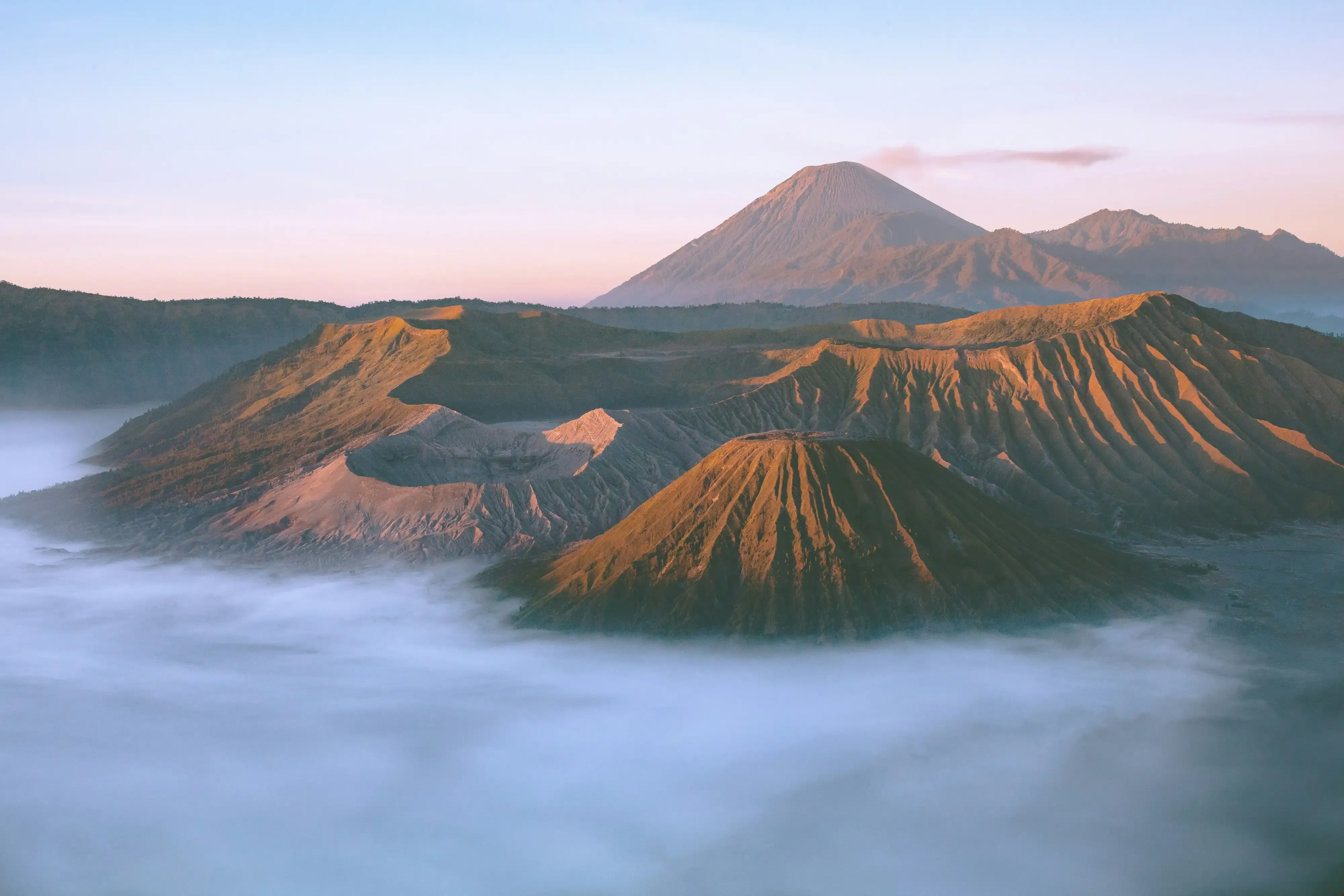
Sicily sits at the tip of southern Italy, separated from the mainland by the narrow Strait of Messina. Its location in the middle of the Mediterranean made it a meeting point for trade and cultures for thousands of years.
Sicily is an autonomous region of Italy, but it has its own identity. The food, architecture, and even the local dialect all carry traces of the many people who once lived here.
The island covers more than 25,000 square kilometres, making it Italy's largest region. It looks small on a map, but distances take longer than you'd think. Driving from Palermo to Syracuse takes about three hours. Reaching Trapani or the smaller inland towns can turn into a full day.
Most people think of Sicily in four areas:
Northern Sicily: Palermo, Cefalù, dramatic coastline, the Madonie Mountains.
Eastern Sicily: Catania, Taormina, Syracuse, and Mount Etna. This is the most visited region.
Western Sicily: quieter beaches, Trapani, the salt pans, and easy ferries to the Egadi Islands.
Southern Sicily: Baroque towns like Ragusa and Noto, plus the Valley of the Temples near Agrigento.
Tip: if you have less than a week, pick either eastern or western Sicily instead of trying to cover the whole island. Sicily deserves more time than most first-time visitors give it.
Why Visit Sicily?

Italy has no shortage of great destinations, but Sicily mixes history, nature, food, and everyday life in a way that feels natural rather than staged.
A long, layered history. Few places in Europe changed hands as often as Sicily. Greeks, Romans, Arabs, Normans, and Spaniards all ruled here, and each left something behind. You'll find Greek temples next to Baroque churches, Arab-influenced gardens, and Norman palaces, sometimes on the same street.
Landscapes that keep changing. The north has mountains and hidden coves, the east is dominated by Mount Etna, and the south has long sandy beaches with shallow, clear water. You can hike a volcano, relax on a quiet beach, or take a boat to a smaller island, all within a short drive of each other.
Food that's worth the trip on its own. Sicily is known for street food, fresh seafood, citrus, pistachios, and desserts. A typical day might start with a granita, continue with an arancino for lunch, and end with fresh pasta and a cannolo for dessert. Don't fight it, just eat.
Good value. Prices have gone up in recent years, but Sicily is still cheaper than Rome, Venice, or Florence for accommodation, meals, and car hire, especially outside summer.
Something for every kind of traveller. History lovers get Greek temples and Roman ruins. Beach lovers get hundreds of kilometres of coastline. Road trippers get mountain villages and coastal roads. Families get relaxed beaches and plenty of space. Couples get hilltop towns and sea views. Adventure travellers get Mount Etna, diving, and kayaking. Most people end up wanting to come back for what they missed the first time, which is usually a good sign.
Major Cities in Sicily
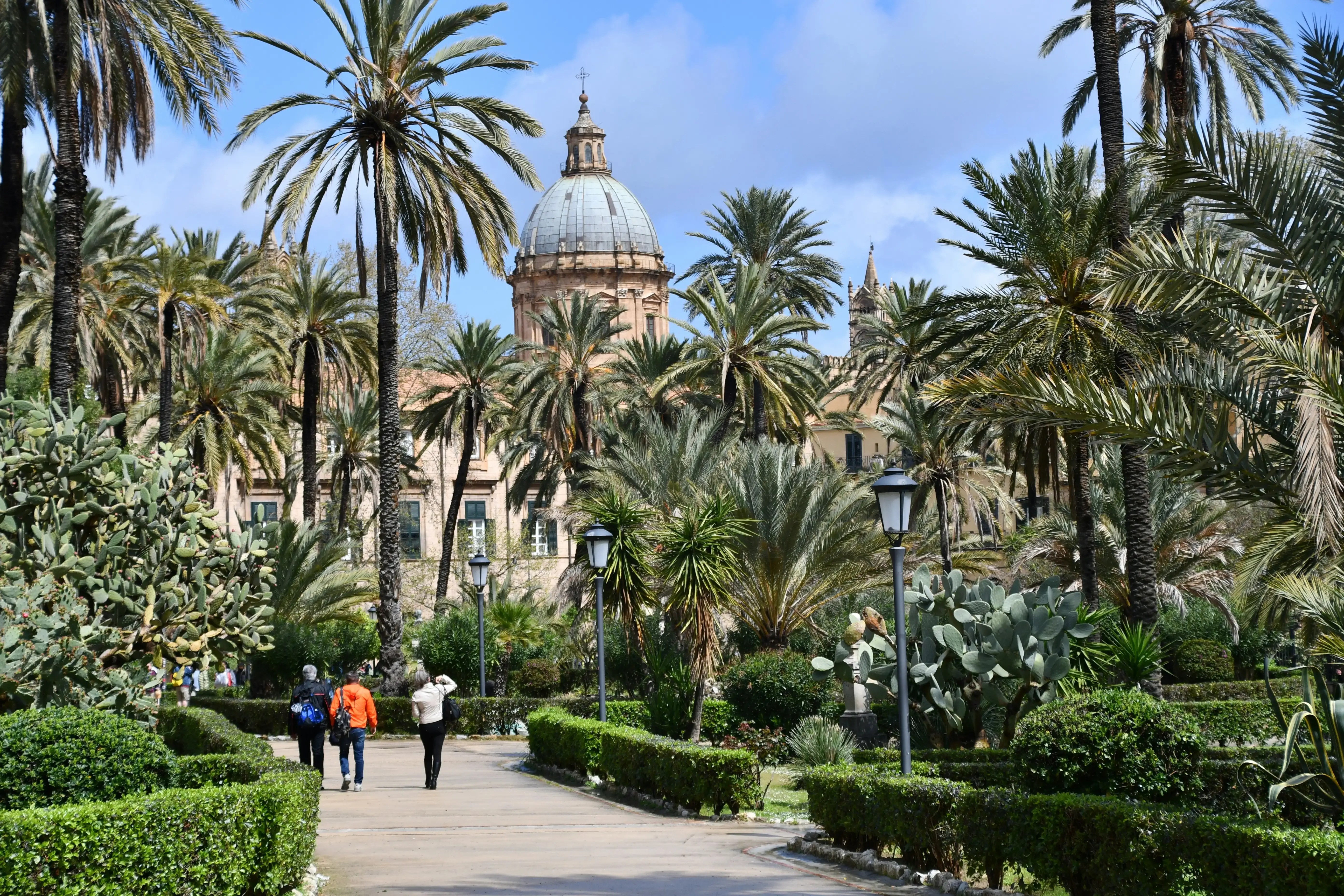
No two Sicilian cities feel the same. If you have time, visit more than one to see the contrast.
Palermo. Sicily's capital is loud, colourful, and full of life. Known for its street markets, churches, and some of the best street food in Italy. Arab, Norman, and Baroque buildings sit side by side. Visit Palermo Cathedral, then head to Ballarò or Vucciria Market to eat. A good base for exploring the northwest.
Catania. Built largely from dark volcanic stone, Catania sits in the shadow of Mount Etna and looks like nowhere else on the island. Its historic centre is a UNESCO site full of Baroque buildings and busy cafés. Good nightlife, and a convenient base for Etna, Taormina, and nearby beaches.
Syracuse (Siracusa). Once one of the most powerful cities in the ancient Greek world, now home to major archaeological sites and one of Sicily's nicest old towns. The centre is Ortigia, a small island linked to the mainland by bridges, with narrow streets and waterfront restaurants. Easy to lose a whole day here.
Taormina. Perched on a hillside over the Ionian Sea, this is one of Sicily's most photographed towns. The Ancient Greek Theatre, which still hosts performances, has Mount Etna as a backdrop. It gets crowded, but the views explain why.
Agrigento. Home to the Valley of the Temples, one of the best-preserved collections of Greek temples outside Greece. Most visitors focus on the archaeological park and skip the town centre, which is a shame, since it's pleasant on its own.
Trapani. Slower paced than Palermo or Catania. Known for its old town, nearby salt pans, and seafood. It's also the main gateway to the Egadi Islands and close to Erice, a hilltop medieval town with wide views over western Sicily.
Cefalù. A sandy beach, a pretty old town, and good restaurants, all in one place. The Norman cathedral, a UNESCO site, dominates the centre, and the hill behind town (La Rocca) gives you a great view over the coast.
Ragusa and Noto. Two of the best examples of Sicilian Baroque architecture. Ragusa splits into two parts, with the old district of Ragusa Ibla built around winding streets and churches. Noto is known for honey-coloured limestone buildings that glow in the late afternoon light. Both are good for a slow day with plenty of café stops.
Getting Around Sicily
Sicily is bigger than most visitors expect, and some of its best spots are tucked away along the coast or in the countryside. How you get around depends on your plans.
Renting a car. This gives you the most freedom, especially for smaller towns, quiet beaches, and vineyards that public transport doesn't reach. That said, driving in Sicilian cities takes some getting used to. Roads are narrow, parking is tight, and local driving style is, let's say, confident. Some people love the freedom of a road trip. Others prefer to enjoy the view from the passenger seat.

Private transfers and chauffeur services. If you want a car without driving yourself, this is a solid option. Kiwitaxi offers pre-booked airport transfers at a fixed price, so you know the cost upfront, and your driver meets you at the airport and takes you straight to your accommodation.
For day trips or visiting several towns in one day, a private chauffeur (car plus driver, by the hour) means you don't worry about parking, navigation, or where to leave your bags while you explore.
Public transport. Trains connect Palermo, Catania, Syracuse, Messina, and Cefalù, though journeys can be slower than driving. Regional buses reach places trains don't, and sometimes they're actually faster. If your trip is mostly about the bigger cities, you can get by without a car.
Ferries. Regular ferries run between mainland Italy and ports like Palermo, Messina, and Trapani. They also connect Sicily to the Aeolian Islands, Egadi Islands, Pantelleria, and other smaller islands. Many routes let you bring your own car.
Staying connected. Good internet makes everything easier, from checking train times to translating a menu. If you're coming from outside the EU, an eSIM set up before you land saves you from hunting for a SIM card shop at the airport.
A Brief History of Sicily
Sicily has been a crossroads of the Mediterranean for more than 3,000 years. Its location drew in the Greeks, Romans, Byzantines, Arabs, Normans, Spaniards, and eventually the Italians, and each left something behind.
You see this mix everywhere. Greek temples stand near Norman cathedrals, Arab influence shows up in the food and farming, and Baroque towns tell the story of Sicily's later years. These cultures didn't just replace each other, they blended into something distinct.
Today Sicily is an autonomous region of Italy with a culture that feels quite different from the mainland. You notice it in the food, the local dialect, and the traditions that have carried on for centuries.

Sicily and the Mafia
Many people outside Italy hear "Sicily" and think of the Mafia, thanks to decades of books and films. It's worth knowing a little about this, mostly so you can see past the stereotype.
The Sicilian Mafia, or Cosa Nostra, formed in the 19th century, when weak local government left room for private groups to step in and enforce their own rules. Over time, these groups moved into business and politics through intimidation and corruption.
In 1992, judges Giovanni Falcone and Paolo Borsellino, both known for prosecuting Mafia leaders, were assassinated within two months of each other. Their deaths shocked the country and led to a much stronger crackdown on organised crime. Today they're remembered as national heroes, and you'll see streets and schools named after them across the island.
For travellers, this history has almost no practical impact. Millions of people visit Sicily every year and never encounter anything related to it. Sicilians themselves are often tired of the association and would rather you remember the island for its food, history, and hospitality.
If you're curious, a few museums and guided tours cover this part of Sicily's story in a thoughtful, non-sensational way.
For a cultural take, The Godfather Part II uses Sicily as a backdrop and is a good watch if you want some atmosphere before your trip, just don't expect a documentary.
Best Time to Visit Sicily
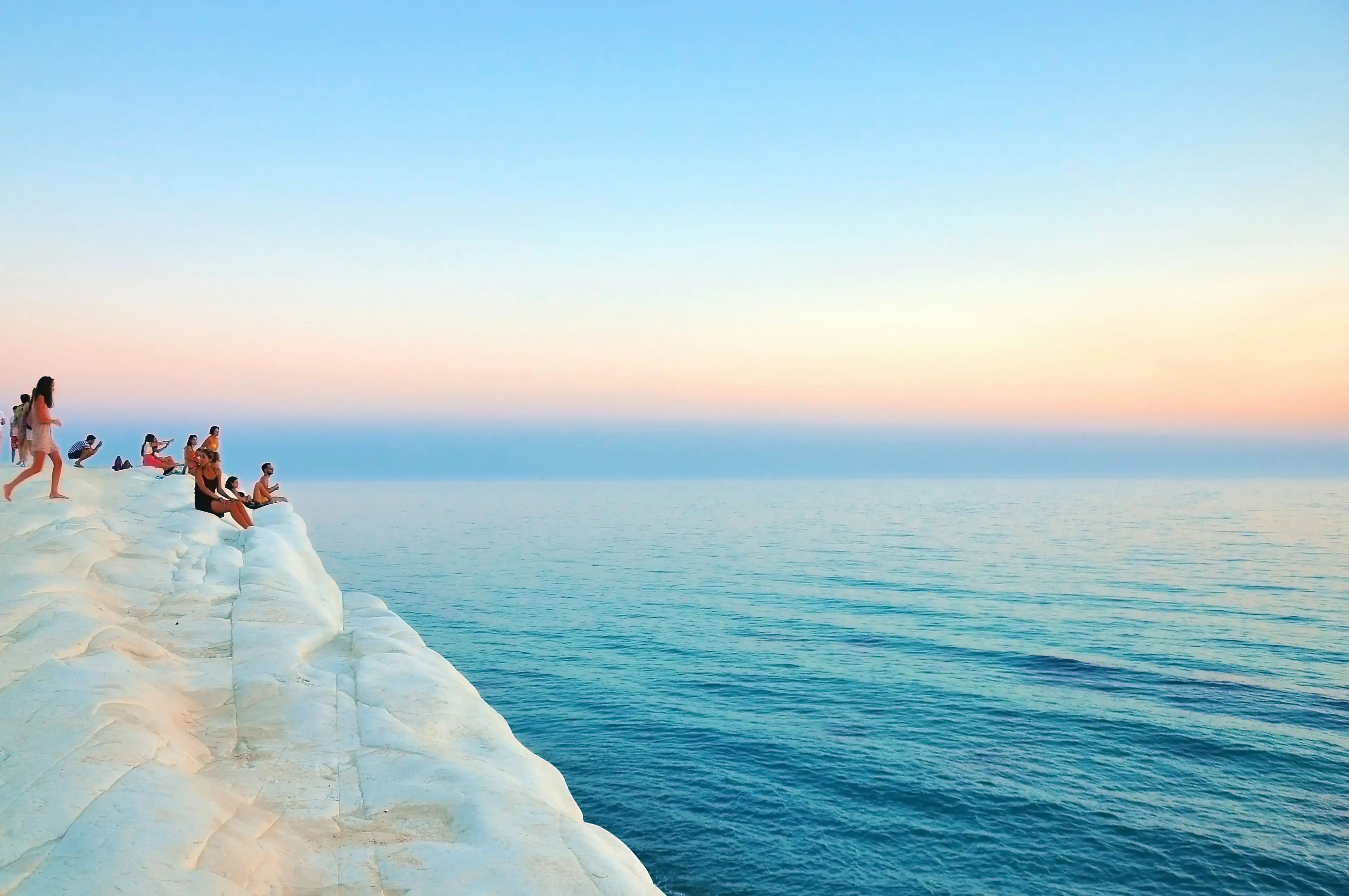
Sicily has a Mediterranean climate, hot summers, mild winters, and plenty of sun, so there's no bad time to go. It depends on what you want from the trip.
Spring (March to May). Pleasant temperatures, green countryside, and wildflowers. Good for hiking around Etna, and attractions are less crowded than summer. The sea is still cool early on but swimmable by late May.
Summer (June to August). Sicily's busiest season, with long sunny days and lively coastal towns. July and August often go above 30°C, and beaches get packed, especially in August. Book ahead, and start sightseeing early before the heat kicks in.
Autumn (September to November). Many people call this the best season. The sea is still warm from summer, temperatures cool down, and the crowds thin out. September can feel like an extension of summer, while October is great for road trips and wine harvest season.
Winter (December to February). Quiet season, but coastal cities stay relatively mild, so sightseeing is comfortable without the crowds.
You can even ski on Mount Etna, which surprises most people.
Accommodation is also cheaper.
Quick answer: for the best all-round balance of weather and fewer crowds, go in spring or autumn. For beaches, June and September give you warm water without August's crowds. For sightseeing and road trips, April, May, September, and October are your best bets.
A Few Fun Facts About Sicily
Mount Etna is Europe's tallest and most active volcano, and it's still growing. It erupts often enough that locals barely blink, but it's usually calm enough to visit safely with a guide.
Sicily has its own language, Sicilian, which isn't just a dialect of Italian but has its own grammar and roots going back to Arabic, Greek, and Norman French.
Arancini (fried rice balls) are a whole debate on the island. In the east they're often cone-shaped, in the west they're round, and locals have strong opinions about which is correct.
The Valley of the Temples in Agrigento has better-preserved Greek temples than many sites in Greece itself, since Sicily was once part of "Magna Graecia," the Greek-colonised part of southern Italy.
Cannoli were traditionally made for Carnival season, not as an everyday dessert, though nobody in Sicily seems to enforce that rule anymore.
Sicily's salt pans near Trapani have been used since Phoenician times, and some are now protected nature reserves where you can watch flamingos alongside the old windmills.

Frequently Asked Questions
Is Sicily worth visiting? Yes. Beaches, historic cities, ancient ruins, great food, and dramatic landscapes, all in one place. Works for both relaxing trips and active ones.
How many days do you need in Sicily? A week covers one part of the island well. Ten to fourteen days lets you see several cities, the beaches, and take day trips without rushing. With only a few days, stick to either the east or the west.
What is the best month to visit Sicily? May, June, September, and October. Warm weather, fewer crowds than peak summer, and good conditions for both sightseeing and the beach.
Do I need a car in Sicily? Not always. Cities like Palermo, Catania, Syracuse, and Taormina are well served by trains, buses, and private transfers. For smaller towns and the countryside, a rental car with a private chauffeur gives you more freedom.
Which airport should I fly into? Depends on your route. Palermo Airport for western Sicily, Catania Airport for the east (Etna, Taormina, Syracuse). Trapani and Comiso airports also work depending on where you're coming from.
Is Sicily safe for tourists? Yes, generally very safe. Normal precautions apply, like keeping an eye on your belongings in busy areas.
Is Sicily expensive? It's usually cheaper than Rome, Venice, or Florence for accommodation, food, and transport, especially outside peak summer.
Can you travel around Sicily by train? Yes, trains connect Palermo, Catania, Messina, Syracuse, and Cefalù. Smaller towns and rural areas are easier by bus, car, or private transfer.
What language is spoken in Sicily? Italian is official, and many locals also speak Sicilian. In tourist areas, most people working in hotels and restaurants speak at least some English.
Is Sicily family-friendly? Very much so. Child-friendly beaches, spacious apartments, and attractions that work for all ages, from ruins to boat trips.
Can I visit Sicily without speaking Italian? Yes. A few basic phrases help, but English is common in tourist spots, and a translation app covers the rest.
What are the must-see places in Sicily? Palermo, Catania, Taormina, Syracuse, Cefalù, the Valley of the Temples, Mount Etna, and the Baroque towns of Ragusa and Noto. With extra time, add the Aeolian or Egadi Islands.
Is Sicily better than Sardinia? Depends what you want. Sicily has more history, cities, and archaeological sites alongside good beaches. Sardinia is more about spectacular coastline and clear water. Both are great, but Sicily usually wins for travellers who want variety.

Landing in Italy? Your Ride Is Ready
Pre-book your private driver, skip the taxi line, and get to your hotel with a fixed price and no surprises.
Book a transferExplore Italy Guides
Italy has a way of overwhelming you with options — in the best possible way. We've gathered all our Italy travel guides in one place: city breakdowns, regional day trips, how-to-get-there comparisons, and honest advice on when a private transfer actually beats the train. Whether you're planning your first trip or filling in the gaps on a route you've done before, start here.

Best Things to Do Around the Colosseum: Rome Attractions, Tours & Insider Tips

Fiumicino Airport to Rome Hotels: Transportation Options for Every Budget

Fiumicino Airport (FCO) to Rome City Center: Complete Transportation Guide

Rome Travel Guide by @vilettv: Hidden Gems, Best Cafés, Gelato & Boutique Hotels

Rome in a Day & 3 Days in Rome: The Ultimate Itineraries for Every Traveler

Rome: La Dolce Vita in Every Corner — travel guide by Olivia (@doinglifewithliv)

How to Get from Venice Airport to Venice: Routes, Times & Prices Explained

Rome Airport to City with Kids: Best Family Transfer Options
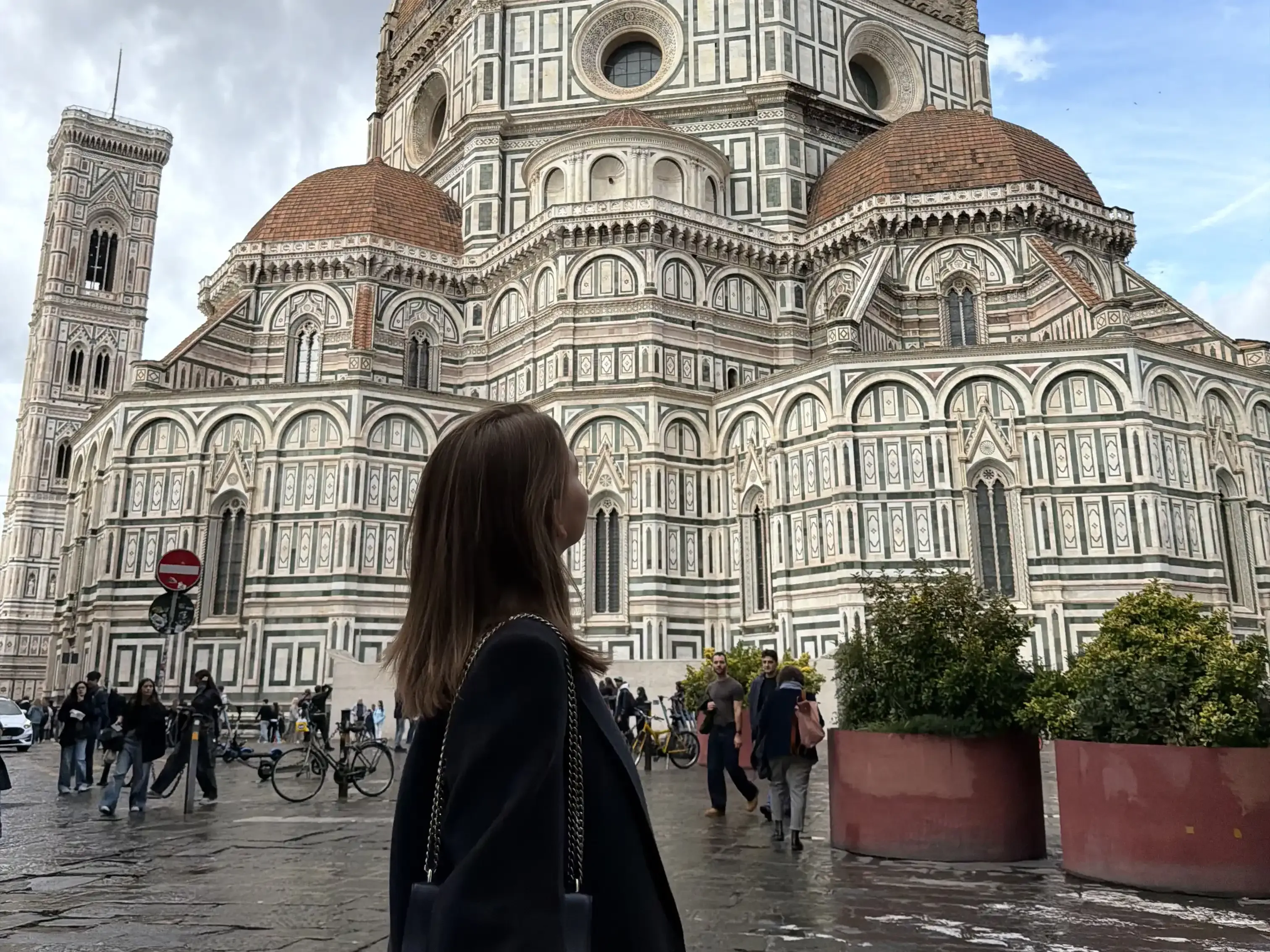
A Taste of Florence: Your Complete Food Guide

Rome Travel Guide 2026: Best Time to Visit, Where to Stay & What Not to Miss

Day Trip from Rome to Pompeii and the Amalfi Coast
Discover Florence: A Local’s Take on Beauty, Food & Life in Tuscany
Milan to Verona Day Trip with a Chauffeur
Serravalle Designer Outlet: Complete Guide & How to Get There (2026)

Best Day Trips from Milan with a Private Driver: Lake Como, Verona & Beyond

Milan to Lake Como Day Trip: Train vs Car vs Chauffeur Service

Best Wine Tours from Milan: Franciacorta, Valpolicella & Chauffeur Hire

Top Things to Do in Naples

Venice for First-Timers: The Only Guide You Need
Mount Etna: How to Visit and Hike

Where Italians Actually Vacation in Italy

Best Time to Visit Italy: Find the Right Season for Your Trip

Amalfi Coast: The Best Towns, Beaches, Hikes and How to Get There

10 Unforgettable Day Trips from Rome, Italy: Ancient Towns, Best Beaches & Countryside Escapes

Venice Without the Crowds: An Escape Guide

What It's Really Like to Live in Venice

Best Hotels in Rome for Every Budget: Luxury, Boutique & Budget Stays
Genoa Travel Guide 2026: Where to Stay, What to See & How to Get There

Elba Island Travel Guide 2026: Where to Stay, What to See & How to Get There
