'%3e%3cpath%20d='M43.073%200.00649261H15.0943V3.94346H43.073V0.00649261Z'%20fill='url(%23kiwitaxi-grad)'%20/%3e%3cpath%20d='M15.0828%203.94346C16.1928%203.94346%2017.0512%203.06513%2017.0512%201.97497C17.0512%200.874164%2016.1822%200.00649261%2015.0828%200.00649261C14.0362%200.00649261%2013.1379%200.851916%2013.1379%201.97497C13.1379%203.10916%2014.0478%203.94346%2015.0828%203.94346Z'%20fill='white'%20/%3e%3cpath%20d='M43.0614%203.94346C44.1715%203.94346%2045.0299%203.06513%2045.0299%201.97497C45.0299%200.874164%2044.1609%200.00649261%2043.0614%200.00649261C42.0149%200.00649261%2041.1166%200.851916%2041.1166%201.97497C41.1166%203.10916%2042.0265%203.94346%2043.0614%203.94346Z'%20fill='white'%20/%3e%3cpath%20d='M19.5921%2038.5052V39.828H23.1471V26.0491H19.5921V27.3446C18.895%2026.5789%2017.4549%2025.8841%2015.7339%2025.8841C11.8502%2025.8841%208.78975%2028.7578%208.78975%2032.939C8.78975%2037.1374%2011.8702%2039.9935%2015.7339%2039.9935C17.4938%2039.9935%2018.932%2039.2691%2019.5921%2038.5052ZM12.2892%2032.939C12.2892%2030.5715%2013.929%2029.1912%2015.9819%2029.1912C18.0106%2029.1912%2019.5647%2030.5845%2019.5647%2032.939C19.5647%2035.2579%2017.9768%2036.6869%2015.9823%2036.6869C13.9596%2036.6869%2012.2892%2035.264%2012.2892%2032.939Z'%20fill='white'%20/%3e%3cpath%20d='M44.7174%2026.0496H41.4289V39.8281H44.7174V26.0496Z'%20fill='white'%20/%3e%3cpath%20d='M32.2183%2035.7001L29.3455%2039.8281H24.94L30.044%2032.8552L25.1624%2026.0496H29.7075L32.3295%2029.8985L35.035%2026.0496H39.4405L34.5599%2032.7435L39.6361%2039.8281H35.1189L32.2183%2035.7001Z'%20fill='white'%20/%3e%3cpath%20d='M3.34504%2022.9604V26.0496H7.4039V29.0939H3.34504V34.2781C3.34504%2035.9866%204.33971%2036.7008%205.955%2036.7008C6.54504%2036.7008%207.16659%2036.5766%207.63241%2036.235V39.4341C7.04237%2039.7757%206.14133%2039.9931%204.89915%2039.9931C1.8243%2039.9931%200.0226746%2038.1293%200.0226746%2034.9298V22.96H3.34504Z'%20fill='white'%20/%3e%3cpath%20d='M36.2094%208.57428L33.307%2016.8723L30.43%208.57428H27.7621L24.8597%2016.8723L21.9828%208.57428H18.4884L23.2157%2021.4188H26.5037L29.084%2014.4093L31.6629%2021.4188H34.951L39.6782%208.57428H36.2094Z'%20fill='white'%20/%3e%3cpath%20d='M44.7174%208.57381H41.4289V21.4188H44.7174V8.57381Z'%20fill='white'%20/%3e%3cpath%20d='M16.7387%208.57381H13.4502V21.4188H16.7387V8.57381Z'%20fill='white'%20/%3e%3cpath%20d='M11.7001%208.57382L6.07922%2014.1326L12.1622%2021.4188H8.05929L3.92163%2016.28L3.3455%2016.8538V21.4188H0.0226746V3.94299H3.3455V12.7574L7.59764%208.57382H11.7001Z'%20fill='white'%20/%3e%3c/g%3e%3cdefs%3e%3clinearGradient%20id='kiwitaxi-grad'%20x1='15.0945'%20y1='1.97497'%20x2='43.073'%20y2='1.97497'%20gradientUnits='userSpaceOnUse'%3e%3cstop%20stop-color='%2300D2CD'%20stop-opacity='0'%20/%3e%3cstop%20offset='1'%20stop-color='%2300D2CD'%20/%3e%3c/linearGradient%3e%3cclipPath%20id='kiwitaxi-clip'%3e%3crect%20width='46'%20height='40'%20fill='white'%20/%3e%3c/clipPath%3e%3c/defs%3e%3c/svg%3e)


Thailand breaks down into a few regions, each with its own character, season and type of traveler. Pick the vibe you want first and the rest falls into place. This guide covers how the country is laid out, where to stay, when to go, how to get around and the questions travelers ask most.
At a glance
Region | Vibe | Best months | Suggested stay |
|---|---|---|---|
Bangkok and the center | Big city, temples, street food, nightlife | November to February | 3 to 5 nights |
The north (Chiang Mai, Chiang Rai) | Culture, hills, slow pace | November to February | 3 to 5 nights |
Andaman coast (Phuket, Krabi, Phi Phi, Lanta, Khao Lak) | Limestone cliffs, islands, resorts | November to April | 4 to 7 nights |
Gulf islands (Samui, Phangan, Tao) | Relaxed beaches, diving, parties | January to August | 4 to 7 nights |
Koh Chang and the east | Green, laid-back, close to Bangkok | November to April | 3 to 4 nights |
Getting from the airport
Thailand has several international and domestic airports, and the distance to your hotel can be bigger than you expect. Phuket airport is in the north of the island, so Kata or Patong can take an hour or more. Pattaya is around 1.5 to 2 hours from Bangkok's Suvarnabhumi airport, and Hua Hin is about 3 hours. Krabi, Samui and Chiang Mai airports are closer to their main areas.
A pre-booked Kiwitaxi transfer is a simple way to handle this. Your driver meets you at arrivals, the price is fixed in advance, and you avoid haggling after a long flight. It works well for Bangkok (Suvarnabhumi and Don Mueang), Phuket, Krabi, Koh Samui, Chiang Mai and the popular routes to Pattaya, Hua Hin and Khao Lak.

How the country is laid out
Bangkok and the center. The capital is the entry point for most trips and a big destination in its own right. Expect temples, street food, rooftop bars, malls and markets. Two nights is enough for the highlights, and four or five suit big-city fans. History lovers can add a day trip to Ayutthaya. Beach lovers who don't want a long journey can head to Pattaya or the calmer Hua Hin.
The north. Chiang Mai is the hub here, a relaxed city surrounded by hills, with old temples, cafes, night markets and ethical elephant sanctuaries. Chiang Rai, a few hours further, is known for the White Temple and the Golden Triangle. This is the region for slower travel, culture and nature, and it is easy to reach from the capital, as our guide on how to get from Bangkok to Chiang Mai explains.
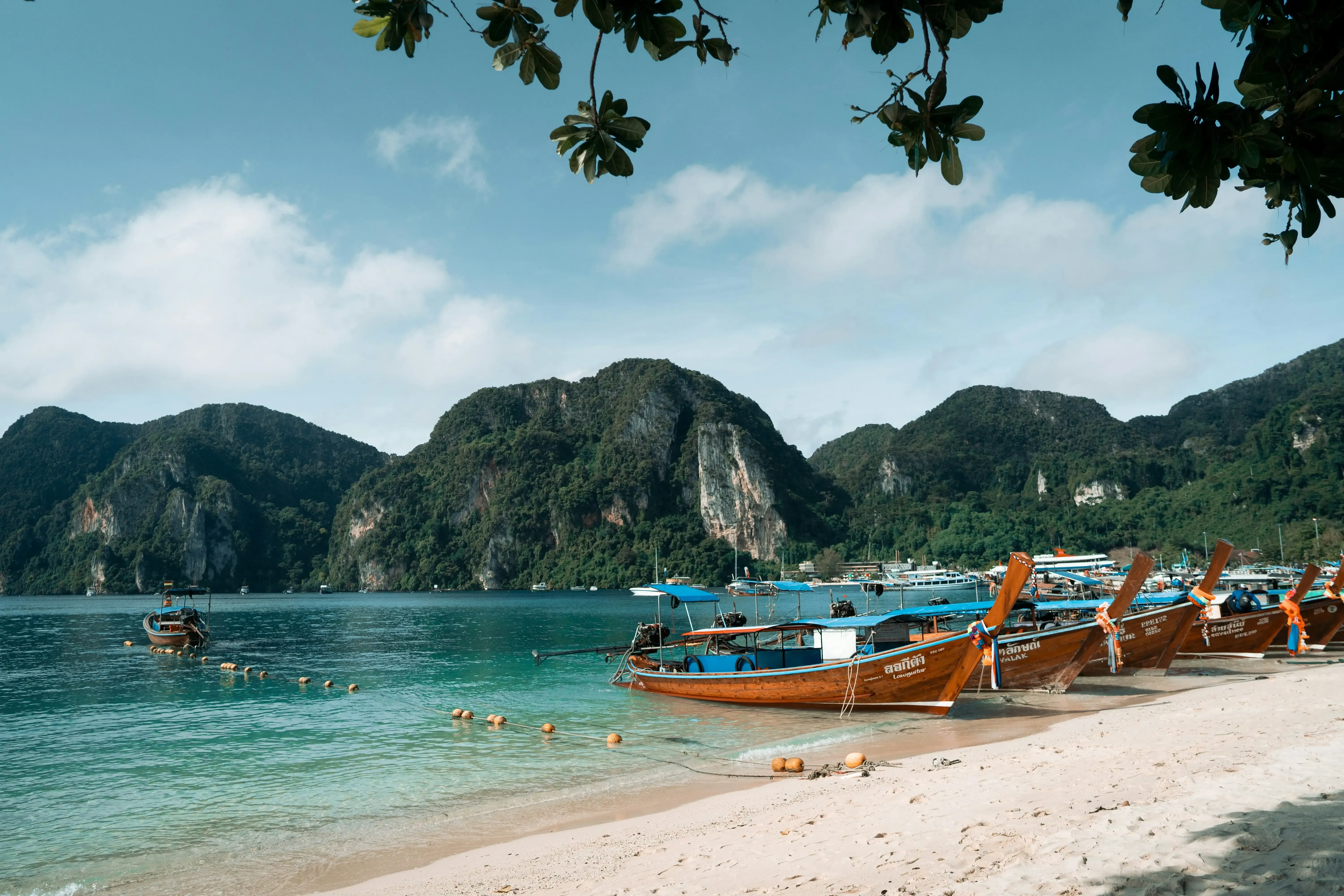
The Andaman coast (west). This is the side with limestone cliffs, turquoise water and big islands.
Phuket has the most choice: lively Patong, family-friendly Kata and Karon, quieter Nai Harn and Bang Tao, and the old town for food and architecture.
Krabi is about scenery. Railay, Ao Nang and the nearby islands suit climbers, kayakers and couples, and it is an easy hop from Phuket, as our guide on getting from Phuket to Krabi shows.
Koh Phi Phi and Koh Lanta work well as add-ons. Phi Phi is good for day trips and party nights, and Lanta for a slower, family pace.
Khao Lak is a quiet, long-beach alternative north of Phuket.
The Gulf coast and the east. Several islands, each with its own personality:
Koh Samui is the comfortable all-rounder, with resorts, restaurants and good beaches.
Koh Phangan is for yoga, beach bars and the famous full moon parties.
Koh Tao is the place to dive or learn to dive.
Koh Chang, near the Cambodian border, is a green, laid-back island that suits a short break from Bangkok. Here is how to get from Bangkok to Koh Chang.

Where to stay, depending on your trip
First time in Thailand: Bangkok, then Phuket or Krabi, or Bangkok, Chiang Mai and a beach.
Families: Kata or Karon in Phuket, Koh Samui, Hua Hin.
Couples and honeymoons: Krabi, Khao Lak, quiet corners of Samui, Koh Lanta.
Nightlife: Patong in Phuket, Bangkok, Koh Phangan.
Culture and food: Bangkok and Chiang Mai.
Diving and snorkeling: Koh Tao, Phi Phi, the Similan Islands from Khao Lak.
Slow travel and remote work: Chiang Mai, Koh Phangan, Koh Lanta.
A short escape from the capital: Koh Chang, Pattaya, Hua Hin.
The best time to go
Thailand has three seasons, but the coasts don't follow the same calendar, so it helps to check by region.
November to February is the easiest time overall. It is dry, a bit cooler and good for almost everywhere. It is also the busiest and most expensive period.
March to May is hot. The beaches are still lovely, but sightseeing in Bangkok and the north can be tiring. Chiang Mai has smoky air in March and April.
June to October is the rainy season, with green landscapes, fewer crowds and lower prices. The Andaman coast gets rougher seas, while the Gulf islands (Samui, Phangan, Tao) stay drier until around October.
Beach rule of thumb: Andaman coast from November to April, Gulf islands from January to August. Both are at their best in January and February.
Festivals and events
A festival can shape your dates, so it is worth knowing the big ones.
Songkran (mid-April): the Thai New Year, celebrated with huge water fights across the country.
Loy Krathong and Yi Peng (around November): floating lanterns and lights, most famous in Chiang Mai.
Full moon parties (monthly): Koh Phangan.
Chinese New Year: big celebrations in Bangkok and Phuket Old Town.
Festival dates move each year, so check the current calendar before you book.

Sample routes
Most travelers combine two or three regions. A classic mix is Bangkok, Chiang Mai and one beach area. If you only have a week, choose one beach region and one city, and keep the transfers short.
7 days: Bangkok and one beach. 3 nights in Bangkok, then fly to Phuket or Krabi for 4 nights. It's simple and has few transfers.
10 days: culture and beach. 3 nights in Bangkok, 3 in Chiang Mai, 4 on the Andaman coast or on Koh Samui.
14 days: the classic loop. Bangkok, Chiang Mai, then Phuket, with a few nights in Krabi or Koh Lanta before you fly home. Our guide on getting from Phuket to Krabi fits here.
Bangkok plus Cambodia. Add Siem Reap to your Thailand trip. See Bangkok to Cambodia.
Moving between regions
Distances in Thailand are bigger than they look on the map, so a little planning saves a lot of time. Domestic flights are the fastest way to cover long distances, for example Bangkok to Phuket, Krabi or Chiang Mai. Trains are slower but scenic, and the night train to the north is a fun experience. Ferries connect the islands, and the Samui, Phangan and Tao routes run daily.
For short and medium distances by road, a private transfer is often the easiest option, especially with luggage or kids. Within cities, ride-hailing apps are handy and tuk-tuks are best for short, fun rides, but agree the price first. If you plan to combine regions, our guides cover the most popular routes, including Bangkok to Phuket, Bangkok to Chiang Mai, Phuket to Krabi and Bangkok to Koh Chang. If you want to add Siem Reap or Phnom Penh, read how to travel from Bangkok to Cambodia.
Exploring by car for a day
Some areas are much more enjoyable at your own pace, and public transport doesn't always reach the best spots. A Kiwitaxi chauffeur lets you book a car with a driver for several hours or a full day, so you can stop where you like and skip the logistics. Some ideas:
From Bangkok: Ayutthaya and its ruins, or a floating market day.
From Chiang Mai: Doi Suthep, nearby waterfalls, or a long day out to Chiang Rai.
From Phuket: Old Town, Big Buddha, viewpoints and quiet beaches on the island's west coast.
From Krabi: Tiger Cave Temple, the Emerald Pool and hot springs.
On Koh Samui: a full island loop with beach and temple stops.

Good to know before you go
A few small habits make the trip smoother.
Temples: cover your shoulders and knees, and take your shoes off when entering.
Connectivity: an eSIM or local SIM is easy to set up on arrival.
Weather: pack a light rain jacket in the rainy season and sunscreen all year.
Traveling solo
Thailand is one of the most popular countries in Asia for solo travelers, and many women explore it on their own. If you're planning that kind of trip, read our guide on whether Thailand is safe for solo female travelers for practical tips on areas, transport and getting around at night.

FAQ
Do I need a visa for Thailand?
Many nationalities can enter visa-free for a short stay, but the allowed length and conditions change from time to time. Before booking, check the official Thai e-visa site or your nearest Thai embassy for your passport. Also check whether a digital arrival form is required before you fly.
What currency do I need, and are cards accepted?
The currency is the Thai baht. Cards work in hotels, malls and many restaurants, but cash is useful for markets, street food and small shops. Thai ATMs usually charge a fee for each foreign card withdrawal, so it is cheaper to take out larger amounts less often.
Is tipping expected?
Tipping is not required. Rounding up the bill or leaving a small amount for good service is appreciated. Some restaurants and hotels already add a service charge, so check your bill first.
Is tap water safe to drink?
It is better to stick to bottled or filtered water. Hotels usually provide free bottles, and ice in restaurants is generally made from purified water.
Is it safe to rent a scooter?
Scooters are popular on islands, but road accidents involving tourists are common. If you decide to rent one, make sure you have a license that covers motorbikes, check that your travel insurance includes it, and always wear a helmet. For longer or busier routes, a driver is the easier choice.
Is it better to hire a driver or rent a car?
Traffic drives on the left, city roads are busy and some island and mountain roads are steep, so many visitors find a driver more relaxing. You skip the navigation and parking, and you can enjoy the views. A Kiwitaxi chauffeur is a good option for a day trip or a longer route.
Do people speak English?
In airports, hotels and tourist areas, yes. Outside them it is less common, so a translation app and a few Thai words, like sawasdee (hello) and khop khun (thank you), go a long way.
Explore Bangkok Guides


Arrive in Phuket without the stress
Skip the taxi queue and the haggling. A professional Kiwitaxi driver meets you at arrivals, helps with luggage, and gets you to your hotel on a fixed price - no surprises. Available 24/7, with vehicles for every group size.
Book my Phuket transferGetting to & from Phuket


Private Chauffeur Service for Day Trips & Sightseeing
Your own driver, by the hour. No fixed routes. No surprises. Just a professional driver at your disposal - from 3 hours to multiple days.
Book a chauffeur