'%3e%3cpath%20d='M43.073%200.00649261H15.0943V3.94346H43.073V0.00649261Z'%20fill='url(%23kiwitaxi-grad)'%20/%3e%3cpath%20d='M15.0828%203.94346C16.1928%203.94346%2017.0512%203.06513%2017.0512%201.97497C17.0512%200.874164%2016.1822%200.00649261%2015.0828%200.00649261C14.0362%200.00649261%2013.1379%200.851916%2013.1379%201.97497C13.1379%203.10916%2014.0478%203.94346%2015.0828%203.94346Z'%20fill='white'%20/%3e%3cpath%20d='M43.0614%203.94346C44.1715%203.94346%2045.0299%203.06513%2045.0299%201.97497C45.0299%200.874164%2044.1609%200.00649261%2043.0614%200.00649261C42.0149%200.00649261%2041.1166%200.851916%2041.1166%201.97497C41.1166%203.10916%2042.0265%203.94346%2043.0614%203.94346Z'%20fill='white'%20/%3e%3cpath%20d='M19.5921%2038.5052V39.828H23.1471V26.0491H19.5921V27.3446C18.895%2026.5789%2017.4549%2025.8841%2015.7339%2025.8841C11.8502%2025.8841%208.78975%2028.7578%208.78975%2032.939C8.78975%2037.1374%2011.8702%2039.9935%2015.7339%2039.9935C17.4938%2039.9935%2018.932%2039.2691%2019.5921%2038.5052ZM12.2892%2032.939C12.2892%2030.5715%2013.929%2029.1912%2015.9819%2029.1912C18.0106%2029.1912%2019.5647%2030.5845%2019.5647%2032.939C19.5647%2035.2579%2017.9768%2036.6869%2015.9823%2036.6869C13.9596%2036.6869%2012.2892%2035.264%2012.2892%2032.939Z'%20fill='white'%20/%3e%3cpath%20d='M44.7174%2026.0496H41.4289V39.8281H44.7174V26.0496Z'%20fill='white'%20/%3e%3cpath%20d='M32.2183%2035.7001L29.3455%2039.8281H24.94L30.044%2032.8552L25.1624%2026.0496H29.7075L32.3295%2029.8985L35.035%2026.0496H39.4405L34.5599%2032.7435L39.6361%2039.8281H35.1189L32.2183%2035.7001Z'%20fill='white'%20/%3e%3cpath%20d='M3.34504%2022.9604V26.0496H7.4039V29.0939H3.34504V34.2781C3.34504%2035.9866%204.33971%2036.7008%205.955%2036.7008C6.54504%2036.7008%207.16659%2036.5766%207.63241%2036.235V39.4341C7.04237%2039.7757%206.14133%2039.9931%204.89915%2039.9931C1.8243%2039.9931%200.0226746%2038.1293%200.0226746%2034.9298V22.96H3.34504Z'%20fill='white'%20/%3e%3cpath%20d='M36.2094%208.57428L33.307%2016.8723L30.43%208.57428H27.7621L24.8597%2016.8723L21.9828%208.57428H18.4884L23.2157%2021.4188H26.5037L29.084%2014.4093L31.6629%2021.4188H34.951L39.6782%208.57428H36.2094Z'%20fill='white'%20/%3e%3cpath%20d='M44.7174%208.57381H41.4289V21.4188H44.7174V8.57381Z'%20fill='white'%20/%3e%3cpath%20d='M16.7387%208.57381H13.4502V21.4188H16.7387V8.57381Z'%20fill='white'%20/%3e%3cpath%20d='M11.7001%208.57382L6.07922%2014.1326L12.1622%2021.4188H8.05929L3.92163%2016.28L3.3455%2016.8538V21.4188H0.0226746V3.94299H3.3455V12.7574L7.59764%208.57382H11.7001Z'%20fill='white'%20/%3e%3c/g%3e%3cdefs%3e%3clinearGradient%20id='kiwitaxi-grad'%20x1='15.0945'%20y1='1.97497'%20x2='43.073'%20y2='1.97497'%20gradientUnits='userSpaceOnUse'%3e%3cstop%20stop-color='%2300D2CD'%20stop-opacity='0'%20/%3e%3cstop%20offset='1'%20stop-color='%2300D2CD'%20/%3e%3c/linearGradient%3e%3cclipPath%20id='kiwitaxi-clip'%3e%3crect%20width='46'%20height='40'%20fill='white'%20/%3e%3c/clipPath%3e%3c/defs%3e%3c/svg%3e)


Introduction
⚠️ Update — 03 March 2026: Regional Travel Advisory
The security situation across the Middle East remains fluid. While the UAE–Oman border crossings are currently operating normally, we recommend checking your government's official travel advisory before departure. Some nationalities may face additional document checks or delays at land borders during heightened regional tensions. For the latest entry requirements, cross-border insurance validity, and emergency contacts, refer to UAE MOFAIC and the Royal Oman Police portal directly.
So you're in Dubai, you've got a few days free, and someone mentions Oman. Or you're living in Abu Dhabi and have been putting off that weekend trip to Muscat for months. Either way — this guide is for you. The UAE–Oman route is one of the most well-worn cross-border trips in the Gulf. Muscat is roughly 450 km from Dubai, a ~4.5 to 5-hour drive depending on the border crossing and how busy the queue is that day. It's close enough for a long weekend, far enough to feel like a proper escape.
Below we break down every realistic way to make the journey in 2026 — what each one actually costs, how long it takes, and who it works best for.
Flight~45–60 min + airport - From AED 100–160 - Fastest door to plane
Bus ~6 hrs (Dubai) / ~9 hrs (Abu Dhabi) From AED 55–110 - Solo budget travelers
Self-drive ~4.5–6 hrs - Fuel + visa + ~AED 35 exit - Residents, road-trippers
Private transfer ~4.5–6 hrs - Fixed price (shown before booking) - Families, business, comfort

Option 1: Book a Private Transfer with Kiwitaxi
If you're traveling with family, carrying a reasonable amount of luggage, arriving late at night, or simply don't want to deal with the logistics of self-driving across an international border — a private transfer is genuinely the most stress-free way to do it.
With Kiwitaxi, you book online, the price is fixed (no surge pricing, no last-minute surprises), and your driver picks you up from your door — hotel, apartment, wherever you're staying. Drop-off is at the Oman border checkpoint, or all the way through to Sohar or Muscat depending on the route.
Why it works
– Fixed price, confirmed before you book – Door-to-door from any Dubai or Abu Dhabi address – Child seats available on request – Pet-friendly options – 24/7 customer support – Driver meets you with a name board – Online payment + email voucher confirmation
Available routes
– Dubai → Hatta / Oman Border Checkpoint link
– Hatta Border → Sohar / Muscat - link
– Abu Dhabi → Hatta Border Cross link
Particularly useful if you're not familiar with the border process - your driver will have done the crossing many times and knows the routine.
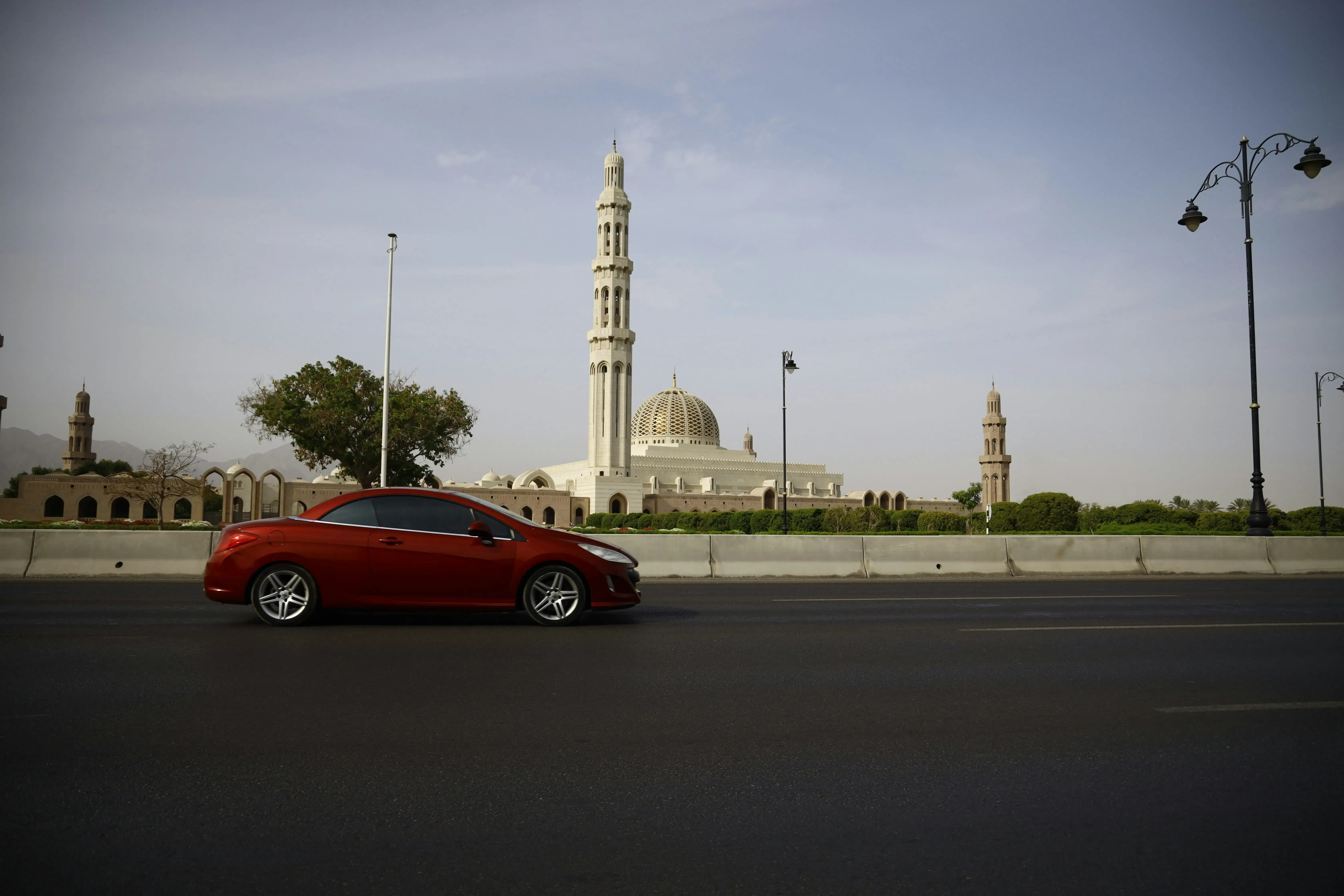
Option 2: Take the Bus
If budget is the main factor, the bus is hard to beat. Fares from Dubai to Muscat start at AED 55–75, and there are usually three departures a day (morning, afternoon, and a late-night run). Al Khanjry Transport and Mwasalat both operate the route. The crossing is usually through Hatta–Al Wajajah.
From Abu Dhabi, Mwasalat's Route 202 runs once a day — departure around 11:45, arriving in Muscat roughly nine hours later. It costs around AED 110 one way.
The honest take: the bus does the job, but it's not a relaxing experience. Fixed departure times, no door-to-door pickup, and if you're traveling with kids, elderly relatives, or more than one suitcase, things get uncomfortable fast. During Eid or National Day long weekends, border waits can stretch the total journey by an hour or two.
Peak season delays
During major UAE and Omani holidays (Eid Al Adha, Eid Al Fitr, UAE National Day), bus crossings at Hatta–Wajajah regularly see 1–2+ hour queues. If you're traveling over a long weekend, plan accordingly or consider a different crossing.
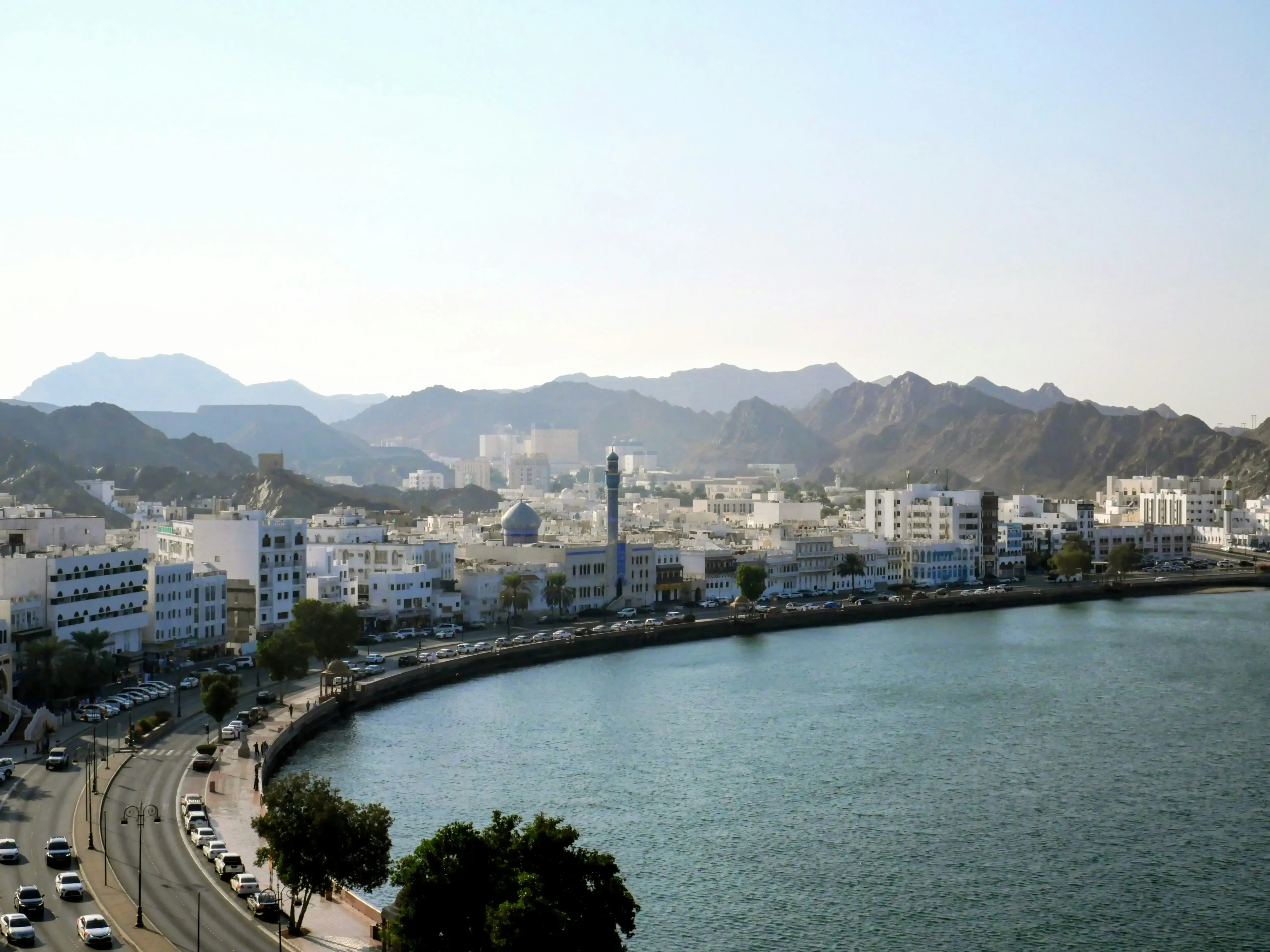
Option 3: Drive Yourself
This is the choice for a lot of UAE residents — and honestly, on a good day, the drive is genuinely enjoyable. The road from Dubai via Hatta into Oman takes you through the Hajar Mountains, and if you're going the Abu Dhabi–Mezyad route, you'll pass some dramatic desert scenery before the Gulf coastline opens up near Muscat.
Routes
– Dubai → Hatta → Al Wajajah → Muscat: ~450 km, 4.5–5 hours
– Abu Dhabi → Mezyad / Hafeet → Muscat: ~480–520 km, 5–6 hours
– Al Ain → Buraimi: popular for those in the eastern parts of Abu Dhabi emirate
– Dibba → Khatmat Milaha (Fujairah): scenic, good option if you're starting from Fujairah or the east coast
What you'll need
– Passport with at least 6 months validity and blank pages
– Oman visa — e-Visa from the Royal Oman Police portal, or on arrival depending on nationality
– Orange Card: cross-border vehicle insurance, mandatory for UAE-registered vehicles entering Oman
– UAE exit fee: ~AED 35 at the border
– If renting: confirm with the rental company that cross-border driving is permitted
One thing worth flagging for 2026: some rental companies have tightened their cross-border policies recently. Double-check before you drive off.

Option 4: Fly (Dubai or Abu Dhabi - Muscat)
On paper, flying is the obvious choice — under an hour in the air, and you skip the border queue entirely. Emirates, Flydubai, Oman Air, and Etihad all operate DXB–MCT and AUH–MCT routes daily, with tickets often starting around AED 100–160 one way on sale.
The catch, of course, is everything around the flight itself. Add check-in, security, the actual 45 minutes in the air, baggage claim, and then a taxi or transfer from Muscat Airport to wherever you're staying — and you're looking at 4+ hours door to door anyway.
That said, if you're traveling light and speed is the priority, it's a perfectly solid option. Just make sure you've sorted your transfer from the Muscat end before you land.
Book return transfers via kiwitaxi.com

Border Crossings: What to Expect
Most travelers from Dubai go through Hatta / Al Wajajah. It's the most direct route and the busiest, which means it's also the most streamlined. From Abu Dhabi, Mezyad / Hafeet is the standard choice.
The basic process
– UAE exit: stamp in passport + AED 35 fee
– Oman entry: visa check (on arrival or e-Visa), vehicle inspection, entry stamp
– Total border time: 30–45 minutes on a quiet weekday morning; 1–3+ hours on peak days
Photography at border crossings is strictly prohibited. This applies to both the UAE and Oman sides. No photos, no videos — not even of the scenery nearby. Border staff take this seriously.
Regional situation - March 2026
Given ongoing tensions in parts of the Middle East, some border crossing procedures have been updated. While the UAE–Oman border is not in an affected zone, it's worth monitoring your government's travel advisories in the lead-up to your trip — particularly if you hold a passport that may trigger additional checks.
Official sources: UAE MOFAIC (mofaic.gov.ae) | Royal Oman Police (rop.gov.om) | Your country's foreign affairs/state department.

Oman Visa & Entry (2026)
– GCC citizens: no visa required
– EU, UK, US, and most Western nationalities: visa on arrival or e-Visa via the Royal Oman Police portal (rop.gov.om)
– Visa cost: from OMR 5 for a standard tourist visa
– Passport requirements: minimum 6 months validity + at least one blank page
Visa rules do change. This guide reflects the situation as of March 2026, but always verify directly with official sources before you travel — particularly given regional developments this year.
Practical Tips
– Best time to cross the border: weekday mornings (Sunday–Tuesday). Quietest queues, fastest processing.
– Avoid traveling over Eid Al Adha, Eid Al Fitr, and UAE National Day if you can — these are the peak bottleneck days.
– Fuel: no worries on either side — prices are reasonable in both the UAE and Oman.
– Money: the Omani Rial (OMR) is one of the strongest currencies in the world. As of early 2026, 1 OMR ≈ 9.5 AED. Exchange before you leave or withdraw at an Omani ATM.
– SIM card: your UAE roaming will work in Oman, but a local Omani SIM from the border or a petrol station is cheaper for data-heavy use.

Frequently Asked Questions
How long does it take to get from Dubai to Oman?
By road — whether self-drive or private transfer via Hatta — you're looking at about 4.5 to 5 hours to Muscat under normal conditions. Add border time. By bus, closer to 6–7 hours. By flight, 45 minutes in the air, but realistically 3.5–4 hours door to door once you factor in airport time.
What is the cheapest way to get from Dubai to Oman?
The bus, no question — from AED 55 one way. The trade-off is fixed departure times and no pickup from your door. For solo budget travelers without much luggage, it's a viable option.
Can I book a private taxi from Dubai to Oman?
Yes. Kiwitaxi runs private door-to-door transfers from anywhere in Dubai to the Hatta/Oman border checkpoint, or further through to Muscat. Price is fixed and shown before you book — no surprises.
Do I need a visa to enter Oman?
Most Western passport holders can get a visa on arrival or apply for an e-Visa in advance via the Royal Oman Police website. GCC citizens are exempt. Check the current requirements for your nationality before traveling — especially given fluid regional conditions in 2026.
Which is the best border crossing from Dubai to Oman?
Hatta / Al Wajajah is the most convenient and most commonly used. If you're coming from Abu Dhabi, Mezyad / Hafeet is the standard choice.
How do I travel from Abu Dhabi to Oman?
Three realistic options: the Mwasalat Route 202 bus (one departure daily, ~9 hours, AED 110), self-drive via the Mezyad border (~5–6 hours), or a private transfer with Kiwitaxi door-to-door. The drive from Abu Dhabi is longer than from Dubai, so the private transfer option is especially popular for families.
Final Word
The UAE–Oman trip is one of those routes that looks a bit daunting on a map the first time, but becomes completely routine once you've done it. The paperwork is manageable, the road is good, and Oman itself is worth every kilometre. The main variable in 2026 is timing — both in terms of which day of the week you travel and what's happening regionally. Check your government's travel advisory the week before you go, have your documents ready, and if border logistics aren't your thing, let someone else handle the driving. Whichever option you go with, have a good trip.
Ready to book your transfer?

Best Picks


Kiwitaxi Airport Transfers
Relax and enjoy the ride, knowing that every detail is managed for your peace of mind
Explore