'%3e%3cpath%20d='M43.073%200.00649261H15.0943V3.94346H43.073V0.00649261Z'%20fill='url(%23kiwitaxi-grad)'%20/%3e%3cpath%20d='M15.0828%203.94346C16.1928%203.94346%2017.0512%203.06513%2017.0512%201.97497C17.0512%200.874164%2016.1822%200.00649261%2015.0828%200.00649261C14.0362%200.00649261%2013.1379%200.851916%2013.1379%201.97497C13.1379%203.10916%2014.0478%203.94346%2015.0828%203.94346Z'%20fill='white'%20/%3e%3cpath%20d='M43.0614%203.94346C44.1715%203.94346%2045.0299%203.06513%2045.0299%201.97497C45.0299%200.874164%2044.1609%200.00649261%2043.0614%200.00649261C42.0149%200.00649261%2041.1166%200.851916%2041.1166%201.97497C41.1166%203.10916%2042.0265%203.94346%2043.0614%203.94346Z'%20fill='white'%20/%3e%3cpath%20d='M19.5921%2038.5052V39.828H23.1471V26.0491H19.5921V27.3446C18.895%2026.5789%2017.4549%2025.8841%2015.7339%2025.8841C11.8502%2025.8841%208.78975%2028.7578%208.78975%2032.939C8.78975%2037.1374%2011.8702%2039.9935%2015.7339%2039.9935C17.4938%2039.9935%2018.932%2039.2691%2019.5921%2038.5052ZM12.2892%2032.939C12.2892%2030.5715%2013.929%2029.1912%2015.9819%2029.1912C18.0106%2029.1912%2019.5647%2030.5845%2019.5647%2032.939C19.5647%2035.2579%2017.9768%2036.6869%2015.9823%2036.6869C13.9596%2036.6869%2012.2892%2035.264%2012.2892%2032.939Z'%20fill='white'%20/%3e%3cpath%20d='M44.7174%2026.0496H41.4289V39.8281H44.7174V26.0496Z'%20fill='white'%20/%3e%3cpath%20d='M32.2183%2035.7001L29.3455%2039.8281H24.94L30.044%2032.8552L25.1624%2026.0496H29.7075L32.3295%2029.8985L35.035%2026.0496H39.4405L34.5599%2032.7435L39.6361%2039.8281H35.1189L32.2183%2035.7001Z'%20fill='white'%20/%3e%3cpath%20d='M3.34504%2022.9604V26.0496H7.4039V29.0939H3.34504V34.2781C3.34504%2035.9866%204.33971%2036.7008%205.955%2036.7008C6.54504%2036.7008%207.16659%2036.5766%207.63241%2036.235V39.4341C7.04237%2039.7757%206.14133%2039.9931%204.89915%2039.9931C1.8243%2039.9931%200.0226746%2038.1293%200.0226746%2034.9298V22.96H3.34504Z'%20fill='white'%20/%3e%3cpath%20d='M36.2094%208.57428L33.307%2016.8723L30.43%208.57428H27.7621L24.8597%2016.8723L21.9828%208.57428H18.4884L23.2157%2021.4188H26.5037L29.084%2014.4093L31.6629%2021.4188H34.951L39.6782%208.57428H36.2094Z'%20fill='white'%20/%3e%3cpath%20d='M44.7174%208.57381H41.4289V21.4188H44.7174V8.57381Z'%20fill='white'%20/%3e%3cpath%20d='M16.7387%208.57381H13.4502V21.4188H16.7387V8.57381Z'%20fill='white'%20/%3e%3cpath%20d='M11.7001%208.57382L6.07922%2014.1326L12.1622%2021.4188H8.05929L3.92163%2016.28L3.3455%2016.8538V21.4188H0.0226746V3.94299H3.3455V12.7574L7.59764%208.57382H11.7001Z'%20fill='white'%20/%3e%3c/g%3e%3cdefs%3e%3clinearGradient%20id='kiwitaxi-grad'%20x1='15.0945'%20y1='1.97497'%20x2='43.073'%20y2='1.97497'%20gradientUnits='userSpaceOnUse'%3e%3cstop%20stop-color='%2300D2CD'%20stop-opacity='0'%20/%3e%3cstop%20offset='1'%20stop-color='%2300D2CD'%20/%3e%3c/linearGradient%3e%3cclipPath%20id='kiwitaxi-clip'%3e%3crect%20width='46'%20height='40'%20fill='white'%20/%3e%3c/clipPath%3e%3c/defs%3e%3c/svg%3e)


Why Spring Is the Best Time to Visit Morocco
Morocco is having a moment. It was already one of the most searched travel destinations from Europe and North America going into 2026, and spring is hands down the best window to actually be there. Temperatures land between 20 and 27 degrees Celsius across most of the country, the crowds are not yet at summer levels, the landscapes are green from winter rains, and the light is extraordinary. If you have been thinking about it, this guide covers every practical thing you need — from booking the flight to picking up the car at the airport — so you can stop planning and start going.
Why Spring Is the Best Time to Visit Morocco
Spring — roughly March through May — is the sweet spot that almost every Morocco guide agrees on. Daytime temperatures sit comfortably between 18°C and 28°C (64–82°F) in most regions, making city exploration, mountain hiking and desert camping all possible on the same trip.
The Sahara, which is brutal and unforgiving in summer when temperatures hit 45°C inland, is comfortable at night in spring — you actually want to be in a desert camp in April. The Atlas Mountains are green and clear. The medinas of Marrakech, Fez and Chefchaouen are alive with colour.
One important note for 2026 specifically: Ramadan fell in late February through late March. If you are visiting in March, some restaurants close during daylight hours and the atmosphere shifts. This is not a reason to avoid Morocco — Ramadan evenings are actually spectacular — but it is worth knowing in advance and planning meals accordingly. By April everything is fully open and the post-Ramadan vibe across the country is warm and festive.
March 18–23°C Spring arriving, Ramadan ends late March
April 20–26°C Peak spring, ideal for everything
May 22–28°C Rose Festival, slightly more crowded, still great

How to Get to Morocco: Flights and Entry Points
Morocco has nearly 20 commercial airports, but most international visitors fly into one of four: Marrakech (RAK), Casablanca (CMN), Fez (FEZ) or Agadir (AGA). Which one you choose depends on your itinerary, not just where you are flying from.
Marrakech–Menara Airport (RAK) — the tourist gateway
The most popular entry point for leisure travellers. Over 90 direct flights from 25+ countries connect here. Ryanair, easyJet, Air Arabia, Royal Air Maroc and Transavia all fly into RAK. If Marrakech is your starting point and you plan to do a road trip south into the desert, this is where to land.
Flight time from Western Europe: 3 to 3.5 hours. From New York or the US East Coast: around 8 hours with a connection in Europe or Casablanca.
Casablanca Mohammed V Airport (CMN) — the main hub
The busiest airport in Morocco, with 100+ nonstop flights from 45 countries. If you are starting in Casablanca or flying to northern Morocco (Fez, Chefchaouen, Rabat), CMN is often cheaper and better connected. Royal Air Maroc operates its main hub here and has the most frequency.
Fez–Saïss Airport (FEZ) — for the northern route
If your itinerary goes Fez, Chefchaouen and Tangier first, flying into FEZ saves you hours of overland travel. Ryanair operates routes from several European cities. Discover Airlines is launching Frankfurt to FEZ in late 2026.
Agadir–Al Massira Airport (AGA) — for surf and coast
The entry point for Morocco's Atlantic surf coast — Taghazout, Tamraght and Agadir's beach strip. If sun and surf is the main plan, this is the right airport. Ryanair and Thomas Cook fly here.
Pro tip: Booking 2–3 weeks in advance saves roughly 17% on average for spring Morocco flights. Tuesday and Wednesday are statistically cheaper days to fly than Friday or Sunday. The 'hub trick': fly into a European city like Paris or Madrid on a cheap transatlantic fare, then connect to Morocco on Ryanair or easyJet for under €50.

Morocco Airport Transfers: Getting to Your Hotel or Riad
Landing at a Moroccan airport for the first time comes with one consistent challenge: getting into the city without getting overcharged or lost. Here is exactly what to expect at each main airport.
Marrakech Airport (RAK) to the Medina
Marrakech Menara Airport sits just 6 km from Jemaa el-Fnaa, the main square. The drive takes 15–25 minutes. However, the Medina is a partially pedestrian zone and most taxis will drop you at the nearest gate — not your riad door. If you have luggage and arrive tired after a long flight, knowing your drop-off point matters.
Official petit taxi 100–150 MAD (~€9–18).Negotiate before getting in. No meter for airport trips.
Bus Line 19 (ALSA) 30 MAD (~€2.80). Every 20–30 min, 6am–midnight. 40 min to Jemaa el-Fnaa.
Ride-hailing 50–80 MAD (~€5–12).
Kiwitaxi transfer: Marrakech Airport to your riad
• Why it matters here: Street taxis in Marrakech do not use meters for airport routes and overcharging is common - some visitors report paying 3x the official rate. A pre-booked Kiwitaxi gives you a fixed, confirmed price and a driver who tracks your flight for delays.
• Book at: kiwitaxi.com — search Marrakech Airport (RAK) to your hotel or address in the Medina. The driver meets you at arrivals with a name board, loads your luggage, and takes you directly. No queue, no negotiation.

Casablanca Airport (CMN) to the city
CMN is 30 km from central Casablanca. You have more transport options here than in Marrakech. The easiest option after a private transfer is the ONCF train — the Casa Voyageurs line runs from directly under Terminal 1, takes about 35 minutes and costs around 90 MAD. It is comfortable, reliable and a genuinely good first impression of Morocco. If your hotel is near a train station in the city, use it.
Grand taxis from the official rank outside arrivals charge a fixed 200–250 MAD for most central destinations. Petit taxis are cheaper for shorter distances within the city once you are in.
Kiwitaxi transfer: Casablanca CMN to city centre
For families, groups, late arrivals or anyone who does not want to figure out which train platform is which after an overnight flight — a Kiwitaxi private transfer from CMN is the cleanest option.
• Book at: kiwitaxi.com — select Casablanca Mohammed V Airport (CMN). Flat rate, English-speaking driver.
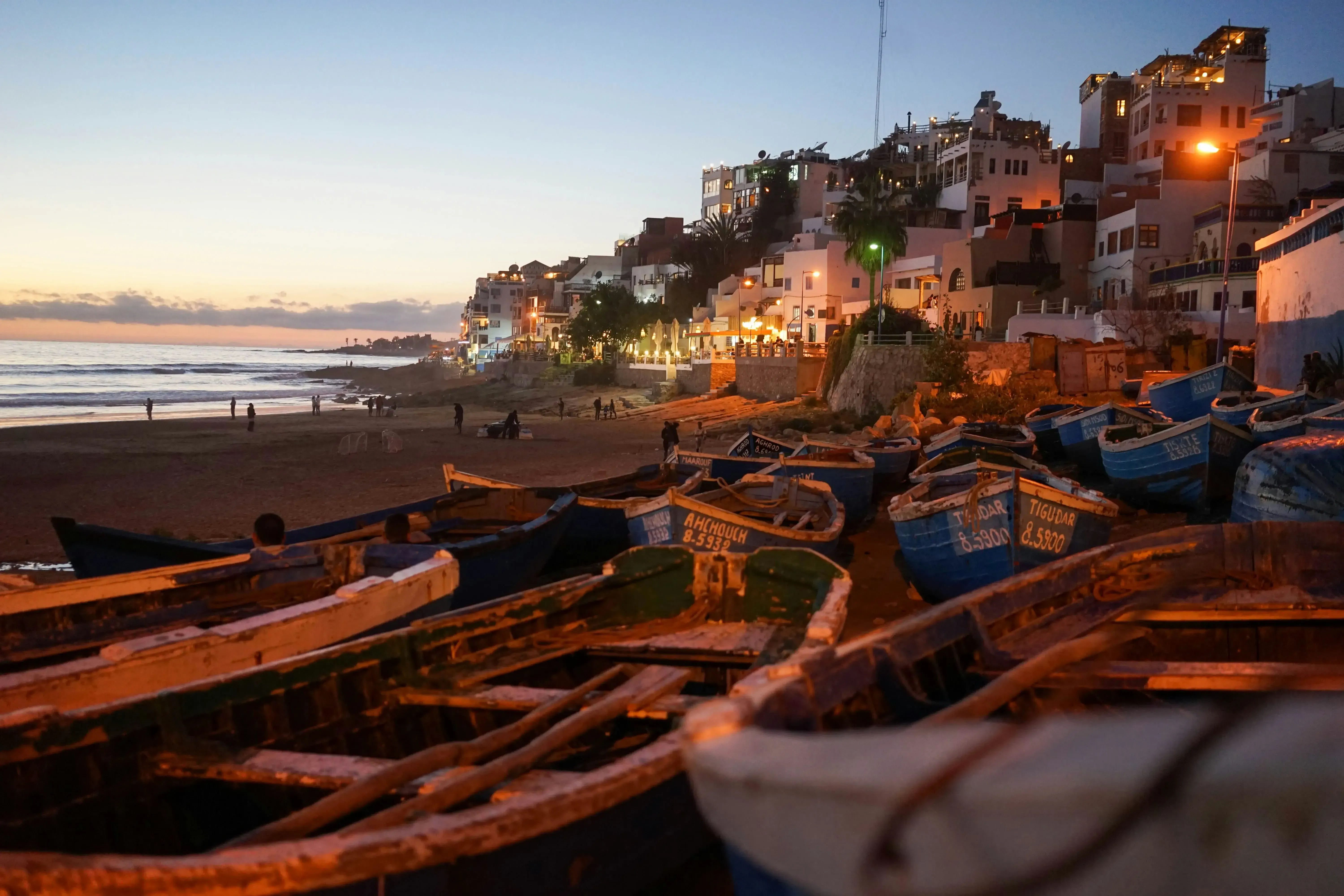
Renting a Car in Morocco: Self-Drive or Car with Driver?
This is the question every Morocco traveller faces. The country is big, public transport between cities is slow, and the best parts — the desert, the Atlas passes, the Atlantic coast — are genuinely hard to reach without a vehicle. Here is an honest breakdown.
Do you actually need a car?
If you are staying only in Marrakech or only in Fez for 4–5 days: no, you do not. The medinas are walkable and taxis handle the rest. If you want to do a desert route, drive to Chefchaouen, reach the Atlantic coast or explore the High Atlas on your own schedule: yes, a car transforms the trip. You stop when you want, visit villages not on any tour, and save significant money compared to organised tours.
What driving in Morocco is actually like
The reputation for chaos is partly accurate and partly exaggerated. The main inter-city highways (autoroutes) are in excellent condition — smooth dual carriageway with clear signs in both Arabic and French (often English too). Intercity journeys are straightforward.
Inside cities, especially Marrakech, Casablanca and Fez — it gets hectic. Scooters, pedestrians and donkeys share the same lanes. Speed limits are strictly enforced by radar: 60 km/h in urban areas, 100 km/h on rural roads, 120 km/h on highways. Police checkpoints are common; tourists are usually waved through but never assume. Mountain roads through the Atlas are narrow and scenic rather than genuinely dangerous. You do not need a 4x4 for the main routes — a standard hatchback handles the Tizi n'Tichka pass to the desert without issues.
Pro tip • Critical: avoid night driving. There are rarely street lights on rural roads. Pedestrians, donkeys, cyclists and animals walk along the road and are nearly invisible after dark. Almost every Morocco road trip guide gives this same advice: plan your legs to finish before sunset.
Do not drive in the Medina of Marrakech or Fez. The streets are too narrow, navigation is impossible and many sections are pedestrian-only.
Self-drive car rental: what to know
Car rental in Morocco costs roughly €15–45 per day depending on vehicle size and company. A basic hatchback is enough for 95% of routes. Book an automatic if you are not comfortable with a manual on mountain roads — they cost more and book out fast in peak season.
• Documents needed: valid driving licence from your home country. No international permit required, but having one speeds up any police interactions. • Insurance: get full coverage. Standard rentals come with a basic CDW with a €1,000–1,500 excess. Small stones on desert roads scratch paintwork; full cover is worth the extra €8–12/day. • Credit card required: rental companies place a security deposit hold, often €300–1,000. Check your credit limit before arriving. • Toll roads: Morocco has two main toll motorways. Pay in cash (Moroccan Dirhams) at booths — card machines only accept Moroccan cards. • Inspect the car thoroughly before driving away. Film any existing damage on your phone. Every scratch or dent should be on the contract.
Pro tip:
Kiwitaxi connects you with a private driver you can book from 3 hours - whether that is a straightforward airport pickup, a half-day trip to the Atlas Mountains, or a full day driving the Ourika Valley. The price is fixed before you confirm, so there are no meter surprises and no negotiating on the kerb after a long flight.
If you are visiting Morocco for the first time and want to cover serious ground — Marrakech to the Sahara and back via the Atlas, or a full north-south circuit — hiring a private car with a driver is genuinely worth considering. Not as a luxury, but as a practical decision. A good Moroccan driver knows the mountain pass shortcuts, speaks to locals, handles parking in medina cities (which is a skill in itself), knows which road gets flooded after rain, and can get you into villages that Google Maps does not have on any route. On a 7-day itinerary covering 1,500+ km, this is not nothing. • No navigation stress on unmarked mountain roads • Driver handles parking, tolls and police checkpoints • Local knowledge opens doors — restaurants, viewpoints, off-route stops • Cost split between 2–4 people is often competitive with self-drive plus tour costs
Book at: rental.kiwitaxi.com — select your pickup point, date and number of hours.

Morocco Spring Itinerary: The Essential Route
Spring is long enough to cover a lot of Morocco, but most first-timers are working with 7–14 days. Here is how experienced travellers structure the classic circuit, and how to get between each point.
Marrakech — your starting point
Most international flights land in Marrakech and it earns its role as the gateway. The Jemaa el-Fnaa is the best open-air theatre in North Africa — food stalls, musicians, snake charmers and 10,000 people after dark. The Bahia Palace, Saadian Tombs, Koutoubia Mosque and the souks behind the square keep you busy for two full days without repeating yourself.
Spring temperatures in Marrakech hit a comfortable 22–26°C in April and May. Mornings are perfect for walking the medina before the afternoon heat builds. Atlas Mountains — day trip or overnight
The High Atlas start just 30 minutes south of Marrakech. Day trips to the Ourika Valley, Imlil village (base camp for Toubkal) or the Agafay desert (rocky desert landscape right at the city's edge) are easy and transformative. The Tizi n'Tichka mountain pass south to Ouarzazate is one of the great drives in Africa.
Getting there: Kiwitaxi day-trip transfer from Marrakech, or rent a car from RAK airport and drive yourself. This is one of the easiest self-drive routes from the city — the road is well-paved and clearly signed.
Ouarzazate and Ait Benhaddou
Four hours south of Marrakech over the Atlas lies Ouarzazate, gateway to the pre-Saharan south. Ait Benhaddou is a UNESCO-listed ksar (fortified village) that has appeared in more films and TV series than almost any location on earth — Gladiator, Game of Thrones, Lawrence of Arabia.
Spring is perfect here: warm but not hot, and the light on the ochre mud-brick walls is extraordinary in the afternoon. Getting there by private car or Kiwitaxi is by far the most practical option — public transport is infrequent.
Merzouga and the Sahara Desert The main desert camp destination is Merzouga (Erg Chebbi dunes), about 8–10 hours from Marrakech by road via Ouarzazate and the Dades and Todra Gorges. This is where Morocco delivers its most theatrical experience: camel trek into the dunes at sunset, night in a luxury camp, and waking before dawn for the sunrise.
The route through the Dades Gorge and Todra Gorge — two spectacular canyon landscapes — is one of the best road trips in the world. Spring, when the gorge walls are streaked with colour and wildflowers grow along the riverbed, is the optimal season.
Getting there: rent a car from Marrakech and drive the southern circuit, or book a private multi-day transfer with driver through rental.kiwitaxi.com. Most travellers fly back to Marrakech from Fez after completing the loop.
Fez — the best-preserved medieval city on earth
Fez el-Bali, the old medina, is a UNESCO World Heritage site and unlike any city in Europe. 9,000 streets and alleys in the old quarter, with no cars. The famous Chouara Tanneries, where leather has been dyed in the same outdoor vats since the 11th century, should be on every itinerary.
From Marrakech: 5–6 hours by road (great self-drive route via Meknes), or 3 hours by Supratours bus, or a domestic flight with Royal Air Maroc.
Chefchaouen — the Blue City
The most photographed city in Morocco: a mountain town in the Rif where most buildings are painted in shades of blue and white. Genuinely beautiful and not overrated. Spring afternoon light through the painted alleys is exceptional.
Getting there from Fez: 3–4 hours by taxi or bus. CTM bus runs twice daily and costs around 75 MAD. From Chefchaouen to Tangier is another 2 hours, making a logical final leg if you are flying out from Tangier.

Practical Info for Visiting Morocco in Spring 2026
Visa and entry
Citizens of the US, UK, EU, Canada, Australia and many other countries do not need a visa for stays under 90 days. Your passport must be valid for at least 6 months beyond your travel dates. Check gov.uk, travel.state.gov or your national travel authority for the most current requirements.
Currency
The currency is the Moroccan Dirham (MAD). Dirhams cannot be purchased outside Morocco — get cash at the airport on arrival (ATMs at RAK and CMN) or at a bank. Keep small bills and coins for medina shops, tipping and small transport. Cards are accepted in most hotels and restaurants in major cities. Markets, taxis and smaller places are cash only. Budget around 100–200 MAD per day in incidental cash spending.
Language
Moroccan Arabic (Darija) and French are the main languages. French is widely understood in tourist areas and with most taxi drivers. English is common in hotels and tour contexts but less so on the street. A few words of French — bonjour, merci, combien (how much) — go a long way.
Safety
Morocco is considered safe for tourists. Use normal city awareness in medinas — watch for pickpockets in crowded areas and be wary of unofficial 'guides' who approach you near major attractions. Politely and firmly declining these approaches works fine. Women travelling solo report occasional street attention but broadly find Morocco manageable.
Tipping
Tipping is standard practice: 10–15 MAD for bag carriers, 10–20% in restaurants, 50–100 MAD for a day guide. Taxi drivers do not generally expect a tip but rounding up is appreciated.
Connectivity
Buy a local SIM at the airport — Maroc Telecom or Orange work well across the country. A data package for a week costs around 50–100 MAD. If you prefer to sort connectivity before you even land, Airalo sells an eSIM for Morocco starting from around $4.50 for 1GB — you activate it on your phone before departure and have data the moment you step off the plane. Useful if your phone supports eSIM and you do not want to hunt for a SIM counter at the airport with luggage in tow. Download Google Maps offline for your route before you go — mobile signal drops in the mountains and desert.
Health
No specific vaccinations are required for Morocco, but staying current on Hepatitis A and Typhoid is recommended by most travel health authorities. Drink bottled water throughout the trip. Food safety in restaurants is generally good; be cautious with uncooked street food if you have a sensitive stomach.
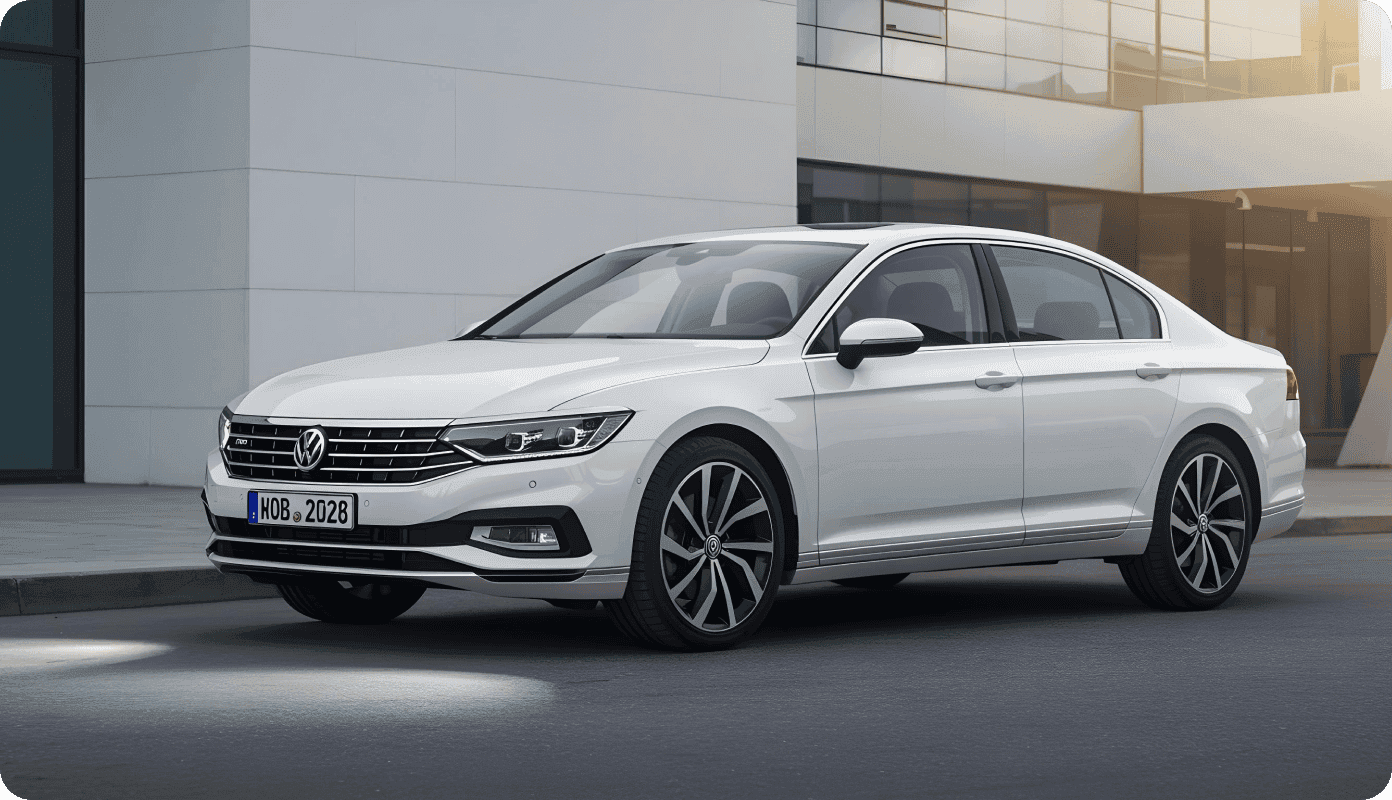
Kiwitaxi Airport Transfers
Relax and enjoy the ride, knowing that every detail is managed for your peace of mind
Explore