'%3e%3cpath%20d='M43.073%200.00649261H15.0943V3.94346H43.073V0.00649261Z'%20fill='url(%23kiwitaxi-grad)'%20/%3e%3cpath%20d='M15.0828%203.94346C16.1928%203.94346%2017.0512%203.06513%2017.0512%201.97497C17.0512%200.874164%2016.1822%200.00649261%2015.0828%200.00649261C14.0362%200.00649261%2013.1379%200.851916%2013.1379%201.97497C13.1379%203.10916%2014.0478%203.94346%2015.0828%203.94346Z'%20fill='white'%20/%3e%3cpath%20d='M43.0614%203.94346C44.1715%203.94346%2045.0299%203.06513%2045.0299%201.97497C45.0299%200.874164%2044.1609%200.00649261%2043.0614%200.00649261C42.0149%200.00649261%2041.1166%200.851916%2041.1166%201.97497C41.1166%203.10916%2042.0265%203.94346%2043.0614%203.94346Z'%20fill='white'%20/%3e%3cpath%20d='M19.5921%2038.5052V39.828H23.1471V26.0491H19.5921V27.3446C18.895%2026.5789%2017.4549%2025.8841%2015.7339%2025.8841C11.8502%2025.8841%208.78975%2028.7578%208.78975%2032.939C8.78975%2037.1374%2011.8702%2039.9935%2015.7339%2039.9935C17.4938%2039.9935%2018.932%2039.2691%2019.5921%2038.5052ZM12.2892%2032.939C12.2892%2030.5715%2013.929%2029.1912%2015.9819%2029.1912C18.0106%2029.1912%2019.5647%2030.5845%2019.5647%2032.939C19.5647%2035.2579%2017.9768%2036.6869%2015.9823%2036.6869C13.9596%2036.6869%2012.2892%2035.264%2012.2892%2032.939Z'%20fill='white'%20/%3e%3cpath%20d='M44.7174%2026.0496H41.4289V39.8281H44.7174V26.0496Z'%20fill='white'%20/%3e%3cpath%20d='M32.2183%2035.7001L29.3455%2039.8281H24.94L30.044%2032.8552L25.1624%2026.0496H29.7075L32.3295%2029.8985L35.035%2026.0496H39.4405L34.5599%2032.7435L39.6361%2039.8281H35.1189L32.2183%2035.7001Z'%20fill='white'%20/%3e%3cpath%20d='M3.34504%2022.9604V26.0496H7.4039V29.0939H3.34504V34.2781C3.34504%2035.9866%204.33971%2036.7008%205.955%2036.7008C6.54504%2036.7008%207.16659%2036.5766%207.63241%2036.235V39.4341C7.04237%2039.7757%206.14133%2039.9931%204.89915%2039.9931C1.8243%2039.9931%200.0226746%2038.1293%200.0226746%2034.9298V22.96H3.34504Z'%20fill='white'%20/%3e%3cpath%20d='M36.2094%208.57428L33.307%2016.8723L30.43%208.57428H27.7621L24.8597%2016.8723L21.9828%208.57428H18.4884L23.2157%2021.4188H26.5037L29.084%2014.4093L31.6629%2021.4188H34.951L39.6782%208.57428H36.2094Z'%20fill='white'%20/%3e%3cpath%20d='M44.7174%208.57381H41.4289V21.4188H44.7174V8.57381Z'%20fill='white'%20/%3e%3cpath%20d='M16.7387%208.57381H13.4502V21.4188H16.7387V8.57381Z'%20fill='white'%20/%3e%3cpath%20d='M11.7001%208.57382L6.07922%2014.1326L12.1622%2021.4188H8.05929L3.92163%2016.28L3.3455%2016.8538V21.4188H0.0226746V3.94299H3.3455V12.7574L7.59764%208.57382H11.7001Z'%20fill='white'%20/%3e%3c/g%3e%3cdefs%3e%3clinearGradient%20id='kiwitaxi-grad'%20x1='15.0945'%20y1='1.97497'%20x2='43.073'%20y2='1.97497'%20gradientUnits='userSpaceOnUse'%3e%3cstop%20stop-color='%2300D2CD'%20stop-opacity='0'%20/%3e%3cstop%20offset='1'%20stop-color='%2300D2CD'%20/%3e%3c/linearGradient%3e%3cclipPath%20id='kiwitaxi-clip'%3e%3crect%20width='46'%20height='40'%20fill='white'%20/%3e%3c/clipPath%3e%3c/defs%3e%3c/svg%3e)


How to Spend a Layover in Amsterdam
There's something oddly liberating about finding yourself suspended between destinations, caught in that liminal space of a layover in Amsterdam. Most travelers treat this interlude as dead time—a few hours to kill scrolling through phones in uncomfortable airport chairs. But what if your Amsterdam connection could become the most memorable part of your journey?
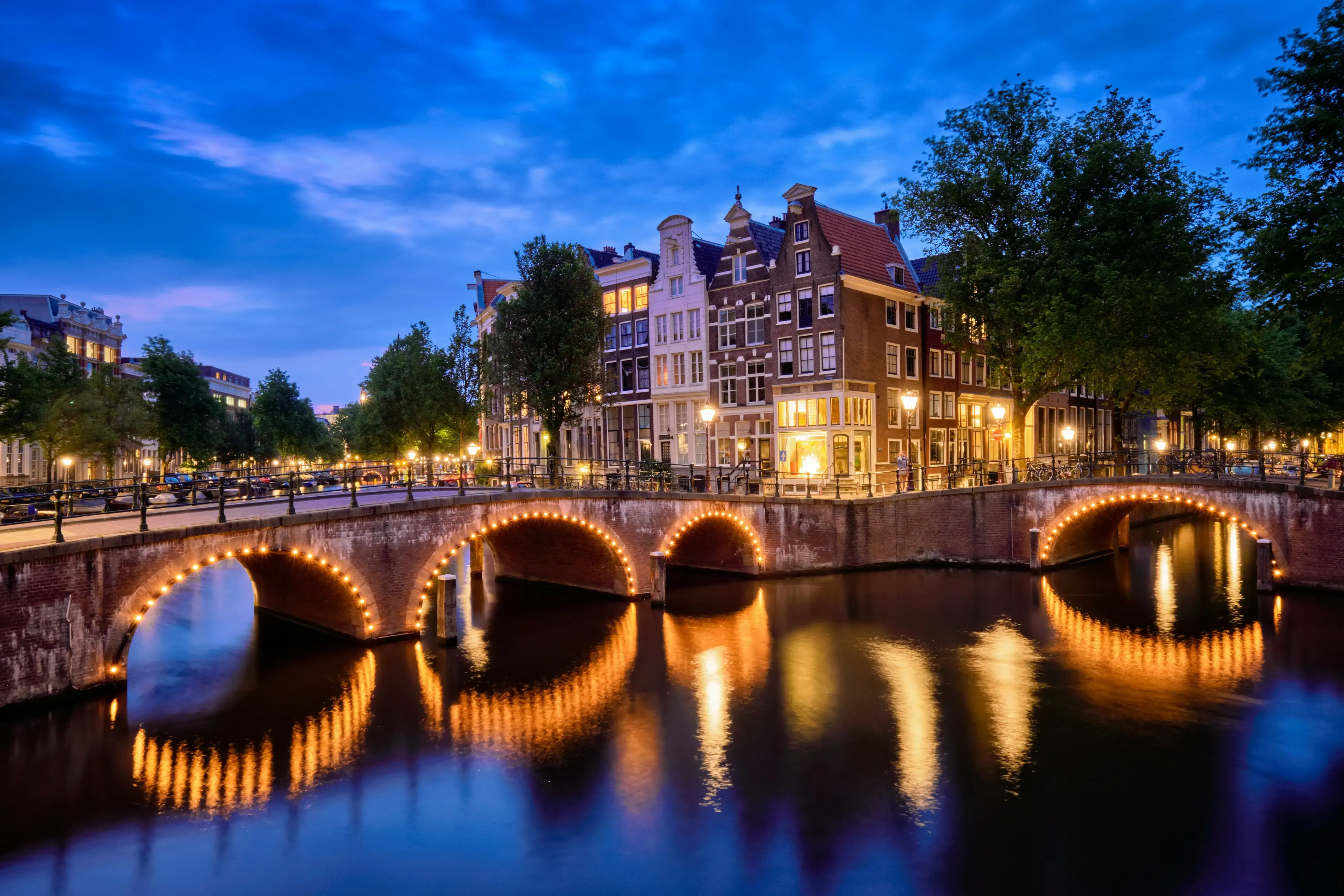
The city waits just beyond the terminal glass, impossibly close. Crooked canal houses lean against each other like old friends. Bicycle bells ring out across cobblestone streets. That peculiar golden light that seems to exist nowhere else on earth filters through the trees. In less time than you'd spend watching two movies, you could be standing before a Rembrandt, gliding along waterways older than nations, or biting into a warm stroopwafel that tastes like captured sunshine.
Amsterdam's Schiphol Airport sits a mere fifteen minutes from the city center by train. This proximity is almost scandalous in its convenience—a gift to anyone wondering how to spend layover in Amsterdam. The question isn't whether you should explore, but rather how to make the most of whatever time you have.
This Amsterdam layover guide will help you navigate everything from transit options to itinerary planning. Your connection can become an adventure rather than an inconvenience.

Things to Do During Your Amsterdam Layover
The city reveals itself in layers.
Even a brief visit peels back enough to glimpse its soul. When considering things to do during Amsterdam layover, the compact historic center means you can experience multiple facets in a surprisingly short time. The concentric canals form a natural navigation system, impossible to get truly lost in. The flat geography makes every destination accessible—no hills to climb, no exhausting treks between neighborhoods.
Museums cluster in dedicated quarters. Cafés spill onto sidewalks. Markets buzz with vendors hawking everything from fresh herring to vintage clothing. The Dutch have mastered the art of packing intensity into small spaces.
Museums & Art The Rijksmuseum stands as the crown jewel among Amsterdam layover attractions, home to Rembrandt's Night Watch and Vermeer's intimate domestic scenes. Even if you only have an hour, the Gallery of Honour provides a concentrated dose of Dutch Golden Age mastery. Walk through those high-ceilinged rooms and you'll understand why people traveled here for centuries to see these paintings.
The Van Gogh Museum nearby houses the world's largest collection of the tortured genius's work. His sunflowers and starry nights are more vibrant in person than any reproduction suggests. The Anne Frank House offers a sobering, essential experience, though advance booking is absolutely necessary—you can't just walk up. These museums represent some of what to see in Amsterdam during a layover when culture tops your priority list.
Canal Exploration The UNESCO-listed canal ring defines Amsterdam's character and features prominently in any solid Amsterdam layover itinerary. A canal cruise provides an efficient way to absorb the city's architecture and atmosphere. Glass-topped boats drift beneath stone bridges while recorded narration explains the gabled houses and their histories.
Walking along Prinsengracht or Herengracht lets you move at your own pace. Stop to photograph the houseboats and tree-lined waterways that appear on every Amsterdam postcard. Duck into side streets when something catches your eye. The canals are meant for wandering, not rushing.
Food & Markets Albert Cuyp Market sprawls through the De Pijp neighborhood with vendors selling everything from fresh herring to Indonesian satay—a reflection of Amsterdam's colonial history transformed into culinary present. Foodhallen offers a more curated indoor experience with gourmet stalls and craft beer. For authentic Amsterdam short layover ideas, seek out a traditional brown café for bitterballen and a Dutch beer.
Grab poffertjes (mini pancakes) dusted with powdered sugar from a street vendor. These quick culinary experiences deliver maximum Dutch flavor in minimum time. Food here tells stories—of maritime trade, colonial expansion, immigrant communities that made this city their home.
Neighborhoods to Walk Through The Red Light District fascinates regardless of your moral stance. A centuries-old pragmatism about sex work made visible in neon-lit windows. By day it's surprisingly mundane, almost quaint—tourists wander through taking photos while locals grab groceries from corner shops.
Jordaan, the former working-class quarter, now charms with narrow streets, independent boutiques, and corner cafés where locals actually live their lives. The Nine Streets (De Negen Straatjes) offer concentrated shopping in a picturesque setting—vintage clothing, Dutch design, specialty cheese shops all within a few photogenic blocks. These neighborhoods represent best activities in Amsterdam with limited time, each offering concentrated character you can absorb quickly.

Itineraries for 5-Hour & 8-Hour Layovers
Layover in Amsterdam 5 Hours: The Essentials Time is tight but sufficient for a taste. Understanding how many hours needed for an Amsterdam layover to successfully visit the city is crucial—five hours represents the minimum for a worthwhile excursion. This Amsterdam layover schedule ideas approach assumes you're arriving and departing from Schiphol, allowing roughly two hours in the city after accounting for security, immigration, and travel time. Not generous, but doable if you move with purpose.
Hour 1: Arrival and Transit Clear passport control (quick for EU/Schengen passengers, potentially longer for others). The Schiphol to Amsterdam transit is remarkably efficient—take the train from Schiphol to Amsterdam Centraal. Fifteen minutes, runs every 10-15 minutes, €5-6 one way. This seamless Amsterdam layover transport option is your fastest route to the city center. Store any luggage at Centraal Station's left luggage facility if needed, though this eats into your time. Trains depart from platforms directly below the main terminal. Follow the yellow signs. Buy tickets from machines or counters—both work fine, though machines are faster if you know what you're doing.
Hours 2-3: Central Amsterdam Highlights Walk to Dam Square (8 minutes from Centraal)—the Royal Palace and National Monument anchor the city's symbolic heart. These quick Amsterdam layover highlights give you essential Amsterdam in concentrated form. Continue to the Begijnhof, a hidden courtyard of 17th-century houses surrounding a chapel, miraculously quiet despite the surrounding urban buzz. If time permits, duck into one of the nearby churches or browse the Kalverstraat shopping street. Don't try to see everything. Choose two or three spots and actually experience them rather than racing past in a blur.
Hour 4: Canal Experience and Return Take a quick canal cruise from near Centraal Station (one-hour tours available, though you might only do 30-40 minutes). Walk along Damrak back toward the station, stopping for a stroopwafel or fries with mayonnaise. Catch your train back to Schiphol with at least two hours before your flight—this timing is one of the most important Amsterdam layover tips for avoiding missed connections.
The return journey matters more than the outbound one. Flights don't wait. Miss your connection and you've turned a pleasant excursion into an expensive nightmare.
Layover in Amsterdam 7 Hours: Deeper Immersion With seven to eight hours, you can breathe. Budget four to five hours in the city, allowing for a more comprehensive Amsterdam layover itinerary that moves beyond surface impressions. You have time for museums, meals, and actual wandering rather than just frantic sightseeing.
Morning Arrival Follow the same train route to Centraal. Head immediately to the Museum Quarter—take tram 2 or 12 from Centraal to Museumplein (about 15 minutes). Choose your museum (Rijksmuseum or Van Gogh) and spend 90 minutes inside. Pre-booking tickets eliminates queue time and represents one of the key Amsterdam layover tips for efficiency. Showing up without tickets during high season can cost you an hour just standing in line. Book online the night before or even that morning from the airport.
Midday Walk through Vondelpark if weather permits—Amsterdam's green lung, filled with joggers, picnickers, and the occasional street performer. Find lunch in the De Pijp neighborhood (10-minute walk from the park)—Albert Cuyp Market for street food, or sit down at one of the district's many international restaurants. This approach to what to see in Amsterdam during a layover balances culture with local atmosphere rather than just ticking off tourist sites. Indonesian food here is exceptional. Turkish kebab shops serve döner that rivals anything in Berlin. Vietnamese pho restaurants cluster in certain streets. Eat where you see locals eating—they know.
Afternoon Explore the canal ring properly. Walk from De Pijp north through the Nine Streets area, window shopping and photographing the canal houses. Cross into Jordaan and find a brown café for a beer—these traditional pubs have been serving drinks in the same locations for centuries. If you're ambitious, visit the Anne Frank House (requires advance booking) or the Westerkerk. These best activities in Amsterdam with limited time offer depth without rushing. You'll remember a couple of meaningful experiences more than a dozen rushed photo ops.
Return Tram or walk back to Centraal Station, allowing three hours before your flight for the journey and security. This buffer time is essential when planning how to spend layover in Amsterdam successfully. Amsterdam is relaxed, but airports are not.
Short Layover in Amsterdam (3-4 Hours) Be realistic, any layover under four hours shouldn't involve leaving the airport.
Schiphol itself offers enough to occupy you: the Rijksmuseum Schiphol (a free mini-museum between piers E and F), decent restaurants beyond typical airport food, and even a library. When time is this limited, Amsterdam airport layover things to do are better kept airside. The stress of possibly missing your connection outweighs the brief glimpse of the city you'd get. Trust this: Rushing through Amsterdam to make your flight is miserable.
If you absolutely must leave, take the train to Amsterdam Centraal, walk around Dam Square for thirty minutes, and return immediately. It's a taste, nothing more. Sometimes a taste is enough to bring you back for a proper visit. This ultra-compressed approach works as one of the more extreme Amsterdam short layover ideas, though it's not recommended for anxious travelers or anyone who values their sanity.
The Kiwitaxi Chauffeur Service Advantage
Here's a truth that anxious layover travelers understand: freedom of movement conflicts with fear of missing your flight. Public transport works efficiently in Amsterdam, but it operates on its schedule, not yours. Trains run every 15 minutes until they don't. Trams get delayed by traffic. You're always checking the time, always calculating whether you have enough buffer, always slightly stressed about making it back.
When considering how to maximize your layover in Amsterdam, a chauffeur service solves this fundamental tension. Booking a Kiwitaxi chauffeur transforms the experience from rushed to relaxed. Your driver meets you at Schiphol arrivals with your name on a card and a professional demeanor—no searching for the train platform, no figuring out ticket machines, no navigating with luggage.
They own the timing. Monitoring your return flight, knowing the traffic patterns, adjusting routes in real-time to ensure you're back with plenty of margin. You won't be late because missing your connection costs them reputation and business. This alignment of interests works in your favor.
But the deeper advantage is total freedom of mobility. No searching for tram routes. No figuring out which train platform. No walking with luggage through cobblestone streets that look charming in photos but feel brutal when you're dragging a suitcase. You choose your itinerary and your driver makes it happen, door-to-door.
Want to see the windmills at Zaanse Schans instead of the city center? They'll take you. Prefer to combine museum visits with a quick stop at a specific restaurant? They know the route. The vehicle becomes your mobile hotel, your storage unit, your climate-controlled refuge between attractions. Your luggage stays secure while you explore unburdened.
For those planning Amsterdam layover schedule ideas, Kiwitaxi allows you to customize completely. But if you'd like suggestions, consider these thematic itineraries:
Classic Amsterdam: Culture & Cuisine Rijksmuseum – Walk through the Gallery of Honour to see Rembrandt's Night Watch and Vermeer's Milkmaid. The building itself, reopened after a ten-year renovation, deserves admiration—a palace of art inside a palace of architecture.
Canal Ring Cruise – Let your driver arrange a private boat or drop you at a departure point. Forty-five minutes floating past gabled houses while your driver parks and waits offers maximum efficiency.
Jordaan District – Stroll through these narrow streets lined with art galleries, vintage shops, and picturesque bridges. The neighborhood feels like a village within the city, locals still outnumbering tourists in certain cafés.
Indonesian Restaurant (Blauw or Kantjil & de Tijger) – Amsterdam's colonial history created an enduring love affair with Indonesian food. A rijsttafel—rice table—delivers twenty small dishes showcasing the archipelago's flavors, from fiery rendang to sweet peanut sauce.
Shopaholic's Amsterdam
P.C. Hooftstraat – Amsterdam's luxury shopping street, where Chanel and Louis Vuitton occupy the ground floors of 19th-century buildings. Even window shopping here feels decadent.
De Bijenkorf – The Netherlands' premier department store, occupying a prominent building on Dam Square. Six floors of fashion, cosmetics, and homeware, plus a top-floor restaurant with views over the city center.
The Nine Streets (De Negen Straatjes) – Vintage boutiques, specialty stores, and Dutch design shops pack these canal-side lanes. Hunt for one-of-a-kind pieces: vintage Delftware, handmade jewelry, rare books, designer clothing from young Dutch creators.
Magna Plaza – A neo-Gothic former post office transformed into a shopping center behind the Royal Palace. The architecture alone justifies a visit—soaring ceilings, ornate details, and the incongruity of modern retail in a 19th-century monument.
Architecture Walk Rijksmuseum Building – Even if you skip the art, walk through the central passageway connecting Museum Square to the city beyond. Architect Pierre Cuypers created a neo-Renaissance masterpiece in the 1880s.
Central Station – Another Cuypers creation, this railway terminus rises like a cathedral dedicated to transportation. Built on artificial islands, it required 8,600 wooden piles driven into Amsterdam's soggy soil.
Eastern Docklands (Scheepvaartbuurt) – Amsterdam's 21st-century architecture laboratory, where experimental housing projects line former industrial waterways. The Whale Building ripples like its namesake; the Silodam stacks colorful shipping-container-like units in apparent chaos.
Eye Filmmuseum – Across the IJ river from Centraal Station, this white, angular building looks like a spaceship landed on the waterfront. Deconstructivist architecture at its most photogenic, hosting film screenings and exhibitions inside.
Adventurer's Amsterdam Zaanse Schans Windmills – Twenty minutes north of the city, this open-air museum preserves working windmills and traditional Dutch crafts. Watch clog-making demonstrations and cheese production while surrounded by pastoral scenery seemingly unchanged since the 17th century.
Bike through Vondelpark to Amsterdamse Bos – Your driver can arrange bike rentals and follow along. Pedal through Vondelpark then continue south to the Amsterdamse Bos—a massive park three times the size of New York's Central Park, with forests, meadows, and canals.
Noord (Amsterdam North) – Take the free ferry from behind Centraal Station to this formerly industrial district now buzzing with creative energy. Street art, breweries, and the NDSM Wharf—a former shipyard turned cultural playground with shipping container studios and weekend markets.
Eastern Islands (KNSM Island) – Another waterfront transformation, these former warehouse districts now house modern apartments and waterside restaurants. Walk the piers, watch boats navigate the locks, feel the maritime history beneath the contemporary renovation.

Tips for Leaving the Airport During Layover
Visa Requirements If you're transiting through Schiphol, check whether you need a Schengen visa to leave airport in Amsterdam layover. Citizens of the US, UK, Canada, Australia, and many other countries can enter the Schengen area visa-free for short stays. If your passport requires a visa, you'll need to arrange this before arrival—there's no visa-on-arrival for Schengen entry. Staying airside (not leaving the airport) doesn't require a visa regardless of nationality. This matters if you're from countries that need advance paperwork.
Minimum Time Considerations Never attempt to leave the airport with less than a four-hour layover. Too many variables can extend timelines. Immigration queues, train delays, museum crowds, getting temporarily lost—any one of these can derail tight schedules.
Understanding how many hours needed for an Amsterdam layover helps you make realistic decisions. Five hours offers just enough time if you're efficient and lucky. Six to eight hours works well for a layover in Amsterdam 7 hours scenario. Beyond eight hours, consider whether you'd rather explore extensively or rent a hotel room for a nap between adventures. Sleep can be more valuable than another museum when you're facing a long-haul flight ahead.
Luggage Storage Schiphol offers luggage storage facilities, but they can have queues. If you're traveling with only a carry-on, consider taking it with you—Amsterdam's flat terrain makes rolling bags manageable. The left luggage facilities at Amsterdam Centraal Station provide another option once you're in the city. Many travelers find that a chauffeur service solves this problem entirely—your luggage stays secure in the vehicle while you explore unburdened. This is one of those practical Amsterdam layover tips that dramatically improves your experience.
Transportation Efficiency The train from Schiphol to Amsterdam Centraal runs every 10-15 minutes and takes exactly 15-17 minutes. It's reliable, clean, and drops you in the city's heart. Taxis cost significantly more (€40-50) and take longer in traffic during peak hours. Uber functions in Amsterdam but isn't substantially cheaper than taxis. For Amsterdam layover transport, the train is your most efficient public option. Bikes are everywhere but renting one for a few hours involves paperwork and returning it—not ideal for layovers. A pre-arranged chauffeur service makes sense if you want to maximize your time and minimize stress about timing. The cost difference diminishes when you calculate the value of your time, the elimination of navigation stress, and the guarantee you won't miss your flight.
Security and Re-Entry Keep your boarding pass and passport easily accessible. You'll need them to return to Schiphol's secure area. Budget at least two hours before your departure time to return to the airport, check in (if changing airlines), and clear security. Schiphol security can be quick or can involve long queues—it's unpredictable depending on time of day and random fluctuations. Better to have ninety minutes spare in the airport than ninety seconds of panic racing to your gate—a crucial consideration when planning how to spend layover in Amsterdam. The Dutch are relaxed about many things, but airline departures are not one of them.
Weather Preparedness Amsterdam weather is famously unreliable. Pack a light waterproof jacket regardless of the forecast. The city is eminently walkable, but only if you're not soaked and miserable. Comfortable shoes are non-negotiable. Cobblestones and lengthy museum corridors punish anything with heels or poor support. Your feet will hate you after three hours of exploring in the wrong footwear. Locals wear practical shoes for a reason—form follows function here.
Money Matters The Netherlands uses the euro. Most places accept cards, including contactless payment. Carry €20-30 in cash for street vendors, some cafés, and public toilets (which charge 50 cents). ATMs are readily available if you need more cash during your visit, though transaction fees can add up if you're just grabbing small amounts.
When to Leave Airport in Amsterdam Layover The sweet spot is a layover between 6-12 hours. Less than six hours and you're rushing. More than twelve and you might want proper accommodation for a shower and rest.
Morning and early afternoon layovers work better than evening ones. Museums and attractions operate full schedules, daylight extends your photography opportunities, and you avoid evening rush hour returning to the airport. If your layover spans meal times, plan accordingly—Amsterdam's food scene deserves attention. Traditional Dutch fare, Indonesian restaurants that reflect colonial history, contemporary dining that holds its own against any European capital. Eating well makes any trip more memorable.

Overnight Layover in Amsterdam: What to Know
An overnight layover Amsterdam situation transforms a connection into a mini-break. If your flights bracket a night in Amsterdam, you're faced with a choice: stay airside in the airport hotel or venture into the city for evening and morning explorations. Both have merits depending on your priorities and energy levels.
Airport vs. City Hotels The Sheraton Amsterdam Airport Hotel & Conference Center connects directly to Schiphol's terminal—you literally don't go outside. Rooms are predictably comfortable, you can sleep within minutes of landing, and you're equally close to your morning departure. The YOTELAIR inside the terminal offers even more convenient pod-style rooms for shorter rest periods. You pay a premium for this convenience, but if you're exhausted or have an early departure, it might be worth it.
City hotels range from budget hostels to five-star canal-side luxury. Staying in Amsterdam proper means you experience the city at night. The canals lit by streetlamps, the brown cafés filled with locals, the Red Light District in full operation. The drawback is commute time and the need to check in and out, which consumes valuable hours you could spend sleeping or exploring.
Evening Activities Amsterdam after dark reveals different charms. The major museums close by 5-6 PM, but the city itself awakens. Canal-side restaurants fill with diners. Jazz clubs host live music in basement venues. Brown cafés—traditional Dutch pubs—hum with conversation and laughter. The Red Light District draws curious crowds, particularly on weekends, though it's safer and more regulated than reputation suggests. These evening options represent unique things to do during Amsterdam layover that day visitors miss entirely. Walking the canal ring at night, when tourist crowds thin and the city belongs to locals again, offers a different perspective than the daytime rush. For a more refined evening, Amsterdam's theater scene thrives in Dutch and often English. The Concertgebouw hosts classical concerts in a venue celebrated for its acoustics. Smaller venues offer comedy, experimental theater, and live music across genres.
Morning Departures If your outbound flight leaves early, staying at the airport makes practical sense. But if you don't depart until mid-morning or afternoon, spend the night in the city and enjoy breakfast in a proper café. Fresh bread, aged cheese, chocolate sprinkles on buttered toast (yes, really—hagelslag is a Dutch breakfast staple), strong coffee. The Anne Frank House opens at 9 AM, and visiting first thing means smaller crowds and more space for reflection. The Rijksmuseum also opens at 9 AM, allowing a couple hours of art before you must leave for Schiphol. This approach maximizes what to see in Amsterdam during a layover that extends overnight.
Budget Considerations Airport hotels command premium prices for convenience. City center hotels range more widely, from €60-80 for a basic room to €300+ for canal-view luxury. Book in advance during peak season (April-September) when prices surge and availability shrinks. Consider that a night in the city adds transportation costs (€10-12 round trip by train, or chauffeur service rates) but delivers vastly more atmosphere and experience. The calculation depends on your priorities—maximum rest versus maximum exploration. Some travelers need sleep more than sights. Know yourself.
Safety Amsterdam ranks as one of Europe's safer major cities. Exercise normal urban precautions—watch for pickpockets in crowded tourist areas, don't flash expensive items unnecessarily, be aware of your surroundings.
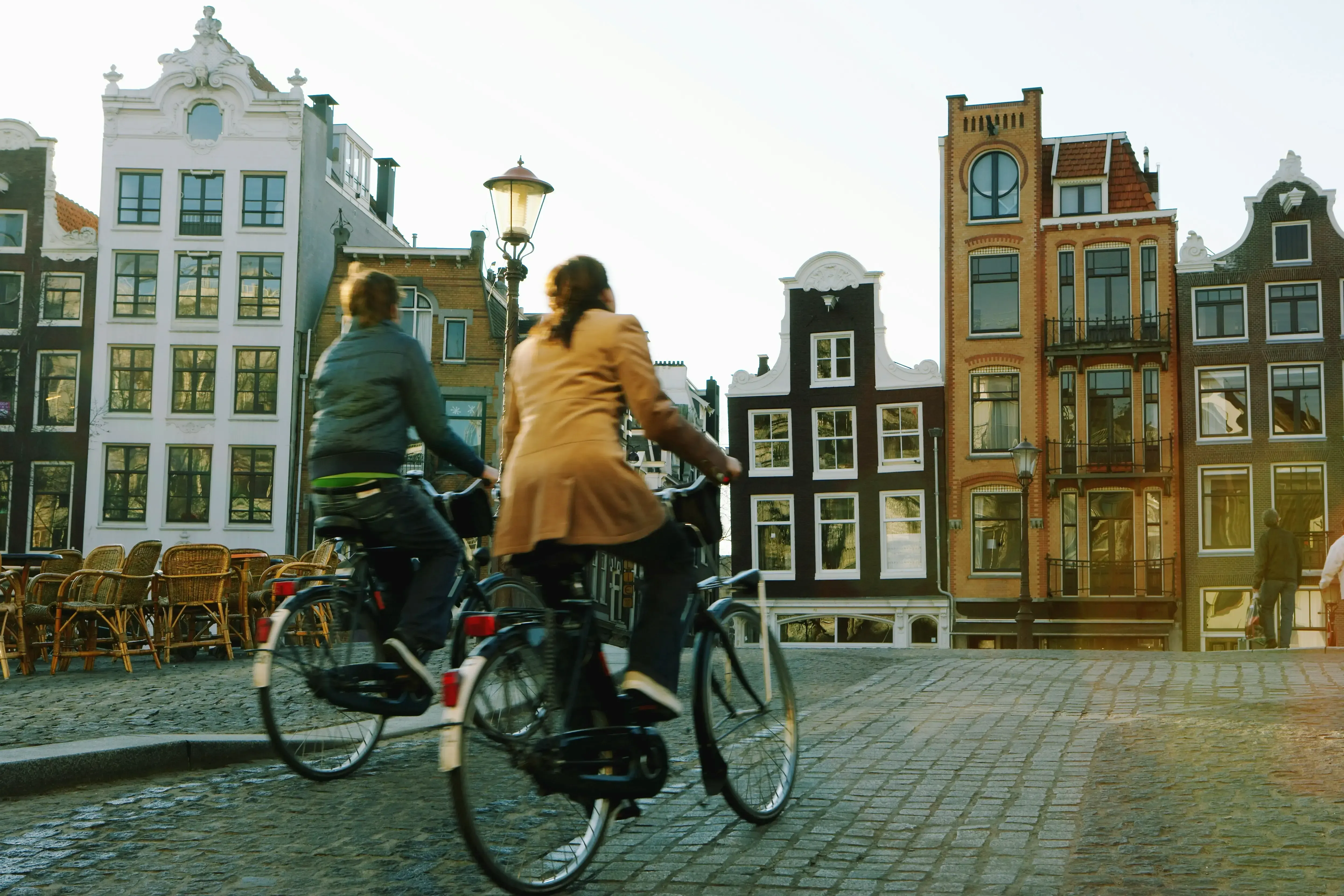
The Red Light District is heavily policed and safe, though occasional drunken tourists create minor incidents. The city's cycling culture means watching for bikes constantly. They have right of way, come from unexpected directions, and don't always signal. As a pedestrian, treat bike lanes like you'd treat a car lane: don't stand or walk in them without looking both ways. Locals on bikes have zero patience for oblivious tourists blocking the bike path.
Making Your Amsterdam Layover Memorable
The thing about layovers is that nobody expects them to be memorable.
They're supposed to be dead time, hours to kill between meaningful destinations. Amsterdam refuses to accept this logic. The city sits too close to Schiphol, offers too much in too small a space, makes itself too accessible to passing travelers. Whether you choose two hours around Dam Square, four hours in museums, or eight hours combining multiple neighborhoods, the city will give you something. Maybe it's the particular quality of light reflecting off canal water—that golden late afternoon glow that painters have tried to capture for centuries. Maybe it's an unexpected moment of beauty before a Rembrandt, standing in a room where people have stood for 150 years having the same revelation. Maybe it's just a really good stroopwafel eaten while sitting on a bridge watching boats pass beneath your feet.
This guide provides frameworks for Amsterdam layover itinerary planning, but the moments you remember often occur in the margins. When you take the wrong turn and find a café that serves the kind of coffee that makes you reconsider your entire relationship with caffeine. When you stumble into a street market that wasn't in any plan, vendors selling things you didn't know you wanted. When you simply stand on a bridge and realize you're exactly where you want to be, even if it's nowhere you intended to go.
So when you find yourself with those hours to kill at Schiphol, don't settle for the terminal. The city waits just outside, improbably close, ready to reveal itself in whatever time you can give it. Your layover might become the reason you return, properly next time, with a week to spare and nowhere else to be.

Kiwitaxi Airport Transfers
Land. Meet your driver. Go. Skip taxi lines and travel stress after your flight. With Kiwitaxi, your airport transfer is already arranged. Fixed prices, professional drivers, and service in 100+ countries - so your trip starts smoothly from the moment you land.
Book a transfer